A Fatal Collision: The Opioid Epidemic and the Dismantling of Child Protection Services in Washington State

by Marie Cohen

โ€œB.B.โ€ was born in 2022 and died of fentanyl poisoning in March 2023. During the ten years before B.B.โ€™s death, DCYF had received 30 reports on B.B.โ€™s family (many before B.B. was born) for issues including use of heroin, marijuana and alcohol in the home; lack of supervision of the children; domestic violence; an unsafe caregiver living with the family; an unsafe and unclean living environment unsecured guns in the home โ€œout-of-controlโ€ behaviors by B.B.โ€™s older siblings at school, with the mother described as โ€œout-of-itโ€ and unresponsive to school concerns; concerns about the childrenโ€™s hygiene; and the mother driving under the influence of marijuana. An in-home services case that had been open since January 2023 was closed days before B.B.โ€™s death. 

On August 24, 2024, the Washington Department of Children, Youth and Families (DCYF) proudly announced in a press statement that it had reduced the number of children in out-of-home care by nearly half since 2018. Specifically, the number of children in foster care had fallen from 9,171 in 2018 to 4,971 as of August 14, 2024. โ€œOutcomes like this demonstrate our agencyโ€™s commitment to keeping families together and children and youth safe,โ€ DCYF Secretary Ross Hunter said. โ€œAlthough the number of reports we are receiving remain [sic] consistent, we are seeing fewer children and youth in out-of-home care as families are being referred to support services rather than having children removed from their homes. Indeed, โ€œsafely reduce the number of children and youth in out of home care by halfโ€ (without a baseline date from which this can be measured) is one of DCYFโ€™s six strategic priorities. But treating the decline in foster care (the direct result of government actions) as a desirable outcome in itself can contribute to a disregard of actual child welfare outcomes like safety and permanency.

How did DCYF reduce foster care by nearly 50 percent?

How did DCYF manage to slash its foster care rolls so radically in such a short time? Without providing specifics, the press release cites DCYFโ€™s implementation of the Family First Prevention Services Act (FFPSA) and its emphasis on โ€œsupporting and collaborating with families by providing access to services and programs.โ€ A DCYF spokesperson told the Seattle Times that the department was using services to avoid removing children or to reunite families sooner, citing efforts to connect parents to substance use or mental health treatment programs, bring a social worker into the home to โ€œproblem solve,โ€ or โ€œoffer practical items, like diapers, car seats and beds.โ€

Apparently not satisfied with the changes implemented by DCYF, the Washington legislature in 2021 passed the Keeping Families Together Act (KFTA, also known as HB 1227), which took effect on July 1, 2023. Among other provisions, KFTA increased the standard for the court to order removal of a child from the home, which previously required the agency to demonstrate that โ€œreasonable grounds that the childโ€™s โ€œhealth safety or welfare will be seriously endangered if not taken into custody and that at least one of the grounds set forth demonstrates a risk of imminent harm to the child.โ€ As amended by KFTA, the law now requires the agency to demonstrate โ€œthat removal is necessary to prevent imminent physical harm to the child due to child abuse or neglect.โ€ The petition for removal is required to contain โ€œa clear and specific statement as to the harm that will occur if the child remains in the care of the parent, guardian or custodian, and the facts that support the conclusion.โ€ Moreover, the court must consider whether participation by the parents or guardians in โ€œany prevention servicesโ€ would eliminate the need for removal. If so, they must ask the parent whether they are willing to participate in such services and shall place the child with the parent if the parent agrees.

On a page dedicated to KFTA implementation, DCYF explains that it has implemented the law by adopting new policies and procedures to determine whether to remove a child and by training and supporting staff to implement the new procedures and determine whether there is an imminent risk of serious harm to the child. DCYF reports that internal reviews show that staff are โ€œtaking additional steps to prevent removal of a child and to support a safety plan for the family.โ€ 

Shortly before KFTA took effect, DCYF, along with the Department of Health, the Health Care Authority, and the Washington State Hospital Association issued new guidelines to birthing hospitals and mandatory reporters. These guidelines stated that infants born substance exposed, but for whom there are no other safety concerns, can receive โ€œvoluntary wrap-around services from a community organizationโ€ without being reported to CPS. These voluntary services are being provided through federally-mandated โ€œPlans of Safe Care (POSC).โ€ Healthcare providers identifying a substance-exposed infant are instructed to access an online portal where they are directed  to call DCYF if safety concerns are identified and to complete a POSC referral if not.

DCYF has been issuing quarterly data updates to assess the impacts of the KFTA. According to the most recent (October 2024) update, the law is having the intended impact of further reducing removals to foster care. DCYF reports a 16 percent decrease in the number of children removed in the July through September quarter of 2024 compared to the same quarter of 2022, before passage of KFTA. However, comparing foster entries for all ages in July through September 2024 to those in the same quarter of the previous year, the data indicate that foster care entries actually increased! Will this be the beginning of the end of the foster care reductions? That remains to be seen.

A longer-term view raises questions about the difference KFTA made, compared to the previous and ongoing efforts by DCYF to reduce foster care placements.  Entries into foster care in Washington have decreased annually from 2017 to 2024, as shown in the chart below. The rate of decrease remained about the same between 2019 and 2024, while KFTA was not implemented until July 2023. Perhaps more children would have entered care if not for KFTA, but there is no way to assess the impact of KFTA as compared with DCYFโ€™s ongoing effort to reduce removals. 

Source: DCYF, Child Welfare Agency Performance Dashboard, Children Entering Care in SFY, https://dcyf.wa.gov/practice/oiaa/agency-performance/reduce-out-of-home-care/cw-dashboard

The reduction in foster care placements was supposed to be accompanied (and made possible) by an increase in in-home services (which DCYF calls Family Voluntary Services or FVS), and DCYF reports that the number of cases receiving FVS increased by nine percent from 1,809 in SFY2023 to 1,994 in SFY2024. This increase in FVS cases cannot be compared to the 17-percent decrease in children placed in foster care over the same period, as the unit of analysis is different (families rather than children). But the key question is the nature and intensity of these services and whether they really kept the children safe. 

The cost of foster care reductions

The purpose of foster care is to keep children safe when they cannot be protected at home. So the essential question is whether the reduction in foster care placements has occurred without any cost to children. Trends in child fatalities and โ€œnear fatalitiesโ€1 due to child abuse or neglect can provide a clue. These deaths and serious injuries are the tip of the iceberg of abuse and neglect. For each child who dies or is seriously injured, there are many more that are living in fear, pain, or hunger, and incurring lifelong cognitive, emotional, and physical damage. There are troubling signs of an increase in child fatalities and near fatalities over the past several years. In its most recent quarterly update, DCYF reports on the number of “critical events” or child fatalities and near fatalities that met its criteria for receiving an โ€œexecutive review.โ€ These include the deaths of any minor that had been in DCYF custody or received services within a year of the death that were suspected to be caused by child abuse or neglect.2 They also include near fatality cases in which the child has been in the care of or received services from DCYF within three months preceding the near fatality or was the subject of an investigation for possible abuse or neglect. DCYF reports that the number critical events it reviewed increased from 23 in 2019 to 51 in 2023 and projects that it will increase to 61 in 2024.3

Source: DCYF, Keeping Families Together Act Quarterly Date Update, October 2024, https://dcyf.wa.gov/sites/default/files/pdf/DataUpdate_HB1227_October2024.pdf


The increase in critical events reflects, in part, the growing opioid crisis in Washington, as well as decisions Washington has made regarding how it intervenes to protect children.  Opioid related emergencies have โ€œdramatically increased for the entire population (adults and children) in Washington,โ€ and children have not been immune. Fentanyl is particularly dangerous to young children because it takes only a tiny amount to kill a baby or toddler, who can mistake the pills for candy or put straws or foil meant for smoking the drug in their mouths. The number of fatalities and near fatalities reviewed by DCYF that involved fentanyl climbed from four in 2019 to a projected 35 in 2024. Since 2018, Washingtonโ€™s Office of the Family and Childrenโ€™s Ombuds (has observed an annual increase in child fatalities and near fatalities involving accidental ingestions and overdoses. Fifty-seven (or 85 percent) of the 67 incidents examined in 2023 involved fentanyl. Over half of these incidents involved children under three years old and a shocking 14 out of the 85 infants were 12 months old or less.  As Dee Wilson and Toni Sebastian point out, the limited mobility and motor skills of infants suggests that some of these infants may have been given a small amount of fentanyl as a means of sedation.

The Washington Legislature was concerned enough about the possibility that KFTA is contributing to an increase in child fatalities and near fatalities in the context of the fentanyl epidemic that it passed a new law (SB 6109) in 2024. The law provides that a court must give โ€œgreat weightโ€ to the โ€œlethality of high-potency synthetic opioids.โ€ฆ.in determining whether removal is necessary to prevent imminent physical harm to the child due to child abuse or neglect.โ€ However, it appears that there is confusion about exactly what that means.

Has DCYF given up on protecting children?

“We know that supporting and collaborating with families by providing access to services and programs increases their number of protective factors, leading to better outcomes,โ€ said DCYF Assistant Secretary Natalie Green. โ€œGiving families the tools they need to thrive and safely parent means more children and youth remain safely at home.”

DCYF, Washington Reduces the Number of Children in Out-Of-Home Care by Nearly Half, August 14, 2024.

But the work of DCYFโ€™s own analysts, in their quarterly KFTA updates, raises doubts about whether DCYF is adequately performing its child protection function. These updatesย  acknowledge that the agency is not removing as many children with a high risk of future encounters with child welfare (in other words, those who have a high risk of being harmed). And they also report that the department has seen โ€œan increasing percentage of moderately high to high risk cases being re-referred to CPS within 90 days of the risk assessment. DCYF also reports that the overlap between KFTA and Plan of Safe Care (POSC)ย  is resulting in fewer screened-in intakes involving substance-exposed newborns because these infants are now being referred to voluntary services under POSC.

There has been a chorus of voices alleging that DCYF is abdicating its child protection responsibilities. One foster parent told the Seattle Times that โ€œshe and other foster parents are finding children who now come into their care are in worse shape than they used to be, with more serious mental health conditions or greater exposure to lethal drugs like fentanyl.โ€ She contends theyโ€™ve been left too long in unsafe conditions because of the heightened legal standard for removal. In The Erosion of Child Protection in Washington State, Toni Sebastian and Dee Wilson have cited the weakness of the management of Family Voluntary Services, which is often employed as an alternative to foster care. 

A survey of executive reviews of 2023 and 2024 child maltreatment child fatalities with DCYF involvement within a year provided examples of problems with screening, investigations, and case management, including the following:

  • Hotline issues. Reviews documented multiple intakes screened out on the same family even when the family had been the subject of multiple calls. The reviews also suggest that too many cases may be assigned to the Family Assessment Response (FAR) pathway, an alternative to a traditional investigation designed for lower-risk cases. In FAR cases, a social worker assesses the family and refers it to voluntary services. There is no finding about whether maltreatment has occurred and no child removal unless the case is transferred to the investigative track.
  • Premature closure of FAR cases. Reviewers noted instances in which FAR cases were closed after parents failed to cooperate, without caseworkers considering a transfer to the investigative track or before determining that the parent had followed through with services.
  • Assessment failures: Reviewers noted multiple failures to adequately assess parents for domestic violence, mental health, and substance abuse; failures to contact collaterals (relatives and friends) and instead relying on parental self-reports; lack of recognition of chronic maltreatment; ignoring evidence of past problems if not included in the current allegation; and failing to anticipate future behavior based on historical patterns.4
  • Inadequate understanding of substance abuse: Reviewers noted the failure to conduct a full assessment of substance abuse including history, behavioral observations, and collateral contacts; disregarding the unique danger to children posed by fentanyl; downplaying the significance of marijuana use, particularly as an indicator of relapse from harder drugs; and disregarding alcohol abuse because it is legal.
  • Failure to obtain information from treatment and service providers. The failure to communicate with service providers about clientsโ€™ participation in services like drug treatment and relying on clientsโ€™ self-reports was noted by more than one review team. Sometimes the providers refused to cooperate.  Staff told the team reviewing one case about a substance abuse treatment provider that routinely refuses to cooperate, even when parents sign release forms, and routinely tells clients not to cooperate with DCYF.
  • Lack of subject matter expertise. Reviewers pointed to the lack of deep knowledge about domestic violence, substance use disorder, and mental health among staff doing investigations, assessments, and case management and the need to provide access to subject matter experts when needed.
  • Failure to remove a child despite safety threats. The team reviewing the case of a four-year-old who died after ingesting fentanyl reported that there were at least two different times where an active safety threat was present that would have justified filing a petition in court to place the child in foster care. However, the staff believed, based on past experience, that the court would have denied the petition and therefore did not file. 
  • Delayed Reunifications: โ€œP.L,.โ€ a toddler allegedly beaten to death by his mother, was in foster care for over three years but his motherโ€™s rights were never terminated. He was on a trial return to his mother for just over five months when he was found dead with bruises and burns all over his body. 

Staff shortages and high turnover were mentioned as contributing to the observed deficiencies in case practice in almost every fatality review. In B.B.โ€™s case, the reviewers noted that the office had been functioning with a 50 percent vacancy rate for the last several years, stating that such a vacancy rate leads to high turnover, high caseloads, caseworkers with little experience, and supervisors forced to carry cases rather than support their caseworkers. Even caseloads that comply with state standards may be too high. The standard of 20 families per caseworker in FVS was noted to be unmanageable by one review panel, which noted that FVS cases are often discussed as high risk cases and require multiple contacts per month with family members, services providers, and safety plan participants. As Dee Wilson and Toni Sebastian put it,  โ€œ[b]etting young endangered childrenโ€™s lives on in-home safety plans developed and implemented by inexperienced and overwhelmed caseworkers is reckless, ill-advised public policy.โ€

Conclusions and Recommendations

Treating the decline in foster care as a desirable outcome in itself, as Washington and other states have done, is both disingenuous and dangerous. Any government can slash the foster care rolls reducing or ending child removals, as many โ€œchild welfare abolitionistsโ€ recommend. The central purpose of child welfare services, including foster care, is to protect children from child abuse and neglect. A reduction in foster care placements that results in the failure to protect children is no kind of success. 

DCYF told King5 that โ€œthe increase in child fatalities and near fatalities in Washington is not being driven by the change in removal standards under House Bill 1227 or the reduction in the number of children in foster care. It is being driven by the increased availability of a highly addictive and hazardous drug and a lack of substance use disorder treatment in our communities.โ€ But whether the agencyโ€™s policy or the drug epidemic is more at fault is not the right question. It is DCYFโ€™s job to protect children given the circumstances that exist, including the drug epidemic and the lack of sufficient treatment, keeping in mind that treatment often does not work the first, second, third or subsequent times. 

What can be done? DCYF needs to address the workforce crisis, which will probably require increasing pay and improving working conditions, or even possibly relaxing requirements for employment as a caseworker in investigations, assessment, and FVS. DCYF should consider policy and practice changes such as reducing the FVS caseload cap from 20 cases per worker; Instituting a chronic neglect unit, with expert caseworkers and even lower caseloads, for chronic cases; finding a way to limit the use of FAR to cases that are truly low-risk; and promoting the use of dependency petitions for court supervision when children remain in the home, as suggested by two fatality review committees.5 DCYF should request and the legislature should fund a variety of ancillary services for families, starting with therapeutic childcare for all preschool aged children with FVS cases as well as those who have been reunited with their parents. Such childcare would give parents a break and parenting support, keep children safe for a large part of the day, and ensure another set of eyes on the child, among other benefits. Also needed are more residential drug treatment centers where parents can live with their children. 

Finally, more transparency is needed so that legislators, advocates and the public have access to the findings of DCYFโ€™s executive review teams.  Washington deserves credit for sharing its executive child fatality reviews. But there is no reason that the DCYF should not share its near-fatality reviews as well. We know something about how DCYF failed B.B. and the other children who died. But the public needs access to the reviews of those children who narrowly escaped death as well as those who did not. It is only through such transparency that the public can see the actual impact of all the self-congratulatory proclamations about โ€œsafely reducing the number of children in out-of-home care.โ€

Notes

  1. A โ€œnear fatalityโ€ is defined by state law as โ€œan act that, as certified by a physician, places the child in serious or critical condition.โ€
    โ†ฉ๏ธŽ
  2. DCYF relies on the Office of the Family and Childrenโ€™s Ombuds (OFCO) to determine whether the fatality appears to have been caused by abuse or neglect, therefore requiring DCYF to conduct a review.
    โ†ฉ๏ธŽ
  3. Data collected by OFCO are more confusing. OFCO reviews all fatalities and near fatalities in which the childโ€™s family was involved in Washingtonโ€™s child welfare system within 12 months of the fatality. There number of near-fatalities reviewed by OCFO increased annually from 21 in 2018 to 70 in 2023, according to its most recent annual report on Child Fatalities and Near Fatalities in Washington State. But fatalities reviewed by OFCO did not show the same pattern. They reached a peak of 87 in 2018 and fell sharply in 2019, then rose yearly until they reached 85 in 2022 and then dropped to 79 in 2023. Nevertheless, adding fatalities and near fatalities together shows an alarming increase in critical incidents from 108 in 2018 to 149 in 2023.
    โ†ฉ๏ธŽ
  4. For example, in the case of โ€œR.W.,โ€ a child who died at age four after ingesting fentanyl, an investigation was closed because the children were staying with relatives, despite the motherโ€™s history of repeatedly removing the children from relatives with whom she had left them. A month later the child was found dead at a motel in the custody of the parents.ย 
    โ†ฉ๏ธŽ
  5. See https://dcyf.wa.gov/sites/default/files/pdf/reports/mk-cfr-final-redacted.pdf and https://dcyf.wa.gov/sites/default/files/pdf/reports/ecfr-os-24.pdf โ†ฉ๏ธŽ

Seven children and all she needed was a van: large families and the blindness of the child welfare establishment

By Marie Cohen

Working in the field of child protection, it is sometimes hard to avoid the feeling of living in some type of alternate reality, where bizarre statements are accepted and obvious questions go unasked. A case in point was a hearing on the Family First Prevention Services Act (FFPSA) that took place on May 22, 2024 under the leadership of Senator Ron Wyden of Oregon, one of the original sponsors of the FFPSA. This hearing and the fundamental misunderstanding about FFPSA that it uncovered has already been discussed in a previous post on this blog. But today’s post focuses on one particularly jarring vignette–the story of a mother, her seven children, and a van–and what it means about how child welfare policy is made and discussed today.

David Reed, the Deputy Director of Child Welfare Services in Indiana, introduced the story of this family in his testimony. Reed was trying to illustrate how the provision of economic and concrete supports can make children safer–an application of the theory that much of what is called child neglect is actually only poverty, which has been questioned previously in this blog. Reed explained the Indiana Family Preservation Services (IFPS) model requires that “concrete support be provided to families when not doing so would result in children having to come into foster care.” He gave an example of how this worked in a specific case:

DCS was called about a neglect allegation involving a single mother who had seven children, all of whom were school-aged or younger. This mother worked but struggled financially. DCS was called because she was unable to take all seven of her children in rural Indiana to school and/or daycare at the same time so that she could go to work. She took them in โ€œshiftsโ€ leaving some children home alone. This resulted in the neglect allegation and the opening of a DCS case. The provider delivering INFPS to this family recognized what this mom really needed to ensure that her children could all be transported togetherโ€”a bigger vehicleโ€”and used the concrete supports built into INFPS to purchase her a used minivan. That $3,000 van โ€œsolvedโ€™ the reason for DCSโ€™ involvement and very likely prevented seven children from coming into foster care, which is exactly what most likely would have happened prior to INFPS.

There is something strange about this example. Is it really possible that this mother needed nothing but a van in order to parent her children adequately? The rarity of seven-child families and the association of such large families with family dysfunction, including abuse and neglect, raise doubts about this mother’s appropriateness as a poster child for the provision of material supports as a solution to child maltreatment.

The rarity of a seven-child family

Seven children is such unusual number that it raises questions about why this mother had so many children and how she managed to care for them. The National Center for Health Statistics has estimated that 28 percent of women aged 40-49 (near the end of their childbearing years) who had given birth to children had only one child, 40 percent had two children, 27 percent had three children, and only 13 percent had four or more children.1 It is likely that the proportion with seven or more children is a tiny fraction of that 13 percent–and that is a percentage of women aged 40-48. We don’t know this woman’s age, but the younger she is, the more of an outlier she is, and the more questions this story should raise about her needs.

The association of extremely large families with dysfunction

A family of seven is not just unusual; it is often a marker for family dysfunction and pathology. Despite the rarity of families with five or more children, anyone who has worked in child welfare or juvenile justice knows that children from extra-large families are overrepresented among their clients. These families frequently consist of mothers with children by multiple fathers, with both parents often suffering from mental illness and/or drug abuse, and domestic violence is commonly present. These mothers are often too disorganized or too influenced by drugs and alcohol to use contraception; moreover, they may consciously or unconsciously get pregnant to hold onto a new man. In its Study of the Root Causes of Juvenile Justice System Involvement,” the District of Columbia’s Criminal Justice Coordinating Council interviewed youth service providers with first-hand experience working with justice-involved and at-risk youth. Quotes from these interviews include:


A social service provider described one type of youth they see becoming justice involved, โ€œYou have those that the family may have multiple children and if mom has 13 kids and Iโ€™m the oldest and mom is high or dad is not involved, then they need to eat because they are looking at me. So, I need to be able to figure out how to get the next meal.

One interviewee who works with the juvenile justice system describedthe youth as coming from families with โ€œFour, five, six, seven childrenโ€ and growing up where there are โ€œThree kids in a room, total bedlam all the time,โ€ and as a result โ€œThey raise each other in the streets … because … a lot of times hanging out at home isnโ€™t the pleasant environment.โ€

Research has consistently supported the association of larger families and closer birth spacing with higher rates of child abuse and neglect. In a groundbreaking 2024 article, Ahn et al report on their analysis of 20 years of data on almost 200,000 first-time mothers in California. They found a strong correlation between the number of children born to a mother and the likelihood that she would be reported to CPS in the next 20. The percentage of first-time mothers reported to CPS increased from 18.5 percent for mothers with one child to 25.4 percent for mothers with two children, 39.2 percent for mothers with three children, and 63.1 percent for mothers with four or more children.

Missing the Obvious?

Obviously not all large families are characterized by dysfunction and pathology. But common sense tells us that large family size can add to stress that in turn can lead to maltreatment. Moreover, having multiple children that one cannot afford may reflect other dysfunctions that may in turn be associated with child maltreatment. Yet somehow it never occurred to Senator Wyden or any of his colleagues at the hearing to ask whether this mother had any problems with mental health, drugs or domestic violence. Senator Wyden even mused aloud that federal law discriminates against large families, complaining that the child tax credit does not reimburse families based on the number of children they have! It appeared that he actually wanted to encourage unlimited childbearing regardless of the mother’s emotional or financial readiness.

And what about Mr. Reed, who actually provided this case as his only example of how material assistance can help resolve a child maltreatment report? According to the DCS website, Mr. Reed is a “licensed clinical social worker who has spent most of his career working with foster youth and children involved with the child welfare system.” One would think he had noticed that children from very large families were overrepresented among his clients. It is also worth noting, though slightly off-topic, that if this was the best example he could find, then his argument that many neglect cases can be solved with one-time material assistance appears to be in danger of collapsing for lack of support.

Perhaps one reason for Wyden’s and Reed’s blind spot is the current ideological tendency of what might be called the child welfare establishment, including the federal Administration on Children and Families, state leaders, and large and wealthy foundations and advocacy groups like Casey Family Programs. Many posts on this blog show how these groups’ focus on race and identity has restricted discussion about how to help prevent child abuse and neglect, among other problems. There seems to be a special taboo attached to any discussion about family size as it relates to child maltreatment, or any prescription for family planning as part of the solution. This taboo likely stems at least in part from our countryโ€™s shameful history of attempting to restrict childbearing by Black and poor women through means includingย forced sterilizationย and attempts to mandate that welfare recipients use an early injectable contraceptive called Norplant. But when efforts to be sensitive to past trauma to specific groups prevents the implementation of programs to improve the lives of at-risk children, it is time to set taboos aside.

What could be achieved by seeing extra-large families through clear eyes rather than a lens that is distorted by bias? Frontline workers faced with this type of client could look a little harder to see if the lack of a van was the real issue. Even if it was, requiring the mother to adopt one of today’s safe, long acting contraceptives in return for the gift of a van would hardly be unreasonable. In general, incorporating voluntary family planning, perhaps as a condition of receiving desired benefits, into family case plans might be a good start. Senator Wyden might not know this, but a new pregnancy for a mother who is trying to get her children back from foster care is one of the frequent setbacks observed by front-line workers.


The failure to regard unusually large numbers of children as a possible sign of pathology may reflect a genuine innocence about conditions in low-income urban and rural communities–conditions that are perfectly known to people in those communities and those who work there, but perhaps not to a US Senator like Wyden or his colleagues. A more cynical view is that self-imposed oblivion is needed to stay on the right side of advocacy groups and foundations that dominate the mainstream discourse on child welfare and provide funding to state and local agencies that are willing to toe the line. Whether it is ignorance or fear of losing the support of interest groups, national and local leaders’ disregard of the perils of repeated unplanned childbearing is hurting the very children these leaders claim they want to help.

  1. There is an error in the posted PDF of this report. The percentage of all women aged 40-49 who gave birth to three children was given as 2.4 percent instead of 22.4 percent. This was confirmed by an email to Marie Cohen from Brian Tsai, Public Affairs Specialist, Center for Disease Control and Prevention, November 21, 2024. โ†ฉ๏ธŽ

The tragic life and death of Gavin Peterson: Utahโ€™s statement leaves many questions unanswered

This post was prepared for and originally appeared on the website of Lives Cut Short, a project to document and analyze child maltreatment fatalities in the United States. See my interview with KUTV about this post here.

On October 10, the Utah Department of Children and Family Services (DCFS) finally released a statement summarizing its involvement with Gavin Peterson, who died on July 9, 2024 at the age of 12.  Gavinโ€™s father, stepmother, and older brother are awaiting trial on reckless child abuse homicide, among other charges.  The much-awaited โ€œCAPTA statementโ€ from DCFS (named for the federal law requiring that states have a policy to disclose โ€œinformation and findingsโ€ about child maltreatment fatalities and near fatalities)  provided some new information but raised new questions, especially when contrasted with media accounts. 

The DCFS statement begins with a disclaimer.  Gavin came from a โ€œtwo-household familyโ€ and was residing with his biological father, Shane Peterson, and fatherโ€™s long-term girlfriend, Nichole Scott, at the time of his death. The agency explains that although  it โ€œworked with each household at several points in Gavinโ€™s life as early as 2013,โ€ the statement includes only โ€œinformation relevant to Gavin in the household where his death occurred.โ€ It is not clear from this disclaimer what information was withheld from the public, either because it was from the other household or because DCFS decided it was not “relevant to Gavin.โ€

Some of that information can be pieced together from media coverage. Gavinโ€™s mother, Melanie Peterson, told a reporter at  KSL TV that she lost custody of all four of herchildren in 2014 or 2015. Court documents obtained by the reporter showed that two-yearโ€“old Gavin was found unsupervised outside of his home in 2014, and that in the same year Melanie pleaded guilty to allowing a child to be exposed to illegal drugs or drug paraphernalia. Melanie told the reporter that she never regained custody of her children from the courts, but that Shane Peterson unofficially returned her third child to her in 2018 and her second child in 2019. (Her first child was apparently Tyler, who is charged in Gavinโ€™s death, and Gavin was the fourth child.) 

DCFSโ€™ statement provides a chronology of abuse and neglect reports and agency responses, which are summarized below along with our commentary in italics.

May 28, 2019

The first report of abuse in Shane Petersonโ€™s home is received. DCFS investigates and finds that Nichole Scott had physically abused another child in the home. The Peterson family accepts voluntary in-home services. After a month of services, DCFS concludes the safety concerns have been resolved and closes the case.

The โ€œother childโ€ was clearly Gavinโ€™s sister Mayloni Peterson, now 19. She told KSL TV that she was abused even more severely than Gavin at the time, and was even punished for his actions.  She described being beaten, tied to her bed, fed only once or twice a day, forced to perform labor in the household and at her grandmotherโ€™s house. She reported that Scott once shaved off all her hair as punishment for combing her hair without permission and strangled her in the car following a failed attempt to run away. On Saturday, May 25, 2019, Mayloni told her father that she accidentally broke a sprinkler while mowing the lawn. Her father took her to her motherโ€™s house without warning and left her there, possibly saving her life. Melanie Peterson reported that Mayloni was malnourished and โ€œwith all her hair buzzed off.โ€ After hearing what her daughter had been through, Melanie made a report to DCFS after the Memorial Day holidayโ€“clearly the May 28, 2019 report. (Mayloni mentioned a report that was made by her school in March; it is not clear whether that report was omitted by DCFS because it was โ€œnot relevant to Gavin.โ€)

February 27, 2020

DCFS receives a call reporting abuse of Gavin in โ€œanother household.โ€ DCFS finds Gavin to be a victim of abuse and files a court petition. On May 27, the court orders both households to participate in DCFS in-home services. 

Melanie Peterson told KSL TV that she took a picture of an emaciated Gavin in February 2020. It would be the last time she saw him. She alleges that Nichole and Shane Peterson found out about the photo and made a false allegation about her, thereby ending her visitation rights pending a judgment by DCFS. That โ€œfalse complaintโ€ was likely the February 27, 2020 report, which resulted in an open case for both households. 

August 24, 2020

While the two households are receiving in-home services, DCFS receives a call reporting concerns about Gavinโ€™s treatment in his fatherโ€™s home. The information does not โ€œmeet the criteria required by Utah state law to open an investigation,โ€ but the intake worker shares the information with the in-home caseworker.

May 21, 2021

The โ€œPeterson familyโ€ successfully completesโ€ in-home services, and the judge closes the case. No information is provided about what these services were. 

September 2, 2022

DCFS receives a report from โ€œsomeone concerned about Gavinโ€™s well-being, after observing some of his behaviors.โ€ The hotline worker decides the report does not meet the legal criteria for opening an investigation. A supervisor approves this decision. 

This report most likely came from Gavinโ€™s school, and his โ€œbehaviorsโ€ included eating food from the trash. Cafeteria worker Rachel Reynolds told KSL TV  that she suspected Gavin was hungry even before the schoolโ€™s COVID-19-era free meal program ended in August 2022 and Gavin began taking leftovers from the trash. Her colleague Jan Davis said that she and a coworker began paying for Gavinโ€™s lunch. That ended when Nichole Scott demanded they stop buying his lunch. But the workers continued to โ€œsneak foodโ€ to him, according to Reynolds.

March 28, 2023

DCFS receives a report regarding physical neglect of Gavin and opens an investigation. Two days later, DCFS receives another report, which is added to the open investigation. Gavin is interviewed at school without his parents and does not disclose abuse. On May 8, 2023, DCFS receives a third report alleging physical abuse of Gavin. The investigator visits the home for a second time, interviews the adults and interviews Gavin outside the presence of the alleged abusers. The case is closed on May 15 with no finding of abuse or neglect.

These three reports likely came from the school.The school district reported the school made โ€œmultiple callsโ€ about Gavin, and Rachel Reynolds said that at least four calls were made by cafeteria workers and the principal. Reynolds personally observed the nurse and school principal call DCFS when she brought Gavin to the nurse with fingers that looked swollen and infected from picking. Jan Davis mentioned that Gavin came to school with a chipped tooth shortly after Nichole Scott learned that cafeteria staff were feeding Gavin. Perhaps that accounted for the abuse allegation. 

In August 2023,  Gavin was withdrawn from school for schooling at home. There are no more reports until July 29, 2024. Utah has no policy in place for monitoring children withdrawn from school following allegations of abuse or neglect,

July 9, 2024

DCF receives a report that Gavin is in the emergency room with injuries that appeared to be the result of abuse or neglect. He dies the same day. 

The police investigation into Gavinโ€™s death has revealed that Gavin was abused for years, was kept locked in an uncarpeted room without bedding or blankets while adults monitored him with multiple cameras, and was often beaten or starved, sometimes given only bread and mustard to eat. Nichole Scott, Shane Peterson, and Tyler Peterson were arrested and charged with child abuse homicide, aggravated child abuse, and endangerment of a child, and are awaiting trial. Gavinโ€™s treatment can be defined as torture, a type of child abuse that some have observed may be increasing in Utah and around the country. These cases often include confinement, starvation, beating, and isolation.

Unanswered Questions

Utahโ€™s report on Gavin Petersonโ€™s death, when compared with the media accounts from Gavinโ€™s mother, sister, and school staff, raises more questions than it answers. 

  • The May 28, 2019 report: The allegations that Mayloni made to her mother, who presumably included them in her May 28, 2019 report, concerned multiple reports of physical abuse, confinement, and forced labor.  Both children should have had a physical exam and a forensic interview. How is it possible that allegations of this magnitude (that turned out to be true) resulted in a case that was closed in a month and that was also described as โ€œvoluntaryโ€? 
  • The February 2020 report: This report about the  abuse of Gavin in another household is clearly the โ€œfalse allegationโ€ stemming from his motherโ€™s photograph of an emaciated Gavin. How did that result in a substantiation against her for abuse? The case was open for more than a year during the height of the COVID-19 pandemic. Were the visits virtual? Does that explain why the caseworker observed nothing of concern? Why did Melanie never get her visitation rights back after the case was closed?
  • The August 24, 2020 report: What concerns were raised and why did they not meet the criteria to open an investigation? Was this report really shared with the in-home worker and did that worker try to determine whether they were true?
  • The September 2022 report: How was this report,  obviously from the school and conveying that Gavin was seeking food in the trash, not judged to meet the legal criteria for an investigation, even by a supervisor?
  • The reports in March and May of 2023: Why did the investigation conducted from March to May 2023 fail to find the abuse of Gavin, which was so obvious to school personnel? Wasnโ€™t Gavin very thin? Shouldnโ€™t he have received a physical examination? If he denied the abuse, was the investigator unaware that is what scared children do? Was there any discussion  of taking him to a Child Advocacy Center for a forensic interview?

Key Takeaways

The first major takeaway of this report is that Utahโ€™s CAPTA report does not tell us whether DCFS did all that it could do to protect Gavin. The information shared in the report complies with state policy, which in turn complies with the very vague requirements of federal law. But much more detail is needed including documentation of the reasoning behind rejecting certain reports as worthy of investigation, the entire record of each investigation including interviews and documents, and a report of every interaction with the family during the in-home case. A few states post โ€œcritical incident reviewsโ€ for some death and near fatality cases. But such reviews are expensive, not all cases get reviewed, and internal reviewers may be biased on behalf of the agency. The only way to ensure accountability and inform needed changes is to release the full case file on the family, with certain names redacted,1 for at least the five years preceding the fatal or near fatal event.

The second major takeaway is that in spite of the lack of detail, the information provided strongly suggests that the problems in this home were longstanding and there were many opportunities for DCFS to discover them. It appears that systemic issues prevented the diagnosis of issues that should have been obvious. A former DCFS caseworker told KUTV that she left the agency “after struggling with overwhelming caseloads and a culture of simply ‘checking boxes.” She explained that while cases demanding immediate action are usually addressed, other cases showing red flags are dismissed too soon as “safe enough.” She placed primary blame on the legislature for not allocating adequate resources, saying that workers want to do their jobs, but they are being placed in impossible situations. “It’s unfair to put them in these situations where they don’t have the time to produce quality work, or if they do decide to put in the time, they’re sacrificing so much.”

The third major takeaway is that Gavinโ€™s fate was sealed once he was withdrawn from school and the reports stopped coming in. In its Make Homeschool Safe Act, the Coalition for Responsible Home Education proposes that a child cannot be withdrawn from school for homeschooling within three years of being investigated for abuse or neglect, regardless of the outcome, unless there is a risk assessment by social services or child welfare that finds that the child will not be endangered by being schooled at home, and the home educator agrees to a monthly risk assessment for the next 12 months.

Gavin Peterson was failed by the agency that was meant to protect him, A few children suffering similar torture have been lucky enough to escape to safety, like the boy who escaped from the home of parenting youtuber Ruby Franke and saved himself and his sister from likely death. But most children in these situations have no recourse unless the people being paid to protect them have the time, training, support and resources to investigate fully and respond appropriately. To ensure that happens, the public must have access to the complete records of cases in which the system has failed. 

  1. For example, the names of children and people who reported maltreatment. โ†ฉ๏ธŽ

GUEST POST: Torn Apart: How the Abolition Movement Destroys Foster Youth โ€“ And How Listening To Us Can Build A Safer World

by Patty Flores

I am grateful to be publishing this essay by a gifted and needed young voice in the child welfare space. Liliana “Patty” Flores, MSW is a clinician, researcher, advocate, educator, and motivational speaker. Her intersectionality and affiliation with marginalized identities such as being an undocumented Salvadoran female, LGBTQ+, foster youth, homeless, and cycling in and out of juvenile jails, have shaped the way she sees social issues. Patty was born in El Salvador and migrated to the U.S. at age 10. She spent half of her life in foster care, struggling with substance abuse. Patty turned 18 years old in jail. She eventually graduated high school and enrolled in college while still incarcerated. She now has an A.A. in Social and Behavioral Sciences, an A.S. in Administration of Justice from Pierce College, a B.A. in Sociology from UC Riverside, and a Master’s in Social Work from Smith College. Her goal is to empower those of similar backgrounds like herself. Read more about Patty and her work at www.defyinglabels.com. –Marie Cohen

Imagine going to school with bumps on your head and bruises on your back and legs from being repeatedly punched and kicked; this was my reality as a kid. Youth with lived experiences in foster care face countless challenges, even when the abuse finally stops – one way or another. For me, it stopped because at age 12 I reported it. I then found myself in foster care and having to navigate the complicated child welfare system, speaking little English and knowing nothing about how the child protection system (CPS) works in this country. Although my experience in care was hard for numerous reasons, including substance use, incarceration, homelessness, and being undocumented, I am alive only because this country has a system of protection in place for children and youth like me who have been victimized by their parents.

The movement to abolish the current child welfare system โ€“spearheaded by the organization upEND and its co-founder, Alan Detlaffโ€“has sparked useless controversy and divided the community of people who are concerned with child safety, permanency, and wellbeing. Former foster youth like me, who are pursuing college and graduate education,ย  are silenced in our classrooms. Also silenced are our allies, who are shamed for wanting to pursue a career in child welfare. The child welfare abolition movement originated from academics like Detlaff who haveย  no lived experience of foster care. Who are these ivory tower elites to tell anyone that foster care is unnecessary and should be eliminated when theyโ€™ve not lived through it themselves?

The child welfare abolitionists have chosen to ignore those of us with lived experience of child abuse and neglect who refuse to endorse their program of eliminating the child protection system. Are they too uncomfortable to talk about the cruel truth of being an abused or neglected child? Do they fear this conversation will thwart their efforts to abolish the system? Itโ€™s much easier to ignore the issues of child abuse and child deaths, to avoid engagement with survivors, and to see only the adult perpetrators as victims, than to recognize the reality of child abuse and neglect. It is also much easier to talk about tearing a system down than to grapple with the question of how to build one up that truly promotes child safety, permanency, and well-being. It is  harder to acknowledge the harms of child maltreatment and work together with us to find solutions that ensure our safety, stability, and well-being. Abolitionists are choosing the easy, less messy way out. They argue that foster care is not the answer. But for some of us, it is the only answer after experiencing abuse and neglect without extended family support.

I was born in El Salvador and am a descendant of the Pueblo Pipil, an indigenous group of people in El Salvador. I migrated to the United States as an unaccompanied minor at the age of ten. My background is rooted in a history of civil war and the struggle of oppressed indigenous people to overthrow those in power. In the United States, child welfare abolitionists often label themselves as โ€œrevolutionaryโ€ or claim to be engaging in โ€œrevolutionaryโ€ social work, but they are mistaken. True revolution occurs when the community rises up against oppression from those in power, not the other way around. These are the lessons I have learned from my revolutionary ancestors.

Child welfare abolitionists use the term to brand themselves as social justice warriors and  silence those with lived foster care experiences. They discuss child protection and  foster care among themselves, excluding the very people most affected.  It is  an abuse of power for the โ€œabolitionistsโ€ to neglect the voices of those with lived experiences in foster care, while enhancing their own prestige within the elite ivory tower. 

Advocates for abolishing the child welfare system (or as they call it, the โ€œfamily policing systemโ€) argue that collective efforts and community involvement are the solution in cases of child abuse and neglect. Yet nearly five years have passed since the inauguration of upEND, and the child welfare abolition movement has not provided specifics about how this would look in practice. Nor have I heard Dettlaff or other child welfare abolitionists discuss the experiences of young people like me who endured abuse and neglect. Are they afraid of the harsh realities weโ€™ve experienced? How can they even talk about the child welfare system when they refuse to acknowledge our existence?

I keep asking myself these questions: where was the community when I witnessed my mother being violently attacked, with a gun held to her head by my father? Where was the community when Gabriel Fernandez lost his life? Where was the community when Danieal Kelly was starved to death by her mother? Or much more recently, as four-year-old Jahmeik Modlin, slowly starved to death in an apartment stocked with food? Where is the community when children continue to lose their lives at the hands of their caregivers daily? When Iโ€™ve spoken to community members about their role in intervening when child maltreatment or violence on the streets occurs (a โ€œsolutionโ€ prescribed by the โ€œabolitionistsโ€), theyโ€™ve expressed fears of retaliation or concerns about getting themselves into dangerous situations where they could be attacked by the perpetrators.

The child welfare abolitionists have manipulated many young people, students, and activists into adopting oversimplified, Black and White narratives that erase other ethnic groups and the intersectionality children like me experience. To support their argument, they assert that the media is responsible for over-emphasizing cases of abuse and deaths, which they contend are infrequent. But when you grow up witnessing so much violence, abuse, and neglect firsthand, you donโ€™t have to watch the stories on the news. In fact, I did not grow up watching any TV. I learned about all this violence because I lived it.

College and university professors who support abolition (and who have never worked in the system) consistently push the narrative that CPS serves only to break Black and Brown families apart. They rarely if ever acknowledge the suffering endured by the over half a million children and youth who are abused and neglected annually and the need for a system of child protection in this country. As a young person with lived experience in an abusive family, I felt compelled to speak up in the classroom. And I did, immediately standing out with my thick accent and visible head tattoos. Fortunately, many of my classmates, including peers with experience in foster care, supported me and together we pushed back against professorsโ€™ biases and prejudice. I felt powerless growing up, and I still feel powerless as I navigate the racist, sexist, and classist world of academia.

In Defying Labels: From Negative Credentials to Positive Credentials?, an article I wrote for a newsletter at UC Riverside, I explained that society often shifts blame to the child for revealing family secrets in cases of abuse and neglect. The last thing I want as an adult is to keep being torn down and silenced by those in positions of power โ€“ professors, researchers, policy analysts, lawyers, and others. The abolition movement is tearing foster youth apart. Why not actually listen to what we have to say? This is the only way toward a safer world for all.


How New York keeps the public in the dark about high-profile child abuse and neglect deaths

Image: WWNY

This essay was originally published on the website of Lives Cut Short, a project to document child maltreatment deaths in the United States since 2022, for which I serve as Senior Project Associate

Jahmeik Modlin was found in a skeletal condition in a Harlem apartment stocked with food. He died the next day, and his three older siblings were hospitalized with severe malnutrition. The family had been on the radar of the Administration for Childrenโ€™s Services (ACS) since 2019, before Jahmeik was born. But the agency closed its last case with the family in 2022 after determining that the children were safe, a source told the New York Times. A spokeswoman for ACS declined to offer further information, citing state law designed to protect siblings of fatal abuse victims.

According to data states submit to the federal government, about 1800 children die of abuse and neglect every year, but this figure is widely recognized to be an undercount. Among those deaths, studies suggest that between a third and a half involve families who were already known to the child protection system (CPS) through previous reports.  Even in other cases where the family had no prior contact with CPS, other systems may have interacted with the child and perhaps could have intervened. Legislators, advocates and the public must have access to timely information about the circumstances leading up to child maltreatment fatalities so they can identify missed opportunities and policy and practice changes necessary to protect children. For that reason, Congress in 1996 added a provision in federal law that requires all states to provide assurances to the federal Department of Health and Human Services that they have provisions for disclosing findings and information regarding child fatalities and near fatalities from maltreatment.

Lives Cut Short surveyed state laws and policies governing access to information about child maltreatment fatalities and near fatalities. The resulting report, Keeping the Public in the Dark: How Federal and State Laws and Policies Prevent Meaningful Disclosure about Child Maltreatment Fatalities and Near Fatalities, shows that most states have such laws and practices but many of them are vague, and many have provisions that conflict with the purpose of ensuring public access to critical information. Among such provisions are those that prohibit releasing information that might harm surviving children in the families where a child was killed or seriously injured by maltreatment.

New York, at first glance, appears to be more transparent than most states in making information and findings about child maltreatment fatalities available to the public. The New York State Office of Children and Family Services (OCFS), which supervises local agencies such as ACS, is required to review all local investigations of child fatalities reported to the State Central Register and to publish a summary report within six months of the investigation. Disclosure of this information, however, occurs only if the state or local commissioner determines that it is not โ€œcontrary to the best interests of the child, the child’s siblings or other children in the household.โ€  While the law does not provide a comprehensive definition of โ€œcontrary to the best interests,โ€ the OCFS website does explain that OCFS conducts what it calls a โ€œbest interests determination,โ€ sometimes assisted by โ€œexpertsโ€ from the agencyโ€™s Statewide Child Fatality Review Team.  The process considers โ€œwhether publishing a fatality report is contrary to the best interests of a childโ€™s siblings or other children in the household, what effects publication may have on the privacy of children and family, and any potentially detrimental effects publication may have on reuniting and providing services to a family.โ€ 

To understand the impact of the โ€œbest interestsโ€ determination, one needs to know  the proportion of child fatalities for which New York withholds reports.  The identifying numbers that the state assigns to its child fatality reports provide a useful clue. All these numbers start with a two-letter abbreviation for the region (AL for Albany, BU for Buffalo, etc.), continue with the last two digits of the year, and end with a three-digit number, starting from 001. For example, the first Albany report for 2022 would be identified as AL-22-001. Assuming that all missing numbers represent reports withheld under the โ€œbest interests determination,โ€ about one-quarter of reports on 2022 fatalities in New York State were withheld.

The Child Abuse and Neglect Deaths Integrated Database (CANDID), maintained by Lives Cut Short, allows us to determine which child deaths reported in the media had a corresponding fatality report released by New York OCFS. CANDID combines information on child maltreatment fatalities from media reports, official fatality reviews or reports, and other available sources. New York Stateโ€™s fatality reports do not include names, but they do include the dates of death as well as details about the circumstances. Therefore, one can attempt to match media coverage with the OCFS review of the same fatality. But very few maltreatment deaths occurring in 2022 and covered by the media had an OCFS review released to the public. It appears that the reviews of high-profile deaths that received media coverage were withheld based on โ€œbest interest determinations.โ€ 

These cases included:

  • The death of Bryleigh Klino, a profoundly disabled 17-year-old whose parents have been charged with endangering her welfare. Hospital employees observed numerous signs of abuse and neglect on Bryleighโ€™s body;
  • The drowning of six-month-old Dalilah Crespo, whose death was ruled a homicide;
  • The death from abusive head trauma of four-month-old Cairo Dixon-Sanchez, for which his father pleaded guilty;
  • The fentanyl poisoning death of 11-month-old Liam Sauve, who ingested 23 times the amount of fentanyl that could kill an adult and whose mother pleaded guilty for his death;
  • The death of three-month old Genevieve Comager, whose father was charged with shaking her to death;
  • The beating death of nine-year-old Shalom Guifarro, whose mother has been sentenced to 16 years for her killing;
  • The death of two-year-old Ermias Taylor-Santiago of a fentanyl overdose, which was ruled a homicide;
  • The death of blunt force trauma of Xavier Johnson, whose motherโ€™s boyfriend was charged with beating him to death;
  • The fatal heroin overdose death of six-month-old Denny Robinson, found with a heroin bag in his mouth in a house that was connected with a major drug trafficking operation;
  • The drug and alcohol poisoning of 14-year-old Hailey Hasbrouck, allegedly by her father and his girlfriend, who allegedly gave her the โ€œtoxic cocktail;โ€
  • The โ€œsuspiciousโ€ death of seven-year-old Hunter DeGroat, found unresponsive in his home;
  • The death of two-year-old Aniyah Wyatt-Wright, allegedly punched to death by her father;
  • The murder of three-year-old Shaquan Butler, beaten to death in a Queens homeless shelter after being reunified with his parents after being removed from them by ACS.

It is probably not a coincidence that OCFS has elected not to release information on most of the egregious fatalities that were covered in the media. Many of the published state fatality reviews concern deaths due to unsafe sleep factors, accidental drownings, and other fatalities that do not result in criminal charges and are therefore never known to the public. It is possible that OCFS is trying to shield the surviving children in the cases listed above because readers may be able to identify them by putting together the reports and the media coverageโ€”as we did. But these are the very cases for which the information is most urgently needed. The nature of these cases suggests the existence of serious and chronic conditions that might have resulted in previous reports and involvement with CPS. Any harm that public release of the report would cause when the incident has already been covered in the media is dubious.  
Itโ€™s hard to avoid wondering if the exclusion of these cases from disclosure protects the agency more than the children. And to avoid guessing that Jahmeikโ€™s death will join the list of those cases for which reports are never published.

We cannot make progress in the prevention of severe and life-threatening child maltreatment unless legislators, advocates and the public have access to comprehensive information about what led up to these tragic events. Congress tried to provide this access through a provision in federal legislation, but states have couched this requirement in vague language or hedged it with qualifications that prevent the release of critical informationโ€”or any information at all in some casesโ€”as in New York. Only Congress can fix the gaps in the federal law, but state legislatures can act in the meantime to ensure their disclosure laws serve the purpose of improving child welfare in their states. 

To learn about current law in your state, see the new report: Keeping the Public in the Dark: How Federal and State Laws and Policies Prevent Meaningful Disclosure about Child Maltreatment Fatalities and Near Fatalities


School shootings and fentanyl overdoses: the uncounted costs of neglecting maltreated children

A fourteen-year-old boy and a fifteen-year-old girl are charged as adults, one for a mass shooting and the other for selling a fentanyl tablet that killed an older teenager. These two young people had something in common–a long history of neglect (and sometimes abuse) by their parents and a failure to intervene by child welfare services despite multiple reports that children were in danger. Ignoring chronically maltreated children when they could have been saved and then locking them up for life is both inhumane and costly. We must intervene to help maltreated children before they are irrevocably damaged by years of abuse and neglect.

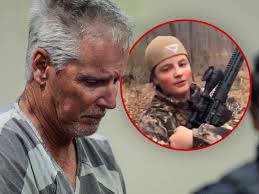
On September 4, 2024, fourteen-year-old Colt Gray shot and killed two teachers and two students at Apalachee High School in Winder, Georgia with an AR-15 style rifle given to him by his father. He has been charged as an adult and is awaiting trial. It did not take long for the media to uncover that Colt had grown up in a chronically abusive and neglectful home. As the Washington Post put it in a devastating article, “Coltโ€™s parents, each addicted to drugs and alcohol, were perpetually inattentive, often cruel and sometimes entirely absent, according to family members, neighbors, investigators, police reports and court records.” In November 2022, Colt’s mother, Marcee Gray, left his father, Colin Gray, and moved to southern Georgia with her two younger children. It appears that DCFS had opened a case at some point because In October of 2023, a spot drug-test revealed Marcee’s renewed drug use. Colin Gray was ordered to retrieve the other children, or they would be placed in foster care. Shortly thereafter, it appears that the case was closed.

There is no information from media reports about whether DCFS evaluated Colin Gray for his fitness to take care of his three children or to monitor their well-being in his care before closing the child welfare case. Yet, relatives reported to the New York Post that Colin Gray relentlessly bullied his son, calling him names like “sissy” and “bitch.” The Washington Post reported that Colt first came to the attention of authorities at the age of 11, when his school flagged him for searching the internet for ideas on how to kill his father. In Colin Gray’s custody, Colt never attended eighth grade and was not even registered for school until February 2 of that year. That Christmas, Colin Gray gave Colt his own AR-15 style rifle, in an attempt to “toughen him up,” as relatives told the New York Post. By his fourteenth birthday in January, Colt’s grandmother reported that he was searching the internet for what was wrong with him; she offered to pay for therapy and take him there but his father never signed him up. In July of 2023, Marcee returned from rehab and Colin allowed her to move back in. Colt’s mental health deteriorated even further after his mother’s return, and he talked of hurting himself or others. He registered for high school two weeks late and rarely attended. โ€œColt was like the thrown-away child,โ€ said his grandmother, who tried in vain to get his father and the school to help him. Five days after his father failed to take him to a crisis mental health center despite his grandmother’s plea, Colt brought his rifle to school and took four lives.

Also charged as an adult was 15-year-old Maylia Sotelo of Green Bay, Wisconsin, the subject of a devastating article by Lizzie Presser of Pro Publica.  Maylia’s home had been a “hangout for users and dealers.” Her three older sisters had all been kicked out or left due to their mother’s violence. Maylia’s had been referred to child protective services 20 times before she was finally removed from her home at the age of 14. In a pattern typical of chronic maltreatment, the reports concerned multiple types of neglect, sexual abuse, and physical abuse. Before Maylia turned one, CPS documents show that her mother overdosed on cocaine and Adderall with seven children in her home. When she was five years old, a caller reported that her mother was โ€œhigh as a kiteโ€ and her boyfriend was violent. The next year, another report indicated that there was no food in the home and that the mother was using heroin in front of her children.

When Malia was seven, CPS substantiated a report that a man โ€œopened his pants, pulled out his penis and masturbatedโ€ in front of one of Mayliaโ€™s sisters. That same year, a woman overdosed on crack in the house and Mayliaโ€™s mother โ€œwould not call rescue or the police because [she] did not want her children removed,โ€ according to a social worker’s notes. And a school employee reported that Maylia missed half the school year. When Maylia was 14 and her mother became psychotic, Maylia and her sister were finally removed from the home and placed with relatives. But they were given no counseling or assistance with school, according to Pro Publica. Maylia had been smoking weed since fifth grade, then began selling it. By the beginning of tenth grade, she was selling “blues,” pills that were billed as percocet but actually contained filler and fentanyl. She sold a pill to an 18-year-old named Jack McDonough. When he died of an overdose, Maylia was arrested for first-degree reckless homicide.

It is obvious that both Colt Gray and Maylia Sotelo were chronically maltreated children who suffered from multiple types of maltreatment over a period of years. It is also obvious that the systems designed to protect them failed both of these young people. Both families clearly required intervention that did not come when it was needed, though we do not have enough details to make an informed critique of the system’s response. When the child welfare system finally intervened in Malia’s case, it may have been hard to change her trajectory, and it appears that she was left with relatives and received monitoring or services to address her traumatic history. In Colt’s case, the intervention may have also come too late to prevent serious psychological damage. And once they became involved, caseworkers appeared to be focused on his mother and ended the case with the placement of all three children with their father, a parent who had been equally neglectful and failed to take action to protect the children from his wife’s abuse.

Perhaps more intensive in-home services provided earlier could have helped Colt’s and Maylia’s parents address the issues that led them to abuse or neglect their children. If not, perhaps Maylia’s earlier removal from her toxic home, and Colin’s removal to a better environment than either of his parents could provide might have saved these children from the sad fate that awaited them. The approach that is currently in fashion – exemplified by the much touted Family First Prevention Services Act (FFPSA) of 2018 – prescribes the avoidance of foster care at almost any cost. It does, however, promise that parents receive support in parenting their children, whether it is mental health, drug treatment, or parenting training. Child welfare systems have long been providing such support to families in the form of in-home services, and FFPSA was supposed to provide the resources to improve these services. Unfortunately, FFPSA did not acknowledge or support the crucial role of frequent home visits to ensure the children are safe and that they can be removed into foster care if the parents do not cooperate with their plans for addressing their issues and improving their parenting.

Sadly, there is no evidence that increases in family support or child safety monitoring are forthcoming. States are proudly citing drops in their foster care caseloads, with no reporting on what is happening to the children left at home. States are not required to release data on the number of cases opened for in-home services, so we have no idea whether the abused and neglected children who are not being removed are getting any supervision or their parents receiving services. But as I have written, data from the states with the largest and third largest foster care caseloads indicates that the number of children receiving in-home services has not increased to make up for the drop in children removed to foster care; instead it has decreased along with foster care placements, resulting in a decline in the number of children being served overall.

Studies have documented the connection between child maltreatment and crime.1 Failing to intervene with at-risk children before they resort to crime and subsequently incarcerating them results in unnecessary human suffering, not to mention greater financial costs, than intervening early. If we do not want to remove more children, we must provide intensive services to parents and close monitoring of their children’s safety–and be ready to remove the children as soon as it becomes clear that parents are not going to change before the children are irreparably harmed. Such monitoring is key, because we really do not know what, if anything, works in preventing future maltreatment among parents who have maltreated their children.

This is not the first time that the failure of CPS has been noted in the wake of a heinous crime. I previously wrote about Lisa Montgomery, who was executed on January 12, 2021. She murdered a pregnant woman, cut out the baby, and took it home. It turned out that Lisa Montgomery had a long and horrific history of physical and sexual abuse throughout her childhood, including beatings and bizarre punishments by her mother, rape by her stepfather, and prostitution by both. Sadly, it seems that we have not made much progress since Lisa’s childhood, and current ideological trends run the risk of leaving even more children unprotected in the future.

Notes

  1. See Janet Currie and Erdal Tekin, Does Child Abuse Cause Crime? NBER Working Paper 12171, https://www.nber.org/digest/jan07/does-child-abuse-cause-crime and Todd I. Herrenkohl et al., Effects of Child Maltreatment, Cumulative Victimization Experiences, and Proximal Life Stress on Adult Crime and Antisocial Behavior, https://www.ojp.gov/pdffiles1/nij/grants/250506.pdf.

Reposting: Torn apart: A skewed portrait of child welfare in America

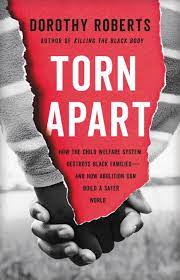
The MacArthur Foundation has announced its new class of Fellows, the recipients of what are commonly called the “Genius Awards.” Among the recipients is Dorothy Roberts, the self-styled popularizer of the term “racial disproportionality” and creator of the term “the family policing system.” According to the Director of the Program, โ€œThe 2024 MacArthur Fellows pursue rigorous inquiry with aspiration and purpose. They expose biases built into emerging technologies and social systems….” It’s hard to understand how this term can be applied to an author who wrote that the “family-policing system terrorizes Black families because that’s what it is designed to do ” despite also stating that child welfare systems excluded Black children from their inception until the second half of the twentieth century. The choice of Roberts only exposes the bias and lack of rigor–or alternatively the sheer ignorance– of the MacArthur Foundation. As an illustration, I am reposting my 2022 review of Roberts’ most recent book, Torn Apart: How the Child Welfare System Destroys Black Families–and How Abolition Can Build a Safer World.

In her 2009 book, Shattered Bonds: The Color of Child Welfare, Dorothy Roberts drew attention to the disproportional representation of Black children in foster care and child welfare in general and helped make “racial disproportionality” a buzzword in the child welfare world. In her new book, Torn Apart: How the Child Welfare System Destroys Black Families–And How Abolition Can Build a Safer World, Roberts revisits the issues addressed in Shattered Bonds and creates a new buzzword, renaming child welfare as the “family policing system.” Those who liked Shattered Bonds will likely love Torn Apart. But those who value accuracy in history or in data will find it to be sadly misguided, although it does make some valid points about flaws in the U.S. child welfare system.

Roberts starts with a horrific anecdote about a mother, Vanessa Peoples, who was doing everything right–she was married, going to nursing school, about to rent a townhouse and was even a cancer patient. But Peoples attracted the attention of both the police and child welfare and ended up hogtied and carted off to jail by police, placed on the child abuse registry, and subjected to months of monitoring by CPS after she lost sight of her toddler at a family picnic when a cousin was supposed to be watching him. But citing these extreme anecdotes as typical is very misleading. This particular story has been covered in numerous media outlets since it occurred in 2017 and continues to be cited regularly. One can counter every one of these horrific anecdotes with a story of a Black child who would have been saved if social workers had not believed and deferred to the parents. (See my commentary on the abuse homicides of Rashid Bryant and Julissia Batties, for example).

Roberts’ book restates many of the old myths that have been plaguing child welfare discussions as of late and that seem to have a life of their own, impervious to the facts. Perhaps the most common and pernicious is the myth that poverty is synonymous with neglect. Roberts embraces this misconception, suggesting that most neglect findings reflect parents who are too poor to provide adequate housing, clothing and food to their children. But parents who are found to have neglected their children typically have serious, chronic mental illness or substance use disorders that severely affect their parenting, and have refused or are unable to comply with a treatment plan. Many are chronically neglectful, resulting in children with cognitive and social deficits, attachment disorders, and emotional regulation problems. Commentator Dee Wilson argues based on his decades of experience in child welfare that โ€œa large percentage of neglect cases which receive post-investigation services, or which result in foster placement, involve a combination of economic deprivation and psychological affliction…., which often lead to substance abuse as a method of self-medication.” Perhaps the strongest argument against the myth that poverty and neglect are one and the same is that most poor parents do not neglect their children.  They find a way to provide safe and consistent care, even without the resources they desperately need and deserve.

Roberts endorses another common myth–that children are worse off in foster care than they would be if they remained in their original homes. She argues that foster care is a “toxic state intervention that inflicts immediate and long-lasting damage on children, producing adverse outcomes for their health, education, income, housing, and relationships.” It is certainly true that foster youth tend to have bad outcomes in multiple domains, including education, health, mental health, education, housing and incarceration. But we also know that child abuse and neglect are associated with similar poor outcomes. Unfortunately, the research is not very helpful for resolving the question of whether these outcomes are caused by the original child maltreatment or by placement in foster care. We cannot, of course, ethically perform a controlled study in which we remove some children and leave a similar set of children at home. We must rely on studies that use various methodologies to disentangle these influences, but all of them have flaws. Roberts cites the study published in 2007 by Joseph Doyle, which compared children who were placed in foster care with children in similar situations who were not. Doyle found that children placed in foster care fared worse on every outcome than children who remained at home. [Update added October 2024: A newer study, reflecting current foster care policy and the more typical state of Michigan, found the opposite result.] But focusing on marginal cases* leaves out the children suffering the most severe and obvious maltreatment. In a recent paper, Doyle, along with Anthony Bald and other co-authors, states that both positive and negative effects have been found for different contexts, subgroups, and study designs.

There is one myth that Roberts does not endorse: the myth that disproportional representation of Black children in child welfare is due to racial bias in the child welfare system, rather than different levels of maltreatment in the two populations. After an extensive review of the debate on this issue, Roberts concludes that it focused on the wrong question. In her current opinion, it doesn’t matter if Black children are more likely to be taken into foster care because they are more often maltreated. “It isn’t enough,” she states, “to argue that Black children are in greater need of help. We should be asking why the government addresses their needs in such a violent way, (referring to the child removal). Roberts was clever to abandon the side that believes in bias rather than different need as the source of disparities. The evidence has become quite clear that Black-White disparities in maltreatment are sufficient to explain the disparity of their involvement in child welfare; for example Black children are three times as likely to die from abuse or neglect as White children. As Roberts suggests and as commentators widely agree, these disparities in abuse and neglect can be explained by the disparities in the rates of poverty and other maltreatment risk factors stemming from our country’s history of slavery and racism. Unfortunately, Roberts’ continued focus on these disparities in child welfare involvement will continue to be used by the many professionals who are working inside and outside child welfare systems all over the country to implement various bias reduction strategies, from implicit bias training to “blind removals.”

In Part III, entitled “Design,” Roberts attempts to trace the current child welfare system to the sale of enslaved children and a system of forced “apprenticeship” of formerly enslaved Black children under Jim Crow, whereby white planters seized custody of Black children from their parents as a source of forced labor.** As she puts it, “[t]hroughout its history US family policy has revolved around the racist belief that Black parents are unfit to raise their children. Beginning with chattel slavery and continuing through the Jim Crow, civil rights, and neoliberal eras, the white power structure has wielded this lie as a rationale to control Black communities, exploit Black labor, and quell Black rebellion by assaulting Black families.” In other passages she adds other groups to the list of victims, adding “Indigenous, immigrant and poor people to the list of communities that are being controlled by the “family policing system.” But most of her statements refer to Black victims only.

Roberts’ attempt to connect slavery and Jim Crow practices with child welfare systems highlights a major flaw of the book. She herself explains that due to racism the child welfare system served only White children when it emerged in the nineteenth century with the creation of child protection charities and the passage of state laws allowing maltreated children to be removed from their homes and placed in orphanages. Foster care was established in the middle of the century and also excluded Black children. The system did not begin serving Black children until after World War II, so it is difficult to understand how it could stem from slavery and Jim Crow practices. It seems much more plausible that the child welfare system arose from basically benevolent concerns about children being maltreated, and that with the rise of the civil rights movement, these concerns were eventually extended to Black children as well.

While Black children’s representation as a share of foster care and child welfare caseloads rose rapidly starting in the 1960’s, and Black children are much more likely to be touched by the system than White children, the system still involves more White than Black children. According to the latest figures, there were 175,870 White non-Hispanic children in foster care (or 44 percent of children in foster care) and 92,237 Black (non-Hispanic) children in foster care, or 23 percent of children in foster care. Moreover, the disparity between Black and White participation in child welfare and foster care as a percentage of the population seems to be decreasing.*** So the idea that this whole system exists to oppress the Black community and maintain white supremacy seems farfetched.

Roberts’ attempt to make Black children the focus of the book results in some awkward juxtapositions, like when she admits that though the Senate investigation of abuses by a for-profit foster care agency called MENTOR “highlighted cases involving white children, we should remember that Black children are more likely to experience these horrors in foster care—not only because Black children are thrown in foster care at higher rates, but also because government officials have historically cared less about their well-being.” A page later she states that the “child welfare system’s treatment of children in its custody is appalling but should come as no surprise. It is the predictable consequence of a system aimed at oppressing Black communities, not protecting Black children.” It is hard to understand how White children being maltreated in bad placements supports this narrative.

Fundamental to Roberts’ critique is her system is “not broken.” โ€œThose in power have no interest in fundamentally changing a system that is benefiting them financially and politically, one that continues to serve their interests in disempowering Black communities, reinforcing a white supremacist power structure, and stifling calls for radical social change.” Even if one believes there is a white supremacist power structure, it is hard to see the direct connection between the abuses Roberts is highlighting and the disempowerment of Black communities; it seems more likely that the more abusive the system, the more protests it would generate. And at a time when the federal government and some of the wealthiest foundations and nongovernmental organizations are echoing much of Robert’s rhetoric, her reasoning seems particularly off-target.

Roberts makes some valid criticisms of the child welfare system. Her outrage at the terrible inadequacies of our foster care system is well-deserved. She is right that “The government should be able to show that foster care puts Black children [I’d say “all children”] on a different trajectory away from poverty, homelessness, juvenile detention, and prison and toward a brighter future.” Any society that removes children from their parents needs to be responsible for providing a nurturing environment that is much, much better than what they are removed from. And we are not doing that. As Roberts states, “The state forces children suffering from painful separations from their families into the hands of substitute caretakersโ€ฆ..who often have unstable connections, lack oversight and may be motivated strictly by the monetary rewards reaped from the arrangement.” As a foster care social worker in the District of Columbia, I was driven to despair at my inability to get my superiors to revoke the licenses of such foster parents; the need for “beds” was too great to exclude anyone was not actually guilty of abuse or severe neglect. Roberts is also right to be concerned the outsourcing of foster care to private for-profit organizations that may be more concerned with making money than protecting children, sometimes resulting in scandals like the one involving MENTOR Inc., which was found to hire unqualified foster parents and fail to remove them even after egregious violations like sexual assault.

Roberts also raises valid concerns about children being sent to residential facilities, often out of state, that resemble prisons rather than therapeutic facilities. But she ignores the need for more high-quality congregate care options for those children who have been so damaged by years of maltreatment that they cannot function in a foster home, no matter how nurturing. Instead, she repeats the usual litany of scandals involving deaths, injuries, fights and restraints, without noting the undersupply of truly therapeutic residential settings, resulting in children sleeping in office, cars, and hotels or remaining in hospital wards after they are ready for discharge. Ironically, she supports defunding the system, even if that would mean even worse situations for these children.

Roberts decries the fact that parents sometimes relinquish custody of their children in order to get needed residential care, arguing that “rather than providing mental health care directly to families, child welfare authorities require families to relinquish custody of children so they can be locked in residential treatment centers run by state and business partnerships.” That statement is completely backwards. The child welfare system does not provide mental health services but, like parents, it often struggles to secure them for its clients. Some parents are forced to turn to the child welfare system because their insurance will not pay for residential care for their children. That is not the fault of child welfare systems, which clearly do not want to take custody of these children. The underlying problem is the lack of adequate mental health care (including both outpatient and residential programs), which has destructive consequences for the foster care system. This is exacerbated by the lack of parity for mental health in health insurance programs. It’s hard to believe Robert is unaware of these well-known facts.

Roberts is correct that parents as well as children are shortchanged by inadequacies in our child welfare program, such as the “cookie cutter” service plans which often contain conflicting obligations that are difficult for struggling parents to meet. But she is wrong when she says that parents need only material support, not therapeutic services. But this error flows logically from her concept of neglect as simply a reflection of poverty. In fact, many of these parents need high-quality behavioral health services and drug treatment, which are often not available because of our nation’s mental health crisis, as well as the unwillingness of taxpayers and governments at all levels to adequately fund these services.

In her final chapter, Roberts concludes that, like the prison system, the child welfare system cannot be repaired because it exists to oppress Black people. “The only way to end the destruction caused by the child welfare system is to dismantle it while at the same time building a safer and more caring society that has no need to tear families apart.” In place of family policing, Roberts favors policies that improve children’s well-being, such as “a living wage and income support for parents, high-quality housing, nutrition, education, child care, health care; freedom from state and private violence; and a clean environment.โ€ I agree with Roberts that aid to children must be expanded. The US is benighted when compared to many other Western countries that invest much more heavily in their children through income support, early childhood and K-12 education, healthcare, and housing. But family dysfunction occurs even if a family’s material needs are met. That is why every other developed nation has a child welfare system with the authority to investigate maltreatment allegations and assume custody of children when there are no other options. Moreover, some of the countries with the strongest safety nets for children also have higher percentages of children living in foster care than the United States.****

Torn Apart is a skewed portrait of the child welfare system. In it Roberts restates the common but easily discredited myths that poverty is synonymous with neglect and that foster care makes children worse off than they would have been if left at home. The underlying flaw in her account is the idea that this system exists to repress the Black community, even though it was established solely for the protection of White children. Roberts makes some valid criticisms of child welfare systems and how they shortchange the children and families they are supposed to help. But when she talks of dismantling child protection, she is proposing the abandonment of abused and neglected Black children in homes that are toxic to them, an abandonment that will perpetuate an intergenerational cycle of abuse and neglect. These children are our future; abandoning their well-being to prioritize that of their parents is a bad bargain with history.

*Doyle’s study included only those cases that would have resulted in foster placement by some investigators and not by others, leaving out the cases in which children were in such danger that all investigative social workers would agree that they should be placed.

**In various places, she also attributes it to different combinations of slavery and apprenticeship of Black children with the transfer of Native American children to boarding schools, the exclusion of Black children from charitable aid and the servitude of impoverished White children.

***A recent paper reports that disparities between Black and White children began to decrease in the twenty-first century in nearly every state, closing entirely in several Southern states.

****Unicef’s report, Children in Alternative Care, shows that Denmark has 982 children in โ€œalternative careโ€ per 100,000 and Sweden has 872 per 100,000, compared to 500 per 100,000 for the United States.

New Jersey’s claim of declining child maltreatment: ingenuous or disingenuous?

Officials of New Jersey’s Department of Children and Families (DCF) are congratulating themselves on what they call the decline of child abuse and neglect in their state and attributing this ostensible decline to their department’s preventive services. The number of reports of child child maltreatment has actually increased over this period. DCF’s claims are based on a decline in the number of children with substantiated reports–a number which reflects DCF policy and practice much more than it reflects actual abuse and neglect. Whether agency officials are ignorant or attempting to manipulate the data for naive readers, this is no way to keep the public informed about how well New Jersey is protecting its children.

Two DCF officials, Laura Jamey, Director of the Division of Child Protection and Permanency and Sanford Starr, Director of the Division of Family and Community Partnerships, say they have some good news for New Jerseyans. They announce it in an op-ed titled “Maltreatment of NJ kids is decreasing. Hereโ€™s wow [sic] weโ€™re preventing it,” which was published in the Asbury Park Press. “By using evidenced-based [sic] prevention strategies and practically addressing familiesโ€™ needs, weโ€™re happy to report that over the past decade, there has been a steady decline in the number of confirmed cases of child abuse and neglect in our state. In 2016, there were more than 8,000 substantiated and established cases of Child Abuse and Neglect in New Jersey. Last year, that number was only 2,641.”

Wow! sounds impressive, right? But it turns out the authors took as much care with the substance of their commentary as with their capitalization and spelling. That much is clear to anyone who bothers to look at the data that New Jersey shares with the federal government through the National Child Abuse and Neglect Data System (NCANDS) and which the federal Children’s Bureau shares through its annual Child Maltreatment reports. The data for 2023 have not yet been published by the Bureau, but the figures below represent what New Jersey reported for Federal Fiscal Years (FFY) 2016 to 2022, which ended on September 30, 2022.

Federal Fiscal YearReferralsChildren Receiving an Investigation or Alternative responseChildren receiving a “substantiated” disposition/percent of referrals
201656,01473,8898,264 (11.2%)
201757,02674,3936,614 (11.6%)
201859, 42877,6616,008 (10.1%)
201960,93478,7415,132 (8.4%)
202052,85370,1793,655 (6.9%)
202148,78166,3213,188 (6.5%)
202257,06874,7663,146 (5.5%)
Sources: Child Maltreatment 2016-2022, Children’s Bureau, Administration on Children and Families

Jamey and Starr cited only the number of substantiated cases of maltreatment. But that figure has meaning only in the context of two figures that represent earlier steps in the process, which are always discussed first in the Child Maltreatment reports. “Referrals” is the child welfare system’s term for reports to the state child protective services hotline. As you can see, those reports increased slightly in New Jersey from 56,014 in FFY2016 to 60,934 in FFY2019. There was a significant drop in referrals during the COVID pandemic in FFY2020 and FFY2021, and then a rebound to 57,068 in FFY 2022, just slightly higher than the number in 2016.

The number of children who were the subject of an investigation also dipped during COVID (in response to the drop in referrals) and bounced back up to a level that was slightly higher than that of 2016. But the number of cases that received a disposition of “substantiated” (which means an investigation concluded that a preponderance of the evidence indicated that abuse and neglect occurred) fell every year, with especially large drops in 2017 and during the COVID pandemic. And according to Jamey and Staff, that number fell even further to 2,641 in 2023, which means the number of children with substantiated referrals had dropped by 68 percent since FFY2016. And the number of children receiving a substantiated disposition as a percent of all referrals fell by half–from 11.2 percent to 5.5 percent, in that period.

So what explains this large drop in children with substantiated dispositions during a period of nine years? In its commentary in Child Maltreatment 2017 (CM2017), New Jersey attributed the one-year drop in children with substantiated dispositions from FFY 2016 to FFY2017 to a revised disposition model it adopted in April 2013.1 But after FFY2017, DCF provided no explanations other than regularly repeating its statement in 2018 that “the decrease in the number of substantiated victims “remains consistent with prior years and shows a continued trend in the decrease of victimization rates.” In CM2022, DCF simply acknowledged without explaining that “[d]espite the number of CPS referrals increasing from FFY 2021 to FFY 2022, the number of child victims continues to decrease. The rate in which New Jersey substantiated reports also decreased from FFY 2021 to FFY 2022.”

Research suggests that substantiation decisions are not very accurate and that a report to the hotline predicts future maltreatment reports and developmental outcomes almost as well as a substantiated report.2 So it just does not seem plausible that child maltreatment could have dropped by over half while the number of reports increased. There is one possible explanation for this decline, which I raised in a 2021 blog. New Jersey is one of many states that is increasingly using a practice called “kinship diversion.” Kinship diversion occurs when social workers determine that a child cannot remain safely with the parents or guardians. Instead of taking custody of a child, the agency facilitates placing the child with a relative or family friend. If this occurs in the context of an investigation, kinship diversion may result in a finding of โ€œunsubstantiatedโ€ (or in New Jersey, “unfounded” or “not established”) even when abuse or neglect has occurred, on the grounds that the child is now safe with the relative. We have no idea how widespread kinship diversion is in New Jersey or how often it results in an “unfounded” or “not established” finding. However, the system of informal kinship care created by kinship diversion has been called Americaโ€™s hidden foster care system and nationwide it appears to dwarf the provision of kinship care within the foster care system.

There is no way of knowing how much, if any, of the drop in child maltreatment substantiations is accounted for by kinship diversion. If diversion accounts for a substantial portion of the drop, that points to serious problems with the practice. It means not only that DCF is undercounting incidents of child abuse or neglect but also that a parent who committed serious maltreatment would not show up as having a substantiated report, possibly affecting decisions on future allegations against that parent. I described some of the other problems with kinship diversion, such as the lack of support for the child and relatives, the possibility that the caregiver will return the child to the an unsafe home, the possible placement of children with inadequately-vetted relatives, and the lack of due process and services for the parents, in another post.

Despite their lack of explanation in their annual commentaries designed for federal employees and child welfare specialists to read, DCF officials have offered the public an optimistic explanation for the drop in maltreatment substantiations. “Weโ€™ve worked to transform New Jerseyโ€™s child welfare system to support and strengthen families who are struggling to meet their basic needs rather than separating them. A family unable to provide clean clothes may need a supportive neighbor who can offer a ride to the local laundromat. A family struggling to put food on the table may need to be connected with a local food bank.” We have already shown that this decline does not indicate a decline in actual maltreatment, but this attempt to tie it to simple casework like finding a family a ride to a laundromat is simply not believable.

The problem is not just an op-ed that few will read. As quoted in NJ Spotlight News, the Commissioner of DCF told a legislative committee that โ€œWorking together, we have achieved so much for New Jerseyโ€™s families, including the lowest rate of family separations in the country, one of the lowest rates of child maltreatment and repeat maltreatment in the country.โ€ This was quoted as part of a congratulatory article about how New Jersey has become a “national leader in child welfare.” it is unfortunate that this public media outlet simply echoed the Department’s rosy view, making no attempt to verify their claims by consulting the data.

The misuse of data by high officials of New Jersey’s child welfare agency raises an uncomfortable question. Is it really possible that these leaders believe that child maltreatment has declined by 68 percent since 2016? All I can say is that their statement reflects either ignorance or a cynical disregard for the truth. Neither of these options reflects well on the leadership’s moral or intellectual capacity to serve their state’s most vulnerable children and families.

Notes

  1. Before the new framework, New Jersey had only two investigation dispositions: unfounded and substantiated. The new model added two new dispositions: established and not established, which fall on a continuum between “substantiated” and “unfounded.” DCF explains that the cases that receive the “established” disposition are coded as “substantiated” in NCANDS, so it is possible that finding some children who would have been substantiated as “not established” instead contributed to the drop in substantiations. โ†ฉ๏ธŽ
  2. Theodore Cross and Cecilia Casanueva, โ€œCaseworker Judgments and Substantiation,โ€ย Child Maltreatment, 14, 1 (2009): 38-52; Desmond K. Runyanย et al, โ€œDescribing Maltreatment: Do child protective services reports and research definitions agree?โ€ย Child Abuse and Neglectย 29 (2005): 461-477; Brett Drake, โ€œUnraveling โ€˜Unsubstantiated,’โ€ย Child Maltreatment, August 1996; and Amy M. Smith Slep and Richard E. Heyman, โ€œCreating and Field-Testing Child Maltreatment Definitions: Improving the Reliability of Substantiation Determinations,โ€ย Child Maltreatment, 11, 3 (August 2006): 217-236. Brett Drake, Melissa Jonson-Reid, Ineke Wy and Silke Chung, โ€œSubstantiation and Recidivism,โ€ย Child Maltreatmentย 8,4 (2003): 248-260; Jon M. Husseyย et al., โ€œDefining maltreatment according to substantiation: Distinction without a difference?โ€ย Child Abuse and Neglectย 29 (2005): 479-492; Patricia L. Kohl, Melissa Jonson-Reid, and Brett Drake, โ€œTime to Leave Substantiation Behind: Findings from a National Probability Study,โ€ย Child Maltreatment, 14 (2009), 17-26; Jeffrey Leiter, Kristen A. Myers, and Matthew T. Zingraff, โ€œSubstantiated and unsubstantiated cases of child maltreatment: do their consequences differ?โ€ย Social Work Researchย 18 (1994): 67-82; and Diana J. Englishย et al, โ€œCauses and Consequences of the Substantiation Decision in Washington State Child Protective Services,โ€ย Children and Youth Services Review, 24, 11 (2002): 817-851. โ†ฉ๏ธŽ

Child Welfare Update: February 2024

Greetings to my faithful readers! I’m trying out a different format for Child Welfare Monitor–a monthly newsletter format that highlights events and information that catch my eye. I’m not ruling out a single-issue piece now and then, particularly when there is a major new report or data source to discuss and analyze. Please let me know what you think of the new format. If you can think of a more exciting title than “Child Welfare Update,” let me know. And if you do find this to be a useful resource, please share it with your colleagues.

Adam Montgomery convicted of Harmony Montgomery’s death

In December 2021, Manchester, New Hampshire Police announced the disappearance of Harmony Montgomery, who would have been six years old if she were alive. We learned that Harmony’s noncustodial mother, Crystal Sorey, had called the police a month earlier to say that she had not seen or heard from her daughter since April 2019, two-and-a-half years earlier. The country was rapidly transfixed by the search for Harmony. We soon learned that the little girl, who was blind in one eye, had first been removed from Sorey at the age of two months by the Massachusetts Department of Children and Families (DCF) due to Sorey’s substance abuse. Harmony’s father, Adam Montgomery, was in jail at the time. Harmony was returned to her mother at seven months, and removed again at ten months. At almost three years old, and after two straight years in foster care with the same family that fostered her from the start and wanted to adopt her, Harmony was returned to her mother for the second time. At age three-and-a-half, Harmony was removed from her mother for the third time. Since Harmony was first removed, Adam Montgomery had been released from prison and begun visiting her. In February, 2018, a judge awarded Montgomery immediate custody of Harmony, without waiting for an assessment of his wife or a study of his living situation in New Hampshire.

A shattering report by the Massachusetts Child Advocate revealed the many missteps by all the professionals tasked with keeping Harmony safe. The OCA concluded that “Harmonyโ€™s individual needs, wellbeing, and safety were not prioritized or considered on an equal footing with the assertion of her parentsโ€™ rights to care for her in any aspect of the decision making by any state entity.” 

Two years after the search for Harmony began, Adam Montgomery has been convicted of her death, thanks to the testimony of his wife. She told prosecutors that after Harmony soiled her bed at night he beat her viciously on the head in the morning of December 9, 2019 and again that afternoon in the car when she soiled herself once more. He then injected opioids and ate fast food as Harmony died of her injuries in the back of the car. He concealed Harmony’s body for months until renting a U-Haul and dumping her remains somewhere outside Boston. Her body has never been found. Montgomery is already serving 32 1/2 years in prison for another case and I hope he will never see the light of day, but what about all the professionals who failed to prioritize Harmony’s needs? And what has Massachusetts done to ensure that there will be no more Harmonies? The adoptive parents of Harmony’s brother have been speaking out; I assume Harmony’s foster parents are too devastated to do so, but their hearts must be broken.

Race trumps child welfare I: Black children don’t get attached?

Harmony Montgomery’s case illustrates, among other things, what happens when the importance of attachment for young children is disregarded. Attachment theory, which is widely accepted and taught in classes on psychology, social work and human development, posits that a strong attachment is central to the development of infants and affects their brain development and their ability to form relationships throughout life. The critical role of attachment in human development, which has been confirmed in mammals as well as humans, is the reason that the Adoption and Safe Families Act (ASFA) set a timeline requiring states to file for termination of parental rights after a child had spent 15 of the last 22 months in foster care. That is the deadline that Harmony’s team disregarded when they returned her to her mother after two years in foster care and continued to work with both parents after her return to foster care at the age of three-and-a-half. The continued disruptions were so devastating for Harmony that her foster parents, according to the OCA, could no longer meet her needs when she was placed with them for the third time, and asked that she be transferred to a specialized therapeutic home.

But some lawyers that counsel parents in child protection cases are being told that attachment theory does not apply to Black children. In Race Trumps Child Welfare, Naomi Schaefer Riley calls attention to a paper called โ€œThe Weaponization of Whiteness in Child Welfare,โ€ originally published by the National Association of Counsel for Children. The paper calls attachment theory a “tool to justify the separation of families” and a manifestation of “racism in psychology.” The authors take aim at professionals who utilize attachment theory to argue for the adoption of Black children by White foster families who have raised them from infancy rather than returning them to their parents or placing them with kin. They argue that a Black child who has lived with a White foster family for the entire two-and-a-half years of his life should be placed with a relative who has never even seen the child. Black families, they say, belong to a collective culture, which emphasizes the needs of the group as a whole over the needs of an individual. Thus, any suffering to an individual child, they imply, is justified by the gain to the group–though it is hard to understand how Black people as a whole gain from the traumatization of young Black children.

Race Trumps Child Welfare II: ABA “addressing bias in medical mandated reporting” in Michigan

The American Bar Association (ABA) has announced that its Center for Children and the Law is piloting a new initiative in Michigan “to address overreporting by medical professionals of Black, Indigenous and Latino/a children to the child welfare system.”  Without a footnote, the ABA reports that “injuries in Black children are 9 times more likely than those in White children to be reported as abuse despite evidence that child abuse and neglect occur at equal rates across races.” (Italics are mine.) Equal across races? I wonder what data they are using. While I am the first to acknowledge that maltreatment substantiation rates may not reflect actual incidence of abuse or neglect, evidence suggests that the two-to-one Blsck-White difference in child maltreatment substantiation rates is likely an understatement, not an overstatement. Moreover, Latino children nationwide are not reported to CPS disproportionately to their share of the population.

The pilots, funded by the Childrenโ€™s Bureau, will use a “multisystem approach developed by the ABAโ€™s Stop Overreporting Our People (STOP) project” to “address each decision made from the time a medical provider has a concern about maltreatment through child welfare hotline report and investigation to the decision of the judicial officer to remove the child from the home.” In Michigan, according to Child Maltreatment 2022, of the 174,000 referrals to the hotline in Federal Fiscal Year 2022, about 68,000 were screened in, about 139,000 children received an investigation or alternative response (down 12 percent from the previous year), and 23,500 were substantiated as victims of abuse or neglect–a whopping 37.7 percent drop over the previous year. Of those “victims,” a total of 2,760 or 11 percent were placed in foster care–along with an additional 956 children who were not substantiated as victims but may have been siblings who were deemed to be equally endangered. Despite the precipitous drops in investigations and substantiations and the very low proportion of children substantiated as victims that were placed in foster care, the ABA isn’t satisfied…or doesn’t bother to look at data. The Michigan pilots will also focus on how doctors are trained to report maltreatment, according to the ABA. Discouraging doctors from reporting the signs that they are uniquely trained to spot may not strike all readers as a good idea.

Where was CPS?

Utah: Abuse in plain sight: Ruby Franke, a parenting influencer who achieved fame by promoting her strict parenting style, was sentenced to up to thirty years after pleading guilty to aggravated child abuse of two of her children. Franke rose to prominence with a youtube channel called 8 Passengers (now taken down) that documented her life with her husband and six children and was criticized for promoting abusive discipline methods. She eventually formed a business partnership with another woman named Jodi Hildebrandt, who encouraged and participated in the abuse of Franke’s children. Both women were arrested in August 2023, after one of Frankeโ€™s children escaped the home and ran to a neighbor’s house asking for food and water. The neighbor noticed the child’s open wounds, duct tape around his ankles and wrists and emaciation and called the police. After the arrest, the oldest daughter posted on social media that: โ€œWeโ€™ve been trying to tell the police and CPS for years about this, and so glad they finally decided to step up.โ€ “Several of us tried to help,โ€ one neighbor told the Salt Lake Tribune. โ€œI know people left food on doorsteps knowing the kids might not be eating; I know people were making phone calls to DCFS, to the police โ€” people really did try and care. No one was looking the other way.โ€

New Mexico: $5.5 million settlement reached in eight-year-old girl’s brutal death: The Santa Fe New Mexican reports that the New Mexico Children Youth and Families Department (CFYD) has agreed to pay $5.5 million to the brother and half-siblings of Samantha Rubino, acknowledging that it placed Samantha and her brother in the care of a man (Juan Lerma) with a history of child abuse and domestic violence, who had been investigated once before for abusing her and had not seen either Samantha or her brother for two years. Samantha died of blunt force trauma to the head, and Lerma placed her body in the trash. This is the latest in a series of big-money settlements by CYFD, funded by the taxpayers. New Mexico’s system is in crisis, with a backlog of 2,000 investigations of abuse and neglect. Is it too much to hope that the legislature will decide it is better to spend money up front to keep children safe than to pay massive settlements to their survivors?

The march continues to remove protections for homeschooled children

The powerful homeschool lobby continues its crusade to eliminate the few regulations that still exist to protect homeschooled children. In Nebraska, LB 1027 would eliminate two of the three minimal documents required for homeschool enrollments. It would bar school districts and Health and Human Services from investigating educational neglect in a homeschool setting. And it would give one parent the power to make homeschooling decisions without input from the other parent. The unicameral legislature’s Education Committee heard testimony from the Nebraska Christian Home Educators Association, the president of a Christian homeschoolers’ co-op, and another homeschooling parent. There was no testimony against the bill. The Education Committee has recommended the bill, and it is headed for a floor vote.

In West Virginia, legislators have tried to bar abusive parents from homeschooling ever since an eight-year-old girl named Raylee Browning died of sepsis, possibly caused by drinking toilet water, in 2018. Teachers had called CPS multiple times because Raylee was constantly hungry and covered in bruises. To avoid further problems, her guardians removed her from school for the ostensible purpose of homeschooling, thus enabling them to torture ber to death without interference. Every year since 2019, legislators have introduced Raylee’s Law, which would prohibit homeschooling if the parent or home educator had a pending investigation for child abuse or neglect or had been convicted of abuse, neglect or domestic violence. This very modest bill, which probably wouldn’t even have saved Raylee because her guardians did not have a pending investigation when they withdrew her from school, nor were they convicted of abuse, has never gotten through the legislature. This year it was voted down in the Education Committee by 15-5 after several legislators outlined their concerns–such as the fear that it would force children to enter public school before an investigation could be completed!

This year, the sponsors of Raylee’s Law managed to get a version of the legislation included in a bill that removes certain testing requirements for homeschooled children, and it passed by a voice vote. Unfortunately the amendment that passed was watered down further from the original bill, which itself was very weak The amendment that passed requires that a parent cannot withdraw a child for homeschooling if there is a pending child abuse or neglect investigation. But if the complaint is not substantiated within 14 days, the superintendent must authorize homeschooling. And the bill to which it was attached (HB 5180) reduces protection of homeschooled children by removing the requirement that parents submit academic assessments for homeschooled children in certain grades, as well as the requirement that the parent or home educator submit evidence that they have a high school or post-secondary degree.

Readers who care about the protection of homeschooled children and the drastic disproportion of power between homeschooling parents and advocates for their children should give to one of my favorite organizations, the Coalition for Responsible Home Education. They are doing their best on a shoestring budget, but they can’t afford to go to every state where protective legislation is threatened.

From the “Are you kidding me?” department

“Safe Haven laws” are a way for new parents who are not ready to raise a child to surrender their newborns safely without any questions or legal consequences. The laws exist in all 50 states. The Committee to Eliminate Child Abuse and Neglect Fatalities has endorsed these laws as a way to protect vulnerable infants and recommended that they be amended to extend the age of protected infants to age 1 and to expand the types of safe havens allowed. And it turns out that this option has existed in Europe since Pope Innocent III required churches to install “Foundling Wheels” in 1198!

In New Mexico, mothers are told they can anonymously surrender their infants through “safe haven baby boxes” located around the state. But recent media coverage from local stations KRQE and KOB4 has revealed the state’s Children Youth and Families Department (CYFD) has been investigating these surrenders–because they are required to do so by the state’s safe haven law. CYFD Secretary Teresa Casados told KRQE that “state law requires CYFD to investigate to ensure the mother was not forced to give up her baby, to make sure she is safe, and to inform the father of the child as well.” (She was apparently not asked what would happen if the father had raped or abused the mother.) She also explained that the Indian Child Welfare Act (ICWA) requires CYFD to look into each case and notify “all the tribes and pueblos” to ensure they are following the Act’s requirement that placement with a Native family be preferred. It is not clear that any other state has interpreted ICWA this way. New Mexico legislators rushed to draft legislation to retain the right of mothers to surrender their infants safely and anonymously, but the short session ended before a bill could be passed.

Never underestimate a persistent child advocate

John Hill, the Investigative Editor at Civil Beat, a nonprofit news outlet in Honolulu, Hawaii, has never given up on his quest to find out how a six-year-old girl named Ariel Sellers was placed with Lehua and Isaac Kalua, the adoptive parents who tortured her, culminating in her murder two-and-a-half years ago. The Kaluas have been charged with murder and abuse of both Ariel and her then 12-year-old sister, among other charges. The prosecution alleges that Ariel was kept in a dog cage and denied food, and that Lehua Kalua caused her death by duct-taping her mouth and nose. For more than two years, according to Hill, the Hawaii Department of Human Services has stonewalled in accounting for its actions in the adoption of Ariel, who was renamed “Isabella Kalua” by her adoptive parents. But Hawaii’s Public First Law Center, motivated by a series of columns written by Hill, has filed a motion to receive the foster and adoption records for Ariel and her siblings. Now Hill is asking uncomfortable questions about the January 2024 death of 10-year-old Geanna Bradley, who was also allegedly tortured and starved to death by her adoptive parents.

In a bizarre twist, the Honolulu Star Advertiser has reported that the Kaluas have retained custody over Isabella’s three sisters, who were removed from the home in September 2021. But apparently the state of Hawaii hasnโ€™t moved to terminate the parental rights of the Kaluas. A special master appointed to oversee the interests of Ariel’s sisters is concerned that the failure to terminate the rights of the Kaluas will interfere with efforts to find permanent families and educational opportunities for the girls. (And already has, I would think!)

The guaranteed income craze continues

At its February oversight hearing, the Director of the District of Columbia Child and Family Services Agency announced a forthcoming grant from the Doris Duke Foundation to a guaranteed income for some low-income families. The announcement was greeted with congratulations from the Council Chair who referenced the great results from the recent Strong Families, Strong Futures pilot, which provided 132 new and expecting mothers with $10,800 in the course of a year. I don’t know where she got her information. An article in the Washington Post reported on interviews with three of the mothers participating in the pilot. One of the mothers took the money as a lump sum. Setting aside about $5,000 for essential expenses, she used the remaining money on a $6,000 trip to Miami preceded by the purchase of new clothes, shoes, gadgets and toys for all of her three children and a $180 hair and nails treatment for herself. Another mother decided to spend $525 on a birthday party for her one-year-old, who clearly couldn’t appreciate it. Program coordinators said that the mothers reported spending most of their funds on needs such as housing, food and transportation. But I’m not sure how I feel as a DC taxpayer to see my money spent in ways that I personally find wasteful, nor am I sure that allowing such spending provides appropriate training in how to budget scarce resources. Such no-strings-attached money giveaways might not be the best use of taxpayer money, even if foundations choose to support it.

And the prize for cynical use of data goes to….

Kentucky! The State’s Cabinet for Health and Family Services (CHFS) is crowing about Kentucky’s drop from the highest rate of child maltreatment “victimization” to number 13 among the 50 states and the District of Columbia. In a statement reported by Spectrum News1, CHFS said this improvement โ€œdemonstrates the efforts made by the Department for Community Based Services and its many partners to increase the provision of child welfare prevention services and reduce child abuse and neglect within the Commonwealth.โ€ But child advocates and family court judges are not convinced, citing a longstanding problem with hotline workers screening out cases that should be investigated–exacerbated by the adoption of an actuarial screening tool at the hotline in April 2022. The report quotes two family court judges and a CASA program director who linked child deaths to the failure to investigate prior reports involving the same families. According to one judge, “The alarm has to be sounded because Iโ€™m not joking when I say children are perishing in the state of Kentucky because of this โ€˜Structured Decision Makingโ€™ tool….'” The judges are right. One has only to look at Kentucky’s commentary in the Children’s Bureau’s report, Child Maltreatment 2022.

An overall decrease for child victims was observed between FFY 2021 and FFY 2022.
Kentucky has worked diligently over the past several years to implement a safety model
which includes the implementation of SDMยฎ Intake Assessment Tool and a thorough review and modification of the stateโ€™s acceptance criteria to ensure a focus upon children and families with true safety threats versus risk factors. This shift in the approach to the work may have contributed to the decrease in child victims this year.

Children’s Bureau, Child Maltreatment 2022, p. 13

In other words, they changed the screening criteria to screen out more cases and voilร ! Fewer child victims! Amazing! The percentage of referrals that was screened in decreased from 45.5 percent in 2021 to 39.9 percent in 2022, and the maltreatment substantiation rate decreased from 14.9 to 12.3 per thousand children during the same period. But both of these rates have been decreasing since FFY 2018, so more factors than the new screening tool are likely responsible. It’s unlikely that a decrease in actual maltreatment is among them.

The placement and workforce crises continue

Every month brings another crop of articles on the intertwined placement and workforce shortages plaguing child welfare. February’s news on the placement crisis included a story from Texas Public Radio reporting on the release of hundreds of incident reports about “Children Without Placements” in the state from 2021 to 2023. They include stories of children squaring off to fight each other in the hallway of a Houston hotel that resulted in the hospitalization of one youth. These incidents, occurring at a rate of about two a day, often involved injured staff, injured youth, and calls to police.

In a state that requires some social workers to supervise youths in hotels and other unlicensed placements, its not surprising that about one in four caseworkers left the job in January, according to the head of the Department of Family and Protective Services (DFPS). And even workers who don’t have to supervise unruly youths are dealing with untenable caseloads and terrible working conditions. Some states are taking action to attract and retain workers. The Governor of Maine announced a series of three one-time lump-sum payments of $1,000 to recruit and retain child welfare workers. Let us hope it is enough to reduce the state’s high caseloads.

And now for some good news: efforts to keep siblings together

It’s always nice to read about people who see a need and create a program to meet it. February brought news of two new “foster care villages” to house larger sibling groups, an idea I have promoted in the past. In California, the actor Christian Bale achieved a dream he has nurtured for 16 years–breaking ground on Together California, a new foster home community in Palmdale, Los Angeles County. The project will include a dozen foster homes built to accommodate up to six siblings and staffed by full time, professional foster parents. A 7,000-square foot community center will offer academic, therapeutic, social, and recreational activities for young people in the foster homes and the surrounding community, which is very short on such resources.

In South Carolina, a new foster care “village” called Thornwell is transforming old houses built about 100 years ago to house foster families and large sibling groups. Two homes are in use, a third is under renovation and more homes await renovation provided the funds and parents can be found. Foster parents will pay one dollar of rent per month and receive free utilities. Children will be eligible for Thornwell’s early learning center, charter school, and recreational facilities. Here’s hoping for more programs like Together California and Thornwell!

Child Maltreatment 2022: reports increase but response lags

Child Maltreatment Victims Have Decreased for the Past Five Years to a New Low,” proclaimed the Administration for Children and Families (ACF) as it released Child Maltreatment 2022, its long-awaited annual compendium of child maltreatment data shared by the states. Contrary to the headline, the report says nothing about the actual incidence of child abuse and neglect. It does show that in Federal Fiscal Year 2022, calls to child protective services hotlines almost rebounded to pre-pandemic levels. But the number of investigations and assessments that CPS undertook in response to these calls did not bounce back as much as calls, and states are confirming even fewer allegations of maltreatment as they did in FFY 2021 and 2022. Moreover, child fatalities are up for the fifth year in a row. Some of the most striking and interesting results are discussed below, though this is not an exhaustive summary of the report’s contents.

Referrals and Reports

The annual Child Maltreatment reports, produced by the Children’s Bureau of ACF are based on data that states submit to the National Child Abuse and Neglect (NCANDS) data system, and this latest report concerns Federal Fiscal Year (FFY) 2022, which ended on September 30, 2022. NCANDS uses the term “referrals” to connote contacts to child protective services (CPS) hotlines. In 2020, the number of referrals dropped sharply as schools closed and children vanished into their homes. In FY 2021, with some opening of schools and society, the referral rate rose slightly but was still much less than in FFY 2019.โ€‚But in FFY 2022, the referral rate bounced back to 58.6 per 1,000 children, bringing it close to the rate of 59.7 per 1,000 in FFY 2019. Some states mentioned in their commentaries that the pandemic continued to suppress referrals somewhat in FFY 2022, which began in October 2021. That fall and winter in particular, there were still temporary school building closures and increases in absenteeism due to big waves of infection. This continued pandemic effect may help explain the failure of referrals to reach their 2019 level.

Source: Child Maltreatment 2022

As usual, the state-by-state tables document huge differences in referral rates, from 21.1 per 1,000 children in Hawaii to 180.7 per 1,000 in Vermont. Vermont reports in its commentary that its very high referral rate reflects that the state counts all calls to the hotline as referrals, suggesting that most states do not do so. And indeed, Connecticut and Alabama report that none of the calls that are assigned to alternative response are included in NCANDS, resulting in a far lower number of calls than the number they actually receive. Louisiana reports that some referrals are neither screened out nor accepted; these are calls related to open investigations or in-home or out-of-home service cases; it appears that these are not counted as referrals at all. These inconsistencies between states make it difficult to interpret state-by-state differences in referral rates.

Once a state agency receives a referral, it will be screened in or out by hotline staff. In general, referrals are screened out if they are deemed not to contain an allegation of child abuse or neglect, contain too little information to act on, are more appropriately assigned to another agency, or for some other reason do not fall under the mandate of the child welfare agency. In NCANDS, a referral becomes a “report” once it is screened in, and it then is assigned for an investigation or alternative response. The 47 jurisdictions that reported both screened-in and screened-out referrals collectively reported screening in 49.5 percent of referrals and screening out 50.5 percent. The national screened-in referral rate was 29.0 per 1,000 children, an increase of one percentage point from the rate in FFY 2021. In that year, as shown in Child Maltreatment 2021, the 46 states reporting screened in 51.5 percent of referrals and screened out 48.5 percent. So as the number of referrals increased, it appears that the states screened in a lower percentage of them.

State by state differences in the percentage of referrals that are screened in were vast; ranging from 16.9 percent of referrals to 98.7 percent in Alabama. But as discussed above, differences in which calls are reported in NCANDS will affect these percentages, making the data hard to interpret. Some of the very high rates reported, such as the 98.7 percent for Alabama, and Texas’s reported 84.5 percent, are hard to understand.

Indiana’s commentary provides an example of how a state can purposely reduce its screen-in rate. The state reported that the Department of Children’s Services “partnered with the Capacity Building Center for States as well as ran internal events targeted at reducing our screen-in rate.” Added to the types of allegations to be screened out during FFY 2021 were “sexting concerns among adolescents,” “pre-adolescent children exhibiting potentially sexually maladaptive behaviors,” and “educational neglect.” Some child advocates might be concerned about excluding these types of allegations, as all of them could indicate serious problems in the home, and the exclusion of educational neglect is particularly surprising. Perhaps the changed screening guidelines are one reason the number of Indiana children receiving an investigation or alternative response fell from 139,343 in 2020 to to 123,644 in 2022, a decrease of 11.6 percent.

Screened-in Referrals by Referral Source

Before the pandemic, teachers were the most common source of screened-in referrals, submitting 21 percent of all referrals that were screened in in FFY 2019. They lost that position in FFY 2020 with the pandemic school closures, while legal and law enforcement personnel increased their share of reports. It is not surprising that teachers did not recoup their leading role in 2021, since many students were still attending school virtually for some part of the year.ย But even in 2022, legal and law enforcement personnel still submitted slightly more screened-in referrals than education personnel–21.2 percent of screened-in referrals compared to 20.7 percent for education personnel. Medical personnel submitted 11.2 percent of referrals and social services personnel 9.8 percent. Because these data are available only for referrals that are screened in, they reflect both the number of referrals each group submits and the extent to which they are screened in. It seems likely that teachers submit more referrals than law enforcement but that their referrals are more likely to be screened out.

Source: Child Maltreatment 2022

Child Disposition Rates: The “Footprint” of CPS

In every state, screened-in reports may receive an investigation, which results in a determination (or disposition) about whether or not maltreatment has taken place. Some states assign some reports (often those deemed to be lower risk) to an alternative track (often called “alternative response” or “family assessment”) that does not result in a formal disposition as to whether maltreatment occurred and who was the perpetrator. ACF calls the proportion of children receiving either an investigation or an alternative response the “child disposition rate.” This is an important indicator, because it can be seen as a measure of the “footprint” of CPS–the number of children it actually touches.

For FFY 2022, an estimated 3,096,101 children, or 42.4 per 1,000 children, received an investigation or alternative response, as shown in Exhibit S-1 of the report, reproduced above. That rate has dropped 12.7 percent since FFY 2018. Not surprisingly, the biggest drop was during the pandemic, but it dropped again in 2021 and rose by only one percentage point from 41.4 in FFY 2022, remaining significantly lower than before the pandemic.

The diversity in child disposition rates across states is striking. Disregarding the 15.0 in Pennsylvania, which excludes most neglect cases from NCANDS,1 this rate ranges from a low of 17.1 per 1,000 children in Maryland to a chilling 131.3 in West Virginia (over one out of 10 children!). The opioid crisis and its catastrophic effects on children in West Virginia has received considerable media attention. It is worth noting that West Virginia’s child disposition rate has decreased from 143.2 in FFY 2018. Below West Virginia, Arkansas and Indiana have similar child disposition rates of 79.9 and 78.8 respectively, far above the next group of states at about 66. The five states with the lowest child welfare “footprint,” (other than Pennsylvania) are Maryland, Hawaii, South Dakota, Connecticut and Louisiana.

Some states or jurisdictions, including Alaska, Arizona, the District of Columbia, Indiana, Kentucky, Maryland, Montana, North Dakota, Rhode Island, and South Carolina, had very large decreases in their disposition rates between FFY 2021 and FFY 2022. These may reflect purposeful policy changes to reduce the role of child welfare (such as Indiana’s addition of categories to be screened out), but it may also affect other factors such as the workforce crisis that is affecting child welfare in most states.

CPS Workforce Data and Child Disposition Rates

Child Maltreatment 2022 also provides interesting data on state child welfare workforces although the quality of the data is impossible to assess. Table 2-4 of the report provides the CPS caseload, which is obtained by dividing the number of intake, screening, investigation and alternative response workers by the number of “completed reports,” meaning reports with a disposition. That is not a very meaningful number, because it leaves out all the alternative response cases, while the workers who handle these cases are included in the numerator. In order to get a better sense of the number of children seen by each worker, I divided the number of children receiving an investigation or alternative response by the number of workers in the 20 states with the highest populations, minus the four states that did not provide workforce numbers–Florida, Georgia, New York and Ohio, as well as Pennsylvania.1

Among the 15 states in the table below, there is a staggering variation in the number of children per worker, which ranged from 21.1 in Wisconsin to 199.4 in Indiana. As child welfare commentator Dee Wilson explains in an unpublished analysis, “Differences of this magnitude develop over time when policymakers do not staff child welfare systems in accordance with workload standards.” We must also keep in mind that we do not know if the data are truly comparable between states.

Children Per Worker, FFY 2022

Source: Child Maltreatment 2022

“Victimization”

An investigation can result in a variety of dispositions, depending on the state. Most states use the term “substantiated” to indicate that the allegation was verified, but some states use another term, usually “indicated.” In NCANDS, a “victim” is defined as “a child for whom the state determined at least one maltreatment was substantiated or indicated; and a disposition of substantiated or indicated was assigned for a child in a report.” A reader might think the terms “victim” and “victimization” reflect the true number of children who experienced abuse or neglect. But there are many reasons they do not provide such a true count. Many cases of child maltreatment go unreported. Children assigned to alternative response will not be found to be victims unless their case is reassigned to the investigation track. And finally, substantiation is not an accurate reflection of whether maltreatment occurred. Adults can lie, children can lie, perhaps when coached by adults, the youngest children are nonverbal or not sufficiently articulate to explain what happened or didn’t, and making a determination of whether maltreatment occurred is difficult. So it is not surprising that research suggests that substantiation decisions are inaccurate2 and a report to the hotline predicts future maltreatment reports and developmental outcomes almost as well as a substantiated report.3 For all of these reasons, it is widely recognized that the number of children estimated to be victims of maltreatment is likely an underestimate. And over time, events such as the coronavirus pandemic or changes in state policies can be confounded (innocently or cynically) with actual changes in child maltreatment victimization. For that reason I generally put quotes around “victimization” or replace it with “substantiation,” and use the terms “substantiated victims” or “children found to be victims of maltreatment” instead of “victims.”

The 2022 report provides an estimate of 558,899 substantiated victims of maltreatment, or 7.7 per 1,000 children, down from 8.2 in FFY 2021. States differed greatly in the “victimization rates” that they found in FFY 2022. Of course these differences can stem from the factors mentioned above, as well as from actual maltreatment. The number of substantiated victims per 1,000 children ranged from 1.6 in New Jersey to 16.5 in Massachusetts. We know that New Jersey has been intent on reducing CPS involvement in the lives of families, no doubt encouraged by its effort to exit a class action suit monitored by the Center for the Study of Social Policy, one of the founders of the upEND movement to abolish child welfare. So its low victimization rate is not surprising (An article by Sarah Font and Naomi Schaefer Riley discusses the New Jersey experience in more detail.) New Jersey’s “victimization” rate has dropped by more than half since FFY 2018.

The number of children found to be victims of maltreatment has declined every year since FFY 2018. The change in state “victimization rates” between FFY 2018 and FFY 2022 ranged from a 48 percent decrease in Kentucky to a 14.5 percent increase in Nevada over those five years. Many things could explain these changes other than an actual change in maltreatment, including policy changes made by state legislatures or agencies. Two of the largest states made it more difficult to substantiate maltreatment in FFY 2022, and both found a decline in the number of maltreatment victims. In Texas, the legislature narrowed the definition of neglect, requiring the existence of both “blatant disregard” for the consequences of a parent’s action or inaction and either a “resulting harm or immediate danger.” Perhaps this helps account for the drop in the number of substantiated victims from 65,253 to 54,207. In New York, the level of evidence required to substantiate an allegation of abuse or neglect was changed from “some credible evidence” to “a fair preponderance of the evidence.” The number of victims found in New York dropped from 56,760 to 50,056. States reported other reasons for changes in their rates of “victimization,” including changes in the use of alternative response, new screening and intake tools, reduction in investigation backlogs, and the continued effects of the pandemic.

It is instructive to look at the changes in the number of referrals, screened-in referrals, child disposition rates, and child “victimization rates” between FFY 2021 and FFY 2022, as the nation came out of the pandemic. Thinking about the process as a funnel starting with referrals and ending with victims, we can see that the effect of the increased referrals is further attenuated at each stage. While the number of referrals increased from 4,010,000 to 4,276,000, an increase of 6.6 percent, the number of screened in referrals increased only 3.3 percent. The number of children receiving an investigation or alternative response increased by only 2.0 percent. And the number of children substantiated as victims decreased by a whopping 7.2 percent. It’s just another way of describing what we have already seen–that the child welfare system’s response is not keeping up with the public’s renewed reporting activity.

Source: Child Maltreatment 2022 and author’s calculations

Demographics and “Victimization”

Younger children are more likely to be substantiated as maltreatment victims. The likelihood of being a substantiated victim of maltreatment is is more than twice as high for an infant younger than one than for a two-year-old, and drops a bit with every one-year increase in age. Girls are more likely to be substantiated as victims than boys, with a rate of 8.2 per 1,000 children, compared to 7.1 for boys. This is probably related to sexual abuse; girls are the overwhelming majority of victims of substantiated sexual abuse, as shown in Exhibit 7-F of the report.

In terms of race and ethnicity, American Indiana and Alaska Native children had the highest rate of substantiation as a victims, at 14.3 per 100,000 children, followed by Black or African-American children with a rate of 12.1 per 100,000 children. The rate for Hispanic children was 7.0 per 100,000 and for White children it was 6.6 per 100,000. Again, the number of substantiated victims is not equal to the number of actual victims. These rates reflect the extent to which these children are reported to CPS, the referrals are screened in, and they are substantiated. If, as many assert, there is systematic bias affecting referral, screening, and investigation, then the total number substantiated will also reflect that bias.

Victimization Rate per 1,000 children by Race and Ethnicity, FFY 2022

  • American Indian/Alaska Native: 14.3
  • Asian: 1.3
  • Black or African-American:12.1โ€ƒโ€ƒ
  • Hispanic: 7.0
  • Native Hawaiian/Pacific Islander: 9.3
  • Two or more races: 9.4
  • White: 6.6

The claim that these rates are biased has resulted in a movement to eliminate racial disproportionality in child welfare or even to eliminate child welfare itself, as promulgated by the upEND Movement. However, evidence confirms that the Black-White difference in substantiation rates is actually less than the disparities in other indicators of child risk and adversity. A group of prominent child welfare researchers led by Brett Drake estimated the โ€œexpected rateโ€ of being reported to CPS, using several categories of risk and harm that are known to be highly correlated with the risk of child abuse and neglect, such as poverty, single-parent families, teen birth rate, very low birth weight, and homicide. Drake et al. reported that the disparity in all the measures of risk, and in all of the measures of harm except accidental deaths, were greater than the disparity for CPS reports, as measured by NCANDS. In other words, there was a greater disparity in risk and harm to Black children compared with White children than there was in CPS reporting. Thus, given their likelihood of being abused or neglected, Black children appear to be reported to CPSย lessย than White children, not more. And even when adjusted to account for confounding factors, Black children are less likely to be substantiated (and placed in foster care) than White children. So if anything, the “victimization rates” provided in CM 2022 may underestimate the true disparities in child maltreatment substantiation of Black and White children.

CM 2022 also provides information on the number of substantiated victims with different maltreatment types. Three-quarters of the substantiated victims, or 74.3 percent, were found to have experienced neglect, 17 percent physical abuse, 10.6 percent sexual abuse, 0.2 percent sex trafficking, and another 3.4 percent another type of maltreatment. (These percentages add up to more than 100 because some children were found to be victims of more than one type of maltreatment during the year.) As shown in Table 3-9 of the report, some states diverged from the pattern that substantiated allegations are for neglect–and instead found more (or almost as many) children to be physically abused than neglected. These states include West Virginia, where 76.2 percent of substantiated victims were found to have suffered physical abuse; Vermont, (58.6 percent); Tennessee (51.8 percent), Alabama (53.5 percent), South Carolina (47.5 percent), and Ohio, with 46.6 percent.5 Corporal punishment often opens the door to physical abuse, some of these states are in regions where corporal punishment is known to be more prevalent. But the absence of Mississippi on this list (with only 16.0 percent of victims substantiated for abuse) and the presence of Vermont are surprising. Perhaps liberal Vermont is simply reluctant to find neglect in cases associated with poverty; only three percent of its victims were found to be neglected. And perhaps in Mississippi, a state that allows corporal punishment in the schools, the standard for finding abuse is may be high.

Substantiation by Reporting Source

Chapter 7 of CM 2022 contains an interesting table plotting the number of substantiations for each reporting source. We have seen that legal and law enforcement personnel made only slightly more screened-in reports than education personnel in FFY 2022: Table 7-3 of the report shows that each group made approximately 21 percent of the reports that were screened in. Yet the reports made by law enforcement personnel accounted for 38 percent of the substantiated victims, and the reports of educators accounted for only 11 percent of the substantiated victims. So reports from law enforcement personnel were over three times more likely to be substantiated than reports from teachers. Medical personnel did better but not quite as well as the police: they made 11 percent of screened-in reports, which accounted for 13 percent of substantiated victims. An analysis by The Imprint shows that social services personnel have a slightly higher share of substantiated reports than of total reports, while nonprofessionals have a substantially lower share. The data align with increasing criticisms of teachers as making too many reports that do not rise to the level or abuse or neglect. Whether that is true, or whether reports from teachers are automatically devalued because of their source, cannot be ascertained from this information.

Fatalities Continued to Increase

CM 2022 reports an estimated increase in child maltreatment fatalities for the fifth consecutive year. The report provides a national estimate of 1,990 children who died of abuse or neglect in FFY 2022 at a rate of 2.73 per 100,000 children in the population. That number has increased every year since 2018, and the 2022 estimate is a 12.7 percent increase over the estimate from 2018. The increase in child fatalities started before 2018; Child Maltreatment 2017 reported an 11 percent increase in child fatalities from 1,550 in FFY 2013 to 1,720 in FFY 2017. That amounts to a 28 percent increase between FFY 2013 and FFY 2022.

Source: Child Maltreatment, 2022

There are many caveats to be made about year-to-year comparisons of child fatalities. First, there is nearly universal agreement among experts that the annual estimates of child fatalities from NCANDS dramatically undercount the true number of deaths that are due to child maltreatment. As CM 2022 states, some child deaths may not come to the attention of CPS at all. That can happen if nobody makes a report, perhaps because there are no surviving children in the family, or if the family is not already involved with CPS. For this reason the Child and Family Services Improvement and Innovation Act (P.L. 112-34) requires states to describe in their state plans all the sources used to compile information on child maltreatment deaths, and to the extent that information from state vital statistics departments, child death review teams, law enforcement agencies and medical examiners or coroners is not included in that description, to explain why that information is not included and how it will be included. Most states that comment on fatalities report using at least some of these sources, but the extent to which they are capturing actual fatalities is unclear. Only Virginia reports that it does not collect child fatality data from external sources.

Second, the fatalities reported in the 2022 report did not all occur in 2022. The report explains that child fatalities reported in CM 2022 are generally those that were determined to be due to maltreatment in 2022, not those that actually occurred during 2022. That is because It may take more than a year to find out about a fatality, gather the evidence (such as autopsy results and police investigations) to determine whether it was due to maltreatment, and then make the detrmination. Some states report that the deaths they reported may have occurred as long as five years before 2022. However, each state has its own way of determining which fatalities to report. California, for example, explains that the fatalities reported in the 2022 report were actually fatalities that occurred in FFY 2021 and were known to the state by December 2021, meaning that the estimate is truncated.

The meaning of the increasing fatalities is not obvious. Just like “victimization,” the classification of a death as a maltreatment fatality depends upon whether the fatality was even reported to the child welfare agency as well as whether the correct decision was made to substantiate the fatality as due to maltreatment. As mentioned above, states are supposed to gather the information about fatalities from other sources like medical examiners, but the extent to which they are receiving this information, and the extent to which these other sources are identifying maltreatment, is unclear.6

From the explanations that some states provided in their commentaries, it appears that annual maltreatment fatality counts can reflect a variety of factors. Year-to-year changes are often attributed to random fluctuations due to small numbers or timing issues. In their commentaries, states often explained a year-to-year jump by explaining that many children in one family died, or or that a large group of fatalities that occurred the previous year were reported in the current year.

Some states reported on societal issues that have contributed to increasing child fatalities over time. For example, Washington’s commentary suggests that the opioid crisis has contributed to its increase in fatalities from 19 in FFY 2021 to 31 in FFY 2022. The state reports that between FFY 2021 and FFY 202 the percentage of child fatalities in the state that were due to opioid ingestion or overdose rose from less than one percent to 23 percent of child fatalities. Of the deaths and near-fatalities that qualified for a review because they occurred in families touched by the system in the previous year, that percentage jumped from 28 to 44 percent.โ€‚Ohio reported that it attributes the increase in child fatalities to an increase in the overall death rate due to violence. Other states commented on the type of deaths that have increased, such as unsafe sleep coexisting with substance abuse.

Changes in how maltreatment fatalities are defined can also affect fatality counts, and in the case of Texas, the change resulted in a decrease in child fatalities from 206 in FFY 2021 to 176 in FFY 2022.โ€‚Specifically, Texas attributes this decrease to the new law that makes the definition of neglect more stringent. Considering that the new law requires both “reckless disregard” of the consequences of parental action or inaction and actual harm, and given that death is certainly harm, this suggests that those investigating the deaths did not consider that the parents or caregivers exhibited such reckless disregard. Texas reports that deaths from unsafe sleep, drowning, and vehicle-related fatalities declined in FFY 2022 under the new definition of neglect.

Some states attribute increases in reported fatalities to improvements in the accuracy with which they report child fatalities. Commentaries from states that experienced an increase in child maltreatment fatalities in recent CM reports include accounts of their improvements in their ability to identify such deaths. These included several states that reported an increased awareness of unsafe sleep practices and hot car deaths resulting in more reports involving these cases, the creation of a Special Investigation Unit that investigates child fatalities to determine whether they are due to maltreatment (Mississippi); requiring mandated reporters participating on child fatality review boards to report suspected maltreatment fatalities to the local child welfare agency (Ohio); the development of capability to track fatalities at report, during investigation, or in care (Maine); ensuring that documentation of deaths is included in the states CCWIS system (Maryland); increased training of staff and partners on reporting child fatalities (Texas); and implementation of death review panels (Arkansas). Therefore, it is not possible to determine the extent to which the increase in reported child maltreatment fatalities reflects better identification, more maltreatment deaths, or a combination of the two.

Demographics and child maltreatment fatalities

Infants under a year old are more than three times more likely to die of maltreatment than one-year-olds, and the fatality rate generally decreases with age. In contrast to the different rates of substantiated abuse or neglect, boys have a higher maltreatment fatality rate (3.26 per 100,000 boys) than girls (2.25 per 100,000). Black children have by far the highest fatality rate of all the groups for whom information was available; 6.37 per 100,000 black children died of substantiated maltreatment, compared to 3.37 for American Indian or Native American children, 1.99 for White children, and 1.68 for Hispanic children. The maltreatment fatality rate for Black children is over three times as high than the rate for White children, a difference that is even more stark than the difference in the “victimization rate,: which is twice as high for Black children than for White children.

Source: Child Maltreatment 2022

The question of bias has to be addressed again when talking about fatalities from maltreatment. It is theoretically possible that racial bias could play a role in whether a fatality is substantiated as maltreatment. But it is likely that there is less opportunity for bias when it comes to fatalities, as the fact that harm was done cannot be disputed even if the parent’s role may be unclear. Drake et al. found that in 2019 indicators of risk and harm for Black children are usually between two and three times greater than those for White children, while the Black-White homicide disparity was four times as great as that for White children. So while we cannot rule out any role for bias, it is unlikely to be the main cause of the disparities in child maltreatment fatalities.

The data showed that most of the perpetrators of child fatalities were caregivers; more than 80 percent of child fatalities involved “one or more parents acting alone, together, or with other individuals.” NCANDS does not collect the official cause of death, but it does ask for the type of maltreatment that was substantiated in each fatality. Thus, one child can be found to have suffered more than one type of maltreatment, though it is not clear that each maltreatment type that was substantiated must have contributed to the fatality. Over three quarters (76.4 percent) of the children who died were found to have suffered from neglect, and 42.1 percent were found to have endured physical abuse.

It is worth noting that CM 2022 was originally released on or about January 8 without a press release and then disappeared from the internet for about three weeks. It is hard to avoid speculating about the reasons for the removal of CM 2022 and then its publication several weeks later. Could it be that officials were trying to figure out how to spin the five years of increase in fatalities? When the press release finally appeared along with the restored report, ACF had elected to basically recycle last years headline, New Child Maltreatment Report Finds Child Abuse and Neglect Decreased to a Five-Year Low. Once again, the press release failed to explain that victimization is not actual maltreatment. It did mention the increase in child maltreatment fatalities and, surprisingly, did not raise the possibility that better measurement contributed to this increase, which might have helped their case.

In the press release, Children’s Bureau Associate Commissioner Aysha Schomberg is quoted as encouraging “agencies to pay particular attention to data in this report that is disaggregated by race.” There is something perplexing about this suggestion. Paying attention to race means observing the stark disparities in child maltreatment “victimization” and fatal child maltreatment, between White children and Black and Native American children. ACF and its allies at Casey Family Programs, the Center for the Study of Social Policy and other like-minded organizations typically argue that these disparities are not due to different rates of maltreatment but to racial bias built into the system. But ACF’s press release accepts these “victimization” rates as a true indicator of child maltreatment, which suggests that the racial disparities in child maltreatment are real. And if that is indeed the case, as I believe it is, isn’t the right answer to protect Black and Native American children through a stronger and better-functioning CPS, rather than trying to weaken or abolish it?

ACF’s Communications team’s misuse of the term “victimization” to suggest that maltreatment is declining is disappointing in a government agency with a responsibility to inform the public. We will never get an accurate measure of child maltreatment because so much of it occurs behind closed doors. So what is the real meaning of CM 2022? The failure of the child disposition rate to keep up with the increase in reports suggests a decreasing response by child welfare to reports of maltreatment, with the slight uptick after the pandemic disguising a downward secular trend over the entire period. The continuing decline in substantiations despite the increase in referrals, while not indicative of declining maltreatment, shows even more clearly how child welfare systems are seeking to reduce their involvement with families. Could the increase in child fatalities be the consequence of this reduced involvement? It is possible, but the improvement of fatality reporting in some states makes it impossible to answer this question definitively.

Notes

  1. In Pennsylvania, referrals that involve non-serious injuries or neglect are assigned to General Protective Services (GPS), and information on these cases is not reported in NCANDS.
  2. Theodore Cross and Cecilia Casanueva, “Caseworker Judgments and Substantiation,” Child Maltreatment, 14, 1 (2009): 38-52; Desmond K. Runyan et al, “Describing Maltreatment: Do child protective services reports and research definitions agree?” Child Abuse and Neglect 29 (2005): 461-477; Brett Drake, “Unraveling ‘Unsubstantiated,'” Child Maltreatment, August 1996; and Amy M. Smith Slep and Richard E. Heyman, “Creating and Field-Testing Child Maltreatment Definitions: Improving the Reliability of Substantiation Determinations,” Child Maltreatment, 11, 3 (August 2006): 217-236.
  3. Brett Drake, Melissa Jonson-Reid, Ineke Wy and Silke Chung, “Substantiation and Recidivism,” Child Maltreatment 8,4 (2003): 248-260; Jon M. Hussey et al., “Defining maltreatment according to substantiation: Distinction without a difference?” Child Abuse and Neglect 29 (2005): 479-492; Patricia L. Kohl, Melissa Jonson-Reid, and Brett Drake, “Time to Leave Substantiation Behind: Findings from a National Probability Study,” Child Maltreatment, 14 (2009), 17-26; Jeffrey Leiter, Kristen A. Myers, and Matthew T. Zingraff, “Substantiated and unsubstantiated cases of child maltreatment: do their consequences differ?” Social Work Research 18 (1994): 67-82; and Diana J. English et al, “Causes and Consequences of the Substantiation Decision in Washington State Child Protective Services,” Children and Youth Services Review, 24, 11 (2002): 817-851.
  4. The ideal numerator would be the duplicated count of children who received and investigation or alternative response, because even if one child is investigated five times, each investigation needs to be counted. But CM 2022 does not provide that number, and I am assuming that there won’t be enormous differences in repeat responses by state.
  5. Pennsylvania also has a high percentage of abuse findings but that reflects the fact that it does not report General Protective Services cases in NCANDS.
  6. Each state submits both a child and an agency file. The Child File contains case-level data on reports that resulted in a disposition in the reporting year. The Agency File contains data that are not reportable at the child-specific level and often gathered from agencies external to CPS, like medical examiners vital statistics departments and child fatality review teams. Child fatalities can be included in the Child File, which means the entire record of the case from report to disposition is included (as well as any previous cases) or it can be included only as part of the aggregate total in the agency file. States must report as part of the Agency File the total number of victims who were not reported in the Child File, so that those that were reported are not double-counted.