Teaching abuse: how some adoptive parents are being taught to maltreat their children

Image: Yadkin Ripple

by Marie Cohen

At a glance:

  • Reactive Attachment Disorder (RAD) is a diagnosis that is included in the DSM and often applied to foster and adopted children. While RAD refers to a pattern of inhibited, withdrawn behavior, some controversial therapies (often described as varieties of “Attachment Therapy”) are based on a distorted definition of RAD, or on an unauthorized diagnosis of “attachment disorder” that includes a deep-seated rage that if unaddressed will result in antisocial and even criminal behavior.
  • Among the practices included these controversial therapies are severe disciplinary methods including the establishment of total parental control over children’s actions, including eating, drinking and using the toilet.
  • Many of these Attachment Therapy technique include a component that involves forcing the child to express underlying rage through physically coercive methods that may include being held down by several adults for as much as three to five hours. Several child deaths have been attributed to such methods.
  • In order to prevent more damage to children, it is necessary to adequately vet prospective adoptive parents for their readiness to parent children with challenging behaviors due to early trauma and deprivation. Even for parents who are able to meet the challenge, training and continued support are necessary.
  • Unbelievably, some adoptive parents have not been charged even when their parenting techniques have led to the deaths of their children. It is absolutely necessary for parents who use abusive parenting techniques to be charged and tried in court. Adequate investigations are necessary in order to ensure that the conditions that lead to such cases are identified and remedied.

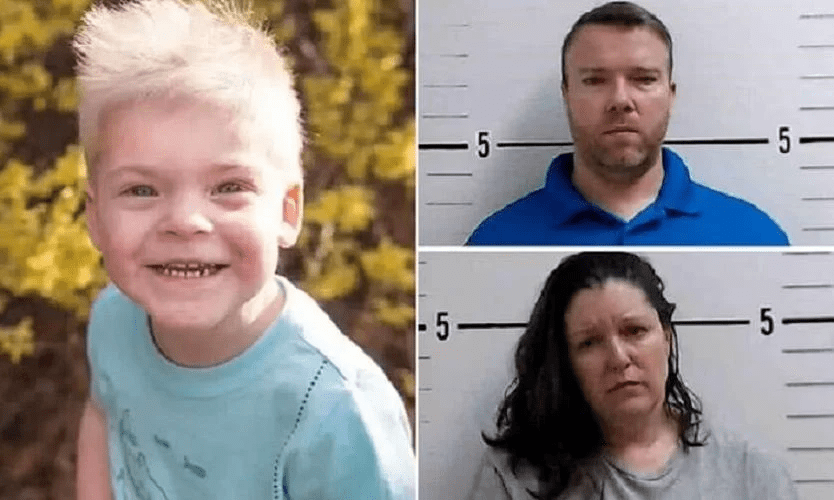
On January 5, 2023, according to a police warrant filed in Surry County, North Carolina, Joseph Wilson received a text from his wife telling him that something was wrong with their four-year-old adopted son Skyler after he was “swaddled.” She attached a picture of Skyler lying face down on the floor, wrapped in a sheet or blanket with duct tape attaching him to the floor. “Swaddling” is a practice used in many cultures to comfort infants, but Wilson told police he was referring to a parenting technique learned from a parenting expert named Nancy Thomas. (Court documents also state that one of the Wilsons’ former employees described recorded Zoom counseling sessions the couple had with Thomas.) Skyler died at Brenner Children’s Hospital in Winston-Salem on Jan. 9 of a “hypoxic, anoxic brain injury,” meaning that oxygen was unable to reach his brain due to the “swaddling.” Skyler’s adoptive parents, Jodi and Joseph Miller, have been charged with murder and felonious child abuse and are awaiting trial, which has recently been postponed–for the second time–from June 2 to December 1, 2025.

After Skyler’s death, police recovered surveillance cameras and arm and ankle restraints that Wilson had told them his wife used on Skyler during “swaddling.” A former foster parent of Skyler and his brother told police that Jodi Wilson had told her about using practices like “food restriction, the gating of Skyler in a room for excessive ‘alone’ time, and the exorcisms of both children.” The former foster parent was concerned enough to call Child Protective Services a month before the incident that killed Skyler.

Nancy Thomas, mentioned as the source of the swaddling technique and as a counselor to Skyler’s parents, is perhaps the most prominent exponent of a group of approaches to that the American Professional Society on the Abuse of Children (APSAC) described in a 2006 report as “controversial attachment therapies.” These therapies are generally directed at children with “attachment disorders.” The only such disorder that is officially recognized by the mental health community is “Reactive Attachment Disorder” (RAD), a diagnosis that is included in the Diagnostic and Statistical Manual of Mental Disorders (DSM-5). This diagnosis involves “a consistent pattern of inhibited, emotionally withdrawn behavior toward adult caregivers” as well as a “persistent social and emotional disturbance characterized by behaviors like minimal responsiveness to others, limited positive affect, and “episodes of unexplained irritability, sadness or fearfulness.” To be diagnosed with RAD, the child must have “experienced a pattern of extremes of insufficient care,.” which explains why this diagnosis is often applied to children who were adopted from orphanages abroad or foster care in the US. Some practitioners of these controversial attachment therapies, like Nancy Thomas, prefer to speak of children with “attachment disorder,” which is not included as a diagnosis in the DSM. Others use the term RAD but ascribe to that term a variety of symptoms that are not part of the DSM definition.

Whatever term they use, practitioners of controversial attachment therapies tend to believe that children who experience early adversity become “enraged at a very deep and primitive level.” This suppressed rage is said to prevent the development of attachment to caregivers and others and to lead to severe behavioral problems, such as violent behavior. These children are described as failing to develop a conscience, not trusting others, seeking to manipulate and control others, and at risk of developing criminal and antisocial behaviors. According to Nancy Thomas, some famous people with “Attachment Disorder” who did not get help in time include Adolph Hitler, Saddam Hussein, Jeffrey Dahmer, and Ted Bundy.

As described in the APSAC report, these controversial attachment therapies suggest that “parenting a child with an attachment disorder is a battle, and winning the battle by defeating the child is paramount.” Parents are often counseled to start by establishing total control over all the child’s actions, and requiring immediate obedience to parental commands. Nancy Thomas’s book, When Love Is Not Enough: A Guide to Parenting Children with RAD-Reactive Attachment Disorder, includes advice like “In the beginning, your child should learn to ask for everything. They must ask to go to the bathroom, to get a drink of water, EVERYTHING. When it starts to feel that they must ask to breathe, you are on the right track.” Another quote: When given directions it is unacceptable for the child to ask ‘”‘why?” or ‘what?’ NEVER answer these questions….Remember, have a consequence ready when a rule is challenged.” Thomas also recommends putting an alarm on a child’s bedroom door, and the window if necessary. Other techniques that have been recommended by attachment therapists include keeping the child at home (even counseling home schooling), barring social contact with others, assigning hard labor or repetitive tasks, and requiring prolonged motionless sitting.

Many proponents of controversial attachment terapies also believe that a child’s rage must be “released” before he or she can function normally. This release is often provided through physically coercive methods that may include being held down by several adults for as much as three to five hours. These techniques can be traced to “holding therapy,” a technique developed by a child psychiatrist named Foster Cline, who was ackhowledged as a mentor by Nancy Thomas in her book. Cline was admonished and restricted from using parts of his holding therapy model by the Colorado Board of Medical Examiners after members saw video of an 11-year-old being subjected to physical and verbal abuse while being restrained.

“Holding therapy” and similar methods designed to address “attachment disorder” have been implicated in the deaths of several adopted children, including that of three-year-old Krystal Tibbets, who died in 1997 when her adoptive father “applied the full weight of his body on the girl by lying across her and pressing his fist into her abdomen,” a technique he said he was taught by a therapist; four-year-old Cassandra Killpack, who in 2002 was forced to guzzle two quarts of water while her arms were bound, and 10-year-old Candace Newmaker, who suffocated in 2000 by a “therapist named Connell Watkins during a 70-minute “rebirthing ceremony” that was supposed to treat her attachment disorder. Nancy Thomas was working for Watkins at the time of Candace’s death. The “swaddling” technique that killed Skyler Wilson is an example of such a method.

Advocates of controversial attachment therapies have come to the defense of Skyler Wilson’s parents. The President of the Board of a nonprofit called Attach Families, Inc. shared an article on Facebook about Skyler’s death with the following preface: “These tragedies are always written one sided with no Investigative reporting, sadly…They obviously were using a swaddling technique that some Professionals promote for Attachment. This is a tragedy. But before these parents are “burned at the cross” our Families want more information.” The Page also posted this: “As we have seen hundreds of others making our Families look like monsters. When the truth is we try and will try ANYTHING to help our children. This is what we are trying to help them heal from before they get too big for us to physically handle their rages. Rages in which they inflict self harm. Rages where they slam their heads over and over on purpose. Rages in which we try to protect them from themselves and others around them. If you don’t live it 24 hours a day you have no idea what it is like.” Attached was an article about a Kansas teen who was arrested in the killing of his mother. The article contained no details about the teen or his mother. It is hard to understand how this talk of rage would apply to four-year-old Skyler. His former foster parent told a reporter that Skyler “was so tiny and small but had a heart three times bigger than he was…” 

In some cases, the parents themselves, after reading misleading literature about children with RAD may invent their own disciplinary practices or use those inherited from their own upbringings or family traditions. The Denver Post recently wrote about Isaiah Stark, a seven-year-old who died in 2020 from ingesting too much sodium, likely from drinking olive brine. The newspaper learned that Isaiah’s adoptive parents were forcing him to eat olives and drink olive brine as a form of punishment for his behavior. According to a report from the state’s Child Fatality Review Team, the mother blamed all of Isaiah’s difficult behaviors on RAD and both parents attributed his actions to “manipulative behaviors and wilfulness.” At the funeral, she described Isaiah’s death as “God rescuing him.”

Isaiah Stark’s parents were never charged for his death. Since there was no trial, the public never learned whether the parents received any sort of parenting advice from an “expert.” The failure to charge parents who have tortured and killed adoptive children is all too common: witness the case in Florida of Begidu Morris, whose parents were not charged after starving, confining and beating him for years, ostensibly because the person who actually killed him could not be determined. As developmental psychologist Jean Mercer writes, plea bargains and the failure of investigators to follow up on the development of abusive parenting practices mean that we often don’t know whether abusive parents drew on outside influences or their own family histories or imaginations for the practices that led to a child’s injury or death.

Concern about controversial theories and methods of “Attachment Therapy” about twenty years ago prompted the formation of a task force of the American Professional Society on the Abuse of Children, the leading professional society of professionals who deal with child abuse and neglect. Its 2006 report, mentioned above, concluded that “attachment parenting techniques involving physical coercion, psychologically or physically enforced holding, physical restraint, physical domination, provoked catharsis, ventilation of rage, age regression, humiliation, withholding or forcing food or water intake, prolonged social isolation, or assuming exaggerated levels of control and domination over a child are contraindicated because of risk of harm and absence of proven benefit and should not be used.” The report cautioned child welfare systems not to tolerate any such techniques by foster or adoptive parents. It also stated that “[p]rognostications that certain children are destined to become psychopaths or predators should never be made based on early childhood behavior.” It also condemned “intervention models that portray young children in negative ways, including describing certain groups of young children as pervasively manipulative, cunning or deceitful.”

Some adults are simply not suited to raise challenging children. Yet, agencies desperate to get children adopted, especially children with special needs in foster care, have placed children with such parents despite red flags, or even returned them after abuse was uncovered. In an extreme case in 2016, the 12-year-old adopted daughter of Eugenio and Victoria Erquiaga ran away from home. Neighbors found her with her hands zip-tied and her feet bound. She reported that she was locked inside a small playhouse for long periods of time with no bathroom. The story became national news and it became known that the parents had sought help from a mental health counselor who oversaw a program called “Radical Healing,” which no longer exists. The state charged the parents with child abuse. However, they then offered to drop all of the charges and expunge their records if the Erquiagas agreed to take their daughter back into their home, which they did. The girl ended up in a group home after she turned 18.

Twenty years since the APSAC report, children continue to suffer and die because they have been diagnosed by “experts” or parents with RAD or “attachment disorder.” To prevent more damage to children, state governments must adopt policies to ensure that all adoptive parents are adequately vetted. Agencies must be prepared to screen out potential adoptive parents who lack the patience, self-control and emotional intelligence to raise challenging children, and those who might be susceptible to practitioners offering controversial methods involving harsh discipline and physical restraint to cope with behaviors stemming from previous trauma or deprivation. In 2012, a committee led by Washington’s child welfare agency and children’s ombudsman published a Severe Abuse of Adopted Children Committee Report, which made several recommendations for improving assessment of assessing prospective adoptive families. These included strengthening qualifications for individuals conducting adoption home studies and post-placement reports and enhancing minimum requirements for these home studies and reports.

Training and ongoing support must also be provided to those adoptive parents who are deemed capable of accepting the challenge of raising children with histories of trauma and deprivation. These parents must be prepared to understand the needs and possible behaviors of the children they adopt, given their backgrounds. They also must be educated about the existence of parenting practices and therapies which are not supported by research and potentially harmful to children. And finally, they need ongoing support. The need for a greater investment in post-adoption services has been publicized by authorities like the Donaldson Adoption Institute (now closed) in its major report, Keeping the Promise: The Critical Need for Post-Adoption Services to Enable Children and Families to Succeed. Even RAD parent advocacy organizations like Attach Families Inc. are also asking for ongoing support.

Parents caught confining, starving, or otherwise abusing their children through adherence to “attachment therapies” must receive a criminal trial. This is, not only to ensure that justice is done, but also to provide an understanding of the factors that allow such tragedies to occur. The failure to try cases of parents who were obviously responsible for the torture and death of a child is a national stain and must be addressed.

That vulnerable children who have already been traumatized or deprived in early childhood in have met suffering or even death in licensed foster or adoptive homes should be a source of shame to all Americans. It is time to put an end to the suffering of children who have suffered enough. These tragedies can and must be prevented.

Just before this article went to press, the author became aware of media reports about the arrest of the adoptive parents of a 15-year-old boy, who for the past ten years has been locked in his bedroom for most of the day with no access to food, water or a bathroom. The adoptive father is a former employee of the El Paso County, Texas sheriff’s office. So far there has been no information about the genesis of the situation and whether a diagnosis or behavioral problem was involved. But it seems that hardly a week goes by without news of an egregious case of abuse against and adopted child. There is no time to waste in taking action to prevent more such suffering and damage to children.

This post was edited on June 24, 2025 to add a reference to the Washington report on severe abuse of adopted children and its recommendations and again on June 26 and 27 to correct several small errors and typos.

A life discounted: The tragic story of Begidu Morris

by Marie Cohen

Ten-year-old Begidu Morris died more than three years ago of horrific child abuse by his parents, who adopted him from Ethiopia. But there was no avalanche of media coverage of his death, no interviews with shocked neighbors saying they had no idea the child even existed. No pyramid of teddy bears and flowers outside his home. No arrests of those who tortured and murdered Begidu, and no demonstrations demanding justice. No anguished commentaries from experts on how we failed and what could be done to prevent such tragedies in the future. There is not even a picture of Begidu by which we can remember him. If not for a child fatality summary released by the Florida Department of Children and Families (DCF) two years after Begidu’s death, nobody outside the family, a few neighbors, and a small group of medical, social service, and law enforcement professionals would have known that it happened.

According to the DCF child fatality summary, Begidu Morris collapsed at home in Lee County, Florida, on March 17, 2022 and was transported to Golisano Children’s Hospital. He was diagnosed with subdural hematoma, hypothermia, cardiac arrest, acute respiratory failure, retinal hemorrhages, and metabolic acidosis.Begidu was placed on life support and died on March 22, 2022. Examination showed bruising to Begidu’s head and significant scarring to his buttocks. Begidu weighed 44 pounds, which was in the 0.1 percentile for his age. An autopsy determined that the cause of death was “complications of hypoxic ischemic encephalopathy due to craniocerebral trauma” and the manner of death was homicide.

The CPS investigation

Begidu lived with his adoptive parents, Jack and Consuela Morris, and their biological son. Their two other biological children were in college and returned home for vacations. Begidu and his biological sister were adopted from Ethiopia by the Morrises, when he was about two years old. His sister’s adoption with the Morris family disrupted and she was re-adopted by another family in 2019. After Begidu’s death, the family quickly obtained a lawyer and was “minimally cooperative” with the CPS and police investigations.

The family’s three-bedroom home was described by the investigator as “pristine.” In addition to the master bedroom and the teenage sibling’s room, the third bedroom served as a guest room for the two adult siblings when they returned home from college. Begidu slept in a small closet, where investigators discovered a pile of urine-soaked clothing on a rollaway bed. The door to the closet was locked from the outside and was monitored by a camera. The closet had no ventilation and there were no toys or personal possessions indicating that a child lived there. Begidu’s adoptive parents claimed that he engaged in behaviors such as temper tantrums and fecal smearing.

The CPS investigation concluded that “[a]lthough it was not able to be determined with certainty who inflicted the injury/injuries that led to this child’s death, it can be concluded that the parents either participated in the abuse that led to the child’s injuries and subsequent death, or they participated in concealing the horrific abuse and neglect that he suffered.” It found the parents Jack and Consuelo Morris responsible for Begidu’s death and for “bizarre punishments,” internal injuries, physical injuries, medical neglect, “failure to thrive/malnutrition/dehydration,” failure to protect, and inadequate supervision. 

Deaths due to child abuse or neglect are the tip of the huge iceberg of child maltreatment, most of which remains unseen by the public. All of these deaths should be examined, not only to determine whether maltreatment occurred and who was responsible, but also to identify systemic issues that might suggest policy changes to protect other children. Yet, the investigation summary I received showed a complete lack of curiosity and interest by DCF in drawing lessons from this terrible case and making them available to the public.

Isolation is a common element of severe and chronic child abuse cases. Begidu was clearly isolated. He had not visited a medical provider in three years. Most neighbors were unaware that the child even existed. And perhaps most important, he was not attending school–at least not in person. The Investigation Summary contains three different statements about Begidu’s and his adoptive brother’s schooling, stating in one place that the brother was enrolled in Lee County Schools and Begidu was not, in another place that both were homeschooled, and in two different places that each was enrolled in “virtual school.” DCF did not respond to my request to know which statement was correct. Yet this is crucial information.

If Begidu was enrolled in school virtually, it would have been incumbent on the investigator to contact the school and ask about his attendance and any interactions with Begidu and his family. This would be important in establishing if there was any negligence on the part of school staff or any need for policy changes. If Begidu was not in school at all, the question would be whether the state was aware he was being homeschooled. Homeschooling parents in Florida must provide one-time notice to the local superintendent, maintain a portfolio of their children’s work, and turn in an annual assessment by standardized test or portfolio evaluation. We need to know if Begidu’s parents complied with these requirements, and how he fell through the cracks if they did not.

With the lack of protective educators to respond to Begidu’s plight, DCF should have wanted to know if there were any opportunities for his situation to be brought to the attention of other protective adults. While the Morris family had no history with CPS in Florida or in Michigan, where they adopted Begidu, there may have been an occasion when the abuse in this home could have come to light. Begidu’s sister was re-adopted by another family in Florida in 2019. One cannot help wondering if the sister was the previous target of abuse in the home, thus leading to her adoption by another family. In his medical chart from a primary care visit in 2018 or 2019, there was a note that Begidu said he was “going to be just like his sister.” (These may be the only words of Begidu’s to be recorded).

Fully 19 lines of text about Begidu’s sister are redacted from the Investigation Summary, which says only that she lives in another state and had no contact with Begidu or the Morris family. It is likely that the redacted information concerned the circumstances behind the disruption of the sister’s adoption. Did the sister report any concerning treatment to her new adoptive parents? Did anyone involved in the second adoption have information that should have been reported and investigated? Was a coverup part of the new adoption arrangement? Unfortunately, DCF denied my request for this information. DCF appears to have no interest in learning from Begidu’s death and sharing the implications of what they have learned with the wider community in the interests of protecting children in the future.

Whatever the flaws of the investigation were in terms of uncovering systemic issues, DCF ultimately found Begidu’s parents to be responsible for Begidu’s death and the horrific abuse and neglect that preceded it. But shockingly, the agency decided not to remove Begidu’s adoptive brother from the home. According to the case summary, the teenager reported feeling safe in the home, and “sources familiar with the child” reported no concerns for his safety. (One wonders who these sources were and what they knew about Begidu’s abuse.) The investigator also noted that the teen “appeared physically healthy, was enrolled in virtual school, and was visible in the community, including attending a Mixed Martial Arts program several times weekly. He had his own fully furnished bedroom, and he was allowed to have relationships with others outside the home, including his adult siblings who were away at college.” It is clear that this decision did not come easily. According to the investigation summary, “[W]hile it is concerning that [Begidu’s sibling] remains in the home, it should be noted that he does not share the same vulnerabilities that were present with his younger sibling.” This is quite a statement. Apparently, this child was considered “safe” in the home of where his brother suffered unspeakable abuse and died, because he himself was not ill-treated. There was not even a services case opened to make sure that he received therapy for the trauma he has endured.

The criminal investigation

Three years after Begidu’s death, the police have made no arrests in the case. The DCF Investigation Summary states that CPS was involved in multiple meetings, including with the State Attorney’s Office (SAO) and that

“[u]ltimately no action was taken by the SAO as the perpetrator of abuse could not be determined based on the information that was available at the time of their staffing. There were two individuals (the mother and [the brother]) in the home capable of causing the head trauma to the child; the individual responsible for the abuse could not be determined.

The lack of charges is almost incredible. If they could not have charged anyone with the actual homicide, it is hard not to understand how the parents could not have been charged with multiple counts of child abuse, charges that surely exist in Florida as they do in other states. It is hard not to ask the question, as one child advocate put it, could this happen if Begidu were White? The State’s Attorney denied my request for the investigation records on the grounds that “there is still an active investigation.” But it is hard to believe that the police are still seriously working on this case.

Adoptions and Severe Abuse

Begidu’s story has similarities with the stories of other children adopted from overseas or from foster care. Few readers could have forgotten the six Hart children, adopted from foster care in Texas, who were starved, beaten, and eventually killed in a 2018 murder-suicide by one of their adoptive mothers. In 2013, a Washington State couple were convicted and sentenced to decades in prison in the death of their Ethiopian adopted daughter, Hanna Williams, who died of hypothermia in 2011 after being forced to sleep outside in the rain. Her malnourished body was covered with bruises and scratches and her brother testified that their adoptive parents beat them and deprived them of food. A Pittsburgh couple was sentenced in 2014 for endangering the welfare of two children they adopted from Ethiopia through withholding food from their six-year-old son and causing abusive head trauma to their 18-month-old daughter. In a dispiriting echo of Begidu’s case, the adoptive mother was sentenced to six to 12 months in jail with daily work release to enable her to go home and care for her biological children. The mother who re-adopted these children saw this sentence as “an indication that the court viewed adopted children as different, since it decided that a woman who abused her adopted kids could be trusted with her biological children.” In 2021, a woman in Washington was charged with second-degree criminal maltreatment for beating and starving a 12-year-old boy that she and her husband adopted from Ethiopia. The prosecution decided to drop the case, as reported by KUOW, stating that the boy had “suffered mental health challenges which will prevent him from testifying.” The child had been re-adopted by one of his schoolteachers, who saw his abuse and came to an agreement with his parents–a possible hint to what may have happened with Begidu’s sister.

The vast majority of adoptive families provide loving homes, and a study from the Netherlands suggests that adoptive families are less likely to maltreat their children than birth families. Nevertheless, observers have noted clusters of cases of severe abuse of adopted children. Such a cluster was noted in the State of Washington at the time of Hanna Williams’ death. A committee led by Washington’s child welfare agency and children’s ombudsman in 2012 published a Severe Abuse of Adopted Children Committee Report, which discussed 15 cases of adopted children who had suffered abuse at the hands of their adoptive families. There was a common pattern of concerning parenting practices in these cases, including physical confinement, withholding food, isolation (including withdrawal from school), forcing the child to remain outside the home; and disparaging remarks about the child. The committee observed that these cases tend to occur “when an adoptive family is ill-prepared or ill matched with a child that suffers from unidentified and/or untreated trauma, abuse, and/or neglect.” The analysis suggests that families may respond to their adopted children’s difficult behaviors caused by past trauma by using punishments like sending a child to bed without dinner, which in turn triggers further behaviors, leading to a vicious cycle of behaviors and punishments culminating in egregious abuse.

The Washington committee made multiple recommendations for avoiding such tragedies in the future, including better oversight of child-placing agencies, strengthening the assessment of prospective adoptive families, and improved training for parents and adoption professionals, and post-adoption support services for families. Some of these recommendations required legislation and other required agency action, and it is not clear whether any of them were implemented.

The trial of Larry and Carri Williams for the death of their adopted daughter, Hannah, was a major event in Washington, with Seattle-area Ethiopians attending proceedings every day, “almost as a vigil” as the Seattle Times described it. But with no arrests in Begidu’s case and no media coverage until two years later, Florida’s Ethiopian community may not even be aware of it. Holding Begidu’s adoptive parents accountable won’t bring him back, but the lack of any meaningful response to his death is an offense to all child victims of abuse and neglect and those who care about them. The only thing that can be done now is to hold his torturers and murderers responsible and learn from his suffering to prevent other children from sharing it.

This blog was updated on April 25, 26, 27 and 29.


Reform, not abolish, child welfare: A science-informed path

By Antonio R. Garcia, Jill Duerr Berrick, Melissa Jonson-Reid, Richard P. Barth, John R. Gyourko, Patricia Kohl, Johanna K.P. Greeson, Brett Drake, and Victoria Cook

A note from Child Welfare Monitor (CWM): CWM welcomes submissions from authors who represent points of view that are more evidence-based and child-centered than what is typically presented by leading media outlets and other child welfare publications. We are privileged to share this commentary from an illustrious group of child welfare scholars from schools of social work and social policy around the country. While this essay does not mirror the views of CWM in every detail, we share the authors’ basic premise regarding the need to reform, rather than abolish, the child welfare system.

Over the past couple of years, while teaching classes, presenting lectures, or offering invited talks and workshops, students and participants have inquired about the need to abolish the child welfare system. Some have questioned whether they should continue their pursuit of a career in this field. They are aware of the growing calls by abolition advocates, particularly UpEND and JMac for Families, to completely eradicate child welfare services, despite offering no evidence as to its likely impact on child safety or permanency.

Abolition advocates have successfully convinced a few scholars, an unknown number of students, and a surprising number of community members and decision-makers that child protective services must be eliminated. Acting on briefs supplied only by activist groups, the United Nations has even called for all major child welfare laws in the United States to be repealed or replaced. 

Why?  The narrative built by the abolitionists includes two major parts: First, classist and racist bias largely determines who has contact with the child welfare system, with poor children as well as Black and Native American children being routinely and unnecessarily harassed.  The resounding narrative–largely offered by lawyers, not child welfare scientists–is that the interventions and intentions of child welfare services and its staff are inherently racist (e.g., Roberts, 2022).  Some child maltreatment scholars (e.g., Briggs et al., 2023) have even gone so far as to reiterate Roberts’ claim that the modern child welfare system (CWS) was intentionally designed as a mechanism of racial oppression. This conclusion flies in the face of history as documented child welfare historians (e.g., Myers, 2004). Purveyors of this narrative ignore efforts like those of pioneering African American women pursuing the development of child welfare facilities for African American children who were routinely insufficiently served by family and community (Peebles-Wilkins, 1996); they fail to mention the work of the Children’s Defense Fund, and a diverse coalition of policymakers, who helped to shape the modern CWS through their work to expand family preservation and support services. Nor do they acknowledge that the Title IVE program was, in part, explicitly developed to extend equal protections to Black children (Hutchinson & Sudia, 2002).

Second, those who denigrate child welfare services argue that CWS interventions do more net harm than good, and for that reason should be abolished.  Child welfare services are said to sever familial connections (Roberts, 2022), and unjustifiably surveil children and families (Gruber, 2023). To that end, they argue that the best way to protect children and families is to abolish the current system and replace it with family and community-based responses (Kelly, 2021). This proposed alternative to CPS is remarkable for the degree to which it is vague and undefined.  Nothing approaching a concrete plan for such a system has ever been suggested to our knowledge.  Given the historical lessons of relegating unwanted or abused children to orphanages, orphan trains, indenture, or detention centers, it is difficult to point to an example of American communities fully embracing the care of children whose parents are unable to care for them.

The abolition movement sidelines any past record of successful reforms of child welfare or hope for future evidence-based or incremental change. Anxious, perhaps, that reforms have been uneven or too slow, the proponents of abolition do not suggest improving the complex and intricate web of local, state, and national child welfare policies that have been developed over the last 40 years.  Critically, their proposals have no evidence base. Instead, they rely on ideology that disregards the best available evidence (Barth et al., 2020).

The degree to which the abolition narrative is taken seriously is troubling.  Child safety is contingent upon training qualified professionals to respond to signs of abuse and neglect – and ensuring institutions have the resources to recruit and support them. Tuition is covered for many social work students if they agree to “repay” their time by working for the state’s child welfare system after graduation. The premise is to promote and retain a highly educated, culturally responsive child welfare workforce and prepare them to rely upon critical thinking skills and the best available evidence to promote child safety and permanency. With many states facing unheard-of staff shortages following the pandemic, the additional decrease in interest in the field is distressing. 

In our paper, The Stark Implications of Abolishing Child Welfare: An Alternative Path Toward Support and Safety, we offer an alternative path – a reformist position that focuses on four key elements of child welfare that must be maintained and improved to keep children safe:

1) receiving and responding to community signals about risk or harm to children;

(2) assessment of need coupled with a proportionate response;

(3) rights protections to ensure fairness and equity when placement outside the family is required; and

(4) procedures for accountability and quality improvement.

Without these key elements, we contend that children will be left in peril.  Many community members will not know how to respond to signs of risk and harm to children.  The progress we have made in the last few decades toward developing, implementing, and evaluating prevention and early intervention services to address trauma and promote healing will be disrupted. Supports for foster parents, kin, and child welfare staff will be disbanded. The elimination of court oversight will eliminate rights protections for parents, children, and extended family.  Racial inequities in economic hardship will make it more challenging for communities of colorto develop responses, which will likely yield an even larger gap in unmet needs for children of color.

Still, many in our field are challenged by having to choose between abolition and reform. At the core of this debate, we are contending with the interplay of science, practice, ideological beliefs, and conflicting values. What types of evidence are or should be used to guide our decision-making? How do we best balance the support of families with a child’s need for safety without defending the status quo? Said another way, we see no reasonable likelihood that abolishing child welfare services would result in a world where families are better supported to provide care that is not injurious to their children and children are better protected from the harsh realities of child abuse, including fatalities.

The debate offers an opportunity to examine current practice and whether it advances the needs of vulnerable children and families. We underscore in our paper that current services and funding are inadequate. To that end, we delineate alternative pathways to abolition providing some practical, evidence-informed recommendations, including but not limited to the following:

  • Create a robust family support and prevention infrastructure outside of Child Protective Services (CPS);
  • Reduce poverty and financial hardships through universal basic income supports and targeted economic supports for families in great need;
  • Resume the child welfare waivers program to expand and test innovations in case finding and response to family needs; and
  • Continue to improve alternative systems for reporting less serious concerns and connecting families to existing resources to reduce the number of families who are subject to unwarranted CPS investigations.

As discussed in our paper, we believe implementing these recommendations offers a holistic roadmap for (1) improving outcomes for all children and families and (2) mitigating racial inequities in exposure to economic hardship and access to services and programs.

Although many jurisdictions have a long way to go in fully aligning practices with our valued principles, the child welfare system, on the whole, has made much headway. We have made progress toward reducing foster care entries, enhancing permanency, supporting youth who must emancipate from care, and developing alternative response paths for less severe cases.  The number of children in foster care is now lower by more than 175,000 children than it was in 1991, despite population growth (US DHHS, 2022; US DHHS, 2000).

We have made advances in the development and implementation of evidence-based, and culturally appropriate parenting programs, and there are innovative approaches to screening and collaboration with other systems such as family drug courts and other models that are  being adopted around the country. Research indicates that families are better served by caring and competent child welfare staff. At a minimum, this means we need trained child welfare professionals to determine if abuse or neglect are occurring and how best to provide services to mitigate risk factors. If removal to foster care is required, trained social work and legal professionals need to be engaged in reunification services and the determination if it’s safe for children to go home.

Finally, it is critical that these efforts are continuously evaluated. Abolition would end the now-routine national reporting of the number of victims of child maltreatment, and their characteristics (i.e., NCANDS; Children’s Bureau, 2023). We would not know if new family- and community-based approaches were helpful or harmful, particularly for the families of color for whom both reformists and abolitionists are concerned. State-level systems that track the provision of services and outcomes would also end, meaning that trends in family needs and gaps in response systems would likely go undetected. We would also lack data to influence policy to end harmful practices and expand funding for effective prevention and intervention services.

As we note, “it is difficult to imagine how eradicating the only structures that exist to address this issue [child maltreatment] would result in any outcome other than jeopardizing the safety and well-being of children as well as reducing accountability to the families that CWS [the child welfare system] serves.”

This is a contentious moment in the journey to create opportunities and healing for all children and families. We hope our message conveys a sense of urgency to engage in critical, evidence-informed practice and policy – and to reflect upon how values, biases, and morals can impact decision-making.  The famous words of Nelson Mandela may be instructive: “There can be no keener revelation of a society’s soul than the way in which it treats its children.” In efforts to enhance practice and policy, we need child welfare professionals to gain the skills, cultural humility, self-efficacy, and motivation to ensure children live lives free of violence and abuse. Policymakers need to stay grounded in the pathway that has led to significant improvements in child welfare services and rely on research-based reforms. Our children deserve nothing less.

References

Barth, R. P., Jonson-Reid, M., Greeson, J. K. P., Drake, B., Berrick, J. D., Garcia, A. R., Shaw, T., & Gyourko, J. R. (2020). Outcomes following child welfare services: What are they and do they differ for Black children?. Journal of Public Child Welfare, 14(5), 477-499. https://doi.org/10.1080/15548732.2020.1814541

Briggs, E., Hanson, R., Klika, J. B., LeBlanc, S., Maddux, J., Merritt, D., … & Barboza, G. (2023). Addressing systemic racism in the American Professional Society on the Abuse of Children publications. Child maltreatment28(4), 550-555.

Children’s Bureau. (2023). National Child Abuse and Neglect Data System (NCANDS). U.S. Department of Health and Human Services, Administration for Children and Families, Administration on Children, Youth and Families. https://www.acf.hhs.gov/cb/data-research/ncands

Gruber, T. (2023). Beyond mandated reporting: Debunking assumptions to support children and families. Abolitionist Perspectives in Social Work, 1(1). https://doi.org/10.52713/apsw.v1i1.12

Hutchinson, J.R. (2002).  Failed child welfare policy: Family preservation and the orphaning of child welfare. Washington DC: Child Welfare League of America.

Kelly, L. (2021). Abolition or reform: Confronting the symbiotic relationship between ‘child welfare’ and the carceral state. Stanford Journal of Civil Rights & Civil Liberties, 17(2), 255–320. https://heinonline.org/HOL/P?h=hein.journals/stjcrcl17&i=271

Myers, J. E. B. (2008). A short history of child protection in America. Family Law Quarterly, 42(3), 449–463. https://www.jstor.org/stable/25740668

Peebles-Wilkins, W. (1996). Janie Porter Barrett and the Virginia Industrial School for Colored Girls: Community response to the needs of African American children. In E Smith and L Merkel-Holguin (Eds.), A history of child welfare. Washington, DC: Child Welfare League of America.

Roberts, D. (2022). Torn apart: How the child welfare system destroys Black families, and how abolition can build a safer world. Basic Books.

U.S. DHHS. (2022). The AFCARS Report. Washington, D.C.: Administration for Children and Families.

U.S. DHHS. (2000). The AFCARS Report. Washington D.C.: Administration for Children and Families.

When parents’ rights trump children’s needs

Photo by Filipe Leme on Pexels.com

Sometimes it seems like basic humanity and common sense get lost in the scramble to affirm parents’ rights at all cost. Nowhere was this more clear than in a quote from Aysha Shomburg, the former New York City child welfare official who was appointed by President Biden to head the Children’s Bureau. As quoted in The Imprint, Schomberg cited a 15-year-old father facing a termination of parental rights as evidence for the need to eliminate the timelines imposed by the Adoption and Safe Families Act. Speaking of this teen dad, Schomberg said, “That stays in my mind and makes me think, how many young fathers are out there and maybe want to take care of their children, but are maybe up against this timeline?”

After picking my jaw up off the floor, I wondered whether Schomberg thought a fifteen-year old was actually capable of parenting an infant, or whether she thinks ASFA should be amended so a child can stay in foster care as many years as it takes for the parent to grow up.

Schomburg’s statement reminded me of one of the saddest cases I carried as a social worker in the District of Columbia’s foster care system. A two-month-old (I’ll call him “Shawn”) came into care when he was removed from his teenage mother (“Shameka”) after she swung him wildly in his carseat and then stalked off in a temper from a home for teen mothers, abandoning her son there. Shawn was placed with one of the best foster families I have ever known–“the Smiths,” a couple who was Black like Shawn and had raised their own children and fostered numerous others. They quickly fell in love with Shawn and gave him the kind of parenting that textbooks envision. Mrs. Smith stayed home with Shawn all day, talking to him, playing with him, and loving him, until the Smiths placed him in a carefully-chosen early childhood education setting at the age of two. Shawn was the center of Mr. and Mrs. Smith’s lives and part of their extended family of children and grandchildren. I’ll never forget that when he fell in love with trains, they found every train-related toy, game or event.

As the months and then years rolled by, Shawn’s mother stopped visiting him. She had named a father for Shawn, but a paternity test came back negative. Shawn’s goal was changed to adoption with the Smiths and I imagined the happy life awaiting him in their loving home. But one day, Shameka admitted that she had lied about the name of the biological father for the sake of revenge against him. She named the real father, and the paternity test was positive. The father (“Antonio”) soon showed up at the agency, a pleasant seventeen-year-old who was delighted to meet his adorable young son. Shawn’s birth father lived with his parents and siblings in subsidized housing and relied on government assistance. Shawn’s grandfather was excited about the new family member. He told me that two of his older sons also had children as teenagers, and that becoming fathers is what made them actually grow up, finish high school, and get jobs.

The Smiths were devastated, but I assured them that the court would not rip a two-year-old away from the only parents he had ever known. But then I talked to the agency attorney and realized there was no question in her mind that the agency had to change the goal to “reunification” with the father, a perfect stranger. And that is exactly what happened. The goal was changed and the Smiths had to bring Shawn to the agency for progressively longer visits with his birth father. At one visit, Mr. Smith was heard crying in the bathroom.

I am glad I was no longer at the agency when Shawn went ‘home’ with his father. But I’ll never forget the day I ran into Shawn’s Guardian ad Litem, the attorney appointed to represent him in court. “We ruined his life,” she told me. She had visited him often in the months following his return home, and and reported that his new household was chaotic, with none of the routine and predictability so crucial for growing children. And we will never know the effects of being ripped away from the Smiths after two years of security and attachment.

I thought about Shawn when I read Aysha Shomburg’s post. I wondered whether Schomburg cared more about the fifteen year-old than about his son. It was not about the infant’s future. It was about the father’s rights. And indeed, most child welfare officials would say Schomburg was correct in not speculating about the child’s future. Child welfare agencies are not in the business of choosing the best parent, just ensuring that the birth parents can provide the minimal acceptable care. But what about the attachment that Shawn had developed over two years with the Smiths? The importance of attachment, and the consequences of disrupting it for a young child, is why the timelines were included in ASFA–the timelines that Schomberg wants to eliminate. So attachment – and the trauma of disrupting it – does not seem to be a significant issue for her.

Schomburg’s citation of a fifteen year old father as an argument against permanency timelines is an illustration of what’s wrong with mainstream child welfare thinking today. It’s all about parents’ rights, while the most basic of children’s needs are disregarded. It is based on an idealized vision of families rather than the way they really are. It’s the kind of thinking that allowed a child named Noah Cuatro to die when the Los Angeles Department of Children and Family Services told social workers to emphasize his family’s strengths more than its weaknesses. We must stop using that kind of thinking to prescribe our actions toward our most vulnerable citizens–our youngest children.

New data show drop in foster care numbers during pandemic

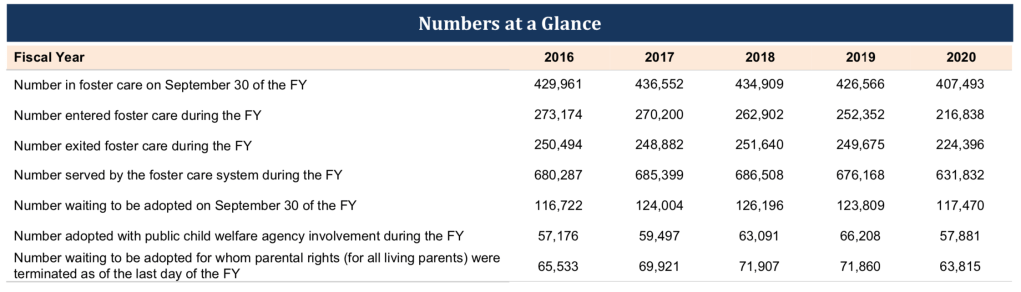
Source: US Children’s Bureau, AFCARS Report $28, https://www.acf.hhs.gov/sites/default/files/documents/cb/afcarsreport28.pdf

A long-awaited report from the federal government shows that most states saw a decrease in their foster care population during the fiscal year ending September 30, 2020, which included the onset of the COVID-19 pandemic. Both entries to foster care and exits from it declined in Fiscal Year (FY) 2020 compared to the previous fiscal year. These results are not surprising. Stay-at-home orders and school closures beginning in March 2021 resulted in a sharp drop in reports to child abuse hotlines, which in turn presumably brought about the reduction in children entering foster care. At the other end of the foster care pipeline, court shutdowns and a slow transition to virtual operations prolonged foster care stays for many youths. One result that is surprising, however, is the lack of a major decrease in children aging out of foster care, despite the widespread concern about young people being forced out of foster care during a pandemic.

Ever since the COVID-19 pandemic resulted in lockdowns and shut down schools around the country, child welfare researchers have been speculating about the pandemic’s impact on the number of children in foster care. While many states have released data on foster care caseloads following the onset of the pandemic, it was not until November 19, 2021 that the federal Children’s Bureau of the Administration of Children and Families (ACF) released the data it received from the 50 states, the District of Columbia and Puerto Rico for Fiscal Year 2020, which ended more than a year ago on September 30, 2020. The pandemic’s lockdowns and school closures began in the sixth month of the fiscal year, March 2020, so its effects should have been felt during approximately seven months, or slightly over half of the year. The data summarized here are drawn from the Adoption and Foster Care Analysis System (AFCARS) report for Fiscal Year 2020 compared to the 2019 report as well as an analysis of trends in foster care and adoption between FY 2011 and FY 2020. State by state data are taken from an Excel spreadsheet available on the ACF website.

The nation’s foster care population declined from 426,566 on September 30, 2020 to 407,493 children on September 30, 2021. That is a decline of 19,073 or 4.47 percent. According to the Children’s Bureau, this is the largest decrease in the past decade, and the lowest number of children in foster care since FY 2014.* Forty-one states plus Washington DC and Puerto Rico had an overall decrease in their foster care population, with only seven states seeing an increase. The seven states with increases were Arizona, Arkansas, Illinois, Maine, Nebraska, North Dakota and West Virginia. The change in a state’s foster care population depends on the number of entries and the number of exits from foster care. And indeed both entries and exits fell to historic lows in FY 2020. The reduction in entries was even greater than the fall in exits, which was why the number of children in foster care declined rather than increasing.

Entries into foster care fell drastically around the country, from 252,352 in FY 2019 to 216,838 in FY 2020 – a decrease of 14 percent. This was the lowest number of foster care entries since AFCARS data collection began 20 years ago. Foster care entries dropped in all but three states – Arkansas, Illinois, and North Dakota. These three states were also among the seven states with increased total foster care caseloads. It is not surprising that entries into foster care dropped in the wake of pandemic stay-at-home orders and school closings. While we are still waiting for the release of national data on child maltreatment reports in the wake of the pandemic, which are included in a different Children’s Bureau publication, media stories from almost every state indicate that calls to child abuse hotlines fell dramatically. This drop in calls would have led to a fall in investigations and likely a decline in the number of children removed from their homes. Monthly data analyzed by the Children’s Bureau drives home the impact of the Covid-19 pandemic on foster care entries. More than half of the decrease in entries was accounted for by the drops in March, April, and May, immediately following the onset of stay-at-home orders, which were later relaxed or removed, as well as school closures.

Source: Trends in Foster Care and Adoption, FY 2011-FY 2020, https://www.acf.hhs.gov/sites/default/files/documents/cb/trends_fostercare_adoption_11thru20.pdf

Reasons for entry into foster care in FY 2020 remained about the same proportionally as in the previous year, with 64 percent entering for a reason categorized as “neglect,” 35 percent for parental drug abuse, 13 percent for physical abuse, nine percent for housing related reasons and smaller percentages for parental incarceration, parental alcohol abuse, and sexual abuse. (A child may enter foster care for more than one reason, so the percentages add up to more than 100.)

Exits from foster care also decreased nationwide from 249,675 in FY 2019 to 224,396 in FY 2020 – a decrease of 10 percent – a large decrease but not as big as the decrease in entries, which explains why foster care numbers decreased nationwide. Only six states had an increase in foster care exits: Alaska, Illinois, North Carolina, Rhode island, South Dakota and Tennessee. Along with the decrease in exits, the mean time in care rose only slightly from 20.0 to 20.5 months in care, while the median rose from 15.5 to 15.9 months in care. Again, it is not surprising that the pandemic would lead to reduced exits from foster care. In order to reunify with their children, most parents are required to participate in services such as therapy and drug treatment, to obtain new housing, or to do other things that are contingent on assistance from government or private agencies. Child welfare agency staff and courts are also involved the process of exiting from foster care due to reunification, adoption, or guardianship. All of these systems were disrupted by the pandemic and took time to adjust to virtual operations. Monthly data shows that about 68 percent of the decrease in exits was accounted for by the first three months of the pandemic, when agencies and courts were struggling to transition to virtual operations. It is encouraging that the number of exits was approaching normal by September 2020; it will be interesting to see if the number of exits was higher than normal in the early months of FY 2021.

Source: Trends in Foster Care and Adoption, FY 2011-FY 2020, https://www.acf.hhs.gov/sites/default/files/documents/cb/trends_fostercare_adoption_11thru20.pdf

Most exits from foster care occur through family reunification, adoption, guardianship, and emancipation. The proportions exiting for each reason in FY 2020 remained similar to the previous year, while the total number of exits dropped, as shown in Table 3 below. Children exiting through reunification were 48 percent of the young people exiting foster care in FY 2020, and the number of children exiting through reunification dropped by 8.3 percent from FY 2019. Children exiting through adoption were 26 percent of those leaving foster care, and the number of children exiting through adoption fell by 12.6 percent. Exits to guardianships fell by 11 percent and other less frequent reasons for exit fell as well. The drop in reunifications, adoptions and guardianships is not surprising given court delays and also the likely pause in other agency activities during the pandemic. However, nine states did see an increase in children exiting through adoption.

Table 3

Reasons for Exit from Foster Care, FY 2019 and FY 2020

Exit ReasonFY 2019
Number
FY 2019
Percent
FY 2020
(Number)
FY 2020
(Percent)
Decrease
(Number)
Decrease
(Percent)
Reunification117,01047%107,33348%9,6778%
Living with another relative15,4226%12,4636%2,95919%
Adoption54,41526%56,56825%7,84712%
Emancipation20,4458%20,0109%4352%
Guardianship26,10311%23,16010%2,94311%
Transfer to another agency2,7261%2,2631%46317%
Runaway6080%5280%8013%
Death of Child3850%3600%256%
Source: US Children’s Bureau, AFCARS Report $28, https://www.acf.hhs.gov/sites/default/files/documents/cb/afcarsreport28.pdf

It is surprising that the number of foster care exits due to emancipation or “aging out” of foster care fell only slightly, to 20,010 in FY 2020 from 20,445 in FY 2019, making emancipations a slightly higher percentage of exits in FY 2020–8.9 percent, vs. 8.2 percent in FY 2019. There has been widespread concern about youth aging out of foster care during the pandemic, and a federal moratorium on emancipations was passed after the fiscal year ended. At least two jurisdictions, California and the District of Columbia, allowed youth to remain in care past their twenty-first birthdays due to the pandemic. It is surprising that this policy in California, with 50,737 youth in care or 12.45 percent of the nation’s foster youth on September 30, 2020, did not result in a bigger drop in emancipation exits nationwide. California’s foster care extension took effect on April 17, 2020 through an executive order by the Governor and was later expanded through the state budget to June 30, 2021. And indeed, data from California via the Child Welfare Indicators Project show that the number of youth exiting through emancipation dropped by over 1,000 from 3,618 in FY 2019 to 2,615 in FY 2020. Since total emancipation exits dropped by only 435 nationwide, it appears that the number of youth exiting care through emancipation outside of California actually increased. This raises concern about the fate of those young people who aged out of care during the first seven months of the pandemic.

In December 2020 (after the Fiscal Year was already over), Congress passed the Supporting Foster Youth and Families Through the Pandemic Act (P.L. 116-260), which banned states from allowing a child to age out of foster care before October 1, 2021, allowed youth who have exited foster care during the pandemic to return to care and added federal funding for this purpose. But this occurred after the end of FY 2020 so it did not affect the numbers for that year. Moreover, The Imprint reported in March 2021 that many states were not offering youth the option to stay in care despite the legislation, raising fears that the number of emancipations in FY 2021 may not have been much lower than the number for FY 2020.

Among the other data included in the AFCARS report, terminations of parental rights decreased by 11.2 percent in FY 2020. This is not surprising given the court shutdowns and delays. Perhaps this decline in TPR’s explains why the number of children waiting to be adopted actually decreased from 123,809 to 117,470, contrary to what might be expected from the decrease in adoptions.

It is disconcerting that some child welfare leaders and media outlets are portraying the reductions in foster care caseloads during FY 2020 as a beneficial byproduct of the pandemic. Despite the fact that maltreatment reports dropped by about half after the pandemic struck, Commissioner David Hansell of New York City’s Administration for Children’s Services told the Imprint that “It was just as likely that the pandemic was ‘a very positive thing’ for children, who were able to spend more time with their parents.” Based on an interview with Connecticut’s Commissioner of Children and Families, an NBC reporter stated that ‘With the pandemic, the last two years have been difficult, but something positive has also happened during that time span. Today, there are fewer kids in foster care in Connecticut.”

Even In normal times, I take issue with using reductions in foster care numbers as an indicator of success. Certainly if foster care placements can be reduced without increasing harm to children, that is a good thing. But in the wake of the pandemic, we know that many children were isolated from adults other than their parents due to stay-at-home orders and school closures, and we have seen a drastic decline in calls to child abuse hotlines. Thus, it is likely that some children were left in unsafe situations. Moreover, the pandemic caused increased stress to many parents, which may have led to increased maltreatment, as some evidence is beginning to show. So when Oregon’s Deputy Director of Child Welfare Practice and Programming told a reporter that “Even though we had fewer calls, the right calls were coming in and we got to the children who needed us,” one wonders how she knows that was the case, and whether her statement reflects wishful thinking rather than actual information.**

There have been many predictions of an onslaught of calls to child protective services hotlines once children returned to school. And indeed, there have been reports of a surge of calls after schools re-opened in Arizona, Kentucky, upstate New York, and other places, but we will have to wait another year for the national data on CPS reports and foster care entries after pandemic closures lifted.

The FY 2020 data on foster care around the country provided in the long-awaited AFCARS report contains few surprises. As expected by many, foster care entries and exits both fell in the first year of the pandemic. Since entries fell more than exits, the total number of children in foster care fell by over four percent. These numbers raise concerns regarding children who remained in unsafe homes and those who stayed in foster care too long due to agency and court delays. The one surprise was a concerning one: the lack of a major pandemic impact on the number of youth aging out of care. The second pandemic fiscal year has already come and gone, but it will be another year before we can get a national picture of how child welfare systems adjusted to operating during a pandemic.

*Our percentages are slightly different from those in the federal Trends report because the Children’s Bureau calculated their percentages based on numbers rounded to the nearest thousand.

*There is evidence that maltreatment referrals from school personnel are less likely to be substantiated than reports from other groups, and this may reflect their tendency to make referrals that do not rise to the level of maltreatment, perhaps out of concern to comply with mandatory reporting requirements. Data from the first three months of the pandemic shared in a webinar showed that referrals which had a lower risk score (measured by predictive analytics) tended to drop off more than referrals with a higher risk score. However as I pointed out in an earlier post, that low-risk referrals dropped off more does not mean that high-risk referrals were not lost as well.

Texas children adopted out-of-state: what happens when the push for adoptions goes too far?


On May 24, 2018, the Chronicle of Social Change published “Bigger in Texas: Number of Adoptions and Parents Who Lose Their Rights.” Reporter Christie Renick points out that Texas has received 15% of the federal adoption incentives that have been given out since the program began in 1998. According to federal data, Texas has about seven percent of the foster children in America, so it has received over twice its share of adoption incentives based on foster care population.

So what is Texas doing differently from other states? Renick suggests that it is a combination of the state’s aggressive push to terminate parental rights along with an emphasis on placing kids with kin. But Renick does not address another factor that may contribute to Texas’ adoption success. And that is the number of Texas children who are adopted by families in other states. Texas is exporting many of its unwanted children.

Child advocates became aware of this issue in the wake of  the violent death of Jennifer and Sarah Hart and most likely all six of their adopted children when their car drove off a California cliff on March 26, 2018. We soon learned that Jennifer and Sarah Hart were living in Minnesota when they adopted their six children from the Texas foster care system. Three of the siblings were adopted in 2006 from Colorado County, Texas and another set of three in 2009 from Harris County, which includes Houston.

Oregon’s release of files from a 2013 investigation following the family’s move to Oregon provided limited information about these adoptions.  An employee of the Department of Human Services (DHS) in Douglas County, Minnesota told an Oregon investigator that  “the State of Texas works with this Permanent Family Resource Center…Texas seems to do a number of adoptions through this agency, even when the Child Welfare Office has not supported the placement.”

The Minnesota employee’s comment was somewhat misleading because the Minnesota child welfare agency does not approve adoptions of children from another state. Instead, the Texas Department of Family and Protective Services (DFPS)  requires that out-of-state homes  be approved for adoption by “agencies licensed or certified to approve adoptive home studies in the state where the home is located.” Apparently the Permanent Family Resource Center (PFRC) was such a licensed agency.

An internet search provides skimpy information about PFRC, which dissolved early in 2012. According to a 2008 article in the Fergus Falls Journal, PFRC was founded by Maryjane Westra and Kristy Ringuette in 2000 with a focus on placing children from foster care with permanent adoptive parents. PFRC’s archived website and its Twitter page are still online. Eerily, its Twitter avatar is a photograph of Markis and Devonte Hart. The internet archives contain a document with profiles of families approved to adopt children, including Jennifer and Sarah Hart, pictured with Markis, Hannah and Abigail, the first set of siblings they adopted. The Harts were described as a “fun, active family” that was “eager to open their hearts and their home to adopted children.”

PFRC emphasized its openness to all potential adoptive families. Westra told the reporter that in forming the agency, “they wanted to expand the range of adoptive families to include those that had the will but needed a little help along the way.” On its Frequently Asked Questions page, PFRC said that it “wants successful families and are not interested in ‘weeding people out.’ A home study is your opportunity to speak about your strengths so the best possible match is made.” “We can always use families. You don’t have to be a perfect family, there is no perfect family,” Westra told the Fergus Falls Journal.

And PFRC was as good as their word. The agency apparently approved the Harts for adopting the second sibling set even though five months before the adoption was finalized, Hannah came to school with a bruised arm and said that Jennifer had hit her with a belt, resulting in a police report and an investigation by Douglas County Social Services. It is not clear if PFRC knew of the incident. But it probably happened during the trial period for the second adoption, during which the agency should have been very carefully monitoring how the family was adjusting to the second set of three siblings.

The addition of three children aged three or under could have precipitated great stress for a family that already had three young children aged about 10, 6 and 5. But PFRC staff and adoptive families often adopted large numbers of closely-spaced children. Westra cited a family that adopted a twelve-year-old and two toddlers. Three years later, they returned and adopted six more children. “It’s heartwarming when that happens,” Westra told the reporter. Of the 16 families approved to adopt, three already had 5 children and four (including the Harts) had three children. Claudia Fletcher, an adoption worker for PFRC, has 12 adopted children and writes about her life in a blog entitled Never a Dull Moment: my Journey as a Foster and Adoptive parent….12 Kids in 12 Years.

The appropriateness of larger families for adoption is a controversial issue. There is strong evidence that child maltreatment increases with family size and more closely spaced children. Having more children, and children closer together in age, can result in increased stress. Moreover, many adopted children, especially those who are older than infancy, need even more attention than other children their age. It is clear from discussions on adoption websites that mainstream adoption agencies are often reluctant to work with larger families. Clearly, PFRC did not have a problem with large families becoming even larger through adoption.

The scanty information about PFRC raises many questions. Was the home study process for the Harts flawed? Were there signals that could have been picked up by a more sophisticated and critical staff? Are there other children adopted through PFRC who are languishing in abusive homes? Are there other agencies around the country that are not interested in “weeding families out?” Adoptions records are sealed, so we probably won’t ever know the answers to most of these questions.

Child advocates told KPRC Houston’s Syan Rhodes that the Hart children’s fate was the result of “a state desperate to remove kids from the system.” And Texas is not the only state where this desperation may lead to adoptions that should never have taken place. States are graded by the federal government as well as outside groups on the size of their foster care caseloads and the time it takes to achieve permanency. Getting children off the rolls also saves money that would be spent on case management and other services and vacates desperately needed foster homes. And then there are of course the federal incentives from which Texas has benefited so consistently.

There were 5,413 adoptions consummated in Texas in 2017. According to Houston’s KPRC, 320 of these children were adopted out of state. That’s a lot of kids to worry about every year.

We don’t want kids to languish in foster care, but we don’t want to adopt them out to abusers. So what is the answer?  Keep children at home with support if it is safe, place them with relatives if appropriate, but recognize that aging out of foster care would have been a better fate than what the Hart children suffered.

This article was modified on June 4, 2017 at 5:30 PM in response to a correction issued by KFRC Houston regarding the number of adoptions by out-of-state families. The number that was originally attributed to the Houston area was actually statewide. 


“Steady March Toward Child Fatality Prevention” leaves Many Endangered Children Unprotected

sad child
Image: socialworkhelper.com

In an April 26 Opinion piece in the Chronicle of Social Change, Teri Covington congratulated the child welfare establishment for a “steady march toward child fatality prevention,” citing new developments on the federal, state and local levels. Earlier that week, new details came out about a case involving six child abuse fatalities that had transfixed the nation. But any mention of the Hart case–or how we can address fatalities and near-fatalities from chronic and severe child abuse–was conspicuously missing from the article and the briefing conducted by Covington’s group on the same day.

On April 23, newspapers across the country carried new headlines about Jennifer and Sarah Hart and their six adoptive children, who drove off a California cliff to their deaths in March. The new information, released by the State of Oregon Department of Human Services (DHS), revealed that DHS knew of the Hart parents’ extensive CPS history in Minnesota and had convincing evidence of maltreatment in Oregon but was still unable to determine that abuse had occurred.

The Hart case may have been unusual in the sheer number of system failures involved, but none of the specific features of the case is unusual. In January, the 13 Turpin children who were saved from death by abuse and starvation by the extraordinary bravery of one child. Within the past year, we’ve learned about Brook Stagles in New York, Evan Brewer in Kansas, and many other children who were allowed to suffer ongoing torture and abuse because of failures of the community and the systems designed to protect them. And those are only the cases that made the headlines. We will never know how many other children have suffered and perhaps died of chronic and severe abuse without ever being discovered.

In the article and briefing, Ms. Covington cited a number of actions by federal, state, or local governments that fulfill one or more of the 100 recommendations of Commission to Eliminate Child Abuse and Neglect Fatalities (CECANF). First and foremost according to Covington was the passage of the Family First and Prevention Services Act (FFPSA), which she hailed as a “seismic change,” because it makes resources available for the first time for services to prevent children who have already been abused or neglected from entering foster care. It’s hard to see how the passage of FFPSA could help victims of chronic and severe child abuse. The view that virtually no abused child should enter foster care may be one reason why many abused children are eventually killed by their parents. Moreover, it is hard to see how FFPSA will make the kind of difference expected by its advocates, since states are already funding the same services through funding streams like Medicaid and TANF.

Covington also mentioned the addition of $60 million in CAPTA funds in the current fiscal year for safe plans of care for drug-exposed infants as “another major federal improvement.” This is a good step that might aid in early identification of some children at risk of abuse, but it is a drop in the bucket compared to the need.

Several state and local initiatives mentioned by Covington are steps in the right direction to identifying victims of chronic and severe child abuse. These include the introduction of predictive analytics, improved data sharing between agencies, and more interagency planning and action.

However, conspicuously missing from Covington’s narrative are a set of major reforms that need to occur if we are to avoid more tragedies due to severe and chronic abuse. Some of these reforms are listed below:

  1. Improve vetting of potential adoptive parents. Jennifer and Sarah Hart arranged the adoption of their children through a Texas agency that reportedly put together adoptions against the wishes of the child welfare agency. Moreover, the second set of children was adopted even though the parents had already been investigated for abusing one of the first set. Agencies must not let their desperate search for homes for children considered to be hard to adopt lead them to disregard the future outcomes for these children.
  2. Monitor children whose parents receive adoption subsidies. Given the disproportionate number of serious cases of child maltreatment among adopted children and a valid state interest in the well-being of children supported by the state, parents receiving adoption subsidies should be required to document annually the child’s well-being through a social worker or doctor visit.
  3. Monitor homeschoolers and ban homeschooling by known child abusers. It is all too frequent for parents who have been substantiated for child abuse to withdraw their children from school as soon as their case is closed and they are no longer under the supervision of the child welfare agency. Parents with a record of abuse should not be allowed to homeschool their children. In addition, since homeschooled children appear to figure disproportionately in serious cases of abuse, all homeschooled children should have at least annual contact with a mandatory child abuse reporter such as a teacher, doctor or social worker.
  4. Adopt and promote universal mandatory reporting. Only 18 states and Puerto Rico require all adults to report suspected child abuse or neglect; most states require only certain professionals to do so. And even in the universal reporting states states (including Texas, where neighbors did not report the numerous red flags surrounding the Turpin family), it is unlikely that people know or observe the law. It should be mandatory for all adults to report any reasonable suspicion that a child is being maltreated and this duty should be promoted through a massive public information campaign.
  5. Demand greater accountability from mandatory reporters, as CECANF recommended. Incredibly, an Oregon pediatrician who saw the Hart children at the request of DHS reported that she had “no concern” that five out of six were so small and thin that their weights and heights did not even appear on the growth charts for children their age. CECANF recommended that mandatory reporting training and competency should be a requirement for licensure when applicable. Licensees and their agencies should be responsible for maintaining and refreshing their competency. And doctors who fail to fulfill their responsibilities should lose their licenses.
  6. Revamp investigations. Agencies need to separate the determination of whether abuse has occurred (which can be difficult when frightened children are coached to lie) from the decision to protect vulnerable children. Furthermore the definition of “safety” needs to be changed in many states. Often, a child deemed to be at high risk can be simultaneously labeled as “safe.” Thorough investigations also require manageable caseloads, which in turn require sufficient funding, which is not available in many states.
  7. Interstate registry: In child maltreatment death cases like that of Adrian Jones, parents have been able to escape detection by moving to another state. States should be required to participate in an interstate registry of child maltreatment reports and findings. This was recommended by foster care alumna and 2017 Congressional intern Tonisha Hora, who along with her sister suffered ten years of severe abuse before she was rescued by CPS.
  8. Reform in-home child welfare services so that meaningful services are provided and feedback is obtained from providers about parents’ progress. No case should be closed unless a state obtains credible testimony from service providers, the children and other professionals who know the family that parental behaviors have changed. Again, this require manageable caseloads and adequate funding.

Why were none of these proposals mentioned in the article and briefing? The most direct cause is that only one of these proposals (holding mandatory reporters accountable) was recommended (in part) by CECANF. But that just begs the question of why they were not among the CECANF recommendations.  There are three reasons I can identify:

  1. More children die of neglect than abuse. Of the children who were reported to the federal government who died of maltreatment in 2016, 75% suffered neglect and 44% suffered abuse either exclusively or in combination with another maltreatment type. At the briefing, a speaker from the Virginia Department of Social Services stated that unsafe sleep was the primary driver of child fatalities in Virginia, so the department was concentrating its fatality prevention work on safe sleep. Of course we should promote safe sleep, but we can’t ignore those children who die of severe and chronic child abuse because they are fewer in number.
  2. Many of these measures would draw intense political opposition for ideological reasons or because they would require increased spending. Homeschooling parents and adoptive parents have been adamantly opposed to any monitoring of their children. Doctors would virulently oppose greater penalties for malfeasance. Beefing up child welfare systems would cost money and systems around the country are struggling to obtain enough funds to meet increasing needs.
  3. The narrative currently embraced by the child welfare establishment is that all parents want the best for their children and that all children do best with their parents, no matter how abusive or neglectful. Perhaps that is why there has been so little response to the Hart tragedy and similar tragedies from the agencies responsible for protecting children.

The child welfare establishment needs to recognize that there are some parents to whom the prevalent rosy attitude simply does not apply. Ms. Covington opened her article by stating that deaths of children from abuse and neglect increased by more than 7 percent from 2015 to 2016. We don’t know how many of these deaths stemmed from severe and chronic child abuse. If there is such a thing as “a fate worse than death,” then years of torture by the people who are supposed to protect you qualifies. As you are reading this, how many children are being deprived of food, chained to their beds, or being beaten? One is too many, and political barriers should not be allowed to prevent action.

New Details on Harts Reveal Oregon Knew Children Were at Risk–but Left them in Abusive Home

Hart family
Image: cbsnews.com

In a previous post about the tragic story of the Hart family I listed multiple system failures that allowed the children to remain in an abusive home for years. In response to a public records request from multiple media outlets, the Oregon Department of Human Services released records from Child Protective Services (CPS) and police investigations of the Hart family. These records show that Oregon had extensive information about the children’s situation but still did not act to protect them.

The Hart family had reportedly lived in Oregon for just three months when a family friend called Oregon DHS to report that she was worried about the children after an incident at her home on June 28, 2013. The Harts were staying with the caller and she ordered pizza. Jennifer Hart gave each child, ranging in age from 8 to 15, one slice of pizza and some water. But in the morning, all the pizza was gone. Hart became angry. She stated that none of the children would be eating breakfast as none confessed to eating the pizza. All six children were made lie on an air mattress with sleeping masks on their faces for five hours as punishment. The caller said that the children had appeared to get taller, but not gain weight, over the 5 to 7 years since their adoption. The caller also indicated that the Harts had been investigated in Minnesota for withholding food from the children. The Harts pulled the children from school after the investigation but the caller doubted there was any education going on. Instead, Jennifer Hart took the children across the country for weeks attending music festivals and frequently had them pose as a happy family for Facebook.  The caller stated that the children were terrified of Jennifer Hart, their primary caregiver. Sarah was outside the home working during the day, but her loyalty was totally with Jennifer.

Because of missing pages in the Oregon record, we do not know the date of this report or how much time elapsed before DHS received a second report on July 18, 2013. An anonymous caller reported that the six Hart children appeared malnourished. The caller provided a Minnesota license plate number which enabled the hotline screener to identify Jennifer and Sarah Hart. The screener contacted Minnesota’s child welfare agency and quickly learned that the Harts had adopted their six children from Texas. A Minnesota social worker told the Oregon screener that Texas “seems to do a lot of adoptions through [a now defunct local agency}, even when the child welfare office has not approved the placement.”

The Oregon screener learned that Minnesota had received six separate abuse and neglect allegations against the Harts in 2010 and 2011, all of which came from the school regarding Abigail or Hannah Hart.  Three of the allegations involved physical abuse. and three involved food deprivation. On November 15, 2010, the school reported that six-year-old Abigail had “bruising on her stomach area from her sternum to waistband, and bruising on her back from mid-back to upper buttocks.” Abigail reported that Jennifer Hart beat her, but it was Sarah who said she was responsible for the marks. The beating reportedly resulted from a penny found in Abigail’s pocket, which her parents thought was stolen. The Harts “agreed to in-home therapy, parenting and counseling, and a variety of skill building activities.”

There is no information about whether the Harts really participated in these services, but a report came in the next month  (December) that Hannah had a bruise she attributed to Jennifer Hart, saying that Jennifer hit her “all the time.” Two reports came in January, one saying that Hannah had been asking classmates for food.  The final report stated that Hannah reported to the school nurse that she was hungry. During the investigation, the children reported being deprived of food as a form of discipline. As part of an assessment, six-year-old Abigail, who reportedly looked like she was two, was taken to the doctor, who “said she is just small, and being adopted, we don’t know their bio family history.” The Minnesota worker reported that when the parents were asked about the children’s hunger and their complaints about withholding food, they said the children were adopted, were “high risk kids,” and had food issues. The allegation apparently was confirmed and the Harts participated in services (perhaps the same services that were ordered pursuant to the November 15 report) but no information is provided about those services and whether the children were assessed to be safe before case closure. When that case was closed, and the services were “concluded” the family pulled their children out of school and eventually left the state for Oregon.

The Minnesota social worker told the Oregon screener that the problem was “these women look normal.” They knew what to tell professionals about special needs, adoption and food issues, to get them to “assign the problem to the children” rather than the parents. The Minnesota worker also understood that the children were at particular risk because “without any regular or consistent academic or medical oversight” and without reviews from the State of Texas, the children risked “falling through the cracks.”

After the Oregon screener spoke to the Minnesota staff, the case was approved for investigation by CPS. A CPS worker tried unsuccessfully to visit the family and found out eventually that the children were traveling with Jennifer Hart. Two Oregon CPS workers finally interviewed the parents and children on August 26, 2013–over a month after the report was received.  All of the children appeared small, but their mothers reported that they had  been small when they were adopted. Hannah Hart, 11 at the time, had no front teeth and the parents stated she had knocked them out in a fall and had to wait another year for dental work. All six children denied that they had been abused. According to the investigative report, “the children provided near identical answers to all questions asked.” For example, they all reported that they were punished by being required to meditate for five minutes. “All of the children, except Devonte, were very reserved, and showed little emotion or animation,” according to the CPS worker’s report. The investigator also observed  that the children looked at Jen Hart for permission to answer a question. The investigator was clearly not fooled by the identical answers. She later told one of the callers that the children had clearly been coached on what to say. Nevertheless, the children’s failure to report the abuse, even though it was characteristic of abused children who fear their caregivers, may have sealed their doom.

One of the family friends interviewed by CPS stated that Jennifer Hart viewed the children as “animals” when they came to her, and herself as their savior. The Harts displayed this “savior” mentality in their descriptions of the children when they were adopted. For example, they reported that when they adopted Devonte at the age of six, he could say only two words, both of which were expletives. They reported that he did not know where his fingers and toes were and was violent. They reported that Abigail was diagnosed as “borderline mentally retarded” at the age of two but had made “great strides” since that time. And they reported that Jeremiah was labelled “globally delayed” and possibly autistic, and could not even use a fork, but was currently functioning normally. As described in my earlier post, this exaggerated emphasis on the children as defective and the parents as saviors fits the pattern of the “white savior” as described by writer Stacey Patton.

The Harts agreed to a CPS request to take the children to a doctor to evaluate their weight. The doctor faxed the children’s growth charts to DHS along with a letter indicating “no concerns” even though five of the six children were so small that their heights and weights were not listed on growth charts for their age. The social worker was curious enough about this lack of concern that she spoke to the doctor, who , like the doctor in Minnesota, explained that she had no previous data or records for the children, and apparently therefore had no basis for concern.

The case was closed on December 26 with a disposition of “unable to determine, which means that there are some indications of child abuse or neglect, but there is insufficient information to conclude that there is reasonable cause to believe that child abuse or neglect occurred.” It was concluded that all of the children were “safe.” Nevertheless, in the section related “Vulnerability,” the investigator indicated that the children “are completely dependent on their caregivers and do not have regular contact with any mandatory reporters, as they are home schooled.”

The Hart case brings together many different barriers to our ability to protect abused children not just in Minnesota, Oregon and Washington but all over the country. In my post, How to Prevent More Hart Cases,  I identified a number of policy areas where change is needed in many or all states and localities, to save children like the Harts. In all of these areas, policy and practice needs to be changed in order to shift away from the current extreme focus on parental rights to a more balanced approach which gives child protection equal or greater emphasis. Here is an updated version of the list based on the new information from Oregon:

  1. Improve Vetting of Potential Adoptive Families. The new information from Minnesota adds more evidence that improved vetting is necessary, at least in some states. The second set of children were adopted despite the fact that the parents were investigated for abuse of one of the first set of children. Moreover, Minnesota staff told Oregon DHS staff that Texas arranged many adoptions through a particular agency, even when not supported by Minnesota’s child welfare agency. We need to know more about how adoptions could be organized against the wishes of the child welfare agency in the adoptive child’s state, and whether such adoptions continue to occur.
  2. Monitor adoption subsidy recipients. The new information confirms that the Harts received almost $2,000 a month in adoption subsidies–money that clearly enabled them to live. All agencies paying adoption subsidies should verify periodically that the children are alive and well and still living in the adoptive home.  Submission of an annual doctor visit report, and/or an annual visit by a social worker could be used for such verification.
  3. Regulate homeschooling. The Minnesota records confirmed that the Harts removed all their children from school after their child abuse case was closed in Minnesota. The Coalition for Responsible Home Education (CRHE), an advocacy group for homeschooled children, recommends barring from homeschooling parents convicted of child abuse, sexual offenses, or other crimes that would disqualify them from employment as a school teacher. CRHE also recommends flagging other at-risk children (such as those with a history of CPS involvement) for additional monitoring and support and requiring an annual assessment of each homeschooled child by a mandatory reporter.
  4. Adopt universal mandatory reporting and educate the public about reporting child maltreatment. The new information does not change the fact that the Harts’ neighbors in Washington witnessed clear indicators of maltreatment months before the family went off a cliff. If they had reported their observations earlier, the children might have been saved. However, Minnesota and Oregon reporters were more conscientious, and the children were failed by CPS; hence the next recommendation.
  5. Revamp the investigative process. We have seen that social workers in Minnesota and Oregon had a very clear idea of the dynamics of the Hart household, and how the parents manipulated professionals to shift all blame to the children. Nevertheless they were not able to act on this knowledge to protect the children. There are several reasons that arise from the characteristics of child protective services in most or all states. First, action such as opening an in-home case or removing a child is contingent on the abuse allegation being confirmed. But that is very difficult to do, especially when children deny the abuse, as abused children often do. It is likely that many actual cases of abuse are not substantiated. Research has found little or no difference in future reports of maltreatment of children who were the subject of substantiated or unsubstantiated reports.  We need to move away from substantiation as a trigger for action to protect children.  Another problem is the bizarre distinction between risk and safety which is made in most or all CPS systems. That children could be labeled “safe” even when  at risk, as happened in Oregon, is obviously ridiculous. This false distinction has contributed to the deaths of Adrian Jones in Kansas, Yonatan Aguilar in California, and doubtless hundreds of other children around the country.
  6. Establish stricter criteria for case closure. In Minnesota, one or two cases were opened and the Harts were required to participate in services. We know in retrospect that none of the services worked to change the Harts’ parenting style. It appears that the parents continued their pattern of abuse and food deprivation while the services were being provided. State and local agencies need to revise their criteria for case closure to make sure that they are not leaving the children in the same unsafe situation they were in before the case opened. Agencies must be required to do a rigorous assessment of the children’s safety, which includes checking in with all service providers as well as the children and other professionals who have contact with them.
  7. Encourage doctors to err in the direction of protecting children. The similar response from doctors in Minnesota and Oregon to these malnourished children (saying that they don’t know if there is a reason for concern because lack of historical data) suggests a pattern of reluctance by medical professionals even to express concern that abuse or neglect may be occurring. For a doctor to say that he or she has no concerns because of the lack of information is backwards. Pediatricians need to express concern until given reason to believe otherwise. The American Academy of Pediatrics should issue guidance to this effect, but this needs to be followed up by consequences for doctors who fail to protect their patients

In my earlier post, I recommended interstate information sharing as a way to prevent future Hart cases.The new information reveals that Oregon DHS was able to obtain information about the Harts’ abuse record almost as soon as they began their investigation. The State of Washington found out about the Harts only three days before the fatal event, so information sharing was unlikely an issue. Thus, a failure of information sharing appears not to have been a major factor in this case, even if it has played a role in other cases where abusive families moved from state to state. One of the family friends who reported the abuse of the Hart children has launched a petition campaign for an national child abuse registry. This proposal deserves support and might save many children in the future, even if it would not have helped the Hart children.

On April 26, I attended a briefing on Capitol Hill about “Innovations and Opportunities to End Child Maltreatment Fatalities.” None of the measures suggested above were mentioned, even though they are responses to system breakdowns that have occurred again and again in child maltreatment fatality cases. Until we are willing to address the current imbalance between the rights of parents and those of their children, children will continue to suffer and die just like the Harts.


How to prevent more Hart cases

Hart family
Image: katu.com

In my last post, I discussed the tragic case of the six children adopted by Jennifer and Sarah Hart. The entire family perished in the crash of their SUV off a cliff in California on March 26. Multiple system gaps resulted in the failure to rescue these children before their tragic death. Below are some suggestions for filling these gaps so that children do not continue to suffer and die in abusive homes.

  1. Improve Vetting of Potential Adoptive Families. The second set of Hart children were adopted despite the fact that the parents were investigated for abuse of one of the first set of children. Moreover, Minnesota staff told Oregon DHS staff that Texas arranged many adoptions through a particular agency, even when not supported by Minnesota’s child welfare agency. We need to know more about how adoptions could be organized against the wishes of the child welfare agency in the adoptive child’s state, and whether such adoptions continue to occur.
  2. Monitor adoption subsidy recipients. The Harts received almost $2,000 a month in adoption subsidies–money that clearly enabled them to live. All agencies paying adoption subsidies should verify periodically that the children are alive and well and still living in the adoptive home.  Submission of an annual doctor visit report, and/or an annual visit by a social worker could be used for such verification.
  3. Regulate homeschooling. The Harts removed all their children from school after their child abuse case was closed in Minnesota. The Coalition for Responsible Home Education (CRHE), an advocacy group for homeschooled children, recommends barring from homeschooling parents convicted of child abuse, sexual offenses, or other crimes that would disqualify them from employment as a school teacher. CRHE also recommends flagging other at-risk children (such as those with a history of CPS involvement) for additional monitoring and support and requiring an annual assessment of each homeschooled child by a mandatory reporter.
  4. Adopt universal mandatory reporting and educate the public about reporting child maltreatment. The Harts’ neighbors in Washington witnessed clear indicators of maltreatment months before the family went off a cliff. If they had reported their observations earlier, the children might have been saved. However, Minnesota and Oregon reporters were more conscientious, and the children were failed by CPS; hence the next recommendation.
  5. Revamp the investigative process. We have seen that social workers in Minnesota and Oregon had a very clear idea of the dynamics of the Hart household, and how the parents manipulated professionals to shift all blame to the children. Nevertheless they were not able to act on this knowledge to protect the children. There are several reasons that arise from the characteristics of child protective services in most or all states. First, action such as opening an in-home case or removing a child is contingent on the abuse allegation being confirmed. But that is very difficult to do, especially when children deny the abuse, as abused children often do. It is likely that many actual cases of abuse are not substantiated. Research has found little or no difference in future reports of maltreatment of children who were the subject of substantiated or unsubstantiated reports.  We need to move away from substantiation as a trigger for action to protect children.  Another problem is the bizarre distinction between risk and safety which is made in most or all CPS systems. That children could be labeled “safe” even when  at risk, as happened in Oregon, is obviously ridiculous. This false distinction has contributed to the deaths of Adrian Jones in Kansas, Yonatan Aguilar in California, and doubtless hundreds of other children around the country.
  6. Establish stricter criteria for case closure. In Minnesota, one or two cases were opened and the Harts were required to participate in services. We know in retrospect that none of the services worked to change the Harts’ parenting style. It appears that the parents continued their pattern of abuse and food deprivation while the services were being provided. State and local agencies need to revise their criteria for case closure to make sure that they are not leaving the children in the same unsafe situation they were in before the case opened. Agencies must be required to do a rigorous assessment of the children’s safety, which includes checking in with all service providers as well as the children and other professionals who have contact with them.
  7. Encourage doctors to err in the direction of protecting children. The similar response from doctors in Minnesota and Oregon to these malnourished children (saying that they don’t know if there is a reason for concern because lack of historical data) suggests a pattern of reluctance by medical professionals even to express concern that abuse or neglect may be occurring. For a doctor to say that he or she has no concerns because of the lack of information is backwards. Pediatricians need to express concern until given reason to believe otherwise. The American Academy of Pediatrics should issue guidance to this effect, but this needs to be followed up by consequences for doctors who fail to protect their patients.

The Hart children can be seen as victims of a “perfect storm”–adoption by unqualified parents, home schooling, neighbors who failed to report, history not shared between states, and inadequate investigations.  But it only takes one system failure to kill a child or scar one for life. All of these systemic gaps must be addressed, so that all children can have a real childhood and grow to be happy, productive adults.

This post was updated based on new records from Minnesota discussed in a later post on April 27, 2018

Multiple System Failures Allowed Hart Children to Die

Hart family
Photo: Associated Press

On March 26, an SUV filled carrying a family plunged off a cliff. The car belonged to Jennifer and Sarah Hart. Their bodies, and those of three of their children, were found on the scene. Three children are still missing although another body found in the ocean may be one of the children. Initial coverage focused on the fact that the family consisted of two white mothers and six adopted black children. The family had had an earlier brush with fame when one of the boys was in a viral photograph hugging a police officer at a Ferguson protest.

As the days passed, disturbing details came to light. Days before the crash, Washington Child Protective Services (CPS) had opened an investigation of the family after a neighbor called the child abuse hotline. We eventually learned the family had a history of abuse reports. Then we learned that the crash appeared intentional, and probably triggered by the CPS report.

With each new discovery, we learned of another systemic failure to protect these vulnerable children. The Hart case brings together several common themes found in many cases of severe child maltreatment. Each of these themes highlights a different gap in the system that is supposed to protect our children.

Adoption: All six Hart children were adopted from foster care in Texas: three in 2006 and the next three in 2009. It is not that being adopted makes children more likely to be abused.  Indeed, one Dutch study indicated adopted children were less likely to be abused than children growing up in their biological families. However, anecdotal evidence suggests that adopted children are overrepresented among children who are severely abused or neglected, at least in homeschool settings. Many of these cases involve common elements, including locking children up in a room, withholding food, and isolating the child by homeschooling or other means, all of which were present in this case. One possible explanation for this pattern focuses on the traumatic backgrounds of many adoptive children, which may lead to behaviors that adoptive parents are not prepared to deal with. While they may start out with good intentions, they end up resorting to punitive and eventually abusive parenting to control the undesired behaviors.

Writer Stacey Patton has described a “white savior attitude” among some white parents who adopt black children from the U.S. or abroad. These parents “wear their transracial adoption as a status symbol.” These adoptive parents often post on social media about their extraordinary efforts to deal with their children’s emotional and intellectual challenges that they attribute to the deficiencies of their birth parents.” The Harts fit this pattern. According to the Oregonian, the Harts often said their children suffered a multitude of early childhood behavioral and developmental issues that made parenting a challenge.  Jennifer Hart also polished her image as an ideal mom who gave her underprivileged children a beautiful life. She frequently posted on Facebook portraying an idyllic family life full of trips, celebrations, community service, and events like the Ferguson rally in which Devonte sported a sign offering “Free Hugs.” When adoption is all about the parents, and the children become part of their public image, a bad outcome is not surprising.

There is reason for concern about the vetting process the Harts received when adopting the children. The Hart kids were among the 300 to 400 Texas children adopted each year by out of state foster parents, often because they are harder to place because they are in large sibling groups or have special needs. The Harts would have been vetted by a Minnesota agency, which would have submitted their home study to Texas for approval. After a child visit, the children would have probably moved in with the Harts for a six-month trial period. A Texas agency spokesman told the San Antonio Express-News that during the trial period for out-of-state adoptions, the out-of-state agency would be monitoring the family and reporting back to Texas. But in September 2008, probably during the trial period for the second adoption, Hannah Hart was asked about a bruise in her arm. She reported that her mother hit her with a belt. Police and social services interviewed the mothers, who denied the beating and said she had fallen down the stairs. Nevertheless, the second adoption went through. We need to know whether Texas was informed of this investigation.

Once the adoption was finalized, there was nobody monitoring the Hart children, even though Texas continued to pay for their care. The San Antonio Express-News reports that Jennifer Hart received nearly $1,900 per month in adoption subsidies from the State of Texas. The paper estimates that she collected a total of $270,000 from the state for caring for the six children during the time they lived with her. Unfortunately, children who receive adoption subsidies are not monitored to ensure that they are being properly cared for, are still in the home, or are even alive. Such monitoring has not been imposed even in the wake of cases in which adoptive parents like Renee Bowman and Edward and Linda Bryant have fraudulently collected adoption subsidies after killing–or allegedly killing–their children.

Home Schooling. On April 11, 2011, Sarah Hart made a plea agreement a week after pleading guilty to physical abuse of a six year old child. The next day, all six children were removed from school, never to attend again. The Harts joined a long line of abusive parents that removed their children from school after a brush with CPS. The notorious Turpin family, who gained worldwide attention this winter when one of their 13 malnourished children escaped confinement in their home, who also liked to dress their children in matching tee shirts. As the Coalition for Responsible Home Education points out, Pennsylvania is the only state that bars convicted child abusers from homeschooling, and then only if the conviction is in the past five years. No state has any mechanism to identify cases where parents remove a child from school after a child protective services case is closed, or after a series of child abuse allegations.

Failure to report: At a festival in Oregon, the Oregonian reports that one acquaintance observed the mothers become enraged after she brought Devonte and Sierra back to her parents from a day out, bearing food.  Sarah Hart grabbed Sierra’s arm, inflicting a bruise that lasted for days, and both mothers chastised her for “being selfish” and not sharing. Sierra told the woman that she often got in trouble for talking to people her mothers did not know. But the neighbor did not report the disturbing incident. The Hart family’s neighbors in Washington, Dana and Bruce DeKalb, told reporters that they had suspected that something was not right in the Hart household.  A few months after the Harts moved to Washington, the DeKalbs reported that Hannah Hart came to their door at 1:30 AM. She had jumped out of a second-story window and ran through bushes to their home, begging them to protect her from her abusive parents. The neighbors noted that she was missing her front teeth and appeared to be about seven years old, although she was twelve. The other children also appeared small and thin when the family came over the next morning.

The DeKalbs told the Washington Post that they considered calling CPS but “tried to overlook the incident.” In the next eight months, the DeKalbs saw Devonte doing chores but never saw the other children outside.  About a week before the crash,  Devonte began coming to the DeKalbs’ house requesting food and saying that his parents had been withholding food as punishment.  The visits escalated from daily to three times a day. It was only after a week of such visits that they finally called CPS, setting in motion the the escape attempt that ended in the fatal crash.The DeKalbs’ hesitation echoes that of the Turpins’ neighbors, who never reported the many red flags they saw.

Biased Investigative Process: As mentioned above, Oregon CPS was unable to substantiate a report from a family friend that the Harts were punishing the children by withholding food and emotionally abusing them. CPS interviewed the children but told the friend that it appeared they had been “coached” to lie, so there was no evidence to substantiate the allegation. The question is, why were the parents given enough warning that the children could be coached? This is only one example of how the system is biased toward parents’ rights over children’s safety.

Multiple systemic gaps allowed the abuse of the Hart children to continue until it culminated in the deaths of the entire family. A variety of policy changes are needed to address the gaps highlighted by this tragic case. I will discuss these in my next post.