
Child Welfare Myths: Foster Care Is Worse than Remaining Home

removed kids
Image: Fox 26 Houston

As a field, child welfare seems to be particularly vulnerable to myths and misconceptions, which are often backed up by inaccurate interpretations of research. Unfortunately, these myths and misconceptions, when promoted by powerful and wealthy advocates, can be perpetuated and enshrined into policy.  This is the beginning of an occasional series in which I attempt to deconstruct some of the most common myths. We start with one of the most common and potentially destructive–the myth that children left with their families always do better than they would if placed in foster care.

This myth was recently exhibited in all its glory by the Arizona Star as part of a major series on child welfare in that state. Here is how reporter Emily Bregel describes a frequently quoted study.

Research indicates that children left with their own troubled families fare better than those brought into the foster care system. A 2007 study found children whose families were investigated for abuse and neglect but remained home were less likely to become teenage parents or juvenile delinquents than similarly abused children who were removed from home. Those left at home were also more likely to have jobs as young adults, compared with children of similar backgrounds who were put in foster care.

This oft-misquoted study was published by Massachusetts Institute of Technology’s Joseph Doyle in 2007. Doyle’s study has been used relentlessly–and often inappropriately–by advocates of reducing foster care placements. Doyle used a creative method to estimate the effects of foster care on Illinois children ages 5 to 15 who were receiving welfare and who were investigated for maltreatment for the first time between July 1, 1990 and June 31, 1991. He compared long-term outcomes (delinquency, teen motherhood, and employment)  for the children assigned to investigators with higher removal rates to outcomes for those assigned to investigators with lower removal rates.

By comparing the outcomes for the two groups, Doyle could estimate the effects of being placed in foster care for children who were on the margin of placement–those who might have been placed by one investigator and not by another. For those children, Doyle found large differences favoring those children who were not removed from their homes. Doyle’s results say nothing about the children whose cases were unambiguous and who would have been placed (or not placed) regardless of the investigator.1

Obviously, we cannot do a controlled experiment in which the same child is both placed and not placed in foster care to get at the true difference that it makes in children’s lives. Perhaps the best we can do is ask the children themselves. Researchers at the University of Chicago’s ChapinHall research center surveyed 727 sixteen and seventeen year olds who had in foster care in California for at least six months. When asked about their treatment by their parents or other caregivers before entering foster care, 36% reported that they were hit hard with a fist, kicked or slapped; 32.4% reported that a caregiver threw or pushed them; 28.4% reported missing school to do chores or care for a family member; 28.3% reported having to go without things they needed because the parent’s paycheck was spent on “adult interests,” 26.4% reported that their caregiver beat them up; and 24.9% reported that their caregiver failed to protect them from harm by someone else. A shocking 29.7% reported sexual molestation and 20.7% reported rape. Horribly, 18.6% reported that their caregiver tried to choke, smother or strangle them and 16.9% reported being locked in a closet or room for several hours or longer.

When asked about characteristics of the parent or caregiver they lived with before entering foster care, 48.8% reported inadequate parenting skills, 49.7% a criminal record, 48.3% drug abuse, 48.8 alcohol abuse, 33% reported that a caregiver was abused by or abused a spouse or partner and 25.6% said a caregiver had mental illness. In addition, a total of 56.9% reported that they either agreed, strongly agreed or very strongly agreed with the statement, “All in all I was lucky to be placed in the foster care system,” while only 17.6% disagreed.

The California survey suggests that more often than not, foster care is an improvement over families where children are unsafe, fearful, hungry, unsupervised, or unloved. However, I have learned from my own experience as a social worker that, while some children make the miraculous journey from hell to heaven when they are placed in the best foster homes, many foster homes are only slightly less chaotic and more nurturing than the homes from which the children have been plucked. The beatings, rapes, and hunger may be over but many children and youth continue to be neglected emotionally, educationally, and in other ways in foster care. When combined with the trauma caused by separation from family, it is not surprising that young people whose home lives were on the border between acceptable and unacceptable to an investigator may do worse in foster care than they would have done at home.

Neglect of children in foster care is inexcusable: these children need more than the usual nurturing in order to make up for the trauma and deprivation they may have already suffered in their birth homes. That’s why we need to increase the number of children placed with kin as well as other alternatives to traditional foster care, such as residential schools and hybrid arrangements that combine features of foster and group homes. But what we don’t need to do is abandon children in homes where they are not safe.

The misuse of Doyle’s article has supported the ideas that it is always better to reduce the number of children in foster care and that reduced care numbers are a prima facie indicator of improvement. It has led to many systems, like that of my home town of Washington DC, using reduction of foster care numbers as an outcome in itself–independent of trends in actual maltreatment. Using foster care reduction as an indicator of success fails to recognize that some placements are needed to keep children safe. It also means that jurisdiction, like New York City for example, may be claiming partial credit for the results of gentrification.

The misuse of research and data, especially when translated into policy, should disturb everyone regardless of their feelings about the particular issue. Doyle’s research suggests that when the case for removal is marginal, the default option might be to keep the child at home–with supervision and services by the state. It does not suggest that removal of a child from home is always the wrong decision or that programs should be rated solely on the ability to cut foster care rolls.


  1. Another problem with making inferences from Doyle’s study about foster care today is the age of his data, which are from 1990 and 1991. Child welfare culture and practices have changed greatly since that time and the relevance of research from 25 years ago is questionable. 

Early Care and Education: A Missing Piece of the Child Welfare Puzzle

early-childhood-education-texas-tech-teaching-2
Photo: Texas Tech University


Over the past two decades, the emphasis in child welfare policy has been on  keeping children at home with their families instead of placing them in foster care. Starting in the 1990’s, states began obtaining federal waivers to use Title IV-E foster care funds for services designed to prevent children being placed in foster care. The use of these funds to prevent foster care placement has now entered permanent law through the Family First and Prevention Services Act (FFPSA), which became law as part of the Continuing Resolution signed by Donald Trump on February 9, 2018. FFPSA allows states to use Title IV-E funds to pay for mental health services, drug treatment, and parenting training for parents whose children would otherwise be placed in foster care.

But there is something missing in this list of allowed services, and that is services to the children themselves. Most notably, quality early care and education (ECE) holds great promise as a way both to keep at-risk children safe at home and to compensate for the developmental effects of past and ongoing neglect.

Providing ECE for infants, toddlers and preschool aged children involved with child welfare was supported in an excellent issue brief by the U.S. Department of Health and Human Services, which received too little attention when it was published in November 2016. This brief explained how high-quality ECE can help promote both the safety and the well-being of children involved with the child welfare system.

Promoting Safety: For a parent to receive services under Title IV-E under FFPSA, the child must be a “candidate for foster care,” which means that the child is at imminent risk of being placed in foster care but who can remain safely at home provided that the parents receive the parenting, mental health, or drug treatment services. Obviously, there is always an element of guesswork in deciding if children can indeed remain safely at home. Many  children have been injured or killed after a social worker decides they are safe at home with services.1 Others end up being placed in foster care later because the abuse or neglect continues.

As described in the HHS issue brief, enrolling young children who are candidates for foster care in high-quality ECE provides an extra layer of protection against further abuse or neglect. There are several pathways that link ECE and child safety.

  • Participation in an ECE program with staff trained in detection of abuse and neglect ensures that more adults will be seeing the child and able to report on any warning signs of maltreatment.
  • Taking young children away from home for the day provides respite to the parent, gives them time to engage in services, and may reduce their stress, which contributes to child maltreatment.
  • Attending quality ECE all day improves child safety by reducing the amount of time the children spend with the parents.
  • Quality ECE programs that involve the parents can also improve child safety by teaching parents about child development, appropriate expectations, and good disciplinary practices. They may also connect parents with needed resources in the community and help them feel less isolated.

As documented in the HHS issue brief, multiple studies link ECE to reduced child maltreatment. The most striking findings were from Chicago’s Parent Child Centers: participants were half as likely as a similar population to be confirmed as a victim of maltreatment by age 18.

Promoting Emotional and Cognitive Development: Enrollment in high quality ECE would promote healthy brain development for children involved with child welfare. A large body of research demonstrates that ECE has positive effects on the early cognitive and socio-emotional development, school readiness and early academic success of children in the general population. And these effects are greater and long-lasting for children who are socioeconomically “at risk,” like most children involved in child welfare.

Many children involved with child welfare are victims of “chronic neglect,” which has been defined as “a parent or caregiver’s ongoing, serious pattern of deprivation of a child’s basic physical, developmental and/or emotional needs for healthy growth and development.” There is increasing evidence that chronic neglect has adverse impacts on children’s brain development, which may lead to lifetime cognitive, academic and emotional deficits.

High-quality ECE can be viewed as a “compensatory” service to make up for emotional and developmental neglect, as Doug Besharov, the first Director of the National Center on Child Abuse and Neglect, suggested back in 1988.

Unfortunately, there is already a national shortage of high quality ECE, and children involved with child welfare cannot simply be inserted into existing slots without displacing other children who may be equally at risk. The lack of high quality ECE is a problem that is far broader than the child welfare system.

The federal spending bill recently passed by Congress and signed by President Trump provides some new money for child care subsidies for low-income parents, but it is only $29 billion for a two-year-period. Child welfare advocates should ally with advocates of expanded ECE to support voter initiatives, such as those that have passed in various Colorado jurisdictions, to use public money to expand the number and quality of ECE slots. All at-risk children can benefit from quality ECE. And maltreated children need it perhaps most of all.


  1.  The Associated Press found 768 children who died of abuse or neglect over a six-year period while their families were being investigated or receiving services to prevent further maltreatment. According to the latest federal data compiled from 35 states, nearly 30% of the children who died had at least one prior contact with CPS in the previous three years. 

New book debunks prevailing child welfare myths

After the Cradle FallsA new book by two leading child welfare researchers aims to elucidate the complex world of child welfare for the general public and policymakers.  In After the Cradle Falls, Melissa Jonson-Reid and Brett Drake of Washington University provide a useful primer for the child welfare field. While they may be overly optimistic in assuming that a lay audience will pick up this book, it will certainly be useful for policymakers, journalists, students and advocates who want a general overview of child abuse and neglect, child welfare systems, and proposals for change.
Jonson-Reid and Drake make a particularly valuable contribution by highlighting myths and common misconceptions that are rife in the child welfare field. Among the common myths they debunk are the following:

  • “Neglect” is just another word for poverty, and parents become embroiled with Child Protective Services just because they are poor. Johnson-Reid and Blake explain that while poverty increases the risk of neglect, most parents who are poor do not neglect their children. Neglect is much more serious than a missed dental appointment or a messy house. Some neglect cases are extremely severe, even fatal. But even less severe cases can result in devastating lifetime consequences on brain development and the ability to form relationships.
  • Racial disproportionality in child welfare involvement is caused by racist decision-making by Child Protective Services (CPS). There is no dispute that African-American children are overrepresented in child welfare services and foster care compared to their share of the population. But Jonson-Reid and Drake conclude that “it is hard to find current empirical data that suggest that widespread bias within today’s CPS system is a significant driver of current disproportionality.” It would have helped if they had included the key research finding that actually debunked the myth about racism and disproportionality. As I have explained elsewhere, research has conclusively shown that higher Black representation in the child welfare system reflects higher rates of maltreatment in African-American families. This Black/White maltreatment gap may in turn reflect the relationship between race and poverty, as Jonson-Reid and Drake suggest.
  • State and local agencies have an incentive to take more kids into foster care. This trope was mentioned over and over again by supporters of the Family First and Prevention Services Act (FFPSA), which was signed into law on February 9, 2018. Jonson-Reid and Drake rightly give it short shrift. They explain that states are required to make “reasonable efforts” to keep children with their families and can be sanctioned by the federal government if they fail to document that they have made such efforts.  The authors could have cited some other key evidence against this myth.  For example, only about half of children in foster care are eligible for federal foster care support under Title IV-E of the Social Security Act and the federal government pays only part (50 to 83% depending on the state) of the cost. States and localities spent about $8 billion on foster care in FY 2014, 47% of their total child welfare spending, so it is hard to understand how they could have an incentive to place children in foster care. Moreover, states have access to other federal funds for services to intact families, such as TANF, Title IV-B, and the Social Services Block Grant.
  • Child welfare systems should prevent abuse and neglect. As the authors point out, child welfare systems (which they refer to as CPS, a term that I prefer to reserve for the investigation function only) have no truly preventative role. They are charged with responding to abuse and neglect after they have already occurred. This common misconception is particularly important in relation to the recent debate on FFPSA. Despite its name, the Act does not fund prevention; rather it funds treatment, or services to parents who have already maltreated their children. Obscuring the distinction between prevention and treatment prevents an honest and clear-headed debate about the appropriate allocation of resources between these purposes.
  • Child welfare is a broken system: Jonson-Reid and Drake argue that rather than being broken, the child welfare system has never been completed. They compare it to a fire department that will will send out a fire truck only 60% of the time, and often after the house has been consumed by flames. When a truck does respond, the firefighters may have minimal training in firefighting. A firefighter might show up without a truck and will have to wait until a truck with water is found. An injured person, instead of being taken into a hospital, may be placed in the home of someone who has no idea what treatment they need.
  • Child welfare can be fixed in a cost-neutral manner. Jonson-Reid and Drake point out that reform efforts (such as privatization or differential response) have often aimed to do more with less or the same amount of resources and have thus either done harm or failed to make a difference. They argue that any real improvement would raise costs but but could result in big long-run savings. They point out that we spend only $30 billion a year on child welfare when the long-term costs of child maltreatment have been estimated at $250 to $500 billion for each year’s cohort of victims.

The last myth is particularly poignant in view of the recent passage of FFPSA. It expands the use of federal Title IV-E funds to  services to parents at risk of losing their children  to foster care. But it  finances some of this new spending by taking money from other key functions of child welfare. like congregate care placements (necessary both for therapeutic reasons and to make up for the foster parent shortage), and foster care payments to kin, who will now not be allowed these payments if the parent is receiving federally-funded services.

Jonson-Reid and Drake end with an extensive list of suggestions for changing programming, policy and law. These include primary (or universal) prevention such as poverty reduction and educating parents about positive parenting, systemic improvements to child welfare (such as completing the system), and improving and expanding treatment for children and families. The list is somewhat overwhelming, but gives policymakers and advocates many options for where to start addressing this massive and complex problem.

After the Cradle Falls is a realistic and informed discussion of child welfare. It will be a useful resource to those who are open minded enough to accept the conclusions of science and common sense even when they conflict with the facile platitudes of ideologues, which have all too often had a disproportionate influence on policy and practice.


Family First: A “Reform” that Isn’t

Family FirstBy now most readers will know that Congress passed the Family First Prevention Services Act (FFPSA) as part of the continuing resolution to fund the government until March 23. The passage of this major legislation as part of a continuing resolution marks the final victory of an ideological agenda that has taken over the child welfare advocacy community.

FFPSA was drafted in secret without feedback from stakeholders such as state and county child welfare administrators, many of whom expressed opposition to the bill or at least concern about its consequences.  After several failed attempts to pass the bill over a two-year period, it was finally passed as part of a continuing resolution that was urgently needed to fund the entire government and avert a shutdown.

If we had a more pluralistic intellectual landscape in child welfare, FFPSA might have looked very different. Any bill calling itself “child welfare finance reform” should have started by addressing the most egregious flaw in child welfare financing–the linkage between Title IV-E eligibility and eligibility for the long-defunct AFDC program, which was terminated in 1996.

As a result of this linkage, fewer children are eligible for Title IV-E assistance every year, and states spend millions of dollars on the useless exercise of verifying eligibility for every child entering the system, as described by Sean Hughes in the Chronicle of Social Change. Yet, the advocacy community, in its single-minded quest to reduce the foster care rolls, gave up the fight to de-link foster care from AFDC.

Instead, the goal of “finance reform” became expanding the use of Title IV-E funds to included what the Act calls “prevention services.” These are not services to prevent abuse and neglect, but rather to prevent a child’s entry into foster care once that abuse or neglect has already occurred. FFPSA allows the use of these funds to fund parenting education, drug treatment and mental health services for parents.

Most of these “prevention” services logically belong to other systems, such as drug treatment and mental health, and are also funded by Medicaid. But prevailing ideology favors diverting foster care funds to other purposes, ostensibly to encourage prevention. In the most recent display of this ideology, the President and CEO of Casey Family Programs testified last week that “for every $7 the Federal government spends on foster care, only $1 is spent on prevention.”

No footnote was provided, but it appears that Bell was restating a common refrain that compares Title IV-E foster care expenditures with spending under Title IV-B, that is used mostly for in-home services. This comparison fails to take into account all the services provided by other programs, such as Temporary Assistance for Needy Families, Social Services Block Grant, the Child Abuse Prevention and Treatment Act, Medicaid, the Maternal Infant and Early Childhood Home Visiting Program and the Comprehensive Addiction and Recovery Act. Most of these programs are insufficiently funded, but it makes sense to increase their funding rather than divert funds that were designed to help good Samaritans meet the needs of the children they have volunteered to care for temporarily.

This view that a foster home is always better than a congregate (non-family) placement is another part of the prevailing ideology in child welfare. Congregate placements also happen to be more expensive, making restrictions on congregate care a perfect offset to FFPSA’s increased costs. It’s very convenient when ideological correctness coincides with saving money! Unfortunately, restrictions on congregate care may be harmful to children when there is a foster home shortage and so many of today’s foster homes are inadequate, as I described in my last column.

The lack of robust conversation and debate in the child welfare advocacy community has resulted in a “reform” that will create more problems than it solves. Our most vulnerable children deserved a better outcome.


The Family First Act: A Bad Bill that Won’t Go Away

continuing rsolution

Some bad ideas just won’t go away. The Family First Prevention Services Act (FFPSA) is rearing its ugly head yet again. The act, which failed to pass the Senate in 2016, has been incorporated into the continuing appropriations bill passed by the House of Representatives on February 6.

Chapter I of the Act, billed as “Investing in Prevention and Family Services,” would allow Title IV-E funds to be used to fund services meant to keep children out of foster care, including mental health and substance abuse treatment, parent training and counseling, and kinship navigator programs.

The general idea of allowing Title IV-E funds to be used for services to prevent foster care placement makes sense. (I prefer to call these family preservation services rather than “preventive services” because true preventive services would seek to prevent maltreatment before it occurred, rather than preventing removal from the home after maltreatment has already occurred.)  But the bill limits the list of services funded to mental health, substance abuse treatment, and parent education and training. It does not include services like domestic violence prevention, peer mentoring or support groups, crisis intervention, housing assistance, and many others that could be crucial to keeping families together.

Chapter II of FFPSA is billed as “Ensuring the Necessity of a Placement that is Not in a Foster Family Home.” This chapter would forbid federal reimbursement for a placement other than a foster family home (often called “congregate care”) beyond two weeks without an “age-appropriate, evidence-based, validated functional assessment” using a tool approved by the Secretary of Health and Human Services to determine that the child’s needs cannot be met “with family members or through placement in a foster family home.” Such placements must also be approved by a court within 60 days. The bill also establishes stringent requirements that must be met by agencies seeking to qualify for reimbursement, including on-site nurses, for example.

This approach is problematic for two reasons.

First, we don’t have enough foster homes. States around the country are reporting foster home shortages. Reports of children being housed in offices and hotels have come from California, Texas, Oregon, Kansas, and Georgia, Tennessee, and Washington DC. With group homes closed, this problem will only worsen.

The attempt to close congregate care facilities without providing an alternative is eerily reminiscent of the closure of institutions for the mentally ill in the 1960s. These hospitals were supposed to be replaced with community health services that were never funded. We are still reaping the consequences with the abundance of mentally ill people sleeping on the streets of America’s cities.

Nevertheless, the authors of the Family First Act made sure to specify that: “A shortage or lack of foster family homes shall not be an acceptable reason for determining that the needs of the child cannot be met in  a foster family home.” One wonders where these children should go but perhaps the sponsors don’t care. It is the states and counties that will find a place for the children, even if the federal government does not pay a share.

Second, we don’t have enough good-quality foster homes. Anyone who works with foster children and parents knows that a minority of foster parents do a spectacular job, treating their charges like their own children. But many of the other homes barely improve upon the abusive or neglectful homes the children were removed from.

I’m talking about foster parents that never visit the child’s school or transport them to activities, insist that the social worker to take them to the doctor and therapist, refuse to meet the child’s birth family, and siphon off part of the foster care payment for their own purposes. These children need extra love, support, and enrichment, not the bare bones of room and board and nothing else.

The widespread simplistic belief that a foster family home is always better than a non-family setting has been promoted widely with heavy support from ideologically driven funders and advocates including the Annie E. Casey Foundation and Casey Family Programs. These groups employ slogans like Every Kid Needs a Family, ignoring the fact that most children entering foster care do have a family that they want to return to, and would not necessarily prefer being placed in a family of strangers rather than an educational or group setting where they can receive the enrichment they need while awaiting reunification.

Research supports the idea that quality is more important than the type of setting, and that high-quality group care can have even better outcomes than high-quality foster home care. Moreover large sibling groups can often be kept together only by placement in a non-family setting.

It is hard to understand that anyone believe that a loveless, bare-bones foster home is better than an idyllic environment like the Crossnore School in North Carolina, where foster children  (including sibling groups) benefit from dedicated cottage parents, an onsite school, and multiple forms of mental health treatment, including equine-assisted therapy. But the bare-bones foster home has one advantage over Crossnore. It is much cheaper.

Clearly, legislators want the savings from eliminating non-family options to offset the increased costs imposed by the expansion of Title IV-E to include preventive services. The Congressional Budget Office estimated that the restriction on non-family placements would offset almost 70% of the costs of extending IV-E reimbursement to family preservation services, over a ten-year period.

It is not surprising that government officials in the three states with the largest foster care populations–California, New York, and Texas, have all expressed concern about or opposition to the Family First Act. Other states have expressed their opposition as well .

Aside from a pair of hearings that were orchestrated by the bill’s sponsors to support their vision for the legislation, there have been no hearings or floor debate on the Family First Act. Last year, it passed the House by voice vote, and its Senate sponsors tried to get it through without a vote before going on summer recess. They failed, thanks to courageous Senators who cared about children enough to resist pressure from the powerful coalition supporting the bill.

Lets hope that the same wise and courageous Senators make sure this dangerous legislation is not allowed to slip into law in the urgent effort to pass a continuing resolution. Lets not save money on our most vulnerable kids. Spending money on better placements now will surely reap savings down the road in crime, unemployment, and welfare receipt.


Grabbing the Wrong End of the Stick on Educational Stability for Foster Youth

vanFor decades, children in foster care have endured multiple school changes as they moved between foster homes and other placements. With each move there is another school placement, with some children and youth changing schools several times in the same year. This is not a satisfactory situation, especially because many children who are placed in foster care have already endured many school changes and long periods of absence from school, leaving them already behind academically.
But in order to bring about educational stability for foster youth, legislators  have grabbed the wrong edge of the stick. Rather than keeping foster youth near their original schools, Congress has passed legislation requiring education and child welfare agencies to transport children from new foster homes and placements to their former schools, no matter how long it takes and how much it costs.

The Every Student Succeeds Act  (ESSA) requires school systems to transport foster children to their original schools “whenever it is in their best interest.” There is nothing wrong with the legislation as written. Clearly, young people should be transported to their original schools if it is in their best interest. The question is, when is it actually in a child’s best interest to be transported to their original school?

Is it in their best interest to be in a van for up to four hours a day as the driver stops to pick up different children going to different schools? Is it in their best interest to be transported by a private services that gets them to school late daily? Is it in their best interest to be unable to participate in extracurricular activities because they have to be picked up right after school ends? Is it in their best interest to spend agency money that could be used for tutoring or therapy on transportation? These are all common problems that I observed as a foster care social worker in the District of Columbia when the children on my caseload were being transported to their original schools from their Maryland foster homes.

Some child welfare agencies, advocates,  and journalists seem to think that being transported to their original schools is always in the best interests of foster children.  But those who work directly with foster youth know better. As Margaret Henry, a Los Angeles Superior Court Judge, wrote in a powerful column, “Why spend money transporting children for hours to their home school, instead of working harder and more creatively to find them placements in their home school’s district?”

The contradictions of this backwards approach to educational stability are illustrated by a recent case that could have major implications for the education of foster youth nationwide, according to Dan Heimpel of the Chronicle of Social Change. “V. Doe” entered foster care in Rhode Island at the age of six in 2005 and had moved a dozen times by 2017. In May 2017, while she was living in a group home in North Smithfield, RI, the school district decided to move her to a special school for youths with disabilities and mental health issues after she had several altercations with other students at her high school.

Reportedly, V. Doe began to thrive at the new school and completed her junior year, hoping to graduate in 2018. But Rhode Island’s Department of Children, Youth and Families (DCYF) decided to move her into a foster home–a placement that soon disrupted. Rather than returning her to the original group home (perhaps it was full?), she was moved to a residential facility in another school district.

DCYF determined that it was in V. Doe’s best interest to stay in the North Smithfield School. The North Smithfield school district agreed but (reasonably) refused to pay now that V. Doe was no longer living in there (and had been there for less than a year). DCYF filed a petition with the State Department of Education arguing that the district’s action violated ESSA. The Education Commissioner agreed and required that she be re-enrolled immediately at the private school, with North Smithfield picking up the costs.

The advocates who are praising this solution seem to be missing some key points about what caused the problem and who is paying for the fix.

A DCYF youth who has bounced between foster homes and group placements a dozen times was finally thriving in a group home and a specialized school. Why did DCYF choose to move her out of the district just before her senior year in high school?  Could V. Doe be a victim of the fashionable assumption that “every child needs a family,” which not coincidentally happens to save money for the state as well? Unfortunately, V’s placement in the foster home did not last and now she was stuck in a new group home. The premature removal of young people from group care, to be placed in homes where they will be shortly kicked out, is also something that I observed as a social worker in foster care.

And then there is the issue of who pays the costs of DCYF’s mistake. V. Doe moved and out of multiple school districts in a demented game of musical chairs. The district that finally found a school that was right for her got stuck paying the costs until graduation. Wouldn’t it make more sense to have a centralized state fund (in either the education or child welfare department) for foster youth in this situation?

The backwards approach to educational stability embodied in ESSA is reminiscent of other false fixes for foster care, like legislation attempting to solve the shortage of foster homes by requiring more training for foster parents. It is not a coincidence that these approaches are often easier and cheaper (at least for the child welfare  agency) than policies that would get to the root of the problem. Instead, policies should aim at finding placements that are closer to students’ original schools . Readers wanting examples of better policies can see my recommendations and those outlined in Judge Henry’s column.


Why The Child Welfare Establishment May Not Want to Know About Child Torture

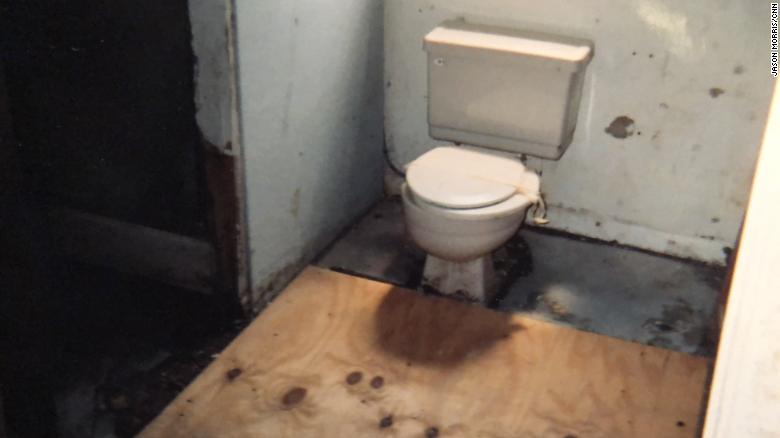
Turpins toilet
Image: CNN

The Child Welfare League of America (CWLA), one of America’s most venerable child welfare organizations, issued its weekly update on January 21 with something conspicuously missing.  “Last Week in Child Welfare, January 14 -21” contained updates on Mississippi’s lack of representation for families involved with child welfare, a recent report from New Jersey’s court monitor, and an opinion piece in the Indiana star about Indiana’s struggles with opioid abuse and its impact on the foster care system.

You would never know that on January 14, a starving seventeen-year-old escaped from a house of horrors where she and her twelve siblings were being starved, beaten, chained to beds, and kept prisoner. The teenager told police that her parents would kill her if her escape plan failed. During the week after the children’s rescue, public and press around the country and indeed the world were fixated on this story, trying to understand why it could happen and what could be done to prevent similar occurrences in the future. But this event apparently did not figure in CWLA’s “week in child welfare.”

One might think that an organization with a self-described mission “to advance policies, best practices and collaborative strategies that result in better outcomes for children, youth and families that are vulnerable” would be concerned that 13 children were allowed to suffer for so many years. You’d think that they would be putting out information  about the warning signs of child abuse and neglect and an admonition to make the call that might save a life. But you’d be wrong.

CWLA is part of what I think of as the child welfare establishment–the group that dominates the national conversation around child welfare. These organizations’ resources have enabled them to dominate the national conversation around child welfare by funding materials, conferences, and technical assistance to state and local child welfare agencies.  Since the 1970s, this group has been preoccupied with keeping families together and children out of foster care–with scant concern about the costs to kids in families that are so dysfunctional and dangerous that foster care is clearly a better alternative

Like the other members of the child welfare establishment, CWLA believes that “children fare better in their own homes compared to children in foster care who have been similarly maltreated, suggesting that social services should promote therapy, education, and treatments to increase family stability instead of relying on removals. ”

Of course child removals should should be minimized unless absolutely necessary, but it is difficult to imagine that parents like the Turpins could be helped through “therapy, education, and treatment” to love and nurture their children. The child welfare establishment appears not to want to believe in the existence of such parents who are so bad as to be beyond rehabilitation.

The child welfare establishment also fears that publicizing cases like that of the Turpins will result in a flood of calls to child abuse hotlines, resulting in the type of “foster care panic” that sometime occurs after a tragic case. Perhaps they would rather not encourage members of the public to report suspicions of child abuse that might save children in the future, because they believe such reports must increase the foster care rolls.

Of course we don’t want the public making frivolous, malicious, or fallacious reports. Nor do we want investigators responding to tragic events by sweeping kids up into foster care who don’t need to be there. In some cases, we can help children by monitoring their situation and providing services to their parents without removing the children. But in other cases, the children can only be protected by removing them from their toxic families.

The desire to avoid publicizing extreme cases of abuse and neglect might also explain why the child welfare establishment was not part of the coalition that supported the establishment of the Commission the Eliminate Child Abuse and Neglect Fatalities. And it might explain why, as I wrote in an earlier post, child deaths and other tragedies that are missed by CPS are often followed by the comment from system administrators that “systems should not be judged by one case.”

During the week the Turpins were uncovered, CWLA thought it was more important to cite an op-ed piece that criticized Indiana’s highly respected former child welfare commissioner, who resigned with warnings that children would die if more funding was not provided. CWLA assured readers that “Even infants who have been exposed to narcotics fare better when they are kept with their mothers, assuming the mother has access to government resources and drug treatments.”

Unfortunately, the child welfare establishment’s obsession with keeping kids out of foster care may be condemning more children to suffering, physical and emotional injury, and death at the hands of their own parents.

This post was updated on January 29, 2017.

.


Breaking the Silence: How to Encourage Family and Neighbors to Report Child Abuse

Report child Abuse
Image from: Michigan-Family-Law Litigation.com

Yesterday I published a post arguing for monitoring of home schools to prevent cases like the horrific story of the Turpins in California. But we really can’t be sure if regulation of home schools would have prevented the horrific abuse of these children. Even if David Turpin had not registered his home as a school, he would not have been caught unless somebody reported his children as truant. Given the silence of their neighbors and family about the disturbing signs of maltreatment, they might have been equally silent about the children’s apparent failure to attend school.

The silence of neighbors and family despite multiple signs that something was terribly wrong in this family was striking. There were numerous red flags. One neighbor reported trying to speak to some of the children when they were outside of the house. She reported that they “froze,” “shut down,” and were “terrified.” They also appeared thin and malnourished. And yet the neighbor did not notify authorities.

Multiple neighbors told reporters that the family was only rarely seen working in the yard or getting into vans at odd hours and always responded to greetings with silence. as a representative of the Riverside County Department of Social Services told USA Today, “Not one person called us. How sad,” she said. Sad indeed.

Before they moved to California, the Turpins’ household also raised questions among their neighbors in rural Rio Vista Texas, according to the Los Angeles Times. One neighbor, Ricky Vinyard, was concerned that the children rarely left their home,  lights were on at all hours with blinds drawn, and eight new children’s  bikes sat outside for months. A dumpster outside the house was filled with trash and David Turpin “would stand in the driveway shooting cans with his pistol, aiming toward the road.” Mr. Vinyard told the Times that he and his wife suspected abuse but decided not to report it, fearing repercussions, especially since Turpin had a gun.

Elizabeth Flores, Louise Turpin’s sister, tearfully told Good Morning America that all attempts by family members to see the children were rebuffed. When Flores came to her sister’s home in Texas, she was not allowed inside and visited with her sister in the driveway. The children never appeared. When her mother drove hours to visit in Texas, she was denied entry, and when her father bought a flight ticket, he was told not to come. The family must have discussed this strange behavior among themselves, but they never reported it to authorities.

The silence of neighbors and family seems to defy belief, yet similar silence has been noticed in other cases of long-term abuse. Is it part of American culture to believe that one’s home is one’s castle and neighbors should not interfere? What can be done to change this reluctance to intervene? This is not an easy issue so I would love to hear readers’ suggestions on how to get members of the public to report suspected abuse or neglect.

At a minimum, it seems clear that states should do a better job of informing the public of the signs of child abuse and neglect and the responsibility to report even a suspicion of maltreatment to avoid a tragedy. Brochures with this information should be available at libraries, pediatricians’ offices, health centers, departments of motor vehicles and police stations. This information should be given out along with drivers’ licenses and voter registrations and included with tax forms. Television and radio PSA’s (along the lines of “If you see something, say something”), bus ads, and other vehicles should be used to disseminate the information. Online training should be available to all citizens.
Beyond public information, the question is whether states should require reporting of suspected abuse or neglect with penalties for those who fail to report. All states require certain professionals, such as doctors and teachers, to report their suspicions.  But most states (including California) don’t require ordinary citizens  to report when they fear a child is being harmed.

However, Texas is one of about eighteen states that require any person who suspects abuse or neglect to report it. The identity of the reporter is confidential and cannot be released except under very limited circumstances. Failure to report suspected child abuse or neglect is a misdemeanor, punishable by imprisonment of up to one year and/or a fine of up to $4,000. And that law has been in existence in Texas at least 20 years. Nevertheless, Mr. Vinyard and his wife chose not to report.

This leaves several questions. Did the Vinyards know that they were required by law to report their suspicions of abuse? Did they know that failure to report was punishable by a fine or imprisonment? While penalties have been imposed on mandatory reporters who failed to report abuse that they saw in their professional capacity, I have not been able to find documentation of such a penalty being enforced upon a member of the general public. Such enforcement might be considered too heavy-handed by most citizens and legislators. However, one way or another it is critical that citizens report to the authorities  when there are signs that things are desperately wrong as they were in in the Turpin case.

The Turpin children have been rescued. But they are physically and mentally stunted, most of them probably for life. We don’t know how many children are currently chained to their beds, locked in rooms. and starved by the people who are supposed to care for them. Monitoring all children who are ostensibly home-schooled and campaigns to encourage citizens to support their suspicions of maltreatment seem like the best ways to save these children and prevent more horror stories.


Turpin Case Shows Risks of Not Monitoring Home Schools

TurpinsIt seems that the whole country is talking about the Turpin family. Thirteen children and young adults were found imprisoned and emaciated in their home in Riverside County and California on January 14 after a seventeen-year-old escaped and called the police.

Reporters and politicians soon focused on one salient aspect of this family. The children were being ostensibly homeschooled under a provision of California law that allows parents to designate their homes as a private school by simply filing an affidavit. These “schools” are not monitored or inspected aside from an annual fire inspection.

I have already written about Natalie Finn. starved to death by her adoptive parents Adrian Jones, tortured to death by his mother and stepfather, and a little girl in Kentucky who was rescued at the last minute from a similar fate. All were ostensibly home-schooled, although little schooling was going on in these toxic homes.

Homeschooling is increasing in popularity in the United States. About 3.3 percent of the school-aged population was homeschooled in America in 2016. This is nearly double the percentage tin 1999. Clearly most of their parents are not abusive and want to provide the best education for their children, often at great personal sacrifice.

But available evidence suggests that the most severe cases of abuse and neglect, often fatal, tend to involve homeschooling.  A study by Barbara Knox of the University of Wisconsin found that 47% of a sample of children tortured by their parents had been withdrawn from school and an additional 29% had never been enrolled.

.The Coalition for Responsible Home Education (CRHE) has collected nearly 400 cases of severe or fatal child abuse in homeschool settings that it identified from public records that mentioned home schooling as a factor. Even based on this incomplete database, CRHE estimates that homeschooled children are more likely to die of abuse or neglect than children of the same age overall.

Many of  the severe and fatal homeschooling abuse cases that CRHE has collected share ugly details with the Turpin case. More than 40% of these cases involved some form of imprisonment. These children were chained to their beds, kept in cages, or locked in rooms for years. More than 45% of these cases involve food deprivation.

The linkage between home schooling and severe child abuse is not totally surprising. As Rachel Coleman and Kathryn Brightbill of CRHE point out in an op-ed piece for the Los Angeles Times, children who are in school cannot be isolated and locked away. They cannot easily be starved to death as school staff would notice and they would have access to food. And they are required to have an annual physical exam.

Of course children who attend school are abused and neglected too. But attending school exposes them to teachers and other staff. School staff submit more child abuse reports than any other group. Education personnel submitted 18.4% of the child maltreatment reports that received an investigation or alternative response in 2015, the most recent year for which the information is available

In order to prevent more cases like the Turpins, CRHE recommends requiring that homeschooled children receive annual education assessments and physical examinations. This would provide two opportunities for each child to be seen by a mandatory reporter.

State Assemblyman Jose Martinez, who represents the town where the Turpins live, has already expressed his concern about the lack of oversight of private and home schools and his intent to explore introducing legislation to mandate some type of oversight.

But homeschooling advocates are opposed to any regulations on homeschooling. The President of the powerful Home School Legal Defense Association (HSLDA) asked a reporter for Reuters, “Should all the innocent home-school families, who do a great job, … be intruded upon because of this family?” he said. “I think the answer is no.”

HSLDA is one of Washington’s most effective lobbying groups, according to the Washington Post Magazine. State groups have also been able to scuttle attempts to regulate homeschooling in response to child abuse deaths in Florida,  Iowa and Kentucky.

It is hard to understand why responsible homeschooling parents and their advocates would object to such minor requirements as requiring an annual doctor’s visit and educational assessment. State legislators should set aside their fears of backlash from extremist advocates and assume that most voters will support protecting children.


Yes, A System Should be Judged by One Case

Katia Tirado
Image: Hartford Courant

“A system should not be judged by one case, no matter how sad or sensational,” said Joette Katz, Commissioner of Connecticut Department of Children and Families (DCF) Katz’ words were reported by the Hartford Courant.

Katz was referring to the case of Matthew Tirado. Matthew, a 17-year-old diagnosed with Autism and Intellectual Disability, died on February 14, 2017 from prolonged abuse and neglect by his mother.  As revealed by a heartbreaking  report from Connecticut’s Office of the Child Advocate (OCA), Matthew had been known to DCF for 11 years, since he was five years old. Yet, DCF missed several opportunities to save Matthew, who was nonverbal and could not speak for himself. Matthew’s interactions with DCF included:

  • In December 2005, when Matthew was six years old, his school called DCF to report that Matthew had missed more than 30 days of school since the school year began, . DCF investigated and found neglect but later closed the case after Matthew’s attendance briefly improved.
  • In December 2006, the school again contacted DCF to report that Matthew had missed over 50 days of school. DCF closed the case six weeks later without finding neglect. Matthew’s mother told DCF that her mother was moving in to help her care for the children. This should have been a red flag because agency files documented Matthew’s grandmother’s  long history of involvement with DCF, alcohol abuse and mental illness. But repeated risk assessments erroneously noted that Matthew’s mother had no history of being abused or neglected as a child.
  • In 2009, school officials again called CPS stating that Matthew came to school with bruising on his face that was covered up with makeup. School officials also reported contacting Ms. Tirado on other occasions regarding bruises, which she responded were inflicted by Matthew’s two-year-old sister.  Matthew’s mother denied abusing him and the case was closed before requested medical records arrived.
  • In October, 2014, Hartford Public Schools (HPS) reported that Matthew’s sister, a first-grader, showed signs of physical abuse and reported that her mother hit her. She told school staff that Matthew was also hit, but he was not seen or assessed.
  • In November 2014, HPS reported to DCF that Matthew was not enrolled in school and may not have been in school for a long time. In fact, Matthew had hardly attended school since 2012.  DCF found Ms. TIrado to be neglectful and abusive and opened a case on the family for supervision by the agency.
  • Matthew attended less than 100 days of school between June 2012 and his death in February 2017. HPS made five reports to DCF between October 2014 and May 2016. about the children’s failure to attend school.  After March 2016, Ms. Tirado refused to allow DCF access to her children. In July, DCS iled a neglect petition with the Juvenile Court.
  • The Court held six hearings on the case between July and December 2016 but Ms. Tirado never appeared. In December 2016 DCS asked the court to terminate the case. No orders were sought to compel Ms. Tirado to produce the children, permit visitation of Matthew’s sister in school, or to remove the children, even though there was legal justification for any of these actions. Unbelievably, after a failed attempt to compel Ms. Tirado to come to court, the court accepted DCS’ request to close the case. DCS closed its own case on the family in January 2017.

After Matthew’s death, the Hartford Courant reported that Commissioner Katz shockingly told legislators that “As horrible as this may sound, there comes a point where you have to make a determination that you have done all that you can legally do. There are 15,000 cases and only so many social workers.”

The Commissioner also said that a system should not be judged based on one case. It’s an old refrain. But is it true? I don’t think so. There are many reasons why a system should be judged by one case.

First, we are not talking about one bad decision. A child suffered for as long as 11 years and agency social workers missed multiple opportunities to protect him. His sister fared a little better since she survived but will probably bear lifetime scars. This is more than a one-time event.

Secondly, for each “worst case, “we don’t know how many children suffer for years and don’t die while the system ignores repeated red flags.  At least Matthew is out of his misery. The others are still suffering. We may never know their names.

I’m tired of agency heads who tell us not to judge the system by the worst cases. Lets bury this trope once and for all. A system should be judged–above all–by the worst cases. For each of these cases represents many more children whose daily suffering will lead to lifetime emotional educational and physical damage.