
by Marie Cohen
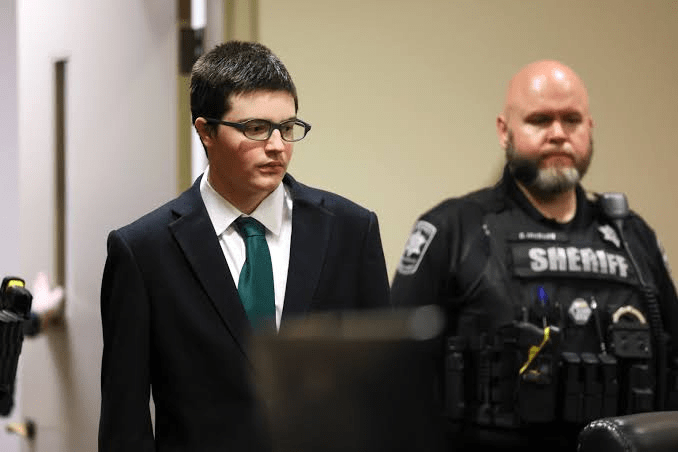
It’s unusual that the head of a state child welfare agency head carries a case–or testifies in a criminal case. But on July 28, when Candice Broce, the head of Georgia’s Division of Family and Children Services (DFCS) testified for the defense in the sentencing of 16-year-old Colt Gray. Gray had already pleaded guilty to shooting and killing two teachers and two students at a Georgia high school in 2024, when he was 14 years old. Broce was there to testify about the long history of abuse, neglect and family dysfunction that resulted in Gray’s crimes. Research shows that Colt Gray is not alone. Most minors who commit serious crimes have a long history of abuse and/or neglect. If only society had intervened to protect them, their crimes might have been prevented.
After the shooting at Apalachee High School that killed four and wounded nine on September 4, 2024, reporters quickly learned that Colt had grown up in a chronically abusive and neglectful home. As the Washington Post put it in a detailed article, “Colt’s parents, each addicted to drugs and alcohol, were perpetually inattentive, often cruel and sometimes entirely absent….” Broce testified that DFCS had substantiated at least 23 allegations of abuse and neglect by Colt’s parents that occurred between 2021 and 2024.1 These included truancy (he did not attend eighth grade at all, according to the Post), physical and verbal abuse, substance abuse, and domestic violence, as well as inadequate food, shelter, supervision and medical care. In October, 2023, Colt’s father, Colin Gray, was awarded custody of all three children based on Marcee Gray’s failed drug tests and corroborated abuse allegations. The agency closed the case upon placing the children with their father.2 During the time remaining before the September 2024 shooting, according to the Post, Colin Gray told Colt his mother wanted to kill him, bought him the AR-style rifle that Colt used for the school shooting, and neglected to take him for intake to a crisis center just days before it occurred.
Colt’s sad history is not unusual among young people who commit serious crimes. A recent book by Wendy Smith, Before their crimes: What we’re misunderstanding about childhood trauma, youth crime, and the path to healing, tells the stories of 20 men and women who were serving time for violent crimes committed when they were minors. Most of the people she interviewed were neglected, physically abused, or both. In an Imprint podcast, Smith reported that the common theme across all the cases is “looking and longing for love.” Colt Gray fits into this theme. As his grandmother told CNN. “He had convinced himself that this was the way for him to go because then he could be somebody. …All he ever wanted was to be included and loved.”
Smith’s sample was small, but a report called The Childhood Trauma-to-Prison Pipeline, published in November 2025 by a small nonprofit called Human Rights for Kids (HRK) backs up her finding that most children who committed crimes were abused or neglected. The researchers mailed surveys to individuals incarcerated as adults for offenses committed as children from Departments of Corrections in 38 states and received responses from 2,220 of them.3 A total of 72 percent of those who responded reported emotional abuse by a parent or other adult in the household, almost 70 percent reported physical abuse, and almost 45 percent reported sexual abuse. Nearly 70 percent of the respondents reported emotional neglect, while more than 46 percent reported physical neglect. In calculations performed for Child Welfare Monitor, the researchers found that depending on how expansively abuse and neglect are defined, anywhere between 85.5 percent and 95 percent of the respondents had suffered child abuse or neglect before they committed the crimes that got them incarcerated.
Only 27.7 percent of the respondents reported a history of foster care or CPS custody. Many critics of foster care talk about the foster care to prison pipeline, as if children are ripped out of happy and functional homes to be abused and neglected in care. They conveniently “forget” that those children who are placed in foster care are almost always the victims of abuse or neglect, which already put them at higher risk of criminal justice system involvement. The purpose of foster care is to remove children from such situations. Colt Gray was actually placed in foster care with his grandmother (while remaining in detention) after the shooting because of his father’s imprisonment (for giving him the gun he used in the shootings) and his mother’s violation of a court order limiting her communication with him. Now that communication with his mother has been cut off and he has been placed on medication, Broce reported that Colt is “essentially a different child.” What an irony that the agency did not step in earlier to help him before he killed four people and destroyed his own life.
I have written about Lisa Montgomery, who was executed in January 2021 for strangling a pregnant woman and then cutting out and kidnapping her baby in 2007. Montgomery had suffered a childhood of sadistic abuse by her mother, repeated sexual assault by her stepfather and his friends, and eventually forced prostitution. Lisa Montgomery was never taken into foster care. But her sister Diane was, leaving Lisa alone and undefended in their toxic home. As Diane put it in a Newsweek article, “Being loved unconditionally helped me heal…While my path to healing was very hard, the difference between Lisa and me is that no one ever intervened to rescue Lisa from a lifetime of abuse.”
Of course, foster care is often not the therapeutic experience that maltreated and traumatized children need and deserve. In many cases, foster care is safer but not much more nurturing than the homes they left behind; in some cases, the foster homes themselves are abusive and/or neglectful. But the idea that foster care is often the cause of crime is not supported by cases like Colt’s and Lisas, or by recent research.
Unfortunately, the current ideological climate emphasizes the risk of foster care, with some commentators even saying it is worse than child abuse and neglect. There is something telling about the wording of the landmark Family First Prevention Services Act (FFPSA), which treats foster care as a social problem that must be “prevented,” rather than a protective intervention that should be used only when necessary. FFPSA talks about about children at risk of foster care, rather than children at risk of abuse and neglect. When are so preoccupied with the “risk” of placing children in foster care, we forget about the risk of leaving a child or children in a toxic home without at least some monitoring.
Wendy Smith writes that that to break the pipeline between child maltreatment, trauma and crime, we must start at birth with a home visit to every newborn. High-quality early care and education is also critical for early identification of children who are not getting what they need at home. Schools, as Smith suggests, should be bolstered to respond to truancy and misbehavior with interventions that allow children to remain in school while their problems are addressed. But child abuse and neglect are not going away any time soon. We need a child welfare system that is more aware of the risks posed by chronic child abuse and neglect. There is a brutal irony about a society that ignores children who are suffering chronic maltreatment, and then hastens to lock them up and throw away the key once they erupt in violence. Wouldn’t it be better to be protect them before they are so broken that they destroy other lives as well as their own?
Notes
- Ms. Broce testified that based on written records and her conversations with relatives, neighbors, and others, she substantiated 12 categories of allegations (such as physical abuse, emotional abuse, supervisory neglect, lack of food, lack of medical care) against Colt’s mother and 11 against his father. To the extent that there was more than one allegation in some categories, there would have been many more than 23 individual substantiated allegations. ↩︎
- Broce testified that upon closing the case, the agency expected to be notified if the family failed to follow up with the referrals that were made for services like therapy for Colt. But Colin Gray did not comply and the agency was not notified ↩︎
- The overall response rate was about 10 percent but authors opine that “the remarkable consistency of the survey responses” suggests that the sample is representative of the underlying population. ↩︎


I appreciate this information. Why is it that this information is rarely publicized? If a good majority of people knew about these percentages, people might begin to rethink how we work with children like this. I remember this story but I don’t recall ever hearing that this young man had this type of abusive upbringing.
LikeLike