
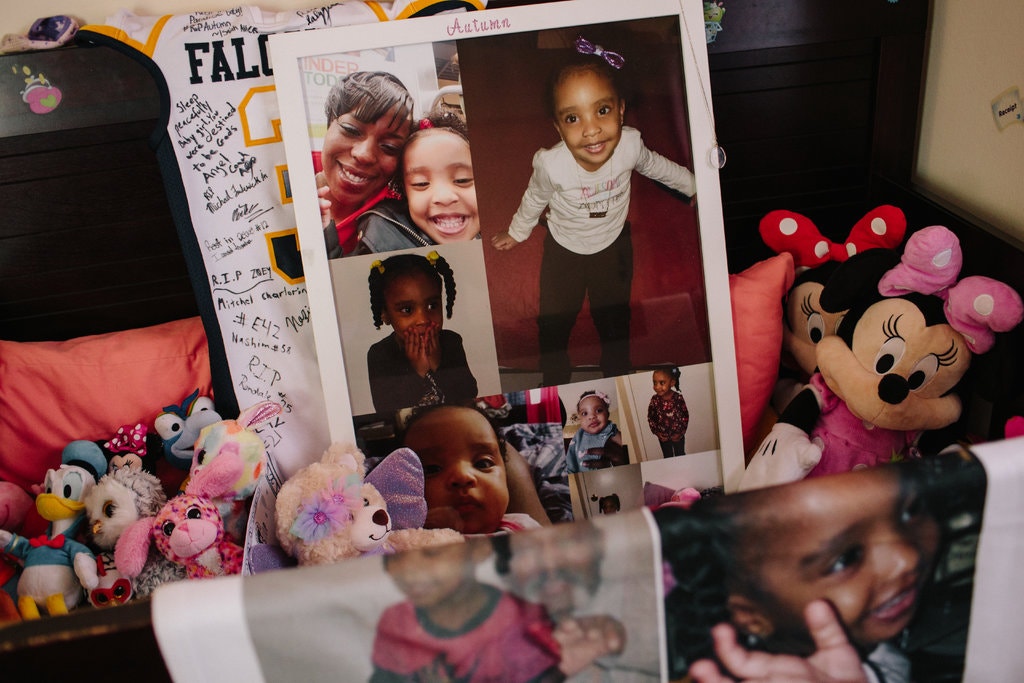
On May 5, New York City firefighters were called to a horrible scene. A three-year-old girl had been locked in a car and the doors had been chained shut. Then the car was set on fire. As reported by the New York Times, the perpetrator had weekend visitation rights with his three-year-old daughter Autumn. Less than two weeks before, Autumn’s mother wrote to the family court in charge of her custody case, that Pereira was “losing a grip on reality and I honestly feel my child is in danger while in his care.” The court did not intervene.
This terrible case is not an aberration. The Center for Judicial Excellence (CJE) has compiled data on 707 children who have been murdered by a divorcing or separating parent since 2008. CJE has documented 98 cases during that time period in which a child was killed by a parent or parental figure after the family court allowed them unsupervised contact with the child despite being warned that the perpetrator posed a risk to the child. But this is likely only the tip of the iceberg as there is no agency that records these cases.
A four-month investigation by Gillian Friedman in the Deseret News found that in many cases family courts are failing to protect children, allowing unsupervised visits or even custody to abusive parents. These decisions are resulting in physical and sexual child abuse and sometimes homicide.
Why would family courts put a child in danger by allowing unsupervised contact with a dangerous parent? One reason, experts told Friedman, is that judges and custody evaluators hired by courts often do not believe the claims of danger from the other parent who is trying to protect the child. As the director of CJE told Friedman, “In custody proceedings, family courts often see a parent’s allegation of child abuse as no more than a tactic to undermine the other parent’s custodial rights to the child — and therefore not a credible accusation.” Several of the mothers interviewed by Friedman reported that their attorneys told them not to allege abuse for fear that these allegations would lead to an adverse custody ruling.
Disbelief of the protective parent is not the only possible factor that causes courts to make decisions that put children in danger. Experts told Friedman that evidence of child abuse is often not conclusive and courts are reluctant to bar a parent from access to a child unless the evidence of past abuse is airtight. Moreover, many judges are overwhelmed. They may see as many as 20 cases a day and may have to make a decision after spending no more than 20 minutes on a case.
Finally, judges may be prioritizing parental rights over child safety and well-being. Even if a judge believes that a parent has been abusive, family court professionals told Friedman that it is very hard to get a judge to deny visitation to a parent. Instead, they will require the abuser to engage in treatment or counseling, while maintaining visitation.
Judges may also think a child is safe with a parent who has abused the other parent but not the child. But placing a child with a parent who has a record of domestic abuse may be dangerous even if that parent had not hurt a child. That’s because the parent may harm the child in order to punish the other parent.
Both mothers and fathers can abuse and kill their children. But domestic violence victim advocates like Joan Meier cite evidence that women are in a disadvantage when alleging abuse in the context of a custody dispute, in part due to the influence of inaccurate beliefs about “parental alienation,” which I described in an earlier post. The “alienation” concept can be used by either parent to connote that the other parent is poisoning the child’s mind against them and has often resulted in the placement of children against their will with a parent that they allege abused them–more often than not, the father.
But fathers’ advocates claim that that family courts are prejudiced against fathers. It seems clear that judicial attitudes have changed over time. As described in a useful article published in 2011 by San Francisco Weekly, family courts were traditionally biased against fathers, believing that children belonged with their mothers. However, as divorce became more common, advocacy by fathers’ rights group has led to the acceptance that children’s time should be split as evenly as possible between parents. While it seems clear that child safety should trump any considerations of equity between mom and dad, it seems that some judges do not agree.
The problem of placing parents’ rights over safety should be familiar to readers of Child Welfare Monitor from our many columns about child welfare agencies and family court judges accepting risks to child safety and well-being in order to keep families together or reunite them. In our experience with such cases. the court and the child welfare agency usually agree about the primacy of parents and the need for children to remain or be reunified with their parents. There are occasional disagreements. Child Welfare Monitor will never forget tearfully trying to convince a judge that my six-year old client would do better with a foster parent who had loved her for two year than with a mother who could not think of one good thing to say about her–to no avail. But in these custody cases it is the protective parent whose pleas to keep the child safe are being disregarded.
Thankfully, there is a growing recognition that family courts are failing to protect children in custody cases, with sometimes tragic results. Last year, Congress passed a resolution stating that “child safety is the first priority of custody and visitation adjudications, “and that courts should resolve safety risk and family violence claims first, before assessing other factors that may affect a child’s best interests. The resolution makes several recommendations to states for improving their court processes, including setting standards for evidence presented in custody proceedings and for the professionals who are accepted as experts.
In 2019, the Governor of Maryland signed a bill requiring the formation of a new workgroup, the first of its kind, to study child custody court proceedings involving child abuse or domestic violence allegations and make recommendations about “incorporating the latest science regarding the safety and well-being of children and other victims of domestic violence.”
It is important for child advocates to become involved with this issue, which has generally been the province of mainly domestic violence advocates. Child advocates around the country should push for legislation like that passed in Maryland to establish commissions to study this issue and make recommendations about how the family courts can be improved to ensure the safety of children involved in custody litigation.
 Child Welfare Monitor
I am grateful to see this very important research being performed. As a victim of domestic violence both through my marriage and in the courtroom, I understand how devastating court abuse is for the family. My net worth went from $500,000 to -$180,000 after my ex’s lawsuit. It has been 15 years and I have just recovered financially.
I was given a “no-speaking order” due to parental alienation which lasted 6 years with my youngest. How was THAT not parental alienation? They were taken on the premise of educational neglect even though my daughter was named a Utah National Scholar the same week. The children were sent back on their 18th birthdays severely traumatized and in complete overwhelm. The costs for therapists, counselors, etc. was overwhelming.
Because I was raised in a religion that asks women to give up their careers to be a homemaker., I lost substantial income and fell behind in my field as we supported my ex to a global CFO status. Instead of compensation for our sacrifices, my ex was able to change his title to “Junior Accountant” without question by the court and brand me a gold digger. Please help continue fighting to stop such heinous abuse in a setting that pretends to protect!
LikeLike
Thanks for sharing your experience. I’m sorry you had to go through this. I hope your children are are doing better.
LikeLike
I am experiencing this right now in New Jersey. My Judge continues to prioritize parental rights over my child’s safety and well-being. What organizations can help?
LikeLike
My sister is trying to protect her girls from their father in California. The girls have disclosed sexual abuse, and while she has a temporary protective order, his very wealthy parents are bankrolling her abuse through the court system as he continues to claw back contact. They are pushing for reunification and it is starting to look like he will prevail and the girls will have to resume contact with him. The criminal side of things? Totally bungled by law enforcement and the D.A. No charges have been filed, which… is maybe a good thing because that is the one thing keeping him from getting them back in full. He is paying no child support, she is shouldering all of the cost, responsibility and burden of therapy and court costs. She is terrified that they will have to go back to him. I’ll also note- this is not the first time they have disclosed inappropriate sexual behavior. The first time, they were little and crumbled under pressure. There is no reason to think he won’t continue the abuse once he has access again. I hate that the claim of “parental alienation” trumps “my dad is sexually abusing me”. I am also outraged and the number of people involved- attorneys, therapists, judges, social workers, visitation supervisors, cops, etc. that don’t seem to care enough to fight for the safety of children. It is demoralizing at every turn. Their continued abuse feels inevitable and something they will need to endure until they are old enough to be heard by the courts. If they make it that long. My heart breaks knowing my sister is one of thousands of women in this predicament.
LikeLike