
Residential care in child welfare: An international perspective

In my last post, Family First at five: Not much to celebrate, I discussed how the Family First Prevention Services Act (FFPSA) made it more difficult to provide residential care (often pejoratively called “congregate care” by the Act’s supporters) for the most troubled foster youth while doing little to ensure the development of alternatives. The result has not been surprising–an exacerbated placement crisis, with foster youth around the nation sleeping in hotels, offices, jails and other inappropriate settings. An important new book provides an international perspective on residential care. It shows that the U.S. ranks very low in the percentage of foster youth that are in residential care, casting doubt on the advisability of trying to further reduce residential placements. The obvious conclusion is that we would do better to increase the quality of residential care by raising standards for staff.

The new book, Revitalizing Residential Care for Children and Youth, is a compilation of research on residential care in 16 high and middle-income countries, edited by James K. Whittaker, Lisa Holmes, Jorge F. Del Valle, and Sigrid James, who are professors at universities in the US, England, Spain, and Germany, respectively.1 The editors define “residential care” as “any group setting where children spend the night,” encompassing settings that vary in size and function and that operate under the auspices of child welfare, juvenile corrections, or mental health. The 16 countries are viewed through a common template, making comparisons possible. However, there are problems with such comparisons. As explained in the second chapter, countries differ in the terms they use for different types of care and how they define these terms, among other things. The editors’ definition of “residential care” does not ensure that the same facilities are being counted across nations. A small group home with paid staff might be classed as “foster care” in some countries, and some facilities (like those for youth offenders) might be counted in the residential totals for some countries and not others.

Keeping in mind the impossibility of obtaining data that is totally comparable across countries, there appears to be a striking variation between nations in the utilization of residential care for youths who are in out-of-home placements. The editors defined the residential care utilization rate as the proportion of out-of-home care dedicated to residential care rather than family foster care or other types of out-of-home placements. This percentage ranged from seven percent in Ireland and Australia to 97 percent in Portugal, as shown in Figure 29.1, which is reproduced below. The United States had the third lowest residential care utilization rate, with ten percent of children in out-of-home placements being in residential settings. Moreover, the number of children in U.S. residential care fell by about 25 percent between 2015 and 2019. According to the editors, it appears that countries in the low-utilization category have made legislative changes (like FFPSA and California’s Continuum of Care Reform in the US) that have led to drastic reductions in residential care. But the countries with medium utilization rates (between 30 and 55 percent) seem to be focused on improving residential care by strengthening the elements believed to be associated with quality care rather than reducing the utilization of residential care.2

Source: James Whittaker et al, Revitalizing Residential Care for Children and Youth, page 430.

The authors also found great variability in the education and training requirements for residential care staff. These range from no minimum qualification in the United States, Canada and Australia, to high school level (Israel, Argentina and Portugal), to rigorous multiyear vocational training and/or university education in the other countries. A number of countries use both vocationally trained and university educated staff. For example, in Germany, about 70 percent of residential care staff hold a 3.5 to five-year vocational degree as educators (or in fewer cases two years as assistants) and 30 percent have Bachelors’ degrees in social work or “social pedagogy.”3

The editors found that it is countries with lower educational requirements for staff that have turned against residential care and have sought a drastic reduction of its use. Among those countries was, no surprise, the United States, along with Australia and England. In contrast, countries with a high qualification requirement have higher utilization of residential care. This correlation is not surprising. There is no doubt, say the volume’s editors, that “the quality of the services is directly related, in any field, to the qualifications, training and experience of the professionals who provide them.” In child welfare, they argue, “[I]t is difficult to carry out the work without a qualification based on the learning of very diverse theories related to child development, the clinical expressions of trauma, listening and helping techniques, the framework of family relationships, and ecological theories.” The editors suggest the existence of a vicious cycle, where low staff qualifications may led to poor quality and outcomes, which in turn lead to reduced funding, making it harder to recruit well-qualified staff.

Unfortunately, available data do not tell us what proportion of children and youth in residential care in each country are there for time-limited treatment for behavioral issues with a plan to “step down” to a family setting. Available data suggest that a majority or large minority of children and youth in residential care in the middle-utilization countries have a mental health diagnosis, which does necessarily mean that they are in a time-limited therapeutic setting. Most likely, the residential care population in the middle-utilization countries is a combination of youths with issues that require treatment in residential care and those who could be in family foster care if available As one of the editors notes in the introductory chapter, “residential care across the globe …does not seem to be limited to the narrow treatment-oriented and time-limited setting it is generally reduced to in several Anglo-American nations. In fact, in many countries,…., children and youth still spend years in residential care programs.”

The assumption that family foster care is always the better choice unless a child cannot function in such a setting may be unique to the English-speaking countries. Small, family style group homes, whether freestanding or part of a campus of such homes, may be difficult to distinguish from foster homes, especially if they use a house-parent model. In fact, the authors say, some countries classify “a small “family group” home, staffed by paid staff” as a foster home. I have argued in the past that high-quality family-like group homes may be better for children than mediocre or poor-quality foster homes and are especially appropriate for siblings. Indeed, as discussed in the book, France has 28 children’s villages, which are family-like units especially for siblings.

The evidence shared by Whittaker et al. has important implications for the United States. Given our low position on the scale of residential care utilization, one might logically conclude that further lowering the number of children in residential care would be unrealistic. In the two countries with lower residential utilization rates than the United States, Ireland and Australia, news accounts document an urgent need for more foster parents, with young people being separated from siblings, moving from one emergency placement to another for lack of a suitable home, and spending nights at hotels. Instead of trying to bring the residential share of foster care even lower, the U.S. might be better advised to follow the example of countries like Germany and Finland, which are focusing on improving residential care programs rather than eliminating them.

Cross-national comparisons are valuable in many policy areas, and the absence of such comparisons in child welfare debates is particularly unfortunate. Reading this book brings home the lack of international comparisons informing Congress when it passed the FFPSA. As far as I know, the supporters of FFPSA’s drastic restrictions on residential care never referred to other countries’ use of residential options; that’s not surprising as such comparisons may have led to uncomfortable questions about the premise that too many foster children and youth were in residential care.

Some members of Congress who supported the residential restrictions in FFPSA may have been more concerned about budgets than ideological objections to residential care. Improving residential care costs money, while cutting it may appear to help balance budgets. FFPSA was designed to be budget-neutral, so that restrictions for funding of residential care were required in order to offset the increase in spending for services to families. And it apparently did not matter to Congress if those costs were by necessity picked up by states that had no other options: the federal government would see the savings.

Perhaps the federal coffers have benefited from the restrictions on federal funding for residential care, especially because federal spending for the “prevention services” side of Family First has been negligible. But it is hard to believe that states have gained financially from the new law. Spending as much as $2,000 a night for a hotel room complete with staffing and security for foster youth, as Washington State is reportedly doing, cannot possibly be a better use of funds than improving and expanding residential care. And the effects on children and youth are disastrous. One can only hope that state leaders will be brave and smart enough to take the first steps in the direction of revitalizing residential care to be a nurturing and therapeutic environment for children and youth and a field that is a source of pride for its practitioners.

Revitalizing Residential Care for Children and Youth should be required reading for anyone involved in making policy or drafting legislation regarding foster care. But it is probably too much to hope that the anti-residential crusaders will choose to read this important book. They find it more comfortable to continue believing that cutting funds for these programs without providing an alternative will save money and help children at the same time.

Notes

  1. The countries studied include Argentina, Australia, Canada, Denmark, England, Finland, France, Germany, Ireland, Israel, Italy, the Netherlands, Portugal, Scotlad, Spain, and the United States.
  2. Portugal, with 97 percent of its out-of-home youth in residential care, is in violation of its own law establishing residential care as the last option for out-of-home care. It appears that the country has not developed the supply of foster parents needed to shift the system toward home-based care. Argentina, with 86 percent of children separated from their families living in residential care, is only in the early stages of developing family-based foster care. In Israel, a system of residential facilities or “youth villages” developed as a means of social integration of immigrant groups, starting with survivors of the Holocaust. This system of residential care operates under the MInistry of Education. A separate child welfare system developed later under the Ministry of Labor, Social Affairs and Social Services, to serve the needs of maltreated children, and 63 percent of the children in this system are also in youth villages.
  3. According to the editors, “[s]ocial pedagogy is grounded in a holistic understanding of the person and espouses participation, democratic processes, self-determination, and social and moral education within the context of everyday life as guiding values and principles for practice. Individualization (n contrast to standardization) and professional decision-making are further hallmarks of this approach.”
The placement crisis for high-needs kids: it is residential facilities, not foster homes, that are lacking

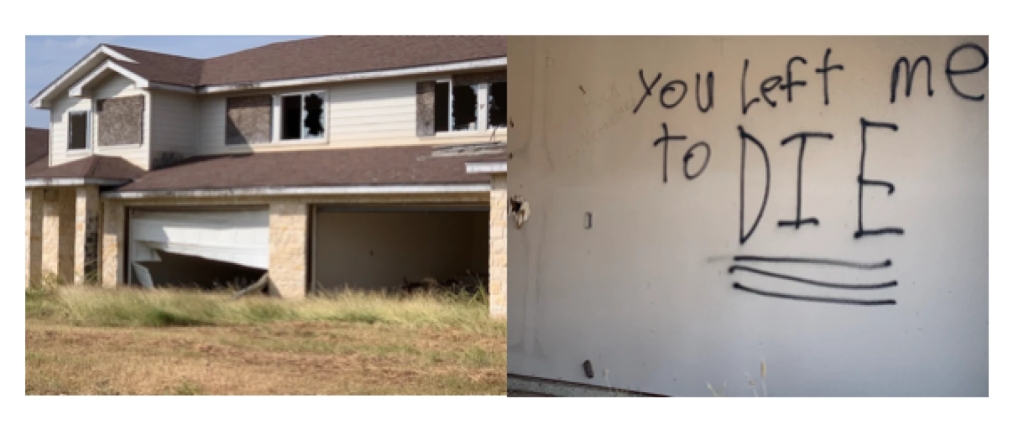
Several housing units leased by DFPS for housing foster youth were adjacent to blighted abandoned housing development. From Court Monitor’s Report, published by Texas Public Radio, https://www.tpr.org/government-politics/2022-01-12/texas-foster-care-in-crisis-after-a-decade-in-litigation-and-5-years-under-federal-oversight

Around the country, child welfare systems are struggling with a placement crisis, especially for their most troubled youths. In North Carolina, an assistant secretary of the health and human services department told county directors that the state’s child welfare system is in crisis and could be hit with a massive class action suit due to children with emotional and behavioral health needs being boarded in offices or left in emergency rooms. In Illinois, the Director of the Department of Children and Family Services has been found in contempt of court a dozen times for not find a appropriate placement for specific children who were left in psychiatric hospitals after they were ready for discharge, left in juvenile detention centers after their sentences expired, or slept on office floors for want of a better placement. A recent case involved a girl who remained in a psychiatric hospital 170 days after being cleared for discharge.

In Colorado, Florida, Kentucky, Maryland, Massachusetts, Michigan, New Mexico, New York, Ohio, Oregon, Pennsylvania, Rhode Island, Tennessee, Texas, Virginia, and Washington, the stories are similar. State and local agencies are unable to find appropriate placements for foster children and youth with the most severe behavioral health needs. As a result, they are being warehoused in inappropriate settings, such as temporary shelters, hotels, offices, or state-leased houses staffed by social workers; sent far away for residential care, or being left in psychiatric hospitals and detention centers after being cleared for release. Depending on the nature of the setting, these young people are deprived of normal schooling, activities, contact with their families, heathy food, exercise and opportunities to develop the life skills that they need. And equally important, they receive the message that nobody cares about them. As Cook County’s Public Guardian told a reporter about the children left for months in hospitals after a stay that should last no longer than a week or two :

“Imagine what it says to a child to see other kids come in, be treated, leave after a week. And they’re (wards of the state) stuck there for months, and months, and months because there’s nowhere for you,” Golbert said. “imagine the message that that sends to these children. It very powerfully tells these children that you don’t matter. And these are kids that often have attachment issues to begin with, by definition — they’ve been removed from abusive parents to be in DCFS care.”

Not surprisingly, the children languishing in inappropriate placements tend to be those who are hardest to place in foster homes. They tend to be older and with mental and physical disabilities, behavioral health problems, or both. Many of them have been bouncing from foster home to foster home for years until no foster home would take them. Many of these children have displayed violent or self-destructive behavior and are at risk of harming themselves or others. With fewer abused and neglected children being removed from their homes, foster care professionals all over the country are reporting that the children who are being placed today have more serious needs and often need of intensive services from professionals.

Few potential foster parents are willing to open their homes to youth who might be a threat to themselves or others in the home. Furthermore, many of these youth require a placement with intensive therapeutic services before being able to function in a normal foster home. Such a placement might be called a therapeutic group home, residential treatment center, or psychiatric residential treatment facility. Definitions of these terms vary, but the federal government’s foster care data system (AFCARS) classifies all these settings as “congregate care,” a term that has come to mean any setting that is not a foster home. Perhaps a specially trained, paid and supported therapeutic foster home could help some of these youths, but the numbers of such homes are tiny compared to the need.

So how did we get to this place where so many children with acute needs, far from having their needs met, are being housed in inappropriate and harmful settings? The foster care placement crisis is part of a larger crisis in residential care for youth (not just those in foster care) that stem from a push by advocates and governments to reduce the number of children in institutional care. Egregious cases of abuse in residential facilities have led to extensive press coverage, lawsuits, investigations, and the closure of many residential treatment centers. But they have also been used by opponents of residential care to argue that all such facilities are abusive or unnecessary, instead of recognizing that there are high-quality residential placements that can help the most wounded children who cannot be helped in another setting.

In addition to the growing opposition to residential care, other factors have also affected the supply of these facilities. Reimbursement rates have stagnated around the country, resulting in closure of some facilities. And those that are still open cannot pay their employees more than they would make in jobs in fast food or retail, with much less stress and risk. This has resulted in a staffing crisis that has caused facilities to close.

In a disturbing echo of the deinstitutionalization movement of the 1960’s, disappearing residential treatment facilities have not been replaced by other options for providing the necessary care. The Colorado Sun reported on the catastropic state of residential care in that state. More than 44 youth treatment centers, with more than 1,000 beds, have closed since 2007. Only “a handful” of the 40 remaining centers will take the youth with the most severe mental health problems. And the director of human services for Weld County, Colorado, told the Sun that when the county does find a residential bed for a child, the child is often kicked out for displaying behaviors to severe for them to handle.

At the same time as residential facilities for youth in general have been closing down, a series of laws and court settlements has resulted in massive reductions in residential beds available to foster youths specifically. As is often the case, California took the lead by passing its Continuum of Care law, and Congress followed by adopting the Family First Prevention Services Act (FFPSA), of which one of its two main purposes was the reduction of children’s placements in congregate care. FFPSA accomplished its purpose by limiting to two weeks the time a child could spend in congregate care, except for certain specialized facilities for youth who had been sex-trafficked, pregnant and parenting teens, and independent living facilities. The only other exception is a new facility type called a Quality Residential Treatment Program (QRTP), which must meet stringent requirements, like a trauma-informed model, accreditation, and full-time nurses on site, that would require major modifications for many existing facilities. FFPSA also required that any placement beyond two weeks be approved by a court and that a stay longer than 12 months be approved in writing by the head of the agency. FFPSA contains another poison pill for residential care, of which its framers may have been unaware. QRTP’s of over 16 beds will likely be classified by Medicaid as “Institutions of Medical Diseases,” and therefore youth who are placed in these facilities will be ineligible for Medicaid funding of any of their care.

New Mexico is a “window into challenges facing other states, as documented by Searchlight New Mexico and Pro Publica. in the aftermath of a court settlement in which it agreed to reduce its reliance on residential treatment centers for foster youth, the number of group facilities has dropped by about 60 percent over the four years ending last August. But the state has yet to build the the community-based behavioral health system that it had promised. Therefore, the highest-needs youths are spending months in crisis shelters designed for brief stays and not equipped to deal with severe mental illness. Practically every day, reports Searchlight New Mexico, someone at a shelter that accepts foster teens calls 911 with a report of young people harming themselves, attacking or threatening staff or other residents, or running away. According to Pro Publica, the state plans to train four therapeutic foster parents and open two small group homes, with six beds each, for troubled youth. The state has not yet licensed a single QRTP.

The states with the largest numbers of foster youths are facing crises as well. In California, according to a letter from four state associations in April 2022, 1,193 residential therapeutic beds available to foster youth had been lost since January 1, 2020. The writers report that they are “aware of a number of other providers who are either greatly reducing their capacity, shifting program models to serve youth with less intensive needs, or closing.” In Texas, at any time there are as many as 75 children sleeping in unlicensed facilities like hotels or state-leased houses staffed by CPS workers for lack of an appropriate placement. In New York, more than half of residential treatment facility beds for children have shut down in the past ten years, dropping from 554 to 274, according to Pro Publica. In New York City, the Imprint recently reported that at least 40 children currently in the City’s emergency Children’s Center have been there for more than a month. The center, designed for temporary stays, currently houses 72 children. Housing children with a variety of complex diagnoses and speaking multiple languages, the center is responsible frequent calls to 911 and has been the subject of public scrutiny as a result of some of these episodes.

Some commentators and media outlets persist in blaming the placement crisis on a shortage of foster homes. Confounding the foster home shortage with the shortage of placements for high-needs kids is deceptive. As mentioned above, there are not many potential foster homes that would agree to take these children or that could help them. The option of using therapeutic foster care, while politically popular, has so far resulted in only very small programs due to the difficulty in recruiting suitable parents. This is not to say there is no foster home shortage for children who could be accommodated in a foster home; such shortages probably exist in many or most states, especially when we talk about the supply of quality foster homes.

What can be done? As many advocates argue, we should help children earlier so that they don’t become so damaged that they have to be placed in residential care. Many child welfare leaders and and advocates say the answer is to reach out to families before they become involved with child welfare. But they rarely talk about intervening earlier and more intensively with families already known to child welfare agencies. As a member of the District of Columbia’s Child Fatality Review Team for years, I have observed a striking pattern among youths who are victims of gun violence. More often than not, their families have extensive child protective services case histories, often involving multiple children with repeated referrals for excessive absences from school, lack of supervision and physical or sexual abuse. The records show referral after referral being screened out, in-home cases being opened and quickly closed, and children being placed in and returned from foster care without any evidence of improvement in family functioning. Over time, the children’s behavior worsens, they acquire mental health diagnoses, become involved with juvenile justice, and those young people whose sad cases I reviewed eventually were killed by other youth and adults with similar backgrounds. We need to understand the deep intergenerational problems of chronically maltreating families and intervene with more intensity earlier–through intensive in-home services (with participation enforced by a court if necessary) and, when all else fails, removal of the child to a safer environment.

No matter what we do to help children earlier, it is obvious that at least in the short-run we must replace some of the lost residential facilities. These new facilities should be QRTP’s or other high-quality residential placements. But they must be established, and funded adequately enough to hire and adequately reward staff who are dedicated and passionate about their work. Some states have already taken action to boost their residential capacity for high-needs youth. The Legislature in Texas, for example, appropriated $70 million to the Department of Family and Protective Services (DFPS) for supplemental payments to retain providers and increase provider capacity, and another $20 million for new facilities for the young people with the most intense needs. Congress can help by exempting QRTP’s from the IMD exclusion. The federal government could also incentivize creation of QRTP’s through a pilot or grant program.

Around the country, and in states encompassing the vast majority of foster youth, there is a placement crisis that is affecting mostly those youth who require more intensive care and services. This is part of a larger crisis in residential care for youth, which is exacerbated among foster youth because of new laws and policies discouraging their placement in what is called “congregate care.” Those who explain this as a shortage of foster homes fail to understand the nature of the youth affected. Perhaps earlier intervention with children who are chronically abused or neglected can reduce the number of children who are in need of residential care. But at least in the short run, we must increase the supply of quality residential facilities in order to prevent further damage to these youths. It will be costly, but the costs of inaction would be far greater.


Therapeutic residential care: A necessary option for foster youth with greater needs

Photo by kat wilcox on Pexels.com

The tide of opinion in the U.S. child welfare arena has been turning against institutional settings for foster youth for some time. A spate of reports of child abuse and improper disciplinary techniques in residential facilities for young people has intensified calls for the elimination of residential care as an option for foster youth. But as all who are intimately involved in the child welfare world know, therapeutic residential care is a critical part of the continuum of services that must be available for foster youth.

Media investigations have targeted abusive behavior by staff at poor-quality residential facilities around the country, with a spotlight on a for-profit company called Sequel. Concern and outrage reached a fever pitch when a 16-year-old boy died at a Sequel home in Michigan after being restrained for 12 minutes. The Imprint and the Texas Observer co-published a harrowing account of Residential Treatment Centers (RTC’s) in Texas, documenting horrific instances of abuse at multiple centers around the state.

Unfortunately, some commentators, like the author of the report on Texas RTC’s, are using reports of abuse and violence to support ending all residential care rather than getting rid of bad providers. These critics of residential care miss two basic points. First, there are children who, for a variety of reasons, are not having their needs met in a family setting. These are the children who bounce from foster home to foster home, spend nights in agency offices or hotels, or even end up sleeping in cars with their caseworkers. Many have endured years of trauma, including physical and sexual abuse, severe neglect, and living in dangerous and chaotic conditions. Some have cognitive or neurological issues caused by drug exposure in utero or severe neglect. Some have violent outbursts, many are verbally aggressive, and many have difficulty in making attachments. These children need treatment delivered in a residential setting before they can function safely and thrive in a family setting.

Perhaps some of these youths could heal and thrive in a home with professional therapeutic foster parents, an option which is gaining increasing popularity. These foster parents are highly-trained and paid to take care of children with complex needs full-time. This is an option that deserves more attention but its growth is probably limited by both the lack of willing and qualified candidates and the expense.

Residential care abolitionists also miss the importance of quality. Residential programs can range from outright abusive to very high quality and highly successful in achieving positive outcomes for their clients. In an op-ed in The Imprint, Dana Dorn and Kari Sisson of the Association of Children’s Residential Centers explain that “High-quality residential interventions have the ability to change lives for the better and are a critical part of the continuum of behavioral health services. They have well-trained and supported staff who provide individualized, trauma-informed, youth-guided, family-driven care in environments that are safe, welcoming and encourage healthy relationships.” The authors stress that providers who are incompetent or “prioritize profits” over people should not be allowed to stay in business.

Opponents of residential care often use faulty reasoning to make their point. They often state that children who attend residential care have worse outcomes than those in family care without explaining that it is the most traumatized, troubled kids with complex histories who are placed in residential facilities. Those children would be expected to have worse outcomes than their peers because they have often had the worst past experiences by the time they finally have access to treatment.

The State of Washington provides a cautionary tale of what can happen when residential care in a state almost disappears. Budget pressures stemming from the 2008 recession dovetailed with the growing sentiment against residential options, as described in an excellent article in The Imprint by Elizabeth Amon. Between 2009 and 2019, over 200 residential beds in 13 locations disappeared. Unfortunately, the state lacks enough appropriate placements for youth with psychiatric, behavioral and developmental needs. These young people end up staying overnight in offices, emergency one-night foster homes, hotels, and cars–or sent to out-of-state facilities including some operated by Sequel. Not only are these arrangements anti-therapeutic, but they are extremely expensive, as Amon points out.

In Texas, where the Imprint focused on the poor quality of many RTC’s, child welfare administrators are worried about the declining number of residential centers. Every year, at least one RTC stops contracting with the state due to inadequate reimbursement, which means they cannot pay workers enough to retain them. As a result, the number of Texas foster children sleeping in offices and hotels spiked last year, according to an article in the Austin American-Statesman. These were mainly teenagers with trauma histories and/or significant behavioral and mental health issues, according to a state official.

In New Mexico, the Department of Children, Youth and Families (CYFD) contracts with ten residential treatment centers in the state, but that is not enough to care for all the foster youth who need therapeutic residential care, as the Secretary told the Santa Fe New Mexican. As a result New Mexico still sends children to out-of-state facilities. The Secretary has requested more funding for additional therapeutic residential care resources.

In Maryland, the Baltimore Sun and WYPR reported last February that dozens of children were spending weeks or even months in psychiatric units of hospitals without a medical reason because social workers had nowhere else to place them. Often these children were placed in psychiatric units after experiencing a crisis in a foster home. Most of these children are not ready to move to a foster home upon discharge and need a higher level of supervision and therapeutic care. But there are waitlists for the roughly 350 spots at Maryland residential treatment facilities, and for out-of-state facilities as well. These long hospital stays are destructive and traumatic to the children as well as extremely expensive.

Last January, I wrote about similar problems in Oregon, New York, California, and Illinois. Residential critics miss the point. If states don’t have quality residential facilities, or any residential facilities at all, they will send their kids to facilities run by operators like Sequel, put them up in offices, hotels, temporary placements or cars, or leave them in hospitals. That’s why only three out of 40 states and territories sending children to Sequel facilities have severed ties with the company, despite its awful track record.

Those who oppose all residential care for foster youths are blind to the challenging problems of some foster youth, the life-changing potential of quality therapeutic residential care and the vast differences between high and low-quality residential facilities. We need to make sure quality residential services are well funded and regulated to keep children out of offices, hotel rooms, abusive or out-of-state facilities, and hospitals. Legislators at all levels of government must recognize the need for adequate funding of this crucial service necessary to heal the wounds of our most fragile foster youth.