
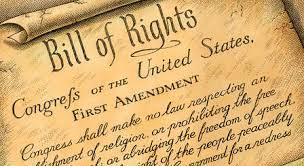
Diverse opinions not accepted: Censorship by a contractor of the U.S. Children’s Bureau

Instances of censorship and restrictions of free speech from both ends of the political spectrum have drawn increasing concern as the country’s polarization has increased. I have been very grateful that a digest of child welfare news and opinion articles funded by the federal government has for years been sharing my work–which often takes aim at the ideology prevailing in child welfare. But last July, the government contractor that prepares these digests declined to share one of my opinion pieces–while continuing to share other commentaries with a different perspective. My attempt to get an explanation has resulted in a series of bizarre communications that only heighten my fears that a government-funded organization is censoring the views that it shares.

Child Welfare in the News (CWN), a daily email sponsored by the US Children’s Bureau, has contributed significantly to Child Welfare Monitor‘s growth from its creation in 2016. CWN is an “email subscription service that provides a daily collection of news stories and opinion pieces from across the country and around the world.” It is an activity of the Child Welfare Information Gateway (CWIG), which is part of the Children’s Bureau and is managed by a consulting firm called ICF. For several years, I have been sharing links to Child Welfare Monitor commentaries with the ICF librarians who put together CWN and they have in turn provided links to these pieces, along with excerpts, in their daily mailings. At least until last July.

On July 24, 2023, I published The Misuse of Lived Experience in Child Welfare. The gist of the piece was that while all lived experiences are valid and valuable, their use can be problematic when experiences that support a particular perspective are highlighted and those that contradict it are not, or when evidence from data and research are ignored in favor of curated narratives. When I shared the blog post with the CWN staff as usual, I received a message saying “We’ll get back to you in a few days with a response on this article.” This was unexpected. When I checked for an update on July 31, an ICF librarian responded that “we are still working to review this article, and expect to have a response soon.” I emailed again on September 7 and heard that “We’ve not yet received a response or decision on this article.”

I replied asking to whom my commentary had been submitted and why, what the review criteria would be, and when I could expect a response. Receiving no answer, I wrote on September 14 to the Communications Director of the Administration on Children and Families, parent agency of the Children’s Bureau. I also submitted a Freedom of Information Act request asking for any emails that contain my name or that of Child Welfare Monitor.

On September 22, I received a response from Kai Guterman, the “Senior Manager of Knowledge Management” at ICF, which included the following:  “As you know from your past submissions, The Child Welfare Information Gateway is a service of the Children’s Bureau and as such, as part of our standard process our team reviews all requests submitted. Upon our review, this request was not selected for posting as it contains personal fundraising links.” I was totally baffled by this response. I was not aware of any “personal fundraising links” in my piece, but an alert reader informed me after I published this blog that the photo I used of the family of Vanessa Peoples (the mother whose bad experience with CPS was cited by Dorothy Roberts in her book), came from a GoFundMe page set up to help her and her family. Not realizing that at the time I replied, asking Mr. Guterman to describe these links so I could remove them and allow the post to be shared by CWN. Thirteen days later I received the following response:

Thank you for following up and agreeing to exclude the fundraising link. 

We have conducted a review of the Misuse of “Lived Experience” in Child Welfare blog submission request.  While we appreciate your submission, it has been determined that it will not be included in the Child Welfare in the News since this specific blog post has a strong emphasis on storytelling, calls out individuals [sic] names, makes personal opinion statements about individuals, and focuses on editorial and opinion-based content. 

As you consider future submissions, please review how much editorial or opinion-based content is included and ensure the content is not driven by or connected with fundraising purposes.   

Email from Kai Guterman, Senior Manager of Knowledge Management, ICF, October 5, 2023

This message from Mr. Guterman was even more confusing than the previous one. It is certainly true that my blog post names several individuals, including the writer Dorothy Roberts and several people who have shared their lived experience with the child welfare system in writing and/or in oral testimony, and I included links to all of their writings. But not many news or opinion articles shared by CWN fail to name individuals. And my post does not make any “personal opinion statements” about these individuals other than summarizing or quoting their views and saying that other types of experiences also exist. The “strong emphasis on storytelling,” leaves me totally baffled. Indeed, the major point of the essay was to question the use of individual stories to make policy. Is it possible that Mr. Guterman missed the point of my blog or did not read it at all? Moreover, removing articles that tell stories would probably exclude more than half the content that is currently included in CWN–pretty much every news story and many opinion pieces as well.

And finally, Mr. Guterman asserts that my piece “focuses on editorial and opinion-based content.” Yes, most of my blog posts are opinion pieces and are labeled as such in the CWN emails, along with opinion pieces by other authors. Since I published my lived experience blog, the newsletter has shared numerous opinion pieces. At least four of these commentaries were by a writer named Richard Wexler. From beginning to end, Wexler’s essays “focus on editorial and opinion-based content,” as Mr. Guterman put it. Here is one example from Child abuse: the surge that wasn’t, a commentary from August 17, 2023 that was shared by CWN.”The American family policing system, a more accurate term than “child welfare” system, is built on ‘health terrorism’ – misrepresenting the true nature and scope of a problem in the name of ‘raising awareness.'” Some of Wexler’s pieces “have a strong emphasis on storytelling.” For example, in Child Well-Being Doesn’t Require Family Policing, also shared by CWN, Wexler devotes seven paragraphs to the story of one family that he says was victimized by a false accusation of child abuse.

As far as “calling out individuals,” CWN shared a piece by Wexler entitled Attn: New Hampshire “Child Advocate – there are horrendous institutions in your state too.” In that commentary, Wexler “calls out” the New Hampshire Child Advocate by name, telling readers that she was “understandably proud of herself” for getting two New Hampshire teenagers out of an abusive institution. But she “took matters too far” when she said according to a local news station that she and her staffers could finally get a good night’s sleep after removing the two teenagers from the institution. But nobody should be getting a good night’s sleep as long as “children are institutionalized,” according to Wexler. “And [the Child Advocate], of all people, should know it” because last year her predecessor issued a report exposing abuse at a New Hampshire institution. He goes on to label as “disheartening” her proposal to form a commission to address the issue of residential care.

It is noteworthy that Wexler’s pieces tend to endorse the prevailing ideology about child welfare, albeit often in an extreme way, while mine tend to challenge it. But Wexler is not the only author of opinion pieces that tell stories and mention individuals and nevertheless are shared by CWN. In addition to commentaries by Wexler, the newsletter has shared opinion pieces with titles like “The Child Welfare System Is Failing Children, Separating Black and Brown Families,” and “What To Do When Children’s Services Comes to the Door,” which also endorse the prevailing view. But my essay has been rejected, ostensibly for the same characteristics that these pieces display. Could it be that the creators of CWN are discriminating based on viewpoint?

As Mr. Guterman mentioned, ICF produces CWN under contract for the Children’s Bureau, which has wholeheartedly endorsed the prevailing view of child welfare promoted by a group of well-heeled foundations and nonprofits, consulting firms and influential commentators. This narrative portrays a racist child welfare system that disproportionately investigates, intervenes with and separates Black children and families. It disregards the evidence that the need for protection is also much greater among Black children, suggesting that they are more likely underrepresented in relation to their need. The dominant viewpoint asserts that foster care is harmful and rarely necessary and that “prevention services” including financial aid can eliminate the need for most child removals. It holds that children should almost never be placed in non-family placements such as group homes or residential treatment centers. Proponents of this perspective hailed the Family First Act, which has failed to add significant preventive services while catastrophically reducing the availability of placements for the most troubled and traumatized young people, resulting in an explosion in the number of youths staying in offices, hotels and other inappropriate placements.

In my censored commentary, I provided examples of how the child welfare establishment and its preferred authors tend to share only the lived experiences that support their views, while ignoring experiences that support different viewpoints. And I gave examples of foster care alumni who have shared experiences of foster care and group homes that contradict the ones that have been repeatedly highlighted. Instead of choosing only the personal stories that support preferred views, I suggested that it is more useful to survey large samples of foster care youths or alumni. And I reported that such surveys result in much more positive views of foster care and group homes than those of the individuals who have been highlighted.

Over the years, Child Welfare Monitor has consistently expressed views that sharply question those of the child welfare establishment. But the CWN staff has never declined to share a piece because of its content. The website description of CWN states that the inclusion of a link “does not imply endorsement of any view expressed in a story and may not reflect the opinions of Child Welfare Information Gateway, the Children’s Bureau, or either organization’s staff.” So they clearly do not need to vet submissions for viewpoint.

The reason for the sudden change in practice (without notification or a change in the website language) remains a mystery, but one might speculate that it has something to do with a decreased tolerance for diverse views. But ICF or the Children’s Bureau would be violating the spirit and possibly the letter of the First Amendment if it were purposely excluding from a government publication content that does not fit the prevailing view. The Supreme Court has ruled that the government cannot discriminate against speech based on viewpoint, stating that: “When the government targets not subject matter but particular views taken by speakers on a subject, the violation of the First Amendment is all the more blatant. Viewpoint discrimination is thus an egregious form of content discrimination. The government must abstain from regulating speech when the specific motivating ideology or the opinion or perspective of the speaker is the rationale for the restriction.”

The possibility of viewpoint discrimination by the federal government or its contractor is deeply disturbing. But ICF’s dishonesty is also concerning. I was told for weeks that the article was still under review. When I persisted, I was told that my piece was censored because of “personal fundraising links” that I could not identify. When I asked to be shown the links so I could remove them, I was then given an entirely different explanation. And the new explanation was equally absurd, citing issues with my blog that either did not exist or were common to many other pieces shared in CWN. So there must be another reason they have not given me, and discrimination based on viewpoint is the only one that comes to mind.

It is unfortunate that my attempt to tell the truth about child welfare has finally come up against the increased intolerance for diverse views, even in a government-funded clearinghouse. Unless I find an organization that wants to take my case to court, it is unlikely that “The Misuse of Lived Experience” will be published in Child Welfare in the News. I’ll have to rely my readers to share my writing with their colleagues. Please share this blog and my censored post and urge people to follow Child Welfare Monitor. We cannot let the censors win.

Caring about Children Isn’t Racist

Well, it happened. After a lifetime of service to poor and maltreated children, I’ve been accused of racism. I knew it would happen eventually. I couldn’t keep saying with impunity that children shouldn’t be collateral damage in an attempt to avoid “punishing” parents who happen to be members of a minority group.

It was a prominent critic of government intervention to protect children who noticed an op-ed that I wrote for the Chronicle of Social Change in August 2017 and demanded a retraction.

In the offending piece, I critiqued an article in the New York Times entitled Foster Care as Punishment: The New Reality of Jane Crow. In my rebuttal, entitled Foster Care as Punishment? A Case of Biased Reporting by the New York Times, I attempted to highlight the naivete of the reporters, who accepted the statement of a birth mother that she splurged on brand-name diapers for her baby as an indicator of her fitness as a mother.

As the authors put it, “Maisha Joefield thought she was getting by pretty well as a young single mother in Brooklyn, splurging on her daughter, Deja, even though money was tight. When Deja was a baby, she bought her Luvs instead of generic diapers when she could.” The authors went on to describe the night when an exhausted Ms. Joefeld put Deja to bed and “plopped into the bath with earphones on.” Ms. Joefeld was indeed tired. Deja was placed in foster care after she was found wandering the streets of Queens at midnight after trying and failing to rouse her mother.

I thought the authors’ concept of good mothering seemed to be a little backwards, as it prioritized spending on brand names over being available to respond to a small child at any time of the day or night. So I wrote, “It is odd to me that the authors seem to consider splurging on brand-name diapers, sneakers, or apparel to be an indicator of good motherhood.”

Little did I know the firestorm I was launching. The authors had said nothing about sneakers or apparel, but I grouped them with diapers, because I was making a general point about some parents’ undue preoccupation with brand names. And those words were a trigger to to those advocates of family preservation under all circumstances who are always looking for a chance to cry racism.

In an email I received 15 months after publication of my op-ed, the Publisher of the Chronicle of Social Change told me that the Chronicle would be publishing a publisher’s note concerning my use of “racially charged language” and asked me whether I wanted to submit a statement that he would consider including.

What the Chronicle eventually published was called An Apology for a Regrettable Chronicle Op-Ed. In it the publisher and Editor state that “the trope of a low-income mom buying children designer clothes, at the expense of spending on more critical family needs, does exist as a crude and often racial stereotype.” They apologize for their “poor judgement” in allowing “a callous dismissal of a young single mother’s very human efforts to do right by her daughter” to stand.  They deleted my piece from their website. And they did not publish my statement that I had sent to the publisher at his request. Here is what I said:

This statement [about brand-named diapers, clothing and shoes] was based not on racism but on my experience as a social worker in foster care. It was not unusual for birth parents to complain when foster parents dressed their kids in clothes that were not stylish or (God forbid) handed down. It was also not uncommon for them to splurge on high-end apparel or athletic shoes, or talk about splurging on them, in visits to their children. All of these behaviors together made a big impression on me. That some parents who had subjected their children to abuse or neglect seemed to care passionately about the brand of diapers, clothing or shoes their child wore seemed contradictory and illustrated a fundamental problem with their parenting.

I expressed my feelings most clearly in an adoption hearing that I will never forget. One of my favorite foster parents, an African-American woman I will call “Ms. Brown,” had petitioned to adopt “Ronald,” a little boy whom she had loved and cared for as her own for several years. “Ronald’s” father, a drug user who often showed up to visits with his son high or exploded with rage during visits, often requiring a police presence, was fighting the adoption tooth and nail with the help of his very aggressive lawyer. Through the lawyer, the father raised the issue that “Ronald” was often dressed in what seemed to be hand me downs or cheap clothes. The Judge asked for my opinion and I gave it to her. I told her how this father resembled many other birth parents, who are more concerned with the newness and style of their children’s clothes than with the safety, security and most importantly love provided by the foster parent. For me, the father’s question illustrated his inability to understand what matters to a child (love and security) and what doesn’t (brand names.)  The judge cut me off, admonishing me sharply for my editorial comments. But I hope she understood. She eventually approved the adoption. I recently saw “Ronald,” and he is thriving with “Ms. Brown.”

Because I worked in the District of Columbia, most of my clients (parents and children) were African-American. If I had worked in Maine or Indiana, I have no doubt that I would have seen some of the same patterns among white parents. Perhaps it is an issue of class [to some extent]. But I think most of all it reflects parents who have not grown up sufficiently themselves to understand that their children are not dolls to be dressed up in a way that reflects well on parents and that they need love, not brand-name diapers or fancy clothes. No, my words were not racist. They were about what matters for children, and what doesn’t. Children should be at the heart of this debate, not racial groups.

Readers who have worked with abusive and neglectful parents as social workers, therapists, or in other capacities will recognize the phenomenon I describe here. The fact that neither the New York Times journalists nor the publisher of the Chronicle (who was clearly puzzled by where my reference came from if not racism) understood this shows their distance from the people they are writing about. Nor do they understand that many healthy and mature parents of all races, such as the foster parent I called “Ms. Brown,” are completely unconcerned with brand names.

I have written before, and will write again, about what has been called “the liberal dilemma of child welfare reform.” Many of my fellow liberals seem to be reluctant to “punish” parents whose problems in parenting stem from poverty and racism by taking away their children or even monitoring and offering services to these families. The whole idea of “punishing” parents, which was used in the title of the Times article, reveals the emphasis on parents’ rights over child safety. But if we succumb to this attitude, we may be condemning poor and minority children to years of suffering and even death. Is that really the anti-racist position?

Some of these who advocate family preservation at any cost are eager to describe any criticism of an African-American parent as racist. They use the fear of being called racist to suppress expressions of alternative viewpoints. As a child of Holocaust survivors, I am well aware of what can happen when fear paralyzes free speech. I was sad to see the Chronicle respond so pusillanimously the demand that I be silenced.


Child Welfare Myths: Black/White Disproportionality in Child Welfare is due to Racist Child Welfare System

Graph: http://www.childrends.org

According to federal data, black children were 13.8 percent of the total child population in the United States in 2014. Yet, they constituted 22.6 percent of those identified as victims of maltreatment, and 24.3 percent of the children in foster care. In Minnesota, the disparities appear to be even greater. Citing these disparities, two legislators have proposed the Minnesota African American Preservation Act.

The Act would create an “African American Child Well-being Department” within the Department of Human Services to receive notification of all cases involving African-American children and “directly  oversee, review, and consult on case plans and services” offered to these children. It would also create an African American Child Welfare Oversight Council.  Similar to the Indian Child Welfare Act, it would set a higher bar for removing African American children from their homes than white children and require greater efforts to reunify children once removed from their families.

The bill’s sponsors argue that racial disparities in child welfare are caused by differential treatment of minority families in terms of how allegations of maltreatment are investigated, resolved, and responded to. This is belief, which was supported by early research, has become accepted by the child welfare establishment.

The idea of racial bias in child welfare found support in the first two National Incidence Studies of Child Abuse and Neglect, which were published in the 1980s and 1990s. These studies, which attempt to count all episodes of abuse and neglect rather than just those that are reported and substantiated, suggested that there was no difference in black and white child maltreatment rates. The study authors suggested that black families received differential treatment by child welfare systems, resulting in their over-representation in these systems.

Starting about 2004, a coalition of foundations, nonprofits, and academics formed around the idea that this disproportional representation of black children in child welfare stemmed from a racist system. This coalition launched a well-funded campaign to reduce the representation of black children in child welfare and especially foster care. They issued reports, held conferences, and provided training and technical assistance to help states analyze their disproportionality problems.

As a result of this work, agencies around the country have adopted strategies like staff retraining, creating special administrative structures to advance racial equity, and special data collection efforts. As a social worker in the District of Columbia, I was subjected to multiple, often poor-quality trainings that tried to help me discover my hidden biases so that they would not affect my treatment of families. 

The fact that child welfare workers in many jurisdictions are disproportionately African American has not influenced the consensus in favor of such strategies, as pointed out in an excellent article by Naomi Schaefer Riley. When I pointed out in a training class that most District of Columbia child welfare social workers were African-American, I was told that did not matter, as Black social workers could be as racist as white ones.

But a cascade of new research has cast grave doubts on the accepted theory of disproportionality. The fourth (larger and more rigorous) National Incidence Study published in 2010 using data collected in 2005 and 2006 estimated that black child maltreatment rates were almost twice as high than those of whites. Further analysis showed that this difference was present in the earlier study, but due to small sample sizes, the differences were not statistically significant and hence not reported.

conference, convened in 2011 by Harvard, Chapin Hall at the University of Chicago, the National Council of Juvenile and Family Court Judges and the National Court Appointed Special Advocates, brought together leading scholars on child welfare and race in front of an audience of child welfare leaders from around the country. A research brief summarizing the conference that was published by Chapin Hall concluded that “there is a significant black/white maltreatment gap, one that roughly parallels the gap in official maltreatment reports. This evidence contradicts the belief that black children are included at high rates in the child welfare system because of bias.”

The brief’s authors based their conclusions on the National Incidence Study as well as other empirical work reinforcing the conclusion that child maltreatment rates are significantly higher for black children. They suggested that the higher rate of maltreatment among African-Americans stems from the history of slavery and racism, which led to higher poverty and concentration in impoverished neighborhoods characterized by crime, substance abuse, unemployment, and limited community services.

In other words, disproportionality is rooted in racism. But It’s not a racist child welfare system that results in disproportional representation of black children in the child welfare system. Rather, it is the racist history of our country that has created the difference in child maltreatment which in turn resulted in disproportional representation.

The researchers concluded that trying to reduce racial bias in the system is not the way to address the inequity between blacks and whites in child welfare. Instead, we need to address the underlying social conditions. And until we can do that, we need to protect children, both by preventing maltreatment and by providing appropriate protective services.

Since the Harvard conference, the evidence continues to accumulate that black and white maltreatment rates differ. A recent study published in the journal Pediatrics concluded that the child abuse fatality rate for children aged four and under was 8.0 per thousand African-American children, compared with 2.7 per 100,000 white children.

Unfortunately, many child welfare agencies, advocates, and legislators, including the sponsors of the Minnesota legislation, are either unaware of, or do not want to recognize, the new consensus among researchers. As The Los Angeles Times put it:

“Many left the [Harvard/Chapin Hall] conference believing that any caseworker bias against black families accounted for only a small portion of the disparity in foster care rates … Yet, Los Angeles County officials pressed forward with programs that assumed that racial bias was a significant cause for the high rate of [foster care placement] of black children.”

As I have written in the past, Native American children have been victimized by a similar type of reasoning. The Indian Child Welfare Act has been responsible for separating Indian children from loving foster families and placing them with relatives they do not know. On some occasions, these relatives have hurt or killed them.

This focus on reducing alleged systemic bias may do more harm than simply wasting child welfare resources on bureaucracy and training. If black children are more likely to be maltreated, equalizing black and white representation in the child welfare system would leave many black children in danger of years of suffering or even death. As Naomi Schaefer Riley put it, “No it’s not racist to save minority children’s lives.”