by Emily Putnam-Hornstein (University of North Carolina at Chapel Hill), Sarah Font (Pennsylvania State University), and Brett Drake (Washington University in St. Louis).
I am honored to publish this post by three of the leading academic researchers in child welfare. As often is the case in this blog, they are writing about the flawed use of data to support the user’s claims about a policy or program. In this essay, the authors discuss last year’s testimony by Indiana’s deputy director of child welfare services claiming success for the state’s family preservation program in reducing foster care caseloads without compromising child safety while also reducing racial disparities.
On May 22, 2024, the U.S. Senate Committee on Finance held a hearing titled “The Family First Prevention Services Act (FFPSA): Successes, Roadblocks, and Opportunities for Improvement.” The testimony was striking for its still-aspirational tone 6 years after the law passed and its sanitized depiction of why children enter foster care. As researchers, however, the statistics offered by Indiana’s deputy director of child welfare services, David Reed, caught our attention. Reed’stestimony indicated that FFPSA and associated investments in intensive family preservation services and concrete supports had produced: (1) a 50% decline in the state’s foster care caseload, alongside improved child safety; and (2) a two-thirds decrease in racial disparities among children entering foster care.
These claims are striking and beg the question: How?
On their very face, such dramatic numbers should invite skepticism. Despite continued efforts to move “upstream,” empirical studies of maltreatment prevention programs generally generate null or small effects. But one way for an agency to achieve a rapid reduction in foster care caseloads is to increase the threshold for intervening, leaving children in environments from which they would have been previously removed.
Below, we review data for Indiana and conclude that available evidence does not support the testimony offered.1 This is problematic not only for Senate Committee Members, but also the field at large. Bold causal claims based on flawed interpretations of data too often lead policymakers, and the public, to conclude that there are easy fixes to complex problems.
Reducing Entries to Foster Care and Improving Child Safety
The ideal way to reduce foster care entries is by reducing the community incidence of child abuse and neglect. Other than a brief drop during the COVID-19 pandemic, and despite investments in voluntary programs such as Healthy Families Indiana, referrals to Indiana’s child maltreatmenthotline were largely stable pre- and post-FFPSA implementation (i.e., 168,919 in 2017 vs. 172,077 in 2023). There is no evidence of a decrease in suspected maltreatment identified by community members.
Of note, data indicate that Indiana is now screening in a smaller percentage of referrals (75.0% in 2017 to 57.9% in 2023). Certainly, it is possible that Indiana was responding to allegations of maltreatment that were unwarranted. Indiana issued guidance in 2021 designed to change the state’s response to allegations of “educational neglect.” But if such changes led to the reduction, one would expect that as more “low-risk” referrals were screened out, children who were screened in would have higher risk and a greater share would be identified as victims requiring services.
Yet that is not what the data show. Among children who were screened in, the number of substantiated victims declined by roughly 30% between 2017 and 2023. This decline is particularly notable, given that during this same period, overdose deaths in Indiana were increasing and parental substance abuse is one of the most well-established risk factors for child maltreatment. It would appear that in addition to reducing the number of children who received a response, Indiana also increased its threshold for substantiating maltreatment. Importantly, changes in substantiation thresholds affect not only overall child victim counts, but also the federal measure of repeat maltreatment, which is the indicator of safety cited in Reed’s testimony. The easiest way to document improvements in child safety is to raise the bar for substantiation, thereby reducing both the initial victim count and the likelihood of identifying repeat incidents.
Short of successful efforts to reduce the incidence of maltreatment in the community at large, a second way an agency could theoretically—and safely—reduce the number of children in foster care is by expanding efforts to prevent placement by providing more families with effective services and resources. Yet once again, Indiana’s data show that fewer rather than more children reported for maltreatment have received in-home services. State data suggest a reduced number of children receiving in-home services in absolute numbers (Figures 1 and 2, Table 1) and no change in the proportion (Figure 3). Moreover, as depicted in all three figures and consistent with screening and substantiations, steep declines in in-home services and foster care caseloads began in 2017, before FFPSA was implemented.
A third possibility is that the services provided have become more effective, thus reducing the rate of children entering foster care. Yet the major program touted by Reed in his FFPSA testimony—an intensive family preservation program called Indiana Family Preservation Services—appears to have no effect on removal and a near-zero effect on repeat maltreatment.2 Indeed, the program is described as having “0 favorable effects” by the federal clearinghouse for evidence-based programs. There is simply no way to attribute a 50% foster care reduction to Indiana’s prevention services.
Finally, because the number of children in foster care is a function of the number of children entering care relative to the number of children exiting care, an additional possibility is that Indiana found ways to transition children out of its foster care system faster or in greater numbers. However, foster care entries declined from 12,826 in 2017 to 6,212 in 2023. underscoring that the bulk of the 50% caseload reduction likely stemmed from fewer entries.
Decreasing Racial Disparities
Senate committee members also heard about data suggesting that Indiana’s Black–White disparity in foster care entries declined by two thirds. The statistics presented, however, were quite unusual. The typical approach—both in the health literature and as a longstanding practice in child welfare—is to measure disparities as a ratio of rates (known as relative risk). In the context of the testimony presented, this would have been presented as the Black foster care entry rate divided by the White foster care entry rate.
But this is not what was used.
Rather, Indiana’s numbers were presented as the subtracted difference: the Black foster care entry rate minusthe White foster care entry rate. The problem with this approach is that it is very sensitive to base rates. Imagine that rates of removal were 10 per 1,000 Black children and 1 per 1,000 White children, then those rates decreased to rates of 1 per 1,000 for Black children and 0.1 per 1,000 for White children. In both cases, the relative risk of removal is 10 times higher for Black children than White children (a 0% change in disparity). But using Indiana’s subtraction-based measure, it would appear that the disparity declined from 9 to 0.9: a 90% reduction.
Using the conventional disparity ratio formula, the Black–White removal rate disparity declined only slightly in 2021–2022 compared with 2016–2017—a reduction of roughly 12%, not the “66.9% decrease” indicated in Reed’s testimony (see Table 2).
Summary
Available data do not support testimony that FFPSA implementation and Indiana’s Family Preservation Services program led to a 50% decline in foster care cases. Likewise, any reported improvements in child safety are likely an artifact of changed thresholds for classifying child maltreatment victims. We also believe that this testimony indicating dramatic reductions in racial disparities is quite overstated.
Of course, it is always possible that we have misunderstood the numbers Reed referenced—which is why we contacted him almost a year ago and shared our analysis. We received no response. If there is additional data that supports the testimony provided, we hope it will be made available. Until then, it is only reasonable to conclude that the striking claims made do not hold up to even modest scrutiny.
Note: On June 3, 2025, the IndyStar published an op-ed by Emily Putnam-Hornstein and Sarah Font summarizing the analysis in this post.
Notes
Regarding data published by Indiana’s Department of Child Services, we relied on publicly available information published as of June 2024 to align with what would have been available at the time this testimony was prepared. We also used data submitted by Indiana and found in the annual Child Maltreatment Reports. We focused on trends from 2017 (before FFPSA) through 2023 (the most recent year available). ↩︎
To elaborate, the intervention produced no “direct effect” on children entering foster care (i.e., no statistically significant reduction occurred in placements among families who were served). Published research has indicated that the intervention may have led to a small reduction in repeat maltreatment. To be generous, Indiana officials might argue that despite no direct effect on removals, the reduction in repeat maltreatment led to reduced removals over time. However, the estimated reduction in repeat maltreatment is only 4%, meaning that any indirect effects on removals cannot be more than this 4%. It is also worth noting that the declines in foster care caseloads began long before the program was implemented at any scale in Indiana. ↩︎
Recognizing implicit bias in mandated reporting training is a national focus for addressing racial inequity in child welfare. States from New York to Washington have updated their training for mandatory reporters to include implicit bias or highlight the distinction between neglect and poverty in an effort to reduce racial disparities in child welfare involvement. My recent experience taking the updated training in Washington DC made clear that there is a fundamental conflict between preparing mandated reporters for their responsibility to report and advising them to assess their biases before reporting. The basic conflict is this: the core training instructs mandatory reporters to report any suspicion of abuse or neglect, while the implicit bias unit urges mandatory reporters to doubt their instincts and reconsider their duty to report.
In FY 2023, the District of Columbia’s Child and Family Services Agency (CFSA) updated its online mandated reporter training to include a module focused on understanding and addressing implicit bias for mandated reporters. This training is required for all mandated reporters, who include both professionals (doctors, nurses, teachers, social workers, etc.) and volunteers who work with children. I had taken the training several times in the past–first for my work as a social worker with CFSA and later as a mentor to a foster youth. I had my first experience with the updated training last month as part of my preparation to serve as a Court Appointed Special Advocate (CASA) for a child in foster care.
The Implicit Bias Module
The implicit bias module appears to have been shoehorned into the existing DC mandatory reporter training right after a brief introduction to mandatory reporters and their role. The video introducing the section explains that implicit bias harms “families of color” in the child welfare system, without providing any evidence of such harm. It goes on to assert that “the point of this portion of the training is to make sure that reporting is based on observations and not assumptions. Ultimately we want mandated reporters to consider this before responding to a child’s disclosure of suspected abuse or neglect: Do I have any implicit bias in my decision to call or not to call the hotline.” It may sound reasonable, but as the training unfolds, a conflict with the goals of the overall training and mandatory reporting itself becomes clear.
The implicit bias module continues by explaining that nationally and in DC, mandated reporters call the CFSA hotline about Black families disproportionately more than White families; this leads to more “Black and Brown” children having in-home cases or entering foster care because they are assessed more closely. A graph has been provided, with text saying “In this graph, disproportionality is where you see that Black and Brown children make up approximately 64% of hotline calls. However, only 57% of people in the District are a race/ethnicity other than white.” Unfortunately, one does not see this in the graph, which does not include hotline calls at all! It does include children who are the subject of an investigation after a call to the CFSA hotline, and it shows that Black children made up 57 percent of the investigated children, while comprising 53 percent of the population. That is a very small disparity, and in any case could reflect unequal rates of abuse and neglect between Black and White children. The data does show a larger Black-White disparity in confirmed maltreatment (71 percent of the children confirmed as maltreated are Black) and “foster care” (whether this is children in care or entries into care is unclear) at 92 percent. But these increasing disparities come in at the investigation stage (where the substantiation and foster care decisions are made), not at the reporting stage, calling into question the need for training mandatory reporters about implicit bias. To make matters worse, the data on investigations contain a whopping 40 percent without race or ethnicity data; 26 percent of the confirmed maltreatment data, and 23 percent of the in-home case data also lack race and ethnicity information. (Note that the bars of the graph have been shifted by one column to the left of the corresponding columns from the numerical table, as in the original.) So it is impossible to draw meaningful conclusions from these data.
Source: DC Mandated Reporter Training, Lesson 3, page 6, available from
Other than the mention of the hotline call data, which is missing from the graph, the only analysis of the data in the text reads as follows. “Disparity occurs when these children and families have cases open to either in home or foster care support. As you can see that [sic] 85% of in-home cases, and more than 92% of foster care cases in 2020 were opened with Black and brown families, while again the District’s make-up is only 57% Black and brown.” The inclusion of “brown families” is somewhat disingenuous. The graph shows that Hispanics and Asians, the only “brown” children with non-zero populations on the graph, are underrepresented in investigations, confirmed maltreatment, foster care, etc.1 Switching categories, the lecturer goes on to state that “At every stage, Black and Indigenous families face racial discrimination and unequal treatment.” DC is not known to have a large indigenous population; there is no row on the table for Native Americans, and Native Hawaiians and Pacific Islanders are zero percent of every category except that they are listed as making up two percent of children aging out of foster care in 2019.
A central motif of the training is that the confusion of poverty with neglect contributes to the racial and ethnic disparities in child welfare. The video states that “under current law, most children in the US are separated for neglect, a code word that typically represents conditions of poverty, resulting in disproportionate separation and harm to Black families….” But there is a problem with this. We know that neglect is often associated with serious drug abuse and/or mental illness. After all, most poor people don’t neglect their children. Moreover DC Code Section 16.2301 forbids a court to find maltreatment when the deprivation of food, clothing, shelter or medical care is due to the parent’s lack of financial means. The law does not allow removing children because of poverty in DC, and the small number of removals compared to investigations in DC (224 children placed in foster care compared to 3,767 investigations in FY 2024) suggests that CFSA does not remove children for poverty alone.
The training includes practice scenarios to help trainees distinguish between poverty (or “need” according to the training) and neglect. The participant must read the scenarios and decide whether they represent need (and presumably do not call for a hotline report) or neglect. After providing their own answer, trainees learn the “right answer” according to CFSA. One of the three “need” scenarios is particularly troubling and is reproduced here:
The 4-year-old child came into the center smelling of a strong smell and her nails are long and dirty. There is sticky stuff on her chest that is black underneath her shirt on her skin. The child often comes to the center unbathed. She was wearing shoes that were too small, but the dad was made aware, and he got her new shoes. The child comes in with an old pamper not changed, soaked or soiled. Sometimes she comes to school with the same clothes on from the day before or sometimes wears the same clothes for three days.
The child does not talk or engage with staff or peers. The mother has been observed yelling at the child and all she does is cry. The child covers her eyes but does not ask for anything.
The caller is aware that the family was recently evicted after the mother lost her full-time job and they are being supported on the income made from the father’s part-time employment. The family moves from the homes of family and friends because they refuse to go to a shelter. Caller suspects sometimes the family may sleep in the car.
The characterization of this scenario as “need” rather than neglect is troubling. The combination of factors that are cited suggest something more than poverty. The fact that the child “does not talk or engage with staff and peers,” and that the mother “has been observed yelling at the child and all she does is cry” suggest problems this beyond the realm of need. The refusal to go to a shelter under current conditions, when the District of Columbia guarantees shelter to families with children and has replaced its dilapidated shelter with modern new facilities, increases the likelihood that this is a case of neglect.
In the content that follows, a video tells mandatory reporters that although they are required by law to report suspected abuse or neglect, they should not make reports “solely based on assumptions, schemas, or biases.” It seems rather disrespectful to think that a doctor, nurse, teacher, social worker or volunteer would do this. Trainees are presented with the following questions to ask before making a report.
This is confusing indeed. Is the agency saying that mandatory reporters should not make a report “solely out of legal obligation,” even though they are legally required to report and could receive consequences for not doing so? Providing resources to assist the family is fine, but if there is abuse or neglect, does that exempt the reporter from the duty to report? It seems unlikely and unwise.
“Granted,” the presenter continues, “there are many times when you recognize your legal obligation, have the resources to support a family, and have checked your biases, and a report still needs to be made.” But the speaker goes on to state that “Each of us holds a responsibility to address disproportionality and disparity in the lives of Black and Brown families in the District.” She then invites us to “walk through how we can do this together,” by listening to two videos that are a total of five minutes in length. The first video, on “Mitigating Bias” counsels reporters to follow a three-step process consisting of of “deliberate,” “reflect,” and “educate,” with each step containing mutiple steps or suggestions. Mandatory reporters then learn about “cultural humility” and its three attributes: “lifelong learning and critical self-reflection,” “recognition and challenging of power imbalances,” and “institutional accountability.” And then training participants are told that “[u]ltimately, our goal is to ensure that children who are experiencing neglect in the District receive the support they need to thrive within their families. To do this effectively, we each have to ensure our implicit biases, whether personal or institutional, are not the foundation for calls to the CFSA hotline.” Apparently, no children in the District need to be removed from their families in order to thrive; even though the agency providing the training removed 244 children in the last Fiscal Year, as mentioned above.
To sum up, the implicit bias section of the training teaches child-serving professionals and volunteers that mandatory reporting harms Black children and that to avoid that harm, mandatory reporters must engage in a lengthy deliberative process before making a report. Mandatory reporters learn nothing of the costs of not making a report, which include the possible death of a child. They also learn nothing about the different risks facing Black children, who are three times more likely than White children to die of maltreatment.2 Instead, they are told that “we are delinquent in addressing the institutionalized racism and bias that pervades our family and wellbeing systems. This has been perpetuated by the misconception that we are nobly rescuing children from dangerous situations.” The clear implication is that making a report is much more risky than not making one.
A Case of Mixed Messages
After at least an hour of training on implicit bias, mandatory reporters finally arrive at the original training, which seems mainly unchanged. They learn about how to respond to a child’s disclosure of abuse or neglect. They learn they must report when they have reasonable cause to believe a child has been, or is in immediate danger of, being abused or neglected. They learn what and how to report. They learn that the identity of reporters is confidential and that failure to make a report can be punished by a fine of up to $1,000 or imprisonment for up to 180 days. They learn about different types of abuse and neglect, which children have higher risks of being maltreated, situations in which CFSA does not intervene, what happens when a report is made, and how child welfare services work in the District of Columbia. They are told to “[r]eport any suspicion of child abuse and neglect,” and that “every call matters!” A key instruction is buried in the section on how to distinguish discipline from child abuse. It says: “The good news is, as a mandated reporter, you do not need to know the details or all the facts before making a report. You just need to be suspicious of abuse/neglect and CFSA’s response, if it does respond, will do the rest.” (This should be moved to the top and emphasized, as it may have been in an earlier version of the training). In closing, trainees are told that:
Abuse and neglect place children at great risk of physical and emotional injuries and even death. As a mandated reporter, the District is expecting you to do the following:
Recognize the signs of child abuse and neglect.
When children have the courage to disclose abuse or neglect to you, take them seriously.
When you suspect or know of incidents of child abuse or neglect, call CFSA at (202) 671-SAFE.
Be responsible for calling the CFSA Hotline yourself, even if you have informed your supervisor.
If necessary, be helpful and available during the investigation.
The fundamental conflict between the training’s two messages is clear. According to the original training, abuse and neglect are dangerous to children and it is our responsibility to report. According to the implicit bias section, it is reporting that is dangerous and needs to be inhibited. Neglect is a serious type of maltreatment according to the original training but a “code word”d according to the implicit bias section. It is not really surprising that the implicit bias element of the training seems to be in opposition to the preexisting content. Perhaps those who inserted this content would prefer to eliminate mandatory reporting training entirely and are just trying to minimize it within the requirements of current law. But the half-measure of trying to train the implicit bias out of mandatory reporters creates a training that simply does not make sense.
In addition to this fundamental disconnect, the training exhibits many factual errors and is padded with extraneous content. The factual errors are discussed in an addendum to this post. The extraneous content includes discussions of the racial wealth gap and instructions for “self-reflection, in which trainees are instructed to define their values by a three-step process that is painstakingly described in a three-minute video. Perhaps the most striking extraneous content is a section that describes in detail six types of “mental models related to diversity, equity and inclusion.” One of the six types is “active opposers,” who are typically deeply rooted in their choice to be a strong opponent of DEI. These are the people whose minds cannot be changed and who are committed to disrupting the work of DEI.” One cannot help wondering how the current federal leadership would respond if they knew of this content, and being offended at the disrespect for the time of busy professionals or volunteers.
In summary, there is a fundamental conflict between the original message of CFSA’s mandatory reporter training and the message of the implicit bias unit that has been added to it. Unlike the original message stressing the duty and importance of reporting suspected abuse and neglect, the new message states that reporting damages children and families of color and should be avoided whenever possible. This fundamental conflict is not unique to the District and by necessity affects all mandatory reporter trainings that attempts to temper the duty to report by inserting considerations related to race and ethnicity.
From U.S. Children’s Bureau, Child Maltreatment 2023, page 59. States reported that 6,04 per 100,000 Black children were found to be victims of a child maltreatment fatality compared to 1.94 per 100,000 White children. These are deaths that have been confirmed as due to maltreatment by child protective services, medical examiners, or police, a process that may be affected by bias. ↩︎
Addendum: Factual Errors in CFSA’s Mandatory Reporter Training Implicit Bias Module
The implicit bias module in CFSA’s mandatory reporter training curtains numerous factual errors and omissions. Here are a few.
“National studies by the US Department of Health and Human Services reported that minority children and in particular black children are more likely to be in foster care than receive in-home services even when they have the same problems and characteristics as White children.” I asked the CFSA’s Communications Director for a citation and I found the exact language in one of the three references that were provided–a 2019 ABA brief entitled Race and Poverty Bias in the Child Welfare System: Strategies for Child Welfare Practitioners. A footnote referred readers to an essay by Dorothy Roberts for PBS’ Frontline program. That essay in turn attributes the same quote to “a national study of child protective services by the U.S. Department of Health and Human Services” with no citation. When consulted, ChatGPT references the outdated 1996 National Incidence Survey of Child Abuse and Neglect, which has been superseded and contradicted by the more sophisticated study published in 2010.
“Rates of child abuse are not higher for children of color than white children. People of color do not treat their children worse than White families do. Racial disproportionality in CW is due to systemic racism, cultural misunderstandings, stereotypes, and biases that influence the decision to report alleged child report or neglect to CPS.” This is simply not true. First, we don’t have definitive evidence of child abuse rates as it occurs in secret, may not be reported, and investigations may not come up with the right results. But all the evidence we have indicates that Black families do abuse and neglect their children more than White families. This is likely due to the history of slavery and racism, which led to higher poverty and concentration in impoverished neighborhoods characterized by crime, substance abuse, unemployment, and limited community services, as well as a legacy of intergenerational trauma associated with these factors as well.
“Although African American families tend to be assessed with lower risk than White families, they are more likely to have substantiated cases, have their children separated, or be provided family based safety services.” I could not find any resource on the internet that indicates that Black families tend to be assessed with lower risk than White families It is true that Black children tend to have more substantiated cases, have their children removed, or receive in-home services. But that is before controlling for family characteristics that affect risk. The only research article cited by CFSA actually reported that when they controlled for family risk factors, agency and geographic contexts, and caseworker characteristics, Black children were not at significantly higher risk of substantiation or removal.
The MacArthur Foundation has announced its new class of Fellows, the recipients of what are commonly called the “Genius Awards.” Among the recipients is Dorothy Roberts, the self-styled popularizer of the term “racial disproportionality” and creator of the term “the family policing system.” According to the Director of the Program, “The 2024 MacArthur Fellows pursue rigorous inquiry with aspiration and purpose. They expose biases built into emerging technologies and social systems….” It’s hard to understand how this term can be applied to an author who wrote that the “family-policing system terrorizes Black families because that’s what it is designed to do ” despite also stating that child welfare systems excluded Black children from their inception until the second half of the twentieth century. The choice of Roberts only exposes the bias and lack of rigor–or alternatively the sheer ignorance– of the MacArthur Foundation. As an illustration, I am reposting my 2022 review of Roberts’ most recent book, Torn Apart: How the Child Welfare System Destroys Black Families–and How Abolition Can Build a Safer World.
In her 2009 book, Shattered Bonds: The Color of Child Welfare, Dorothy Roberts drew attention to the disproportional representation of Black children in foster care and child welfare in general and helped make “racial disproportionality” a buzzword in the child welfare world. In her new book, Torn Apart: How the Child Welfare System Destroys Black Families–And How Abolition Can Build a Safer World, Roberts revisits the issues addressed in Shattered Bonds and creates a new buzzword, renaming child welfare as the “family policing system.” Those who liked Shattered Bonds will likely love Torn Apart. But those who value accuracy in history or in data will find it to be sadly misguided, although it does make some valid points about flaws in the U.S. child welfare system.
Roberts starts with a horrific anecdote about a mother, Vanessa Peoples, who was doing everything right–she was married, going to nursing school, about to rent a townhouse and was even a cancer patient. But Peoples attracted the attention of both the police and child welfare and ended up hogtied and carted off to jail by police, placed on the child abuse registry, and subjected to months of monitoring by CPS after she lost sight of her toddler at a family picnic when a cousin was supposed to be watching him. But citing these extreme anecdotes as typical is very misleading. This particular story has been covered in numerous media outlets since it occurred in 2017 and continues to be cited regularly. One can counter every one of these horrific anecdotes with a story of a Black child who would have been saved if social workers had not believed and deferred to the parents. (See my commentary on the abuse homicides of Rashid Bryant and Julissia Batties, for example).
Roberts’ book restates many of the old myths that have been plaguing child welfare discussions as of late and that seem to have a life of their own, impervious to the facts. Perhaps the most common and pernicious is the myth that poverty is synonymous with neglect. Roberts embraces this misconception, suggesting that most neglect findings reflect parents who are too poor to provide adequate housing, clothing and food to their children. But parents who are found to have neglected their children typically have serious, chronic mental illness or substance use disorders that severely affect their parenting, and have refused or are unable to comply with a treatment plan. Many are chronically neglectful, resulting in children with cognitive and social deficits, attachment disorders, and emotional regulation problems. Commentator Dee Wilson argues based on his decades of experience in child welfare that “a large percentage of neglect cases which receive post-investigation services, or which result in foster placement, involve a combination of economic deprivation and psychological affliction…., which often lead to substance abuse as a method of self-medication.” Perhaps the strongest argument against the myth that poverty and neglect are one and the same is that most poor parents do not neglect their children. They find a way to provide safe and consistent care, even without the resources they desperately need and deserve.
Roberts endorses another common myth–that children are worse off in foster care than they would be if they remained in their original homes. She argues that foster care is a “toxic state intervention that inflicts immediate and long-lasting damage on children, producing adverse outcomes for their health, education, income, housing, and relationships.” It is certainly true that foster youth tend to have bad outcomes in multiple domains, including education, health, mental health, education, housing and incarceration. But we also know that child abuse and neglect are associated with similar poor outcomes. Unfortunately, the research is not very helpful for resolving the question of whether these outcomes are caused by the original child maltreatment or by placement in foster care. We cannot, of course, ethically perform a controlled study in which we remove some children and leave a similar set of children at home. We must rely on studies that use various methodologies to disentangle these influences, but all of them have flaws. Roberts cites the study published in 2007 by Joseph Doyle, which compared children who were placed in foster care with children in similar situations who were not. Doyle found that children placed in foster care fared worse on every outcome than children who remained at home. [Update added October 2024: A newer study, reflecting current foster care policy and the more typical state of Michigan, found the opposite result.] But focusing on marginal cases* leaves out the children suffering the most severe and obvious maltreatment. In a recent paper, Doyle, along with Anthony Bald and other co-authors, states that both positive and negative effects have been found for different contexts, subgroups, and study designs.
There is one myth that Roberts does not endorse: the myth that disproportional representation of Black children in child welfare is due to racial bias in the child welfare system, rather than different levels of maltreatment in the two populations. After an extensive review of the debate on this issue, Roberts concludes that it focused on the wrong question. In her current opinion, it doesn’t matter if Black children are more likely to be taken into foster care because they are more often maltreated. “It isn’t enough,” she states, “to argue that Black children are in greater need of help. We should be asking why the government addresses their needs in such a violent way, (referring to the child removal). Roberts was clever to abandon the side that believes in bias rather than different need as the source of disparities. The evidence has become quite clear that Black-White disparities in maltreatment are sufficient to explain the disparity of their involvement in child welfare; for example Black children are three times as likely to die from abuse or neglect as White children. As Roberts suggests and as commentators widely agree, these disparities in abuse and neglect can be explained by the disparities in the rates of poverty and other maltreatment risk factors stemming from our country’s history of slavery and racism. Unfortunately, Roberts’ continued focus on these disparities in child welfare involvement will continue to be used by the many professionals who are working inside and outside child welfare systems all over the country to implement various bias reduction strategies, from implicit bias training to “blind removals.”
In Part III, entitled “Design,” Roberts attempts to trace the current child welfare system to the sale of enslaved children and a system of forced “apprenticeship” of formerly enslaved Black children under Jim Crow, whereby white planters seized custody of Black children from their parents as a source of forced labor.** As she puts it, “[t]hroughout its history US family policy has revolved around the racist belief that Black parents are unfit to raise their children. Beginning with chattel slavery and continuing through the Jim Crow, civil rights, and neoliberal eras, the white power structure has wielded this lie as a rationale to control Black communities, exploit Black labor, and quell Black rebellion by assaulting Black families.” In other passages she adds other groups to the list of victims, adding “Indigenous, immigrant and poor people to the list of communities that are being controlled by the “family policing system.” But most of her statements refer to Black victims only.
Roberts’ attempt to connect slavery and Jim Crow practices with child welfare systems highlights a major flaw of the book. She herself explains that due to racism the child welfare system served only White children when it emerged in the nineteenth century with the creation of child protection charities and the passage of state laws allowing maltreated children to be removed from their homes and placed in orphanages. Foster care was established in the middle of the century and also excluded Black children. The system did not begin serving Black children until after World War II, so it is difficult to understand how it could stem from slavery and Jim Crow practices. It seems much more plausible that the child welfare system arose from basically benevolent concerns about children being maltreated, and that with the rise of the civil rights movement, these concerns were eventually extended to Black children as well.
While Black children’s representation as a share of foster care and child welfare caseloads rose rapidly starting in the 1960’s, and Black children are much more likely to be touched by the system than White children, the system still involves more White than Black children. According to the latest figures, there were 175,870 White non-Hispanic children in foster care (or 44 percent of children in foster care) and 92,237 Black (non-Hispanic) children in foster care, or 23 percent of children in foster care. Moreover, the disparity between Black and White participation in child welfare and foster care as a percentage of the population seems to be decreasing.*** So the idea that this whole system exists to oppress the Black community and maintain white supremacy seems farfetched.
Roberts’ attempt to make Black children the focus of the book results in some awkward juxtapositions, like when she admits that though the Senate investigation of abuses by a for-profit foster care agency called MENTOR “highlighted cases involving white children, we should remember that Black children are more likely to experience these horrors in foster care—not only because Black children are thrown in foster care at higher rates, but also because government officials have historically cared less about their well-being.” A page later she states that the “child welfare system’s treatment of children in its custody is appalling but should come as no surprise. It is the predictable consequence of a system aimed at oppressing Black communities, not protecting Black children.” It is hard to understand how White children being maltreated in bad placements supports this narrative.
Fundamental to Roberts’ critique is her system is “not broken.” “Those in power have no interest in fundamentally changing a system that is benefiting them financially and politically, one that continues to serve their interests in disempowering Black communities, reinforcing a white supremacist power structure, and stifling calls for radical social change.” Even if one believes there is a white supremacist power structure, it is hard to see the direct connection between the abuses Roberts is highlighting and the disempowerment of Black communities; it seems more likely that the more abusive the system, the more protests it would generate. And at a time when the federal government and some of the wealthiest foundations and nongovernmental organizations are echoing much of Robert’s rhetoric, her reasoning seems particularly off-target.
Roberts makes some valid criticisms of the child welfare system. Her outrage at the terrible inadequacies of our foster care system is well-deserved. She is right that “The government should be able to show that foster care puts Black children [I’d say “all children”] on a different trajectory away from poverty, homelessness, juvenile detention, and prison and toward a brighter future.” Any society that removes children from their parents needs to be responsible for providing a nurturing environment that is much, much better than what they are removed from. And we are not doing that. As Roberts states, “The state forces children suffering from painful separations from their families into the hands of substitute caretakers…..who often have unstable connections, lack oversight and may be motivated strictly by the monetary rewards reaped from the arrangement.” As a foster care social worker in the District of Columbia, I was driven to despair at my inability to get my superiors to revoke the licenses of such foster parents; the need for “beds” was too great to exclude anyone was not actually guilty of abuse or severe neglect. Roberts is also right to be concerned the outsourcing of foster care to private for-profit organizations that may be more concerned with making money than protecting children, sometimes resulting in scandals like the one involving MENTOR Inc., which was found to hire unqualified foster parents and fail to remove them even after egregious violations like sexual assault.
Roberts also raises valid concerns about children being sent to residential facilities, often out of state, that resemble prisons rather than therapeutic facilities. But she ignores the need for more high-quality congregate care options for those children who have been so damaged by years of maltreatment that they cannot function in a foster home, no matter how nurturing. Instead, she repeats the usual litany of scandals involving deaths, injuries, fights and restraints, without noting the undersupply of truly therapeutic residential settings, resulting in children sleeping in office, cars, and hotels or remaining in hospital wards after they are ready for discharge. Ironically, she supports defunding the system, even if that would mean even worse situations for these children.
Roberts decries the fact that parents sometimes relinquish custody of their children in order to get needed residential care, arguing that “rather than providing mental health care directly to families, child welfare authorities require families to relinquish custody of children so they can be locked in residential treatment centers run by state and business partnerships.” That statement is completely backwards. The child welfare system does not provide mental health services but, like parents, it often struggles to secure them for its clients. Some parents are forced to turn to the child welfare system because their insurance will not pay for residential care for their children. That is not the fault of child welfare systems, which clearly do not want to take custody of these children. The underlying problem is the lack of adequate mental health care (including both outpatient and residential programs), which has destructive consequences for the foster care system. This is exacerbated by the lack of parity for mental health in health insurance programs. It’s hard to believe Robert is unaware of these well-known facts.
Roberts is correct that parents as well as children are shortchanged by inadequacies in our child welfare program, such as the “cookie cutter” service plans which often contain conflicting obligations that are difficult for struggling parents to meet. But she is wrong when she says that parents need only material support, not therapeutic services. But this error flows logically from her concept of neglect as simply a reflection of poverty. In fact, many of these parents need high-quality behavioral health services and drug treatment, which are often not available because of our nation’s mental health crisis, as well as the unwillingness of taxpayers and governments at all levels to adequately fund these services.
In her final chapter, Roberts concludes that, like the prison system, the child welfare system cannot be repaired because it exists to oppress Black people. “The only way to end the destruction caused by the child welfare system is to dismantle it while at the same time building a safer and more caring society that has no need to tear families apart.” In place of family policing, Roberts favors policies that improve children’s well-being, such as “a living wage and income support for parents, high-quality housing, nutrition, education, child care, health care; freedom from state and private violence; and a clean environment.” I agree with Roberts that aid to children must be expanded. The US is benighted when compared to many other Western countries that invest much more heavily in their children through income support, early childhood and K-12 education, healthcare, and housing. But family dysfunction occurs even if a family’s material needs are met. That is why every other developed nation has a child welfare system with the authority to investigate maltreatment allegations and assume custody of children when there are no other options. Moreover, some of the countries with the strongest safety nets for children also have higher percentages of children living in foster care than the United States.****
Torn Apart is a skewed portrait of the child welfare system. In it Roberts restates the common but easily discredited myths that poverty is synonymous with neglect and that foster care makes children worse off than they would have been if left at home. The underlying flaw in her account is the idea that this system exists to repress the Black community, even though it was established solely for the protection of White children. Roberts makes some valid criticisms of child welfare systems and how they shortchange the children and families they are supposed to help. But when she talks of dismantling child protection, she is proposing the abandonment of abused and neglected Black children in homes that are toxic to them, an abandonment that will perpetuate an intergenerational cycle of abuse and neglect. These children are our future; abandoning their well-being to prioritize that of their parents is a bad bargain with history.
*Doyle’s study included only those cases that would have resulted in foster placement by some investigators and not by others, leaving out the cases in which children were in such danger that all investigative social workers would agree that they should be placed.
**In various places, she also attributes it to different combinations of slavery and apprenticeship of Black children with the transfer of Native American children to boarding schools, the exclusion of Black children from charitable aid and the servitude of impoverished White children.
***A recent paper reports that disparities between Black and White children began to decrease in the twenty-first century in nearly every state, closing entirely in several Southern states.
****Unicef’s report, Children in Alternative Care, shows that Denmark has 982 children in “alternative care” per 100,000 and Sweden has 872 per 100,000, compared to 500 per 100,000 for the United States.
As readers digest the report that follows, the content may cause significant discomfort stemming from painful, lived personal experiences and perspectives shaped by social constructs made implicit through centuries of white supremacy and structural oppression. Readers are invited to practice self-care while navigating this content and to consider reading the findings with a group to engage in collective reflection.
Tyrone Howard et al, Beyond Blind Removal: Color Consciousness and Anti-Racism in Los Angeles County Child Welfare. UCLA Pritzker Center for Strengthening Children and Families, March 2024, page 5.
For several years, and accelerating after the murder of George Floyd, concerns about the overrepresentation of Black children in child welfare compared to their share of the population have been a leading factor behind proposals to reform child welfare services. One reform proposal–known as “blind removal”–seemed blessedly simple: just hide the race and ethnicity of a child being considered for placement in foster care, and racial differences in child removal will disappear. Los Angeles County was one of the jurisdictions that decided to pilot this new approach, and an evaluation of this pilot was released last month. On first reading, the evaluation looks like evidence that the pilot failed to reduce disproportional Black representation in child welfare. On second reading, the weaknesses of the study come into focus, and it appears to be proof of nothing. On third reading, it becomes clear that the poor quality of the evaluation reflects the evaluators’ and agency’s response to a legislative mandate to pilot a program that they no longer supported because it was “color-blind,” as they proceeded in their plans to develop the “color-conscious” programs they preferred. Apparent from the beginning was that neither the sponsor, nor the agency, nor the researchers stopped to examine the data on blind removals provided in a TED Talk, nor did they consider the basic assumptionbehind this approach.
On July 13, 2021, the Los Angeles Board of Supervisors passed a motion requiring the Los Angeles Department of Child and Family Services (DCFS) to pilot the blind removal concept. The sponsor, Supervisor Holly Mitchell, was influenced by the publicity around an experiment in New York State suggesting that the simple process of hiding racial details about children reported to CPS had been successful in erasing much of the racial disproportionality in foster care placements. A TED talk by Jessica Pryce, the scholar who “discovered” the use of this procedure in Nassau County New York, has been viewed 1.37 million times. In that talk, Pryce presented, to thunderous applause, her finding that after five years of implementing blind removal, the proportion of children entering foster care who were Black plummeted from 57 percent to 21 percent. A post entitled The power of wishful thinking: the case of race-blind removals in child welfare showed that the numbers cited by Pryce were simply wrong. The Black percentage of children who were removed fluctuated from year to year during and after the implementation of blind removals, ending up higher in FY2020 than it was before implementation of the program. But the supporters of blind removal did not seem to have much interest in anything that would cast doubt on this apparently simple fix for the stubborn fact of racial disproportionality in child welfare.
The blind removal pilot evaluation
This month, the Pritzker Center quietly released its report on the Los Angeles pilot, Beyond Blind Removal: Color Consciousness and Anti-Racism in Los Angeles County Child Welfare. The pilot ran from August 2022 to August 2023 in two county offices, West Los Angeles and Compton-Carson. The blind removal process began after the office had investigated an allegation of maltreatment and determined that the removal of a child or children was the only safe alternative. The case was then referred to a panel of administrators in West LA, and to one administrator outside the supervisory line in Compton-Carson. In both offices, the case reviewers were given case details that left out all information that could signal race or ethnicity, including name, race, ethnicity, zip code, income, and school district. Cases were not referred for blind removal when “exigent” circumstances were present, which means there was “reasonable cause to believe that the child was in imminent danger of serious bodily injury (which includes sexual abuse).” In West LA, a “Coach Developer” presented the case to a team of case reviewers with the investigative social worker and supervisor present, and the case reviewers voted at the end of the meeting on the decision to remove the child. The decision would then be conveyed to the social worker and supervisor. In Compton-Carson, the final decision was made in the blind removal meeting between the social worker, supervisor and case reviewer.
To assess the results of the pilot, the researchers used three separate administrative datasets from the Department of Children and Family Services (DCFS) for hotline referrals, petitions filed, and cases that went through the blind removals process. The referral and removal datasets covered five years and three months from April 1, 2018 to June 30, 2023. The blind removal datasets covered the pilot period, from August 1, 2022 to July 31, 2023 in West LA, and September 1, 2022 to August 31, 2023 for Compton-Carson. It is strange and unfortunate that the referral and removal datasets did not cover the last month of the pilot in West LA and the last two months in Compton-Carson; we will see below that this omission caused a serious problem. For referrals and removals, the evaluators calculated a “Disproportionality Index” (DI), which depicts racial overrepresentation when greater than one, equal representation at one, and underrepresentation when less than one.
The researchers found that the total number of children who were removed from their families by each office trended downward during the study period but “racial disproportionality persisted with Black children overrepresented in removals in both offices and Latinx children overrepresented in the West LA office in most quarters.” They found very few non-exigent cases identified for removal in West LA went through the blind removal process. The office petitioned for the removal of 46 children over the period, of whom less than half (21 out of 46) received a blind removal review. The reasons these children were not referred for blind removal were not documented. The researchers report that the pilot was implemented with more fidelity in Compton-Carson, but they reported the results using different categories than they used for West LA, which made it hard to understand or compare the results of the two offices.*
Responses to a survey of workers and administrators provided little evidence of positive change. Social workers and supervisors largely perceived no change in how much they talked about race and ethnicity, the amount of support they received for talking about race and ethnicity and “managing their racial and ethnic biases in their work.” In addition, social workers and supervisors “mostly perceived no changes in how they conducted their daily work.” However, the researchers took pains to share the comments of the minority of employees that expressed positive views, reporting that “[s]ome interviewees came to understand that racial biases and stereotypes might unconsciously affect how decisions are made in the child welfare system.” And a fifth of social workers and supervisors “perceived greater engagement and support across key aspects of their work as defined in the Core Practice Model.”
But majorities of the staff interviewed expressed negative views about changes brought about by the pilot. Most important was the perception that the pilot worked against the prevailing approach of addressing disproportionality through race-conscious policies. As the authors put it, the blind removal pilot “was perceived as contradicting concerted efforts to address racial disproportionality in child removals by explicitly talking about race and increasingly building bridges with individuals and organizations in Black communities to support Black families.” The increased workload for administrative staff was a negative outcome, mentioned as a “source of frustration” by the authors.
A sloppy, poorly-planned and badly-documented study
While it would not be surprising if the pilot was not the cure that its sponsors hoped for, the sloppy research design and presentation make it difficult to accept the results as proof of the failure or success of blind removal in achieving its goal in reducing disproportional removals of Black children. The lack of a comparison site was a big problem. One cannot compare trends over time and assume that nothing changed other than the pilot. The two pilot sites chosen were far from ideal. The West LA office has both a small caseload and a very small proportion of Black children in the population served–only 5.9 percent. The authors report that there were only 46 children removed during the entire pilot, only 21 of whom went through the blind removal process. The total number of Black children removed per quarter, as shown in Figure 4 below, ranged from 0 to what looks like six. Compton-Carson had three times as many cases as West LA. However, 81 percent of the service area population was Latino, and only 17 percent was Black. In the Compton-Carson office, the number of Black children removed was five or less in the last four quarters and the bulk of the children removed were Hispanic. The researchers also assessed Hispanic disproportionality, but it was almost nonexistent at Compton-Carson. Almost all of their discussion of disproportionality relates to Black children, so one might expect them to choose two districts with enough Black children to provide meaningful numbers of removals.
Source: Beyond Blind Removal, page 31.
Even more problematic is the way the data were grouped for display and analysis, as shown in Figures 4 for West LA and Figures 9 and 10 for Compton-Carson. The researchers pooled their data for each calendar quarter despite the fact that in both sites, the pilot started and ended in the middle of a quarter. To make matters worse, data for the final month of the West LA pilot and the final two months of the Compton-Carson pilot are not provided because data were not available for the remaining one or two months–as mentioned above. So the reader cannot see the actual numbers of removals for the pilot period at either site; in only two of the four quarters shown was the plot was operational throughout the quarter.
The confounding of the effects of different interventions is another problem with the study design. This one cannot be blamed on the researchers, who warned that it would be a problem, as discussed below. Figure 9 shows that there was a decrease in the proportion of Black children removed in Compton-Carson starting in the second quarter of 2022, and a concurrent increase in the number of Hispanic children who were removed. This trend began before the blind removal pilot started but after the commencement of 4DX, another initiative to reduce disproportionality that was implemented in January 2021. Figure 10 shows the consequent decline in the Black DR, which falls below one in the first half of 2023, meaning that Black children were underrepresented in that period. The researchers conclude that the “decline cannot be attributed to 4DX because the intervention was not evaluated, nor can it be attributed to blind removal because this intervention was confounded by 4DX and other interventions meant to serve Black families more effectively, such as the Eliminating Racial Disparities and Disproportionality (ERDD) roundtables, and interventions designed to improve assessment of safety versus risk.”**
Additional Note: “4DX refers to the “Four Disciplines of Education,” a “leadership and goal-setting concept” implemented in some counties with the goal of reducing disproportionality by 10 percent.
Missing information is also a problem. It would be impossible to assess the effect of the blind removal process without knowing how often the panel or individual reviewing the cases reversed the decision to remove a child, and whether there was any pattern in terms of race and ethnicity. The authors report that of the 21 children who were referred for blind removal in West LA, the panel agreed with the decision to remove all but two of the children. DCFS reported that those children had situations that “stabilized” presumably between the initial removal decision and the meeting, but the numbers are too small to make any general conclusions. In any case, there wre few reversals of the initial decision, and it appears that these reversals did not relate to race but to changes in the child’s situation. In Compton-Carson, the researchers did not even report on how often the initial removal decision was reversed in the blind removal meeting.
It is also odd that the authors devoted so much of their analysis to topics and periods outside of the one-year blind removal pilots. Much of the text and graphics is devoted to analysis of referrals (not addressed by the pilot), and they usually refer to the entire five-and-a-quarter-year period with little mention of what happened during the pilot. Much of the analysis simply documents the disproportionality in referrals and foster care placements throughout the period–something that really does not need more documentation and was not the reason for funding the pilot. Concentrating on the full period also allowed the writers to disregard the effect of the pilot. In the most flagrant example, the authors state that “Further, while overall child removals decreased in the Compton-Carson office, Black children were disproportionately represented in removals by the office during most quarters for which data were analyzed with a very slight upward trend collectively.” Clearly, the quarters during which the pilot was implemented show a downward trend. The authors are probably right that this proves nothing about blind removals, but this presentation gives the impression that they wanted to avoid saying anything that could be quoted by those wanting to demonstrate the pilot’s success.
A pilot that was doomed to fail?
The report’s section on “Timeline and Related Events” provides clues to the origins of the problems with the pilot’s design. In the wake of George Floyd’s murder and the subsequent demonstrations, the authors report that “child welfare systems and their stakeholders began having deeper and more honest conversations about addressing the longstanding connections between racism and the child welfare system.” It was in that context that the Pritzker Center invited Jessica Pryce to present a three-part series on how to eliminate bias in the child welfare system, which included a discussion of blind removal. The following September, DCFS Director Bobby Cagle expressed interest in developing a blind removals pilot, and DCFS and the Pritzker Center worked to develop a pilot and evaluation plan. But at the same time, Casey Family Programs notified the Center that DCFS also wanted to implement a the “Four Disciplines of Execution,” or 4DX, a framework bills itself as a “simple, repeatable formula for executing your most important priorities.” The Pritzker Center evaluators report that they warned against implementing both programs simultaneously in the same offices, as it would be impossible to identify the source of any change that occurred.
In February 2021, DCFS submitted a letter to the Doris Duke Foundation in support of a grant to the Pritzker Center to evaluate blind removal. But in March, 2021, DCFS withdrew its plan to pilot blind removal. Meanwhile, 4DX was implemented in regional offices throughout Los Angeles County with a goal of “safely reducing entries” into foster care for Black children by 10 percent. The Pritzker Center met with DCFS to discuss an evaluation of 4DX, but no plan was developed. Also in July 2021, the LA County Board of Supervisors passed the motion to pilot blind removal and designated the Pritzker Center as evaluator.
In October 2021, DCFS began meetings with the Pritzker Center to plan the blind removal pilot. It appears that they considered only sites that were in the supervisory district of Holly Mitchell, the Supervisor who had pressed for the pilot. The updates from DCFS to the Board of Supervisors shed more light on the site selection. Only one site was required in the motion that was passed by the Board of Supervisors. In its first update, dated September 13, 2021, Director Bobby Cagle proposed selecting just the West LA office, because it was apparently the only appropriate site that had not implemented 4DX. Cagle argued that it would be a mistake to pilot blind removal at one of the other sites because the “core of the 4DX work is rooted in authentically seeing and addressing families through a cultural lens.” Shifting to a methodology that negates this approach, Cagle argued, would be “contradictory to helping staff make the adaptive change toward leaning into a family’s natural strengths, focusing on natural supports, and activating community partners as resources to mitigate Black/African American children from entering care.” But in the second progress report, dated May 2, 2022, Compton-Carson was listed as a second pilot site with no explanation. And in the third progress report, dated August 1, 2022, the new DCFS Director, Brandon Nichols, explained that Compton-Carson was added because it had already implemented 4DX, unlike the other sites that were still in the implementation phase.
It is understandable that a second site was added, as the numbers in West LA are so small, even though Cagle inexplicably reported to the the Supervisors that the two offices “have the additional benefit of serving a large enough population of Black/African American children to allow for sufficient sample sizes during the pilot phase.” We can now understand the lack of a comparison site, since it appears that no sites were available within the supervisory district that had not implemented 4DX or other interventions, and the small number of available sites may not have included one that was comparable to West LA. But it is clear that not only did the implementation of 4DX possibly contaminate the results of the pilot, but the various programs got into each other’s way in Compton-Carson. That office implemented not only blind removals and 4DX but also another program called Eliminating Racial Disparities and Disproportionality (ERDD), which provided “roundtables, cultural brokers, and father involvement.” The authors of the study report that because of the blind removal process, Black children could not be referred to ERDD until they had been removed, while it was normally used to prevent removals.
Reading between the lines, it appears that DCFS and the Pritzker Center were saddled with the blind removal pilot at a time when they had already lost interest in that program. Both the Center in its evaluation and Cagle in his updates made clear that they saw a conflict between the idea of blind removals and the color-conscious vision behind the other approaches they were implementing, and they both favored the latter. The Pritzker authors wrote, “Colorblind approaches are widely considered harmful to Black people and people of color because they seek to negate race and all the experiences that come with being a racial minority in this country.”
The Pritzker Center also had methodological reasons to avoid blind removals: they had already warned about the problems of evaluating any program when another program is implemented at the same time. Even though the 4DX implementation was complete, one might assume that lasting effects would be expected–and hoped for. It does not appear that anyone had looked closely at Pryce’s data; Cagle was still saying on August 1, 2022, that “[g]iven the successful research findings from New York’s study, …DCFS is excited about piloting Blind Removals in the hopes of achieving similar outcomes…”
To add insult to injury, the county was forced to pay for its no-longer-wanted blind removals pilot. In a classic example of an unfunded mandate, the Board of Supervisors directed DCFS to find $150,000 to fund the blind removals pilot, a directive with which DCFS duly complied. And the Pritzker Center had no choice but to accept the funds that DCFS was directed to provide. Despite their clear negative feelings, the authors tried to justify their work on blind removal, arguing post facto that “the blind removal pilot was viewed as an opportunity to assess the attitudes and perspectives of DCFS staff and social workers toward race, racism and racial bias. Thus, whereas the strategy itself involved a color-blind protocol, the day-to-day experience of blind removal involved significant and insightful discussion about the role of race in child removal.” But it seems unlikely that the pilot was viewed beforehand as an opportunity to assess staff attitudes. And the “insightful discussions” are hard to reconcile with the survey results showing no change in how most workers did their jobs or talked about race and ethnicity.
In the end, the authors tried to reconcile their original goal with the final product by saying the report “articulates a vision that thoroughly documents the pilot, but necessarily urges readers and stakeholders to imagine a color-conscious future for Black families that goes well beyond blind removal.” Bizarrely, though, they insisted that for some jurisdictions, “blind removal may be a worthwhile effort given the possibilities it holds when implemented with proper support and the insights it can afford concerning race and racism within the agency.”
Blinded by ideology
In addition to the difficulties caused by the adoption of multiple interventions at the same time, the blind removal evaluation was flawed from the beginning by the failure to question basic assumptions behind the concept. In their explanation of the idea, the report authors state that “It is hypothesized that racial disproportionality will be reduced because the investigative team’s implicit biases will be mitigated by the case reviewers’ input on the case’s merits for removal.” The missing piece is the assumption that such implicit biases are a major cause of disproportionate removals of Black children. The agency and the evaluators completely ignored the research that suggests that the bias (if any) is probably in the other direction. Most recently, a paper by Brett Drake and a star-studded group of researchers*** shows that once reported to CPS, Black children were slightly more likely to have been substantiated as victims of neglect and placed in foster care than White children until 2011 and somewhat less likely to be substantiated or placed thereafter. In the last few years before the Covid-19 pandemic, they calculated that Black children were about 80 percent as likely to be substantiated and placed as white children, whether or not demographic factors were held constant. Perhaps the increasing concern about disproportionate removals of Black children has been causing social workers and supervisors to be biased in the opposite direction.
Even if the evaluators did not learn from prior research, they could have tried to assess whether investigator bias was actually a cause of disproportionate removal of Black children. They could have collected data at both sites about the proportion of decisions that were overturned by the reviewers, the reason for these reversals, and whether being blind to race had any impact at all. Perhaps they would have learned something about what happens when race and ethnicity are hidden, or perhaps they would have found that hiding these characteristics is impossible. But the authors of the evaluation were apparently too blinded by ideology to even consider the possibility that past rather than current racism is behind current disproportionalities in child welfare. Of course it is not just the researchers, but also the leadership of DCFS, that labored under the assumption that the biases of social workers determine the disproportionality in child removals.
The assumption that disproportional representation in child removals reflects racism in the child welfare system does more damage than simply leading to the adoption of ineffective programs. If the assumption is wrong, as the research suggests, then Black children’s overrepresentation in reporting, substantiations, and removals reflects their real need for protection. And if a child welfare system finds a method that is actually effective in reducing Black children’s representation in child welfare systems, then we are effectively lowering our standards for safely parenting Black children. And that is obviously fine with the authors, who made no bones about their feeling that concerns about child safety unnecessarily interfered with implementation of the pilot. As they wrote:
In general, the West LA staff strongly believed that the slightest concern about safety trumped involvement in the pilot. Though well intentioned, these safety concerns may be informed by bias and thus impede the widespread application of blind removal to families in the West LA office. Across child welfare systems, safety concerns are often prioritized over diverting families from system involvement.
Beyond Blind Removal, page 27.
It is obvious that the authors believe child safety should take a back seat to diverting Black families from child welfare involvement. And there is reason to fear that this happened in Compton-Carson, where removals of Black children fell sharply between Quarter 2 of 2022 and and the same quarter of 2023. Perhaps the LA County has found an intervention that is effective in reducing the removals of Black children absolutely and relative to other groups. Cagle reported that 4DX produced a 47 percent decrease in Black children removed within seven months. That is a pretty radical change–a change that may have severe costs to Black children.
The blind removal report tells a strange and complicated story. It is the story of a pilot program that was apparently imposed by a politicians on a child welfare agency and an evaluator that had moved beyond that program in search of more color-conscious approaches. It is a story of an agency that adopted these preferred approaches simultaneously with blind removal, making it impossible to evaluate any of the interventions. It is the story of researchers and an agency who never stopped to examine the data on blind removals provided in a TED Talk, and who never stopped to think about the assumptionsbehind this approach. It is the story of an attempt to make it appear that this pilot was anything other than a waste of time and money.
Many thanks to Brett Drake, who made me aware of this report and who shared his thoughts about it.
Notes
*They report that Compton-Carson had higher fidelity to the model because more children’s cases (195) were referred to blind removal than the number of children for whom court petitions were filed (146). But this is confusing compared to the description for West LA, which speaks of the proportion of petitioned children who were subject to blind removal. When I requested clarification from the researchers, they simply restated the language from the report.
**In his first update to the Board of Supervisors, Cagle reported that the offices participating in 4DX had experienced a 47 percent reduction in Black children removed between January and August of 2021. The Compton-Carson data shown above documents part of that drop in the Compton-Carson office.
***Brett Drake et al., “Racial/Ethnic Differences in Child Protective Services Reporting, Substantiation, and Placement, With Comparison to Non-CPS Risks and Outcomes: 2005-2019. Child Maltreatment 2023, Vol 0(0) 1-17.
Greetings to my faithful readers! I’m trying out a different format for Child Welfare Monitor–a monthly newsletter format that highlights events and information that catch my eye. I’m not ruling out a single-issue piece now and then, particularly when there is a major new report or data source to discuss and analyze. Please let me know what you think of the new format. If you can think of a more exciting title than “Child Welfare Update,” let me know. And if you do find this to be a useful resource, please share it with your colleagues.
Adam Montgomery convicted of Harmony Montgomery’s death
In December 2021, Manchester, New Hampshire Police announced the disappearance of Harmony Montgomery, who would have been six years old if she were alive. We learned that Harmony’s noncustodial mother, Crystal Sorey, had called the police a month earlier to say that she had not seen or heard from her daughter since April 2019, two-and-a-half years earlier. The country was rapidly transfixed by the search for Harmony. We soon learned that the little girl, who was blind in one eye, had first been removed from Sorey at the age of two months by the Massachusetts Department of Children and Families (DCF) due to Sorey’s substance abuse. Harmony’s father, Adam Montgomery, was in jail at the time. Harmony was returned to her mother at seven months, and removed again at ten months. At almost three years old, and after two straight years in foster care with the same family that fostered her from the start and wanted to adopt her, Harmony was returned to her mother for the second time. At age three-and-a-half, Harmony was removed from her mother for the third time. Since Harmony was first removed, Adam Montgomery had been released from prison and begun visiting her. In February, 2018, a judge awarded Montgomery immediate custody of Harmony, without waiting for an assessment of his wife or a study of his living situation in New Hampshire.
A shattering report by the Massachusetts Child Advocate revealed the many missteps by all the professionals tasked with keeping Harmony safe. The OCA concluded that “Harmony’s individual needs, wellbeing, and safety were not prioritized or considered on an equal footing with the assertion of her parents’ rights to care for her in any aspect of the decision making by any state entity.”
Two years after the search for Harmony began, Adam Montgomery has been convicted of her death, thanks to the testimony of his wife. She told prosecutors that after Harmony soiled her bed at night he beat her viciously on the head in the morning of December 9, 2019 and again that afternoon in the car when she soiled herself once more. He then injected opioids and ate fast food as Harmony died of her injuries in the back of the car. He concealed Harmony’s body for months until renting a U-Haul and dumping her remains somewhere outside Boston. Her body has never been found. Montgomery is already serving 32 1/2 years in prison for another case and I hope he will never see the light of day, but what about all the professionals who failed to prioritize Harmony’s needs? And what has Massachusetts done to ensure that there will be no more Harmonies? The adoptive parents of Harmony’s brother have been speaking out; I assume Harmony’s foster parents are too devastated to do so, but their hearts must be broken.
Race trumps child welfare I: Black children don’t get attached?
Harmony Montgomery’s case illustrates, among other things, what happens when the importance of attachment for young children is disregarded. Attachment theory, which is widely accepted and taught in classes on psychology, social work and human development, posits that a strong attachment is central to the development of infants and affects their brain development and their ability to form relationships throughout life. The critical role of attachment in human development, which has been confirmed in mammals as well as humans, is the reason that the Adoption and Safe Families Act (ASFA) set a timeline requiring states to file for termination of parental rights after a child had spent 15 of the last 22 months in foster care. That is the deadline that Harmony’s team disregarded when they returned her to her mother after two years in foster care and continued to work with both parents after her return to foster care at the age of three-and-a-half. The continued disruptions were so devastating for Harmony that her foster parents, according to the OCA, could no longer meet her needs when she was placed with them for the third time, and asked that she be transferred to a specialized therapeutic home.
But some lawyers that counsel parents in child protection cases are being told that attachment theory does not apply to Black children. In Race Trumps Child Welfare, Naomi Schaefer Riley calls attention to a paper called “The Weaponization of Whiteness in Child Welfare,” originally published by the National Association of Counsel for Children. The paper calls attachment theory a “tool to justify the separation of families” and a manifestation of “racism in psychology.” The authors take aim at professionals who utilize attachment theory to argue for the adoption of Black children by White foster families who have raised them from infancy rather than returning them to their parents or placing them with kin. They argue that a Black child who has lived with a White foster family for the entire two-and-a-half years of his life should be placed with a relative who has never even seen the child. Black families, they say, belong to a collective culture, which emphasizes the needs of the group as a whole over the needs of an individual. Thus, any suffering to an individual child, they imply, is justified by the gain to the group–though it is hard to understand how Black people as a whole gain from the traumatization of young Black children.
Race Trumps Child Welfare II: ABA “addressing bias in medical mandated reporting” in Michigan
The American Bar Association (ABA) has announced that its Center for Children and the Law is piloting a new initiative in Michigan “to address overreporting by medical professionals of Black, Indigenous and Latino/a children to the child welfare system.” Without a footnote, the ABA reports that “injuries in Black children are 9 times more likely than those in White children to be reported as abuse despite evidence that child abuse and neglect occur at equal rates across races.” (Italics are mine.) Equal across races? I wonder what data they are using. While I am the first to acknowledge that maltreatment substantiation rates may not reflect actual incidence of abuse or neglect, evidence suggests that the two-to-one Blsck-White difference in child maltreatment substantiation rates is likely an understatement, not an overstatement. Moreover, Latino children nationwide are not reported to CPS disproportionately to their share of the population.
The pilots, funded by the Children’s Bureau, will use a “multisystem approach developed by the ABA’s Stop Overreporting Our People (STOP) project” to “address each decision made from the time a medical provider has a concern about maltreatment through child welfare hotline report and investigation to the decision of the judicial officer to remove the child from the home.” In Michigan, according to Child Maltreatment2022, of the 174,000 referrals to the hotline in Federal Fiscal Year 2022, about 68,000 were screened in, about 139,000 children received an investigation or alternative response (down 12 percent from the previous year), and 23,500 were substantiated as victims of abuse or neglect–a whopping 37.7 percent drop over the previous year. Of those “victims,” a total of 2,760 or 11 percent were placed in foster care–along with an additional 956 children who were not substantiated as victims but may have been siblings who were deemed to be equally endangered. Despite the precipitous drops in investigations and substantiations and the very low proportion of children substantiated as victims that were placed in foster care, the ABA isn’t satisfied…or doesn’t bother to look at data. The Michigan pilots will also focus on how doctors are trained to report maltreatment, according to the ABA. Discouraging doctors from reporting the signs that they are uniquely trained to spot may not strike all readers as a good idea.
Where was CPS?
Utah:Abuse in plain sight: Ruby Franke, a parenting influencer who achieved fame by promoting her strict parenting style, was sentenced to up to thirty years after pleading guilty to aggravated child abuse of two of her children. Franke rose to prominence with a youtube channel called 8 Passengers (now taken down) that documented her life with her husband and six children and was criticized for promoting abusive discipline methods. She eventually formed a business partnership with another woman named Jodi Hildebrandt, who encouraged and participated in the abuse of Franke’s children. Both women were arrested in August 2023, after one of Franke’s children escaped the home and ran to a neighbor’s house asking for food and water. The neighbor noticed the child’s open wounds, duct tape around his ankles and wrists and emaciation and called the police. After the arrest, the oldest daughter posted on social media that: “We’ve been trying to tell the police and CPS for years about this, and so glad they finally decided to step up.” “Several of us tried to help,” one neighbor told the Salt Lake Tribune. “I know people left food on doorsteps knowing the kids might not be eating; I know people were making phone calls to DCFS, to the police — people really did try and care. No one was looking the other way.”
New Mexico: $5.5 million settlement reached in eight-year-old girl’s brutal death: The Santa Fe New Mexicanreports that the New Mexico Children Youth and Families Department (CFYD) has agreed to pay $5.5 million to the brother and half-siblings of Samantha Rubino, acknowledging that it placed Samantha and her brother in the care of a man (Juan Lerma) with a history of child abuse and domestic violence, who had been investigated once before for abusing her and had not seen either Samantha or her brother for two years. Samantha died of blunt force trauma to the head, and Lerma placed her body in the trash. This is the latest in a series of big-money settlements by CYFD, funded by the taxpayers. New Mexico’s system is in crisis, with a backlog of 2,000 investigations of abuse and neglect. Is it too much to hope that the legislature will decide it is better to spend money up front to keep children safe than to pay massive settlements to their survivors?
The march continues to remove protections for homeschooled children
The powerful homeschool lobby continues its crusade to eliminate the few regulations that still exist to protect homeschooled children. In Nebraska, LB 1027 would eliminate two of the three minimal documents required for homeschool enrollments. It would bar school districts and Health and Human Services from investigating educational neglect in a homeschool setting. And it would give one parent the power to make homeschooling decisions without input from the other parent. The unicameral legislature’s Education Committee heard testimony from the Nebraska Christian Home Educators Association, the president of a Christian homeschoolers’ co-op, and another homeschooling parent. There was no testimony against the bill. The Education Committee has recommended the bill, and it is headed for a floor vote.
In West Virginia, legislators have tried to bar abusive parents from homeschooling ever since an eight-year-old girl named Raylee Browning died of sepsis, possibly caused by drinking toilet water, in 2018. Teachers had called CPS multiple times because Raylee was constantly hungry and covered in bruises. To avoid further problems, her guardians removed her from school for the ostensible purpose of homeschooling, thus enabling them to torture ber to death without interference. Every year since 2019, legislators have introduced Raylee’s Law, which would prohibit homeschooling if the parent or home educator had a pending investigation for child abuse or neglect or had been convicted of abuse, neglect or domestic violence. This very modest bill, which probably wouldn’t even have saved Raylee because her guardians did not have a pending investigation when they withdrew her from school, nor were they convicted of abuse, has never gotten through the legislature. This year it was voted down in the Education Committee by 15-5 after several legislators outlined their concerns–such as the fear that it would force children to enter public school before an investigation could be completed!
This year, the sponsors of Raylee’s Law managed to get a version of the legislation included in a bill that removes certain testing requirements for homeschooled children, and it passed by a voice vote. Unfortunately the amendment that passed was watered down further from the original bill, which itself was very weak The amendment that passed requires that a parent cannot withdraw a child for homeschooling if there is a pending child abuse or neglect investigation. But if the complaint is not substantiated within 14 days, the superintendent must authorize homeschooling. And the bill to which it was attached (HB 5180) reduces protection of homeschooled children by removing the requirement that parents submit academic assessments for homeschooled children in certain grades, as well as the requirement that the parent or home educator submit evidence that they have a high school or post-secondary degree.
Readers who care about the protection of homeschooled children and the drastic disproportion of power between homeschooling parents and advocates for their children should give to one of my favorite organizations, the Coalition for Responsible Home Education. They are doing their best on a shoestring budget, but they can’t afford to go to every state where protective legislation is threatened.
From the “Are you kidding me?” department
“Safe Haven laws” are a way for new parents who are not ready to raise a child to surrender their newborns safely without any questions or legal consequences. The laws exist in all 50 states. The Committee to Eliminate Child Abuse and Neglect Fatalities has endorsed these laws as a way to protect vulnerable infants and recommended that they be amended to extend the age of protected infants to age 1 and to expand the types of safe havens allowed. And it turns out that this option has existed in Europe since Pope Innocent III required churches to install “Foundling Wheels” in 1198!
In New Mexico, mothers are told they can anonymously surrender their infants through “safe haven baby boxes” located around the state. But recent media coverage from local stations KRQE and KOB4 has revealed the state’s Children Youth and Families Department (CYFD) has been investigating these surrenders–because they are required to do so by the state’s safe haven law. CYFD Secretary Teresa Casados told KRQE that “state law requires CYFD to investigate to ensure the mother was not forced to give up her baby, to make sure she is safe, and to inform the father of the child as well.” (She was apparently not asked what would happen if the father had raped or abused the mother.) She also explained that the Indian Child Welfare Act (ICWA) requires CYFD to look into each case and notify “all the tribes and pueblos” to ensure they are following the Act’s requirement that placement with a Native family be preferred. It is not clear that any other state has interpreted ICWA this way. New Mexico legislators rushed to draft legislation to retain the right of mothers to surrender their infants safely and anonymously, but the short session ended before a bill could be passed.
Never underestimate a persistent child advocate
John Hill, the Investigative Editor at Civil Beat, a nonprofit news outlet in Honolulu, Hawaii, has never given up on his quest to find out how a six-year-old girl named Ariel Sellers was placed with Lehua and Isaac Kalua, the adoptive parents who tortured her, culminating in her murder two-and-a-half years ago. The Kaluas have been charged with murder and abuse of both Ariel and her then 12-year-old sister, among other charges. The prosecution alleges that Ariel was kept in a dog cage and denied food, and that Lehua Kalua caused her death by duct-taping her mouth and nose. For more than two years, according to Hill, the Hawaii Department of Human Services has stonewalled in accounting for its actions in the adoption of Ariel, who was renamed “Isabella Kalua” by her adoptive parents. But Hawaii’s Public First Law Center, motivated by a series of columns written by Hill, has filed a motion to receive the foster and adoption records for Ariel and her siblings. Now Hill is asking uncomfortable questions about the January 2024 death of 10-year-old Geanna Bradley, who was also allegedly tortured and starved to death by her adoptive parents.
In a bizarre twist, the Honolulu Star Advertiser has reported that the Kaluas have retained custody over Isabella’s three sisters, who were removed from the home in September 2021. But apparently the state of Hawaii hasn’t moved to terminate the parental rights of the Kaluas. A special master appointed to oversee the interests of Ariel’s sisters is concerned that the failure to terminate the rights of the Kaluas will interfere with efforts to find permanent families and educational opportunities for the girls. (And already has, I would think!)
The guaranteed income craze continues
At its February oversight hearing, the Director of the District of Columbia Child and Family Services Agency announced a forthcoming grant from the Doris Duke Foundation to a guaranteed income for some low-income families. The announcement was greeted with congratulations from the Council Chair who referenced the great results from the recent Strong Families, Strong Futures pilot, which provided 132 new and expecting mothers with $10,800 in the course of a year. I don’t know where she got her information. An article in the Washington Post reported on interviews with three of the mothers participating in the pilot. One of the mothers took the money as a lump sum. Setting aside about $5,000 for essential expenses, she used the remaining money on a $6,000 trip to Miami preceded by the purchase of new clothes, shoes, gadgets and toys for all of her three children and a $180 hair and nails treatment for herself. Another mother decided to spend $525 on a birthday party for her one-year-old, who clearly couldn’t appreciate it. Program coordinators said that the mothers reported spending most of their funds on needs such as housing, food and transportation. But I’m not sure how I feel as a DC taxpayer to see my money spent in ways that I personally find wasteful, nor am I sure that allowing such spending provides appropriate training in how to budget scarce resources. Such no-strings-attached money giveaways might not be the best use of taxpayer money, even if foundations choose to support it.
And the prize for cynical use of data goes to….
Kentucky! The State’s Cabinet for Health and Family Services (CHFS) is crowing about Kentucky’s drop from the highest rate of child maltreatment “victimization” to number 13 among the 50 states and the District of Columbia. In a statement reported by Spectrum News1, CHFS said this improvement “demonstrates the efforts made by the Department for Community Based Services and its many partners to increase the provision of child welfare prevention services and reduce child abuse and neglect within the Commonwealth.” But child advocates and family court judges are not convinced, citing a longstanding problem with hotline workers screening out cases that should be investigated–exacerbated by the adoption of an actuarial screening tool at the hotline in April 2022. The report quotes two family court judges and a CASA program director who linked child deaths to the failure to investigate prior reports involving the same families. According to one judge, “The alarm has to be sounded because I’m not joking when I say children are perishing in the state of Kentucky because of this ‘Structured Decision Making’ tool….'” The judges are right. One has only to look at Kentucky’s commentary in the Children’s Bureau’s report, Child Maltreatment 2022.
An overall decrease for child victims was observed between FFY 2021 and FFY 2022. Kentucky has worked diligently over the past several years to implement a safety model which includes the implementation of SDM® Intake Assessment Tool and a thorough review and modification of the state’s acceptance criteria to ensure a focus upon children and families with true safety threats versus risk factors. This shift in the approach to the work may have contributed to the decrease in child victims this year.
Children’s Bureau, Child Maltreatment 2022, p. 13
In other words, they changed the screening criteria to screen out more cases and voilà! Fewer child victims! Amazing! The percentage of referrals that was screened in decreased from 45.5 percent in 2021 to 39.9 percent in 2022, and the maltreatment substantiation rate decreased from 14.9 to 12.3 per thousand children during the same period. But both of these rates have been decreasing since FFY 2018, so more factors than the new screening tool are likely responsible. It’s unlikely that a decrease in actual maltreatment is among them.
The placement and workforce crises continue
Every month brings another crop of articles on the intertwined placement and workforce shortages plaguing child welfare. February’s news on the placement crisis included a story from Texas Public Radio reporting on the release of hundreds of incident reports about “Children Without Placements” in the state from 2021 to 2023. They include stories of children squaring off to fight each other in the hallway of a Houston hotel that resulted in the hospitalization of one youth. These incidents, occurring at a rate of about two a day, often involved injured staff, injured youth, and calls to police.
In a state that requires some social workers to supervise youths in hotels and other unlicensed placements, its not surprising that about one in four caseworkers left the job in January, according to the head of the Department of Family and Protective Services (DFPS). And even workers who don’t have to supervise unruly youths are dealing with untenable caseloads and terrible working conditions. Some states are taking action to attract and retain workers. The Governor of Maine announced a series of three one-time lump-sum payments of $1,000 to recruit and retain child welfare workers. Let us hope it is enough to reduce the state’s high caseloads.
And now for some good news: efforts to keep siblings together
It’s always nice to read about people who see a need and create a program to meet it. February brought news of two new “foster care villages” to house larger sibling groups, an idea I have promoted in the past. In California, the actor Christian Bale achieved a dream he has nurtured for 16 years–breaking ground on Together California, a new foster home community in Palmdale, Los Angeles County. The project will include a dozen foster homes built to accommodate up to six siblings and staffed by full time, professional foster parents. A 7,000-square foot community center will offer academic, therapeutic, social, and recreational activities for young people in the foster homes and the surrounding community, which is very short on such resources.
In South Carolina, a new foster care “village” called Thornwell is transforming old houses built about 100 years ago to house foster families and large sibling groups. Two homes are in use, a third is under renovation and more homes await renovation provided the funds and parents can be found. Foster parents will pay one dollar of rent per month and receive free utilities. Children will be eligible for Thornwell’s early learning center, charter school, and recreational facilities. Here’s hoping for more programs like Together California and Thornwell!
“Child Maltreatment Victims Have Decreased for the Past Five Years to a New Low,” proclaimed the Administration for Children and Families (ACF) as it released Child Maltreatment 2022, its long-awaited annual compendium of child maltreatment data shared by the states. Contrary to the headline, the report says nothing about the actual incidence of child abuse and neglect. It does show that in Federal Fiscal Year 2022, calls to child protective services hotlines almost rebounded to pre-pandemic levels. But the number of investigations and assessments that CPS undertook in response to these calls did not bounce back as much as calls, and states are confirming even fewer allegations of maltreatment as they did in FFY 2021 and 2022. Moreover, child fatalities are up for the fifth year in a row. Some of the most striking and interesting results are discussed below, though this is not an exhaustive summary of the report’s contents.
Referrals and Reports
The annual Child Maltreatment reports, produced by the Children’s Bureau of ACF are based on data that states submit to the National Child Abuse and Neglect (NCANDS) data system, and this latest report concerns Federal Fiscal Year (FFY) 2022, which ended on September 30, 2022. NCANDS uses the term “referrals” to connote contacts to child protective services (CPS) hotlines. In 2020, the number of referrals dropped sharply as schools closed and children vanished into their homes. In FY 2021, with some opening of schools and society, the referral rate rose slightly but was still much less than in FFY 2019. But in FFY 2022, the referral rate bounced back to 58.6 per 1,000 children, bringing it close to the rate of 59.7 per 1,000 in FFY 2019. Some states mentioned in their commentaries that the pandemic continued to suppress referrals somewhat in FFY 2022, which began in October 2021. That fall and winter in particular, there were still temporary school building closures and increases in absenteeism due to big waves of infection. This continued pandemic effect may help explain the failure of referrals to reach their 2019 level.
Source: Child Maltreatment 2022
As usual, the state-by-state tables document huge differences in referral rates, from 21.1 per 1,000 children in Hawaii to 180.7 per 1,000 in Vermont. Vermont reports in its commentary that its very high referral rate reflects that the state counts all calls to the hotline as referrals, suggesting that most states do not do so. And indeed, Connecticut and Alabama report that none of the calls that are assigned to alternative response are included in NCANDS, resulting in a far lower number of calls than the number they actually receive. Louisiana reports that some referrals are neither screened out nor accepted; these are calls related to open investigations or in-home or out-of-home service cases; it appears that these are not counted as referrals at all. These inconsistencies between states make it difficult to interpret state-by-state differences in referral rates.
Once a state agency receives a referral, it will be screened in or out by hotline staff. In general, referrals are screened out if they are deemed not to contain an allegation of child abuse or neglect, contain too little information to act on, are more appropriately assigned to another agency, or for some other reason do not fall under the mandate of the child welfare agency. In NCANDS, a referral becomes a “report” once it is screened in, and it then is assigned for an investigation or alternative response. The 47 jurisdictions that reported both screened-in and screened-out referrals collectively reported screening in 49.5 percent of referrals and screening out 50.5 percent. The national screened-in referral rate was 29.0 per 1,000 children, an increase of one percentage point from the rate in FFY 2021. In that year, as shown in Child Maltreatment 2021, the 46 states reporting screened in 51.5 percent of referrals and screened out 48.5 percent. So as the number of referrals increased, it appears that the states screened in a lower percentage of them.
State by state differences in the percentage of referrals that are screened in were vast; ranging from 16.9 percent of referrals to 98.7 percent in Alabama. But as discussed above, differences in which calls are reported in NCANDS will affect these percentages, making the data hard to interpret. Some of the very high rates reported, such as the 98.7 percent for Alabama, and Texas’s reported 84.5 percent, are hard to understand.
Indiana’s commentary provides an example of how a state can purposely reduce its screen-in rate. The state reported that the Department of Children’s Services “partnered with the Capacity Building Center for States as well as ran internal events targeted at reducing our screen-in rate.” Added to the types of allegations to be screened out during FFY 2021 were “sexting concerns among adolescents,” “pre-adolescent children exhibiting potentially sexually maladaptive behaviors,” and “educational neglect.” Some child advocates might be concerned about excluding these types of allegations, as all of them could indicate serious problems in the home, and the exclusion of educational neglect is particularly surprising. Perhaps the changed screening guidelines are one reason the number of Indiana children receiving an investigation or alternative response fell from 139,343 in 2020 to to 123,644 in 2022, a decrease of 11.6 percent.
Screened-in Referrals by Referral Source
Before the pandemic, teachers were the most common source of screened-in referrals, submitting 21 percent of all referrals that were screened in in FFY 2019. They lost that position in FFY 2020 with the pandemic school closures, while legal and law enforcement personnel increased their share of reports. It is not surprising that teachers did not recoup their leading role in 2021, since many students were still attending school virtually for some part of the year. But even in 2022, legal and law enforcement personnel still submitted slightly more screened-in referrals than education personnel–21.2 percent of screened-in referrals compared to 20.7 percent for education personnel. Medical personnel submitted 11.2 percent of referrals and social services personnel 9.8 percent. Because these data are available only for referrals that are screened in, they reflect both the number of referrals each group submits and the extent to which they are screened in. It seems likely that teachers submit more referrals than law enforcement but that their referrals are more likely to be screened out.
Source: Child Maltreatment 2022
Child Disposition Rates: The “Footprint” of CPS
In every state, screened-in reports may receive an investigation, which results in a determination (or disposition) about whether or not maltreatment has taken place. Some states assign some reports (often those deemed to be lower risk) to an alternative track (often called “alternative response” or “family assessment”) that does not result in a formal disposition as to whether maltreatment occurred and who was the perpetrator. ACF calls the proportion of children receiving either an investigation or an alternative response the “child disposition rate.” This is an important indicator, because it can be seen as a measure of the “footprint” of CPS–the number of children it actually touches.
For FFY 2022, an estimated 3,096,101 children, or 42.4 per 1,000 children, received an investigation or alternative response, as shown in Exhibit S-1 of the report, reproduced above. That rate has dropped 12.7 percent since FFY 2018. Not surprisingly, the biggest drop was during the pandemic, but it dropped again in 2021 and rose by only one percentage point from 41.4 in FFY 2022, remaining significantly lower than before the pandemic.
The diversity in child disposition rates across states is striking. Disregarding the 15.0 in Pennsylvania, which excludes most neglect cases from NCANDS,1 this rate ranges from a low of 17.1 per 1,000 children in Maryland to a chilling 131.3 in West Virginia (over one out of 10 children!). The opioid crisis and its catastrophic effects on children in West Virginia has received considerable media attention. It is worth noting that West Virginia’s child disposition rate has decreased from 143.2 in FFY 2018. Below West Virginia, Arkansas and Indiana have similar child disposition rates of 79.9 and 78.8 respectively, far above the next group of states at about 66. The five states with the lowest child welfare “footprint,” (other than Pennsylvania) are Maryland, Hawaii, South Dakota, Connecticut and Louisiana.
Some states or jurisdictions, including Alaska, Arizona, the District of Columbia, Indiana, Kentucky, Maryland, Montana, North Dakota, Rhode Island, and South Carolina, had very large decreases in their disposition rates between FFY 2021 and FFY 2022. These may reflect purposeful policy changes to reduce the role of child welfare (such as Indiana’s addition of categories to be screened out), but it may also affect other factors such as the workforce crisis that is affecting child welfare in most states.
CPS Workforce Data and Child Disposition Rates
Child Maltreatment 2022 also provides interesting data on state child welfare workforces although the quality of the data is impossible to assess. Table 2-4 of the report provides the CPS caseload, which is obtained by dividing the number of intake, screening, investigation and alternative response workers by the number of “completed reports,” meaning reports with a disposition. That is not a very meaningful number, because it leaves out all the alternative response cases, while the workers who handle these cases are included in the numerator. In order to get a better sense of the number of children seen by each worker, I divided the number of children receiving an investigation or alternative response by the number of workers in the 20 states with the highest populations, minus the four states that did not provide workforce numbers–Florida, Georgia, New York and Ohio, as well as Pennsylvania.1
Among the 15 states in the table below, there is a staggering variation in the number of children per worker, which ranged from 21.1 in Wisconsin to 199.4 in Indiana. As child welfare commentator Dee Wilson explains in an unpublished analysis, “Differences of this magnitude develop over time when policymakers do not staff child welfare systems in accordance with workload standards.” We must also keep in mind that we do not know if the data are truly comparable between states.
Children Per Worker, FFY 2022
Source: Child Maltreatment 2022
“Victimization”
An investigation can result in a variety of dispositions, depending on the state. Most states use the term “substantiated” to indicate that the allegation was verified, but some states use another term, usually “indicated.” In NCANDS, a “victim” is defined as “a child for whom the state determined at least one maltreatment was substantiated or indicated; and a disposition of substantiated or indicated was assigned for a child in a report.” A reader might think the terms “victim” and “victimization” reflect the true number of children who experienced abuse or neglect. But there are many reasons they do not provide such a true count. Many cases of child maltreatment go unreported. Children assigned to alternative response will not be found to be victims unless their case is reassigned to the investigation track. And finally, substantiation is not an accurate reflection of whether maltreatment occurred. Adults can lie, children can lie, perhaps when coached by adults, the youngest children are nonverbal or not sufficiently articulate to explain what happened or didn’t, and making a determination of whether maltreatment occurred is difficult. So it is not surprising that research suggests that substantiation decisions are inaccurate2 and a report to the hotline predicts future maltreatment reports and developmental outcomes almost as well as a substantiated report.3 For all of these reasons, it is widely recognized that the number of children estimated to be victims of maltreatment is likely an underestimate. And over time, events such as the coronavirus pandemic or changes in state policies can be confounded (innocently or cynically) with actual changes in child maltreatment victimization. For that reason I generally put quotes around “victimization” or replace it with “substantiation,” and use the terms “substantiated victims” or “children found to be victims of maltreatment” instead of “victims.”
The 2022 report provides an estimate of 558,899 substantiated victims of maltreatment, or 7.7 per 1,000 children, down from 8.2 in FFY 2021. States differed greatly in the “victimization rates” that they found in FFY 2022. Of course these differences can stem from the factors mentioned above, as well as from actual maltreatment. The number of substantiated victims per 1,000 children ranged from 1.6 in New Jersey to 16.5 in Massachusetts. We know that New Jersey has been intent on reducing CPS involvement in the lives of families, no doubt encouraged by its effort to exit a class action suit monitored by the Center for the Study of Social Policy, one of the founders of the upEND movement to abolish child welfare. So its low victimization rate is not surprising (An article by Sarah Font and Naomi Schaefer Riley discusses the New Jersey experience in more detail.) New Jersey’s “victimization” rate has dropped by more than half since FFY 2018.
The number of children found to be victims of maltreatment has declined every year since FFY 2018. The change in state “victimization rates” between FFY 2018 and FFY 2022 ranged from a 48 percent decrease in Kentucky to a 14.5 percent increase in Nevada over those five years. Many things could explain these changes other than an actual change in maltreatment, including policy changes made by state legislatures or agencies. Two of the largest states made it more difficult to substantiate maltreatment in FFY 2022, and both found a decline in the number of maltreatment victims. In Texas, the legislature narrowed the definition of neglect, requiring the existence of both “blatant disregard” for the consequences of a parent’s action or inaction and either a “resulting harm or immediate danger.” Perhaps this helps account for the drop in the number of substantiated victims from 65,253 to 54,207. In New York, the level of evidence required to substantiate an allegation of abuse or neglect was changed from “some credible evidence” to “a fair preponderance of the evidence.” The number of victims found in New York dropped from 56,760 to 50,056. States reported other reasons for changes in their rates of “victimization,” including changes in the use of alternative response, new screening and intake tools, reduction in investigation backlogs, and the continued effects of the pandemic.
It is instructive to look at the changes in the number of referrals, screened-in referrals, child disposition rates, and child “victimization rates” between FFY 2021 and FFY 2022, as the nation came out of the pandemic. Thinking about the process as a funnel starting with referrals and ending with victims, we can see that the effect of the increased referrals is further attenuated at each stage. While the number of referrals increased from 4,010,000 to 4,276,000, an increase of 6.6 percent, the number of screened in referrals increased only 3.3 percent. The number of children receiving an investigation or alternative response increased by only 2.0 percent. And the number of children substantiated as victims decreased by a whopping 7.2 percent. It’s just another way of describing what we have already seen–that the child welfare system’s response is not keeping up with the public’s renewed reporting activity.
Source: Child Maltreatment 2022 and author’s calculations
Demographics and “Victimization”
Younger children are more likely to be substantiated as maltreatment victims. The likelihood of being a substantiated victim of maltreatment is is more than twice as high for an infant younger than one than for a two-year-old, and drops a bit with every one-year increase in age. Girls are more likely to be substantiated as victims than boys, with a rate of 8.2 per 1,000 children, compared to 7.1 for boys. This is probably related to sexual abuse; girls are the overwhelming majority of victims of substantiated sexual abuse, as shown in Exhibit 7-F of the report.
In terms of race and ethnicity, American Indiana and Alaska Native children had the highest rate of substantiation as a victims, at 14.3 per 100,000 children, followed by Black or African-American children with a rate of 12.1 per 100,000 children. The rate for Hispanic children was 7.0 per 100,000 and for White children it was 6.6 per 100,000. Again, the number of substantiated victims is not equal to the number of actual victims. These rates reflect the extent to which these children are reported to CPS, the referrals are screened in, and they are substantiated. If, as many assert, there is systematic bias affecting referral, screening, and investigation, then the total number substantiated will also reflect that bias.
Victimization Rate per 1,000 children by Race and Ethnicity, FFY 2022
American Indian/Alaska Native: 14.3
Asian: 1.3
Black or African-American:12.1
Hispanic: 7.0
Native Hawaiian/Pacific Islander: 9.3
Two or more races: 9.4
White: 6.6
The claim that these rates are biased has resulted in a movement to eliminate racial disproportionality in child welfare or even to eliminate child welfare itself, as promulgated by the upEND Movement. However, evidence confirms that the Black-White difference in substantiation rates is actually less than the disparities in other indicators of child risk and adversity. A group of prominent child welfare researchers led by Brett Drake estimated the “expected rate” of being reported to CPS, using several categories of risk and harm that are known to be highly correlated with the risk of child abuse and neglect, such as poverty, single-parent families, teen birth rate, very low birth weight, and homicide. Drake et al. reported that the disparity in all the measures of risk, and in all of the measures of harm except accidental deaths, were greater than the disparity for CPS reports, as measured by NCANDS. In other words, there was a greater disparity in risk and harm to Black children compared with White children than there was in CPS reporting. Thus, given their likelihood of being abused or neglected, Black children appear to be reported to CPS less than White children, not more. And even when adjusted to account for confounding factors, Black children are less likely to be substantiated (and placed in foster care) than White children. So if anything, the “victimization rates” provided in CM 2022 may underestimate the true disparities in child maltreatment substantiation of Black and White children.
CM 2022 also provides information on the number of substantiated victims with different maltreatment types. Three-quarters of the substantiated victims, or 74.3 percent, were found to have experienced neglect, 17 percent physical abuse, 10.6 percent sexual abuse, 0.2 percent sex trafficking, and another 3.4 percent another type of maltreatment. (These percentages add up to more than 100 because some children were found to be victims of more than one type of maltreatment during the year.) As shown in Table 3-9 of the report, some states diverged from the pattern that substantiated allegations are for neglect–and instead found more (or almost as many) children to be physically abused than neglected. These states include West Virginia, where 76.2 percent of substantiated victims were found to have suffered physical abuse; Vermont, (58.6 percent); Tennessee (51.8 percent), Alabama (53.5 percent), South Carolina (47.5 percent), and Ohio, with 46.6 percent.5 Corporal punishment often opens the door to physical abuse, some of these states are in regions where corporal punishment is known to be more prevalent. But the absence of Mississippi on this list (with only 16.0 percent of victims substantiated for abuse) and the presence of Vermont are surprising. Perhaps liberal Vermont is simply reluctant to find neglect in cases associated with poverty; only three percent of its victims were found to be neglected. And perhaps in Mississippi, a state that allows corporal punishment in the schools, the standard for finding abuse is may be high.
Substantiation by Reporting Source
Chapter 7 of CM 2022 contains an interesting table plotting the number of substantiations for each reporting source. We have seen that legal and law enforcement personnel made only slightly more screened-in reports than education personnel in FFY 2022: Table 7-3 of the report shows that each group made approximately 21 percent of the reports that were screened in. Yet the reports made by law enforcement personnel accounted for 38 percent of the substantiated victims, and the reports of educators accounted for only 11 percent of the substantiated victims. So reports from law enforcement personnel were over three times more likely to be substantiated than reports from teachers. Medical personnel did better but not quite as well as the police: they made 11 percent of screened-in reports, which accounted for 13 percent of substantiated victims. An analysis by The Imprint shows that social services personnel have a slightly higher share of substantiated reports than of total reports, while nonprofessionals have a substantially lower share. The data align with increasing criticisms of teachers as making too many reports that do not rise to the level or abuse or neglect. Whether that is true, or whether reports from teachers are automatically devalued because of their source, cannot be ascertained from this information.
Fatalities Continued to Increase
CM 2022 reports an estimated increase in child maltreatment fatalities for the fifth consecutive year. The report provides a national estimate of 1,990 children who died of abuse or neglect in FFY 2022 at a rate of 2.73 per 100,000 children in the population. That number has increased every year since 2018, and the 2022 estimate is a 12.7 percent increase over the estimate from 2018. The increase in child fatalities started before 2018; Child Maltreatment 2017 reported an 11 percent increase in child fatalities from 1,550 in FFY 2013 to 1,720 in FFY 2017. That amounts to a 28 percent increase between FFY 2013 and FFY 2022.
Source: Child Maltreatment, 2022
There are many caveats to be made about year-to-year comparisons of child fatalities. First, there is nearly universal agreement among experts that the annual estimates of child fatalities from NCANDS dramatically undercount the true number of deaths that are due to child maltreatment. As CM 2022 states, some child deaths may not come to the attention of CPS at all. That can happen if nobody makes a report, perhaps because there are no surviving children in the family, or if the family is not already involved with CPS. For this reason the Child and Family Services Improvement and Innovation Act (P.L. 112-34) requires states to describe in their state plans all the sources used to compile information on child maltreatment deaths, and to the extent that information from state vital statistics departments, child death review teams, law enforcement agencies and medical examiners or coroners is not included in that description, to explain why that information is not included and how it will be included. Most states that comment on fatalities report using at least some of these sources, but the extent to which they are capturing actual fatalities is unclear. Only Virginia reports that it does not collect child fatality data from external sources.
Second, the fatalities reported in the 2022 report did not all occur in 2022. The report explains that child fatalities reported in CM 2022 are generally those that were determined to be due to maltreatment in 2022, not those that actually occurred during 2022. That is because It may take more than a year to find out about a fatality, gather the evidence (such as autopsy results and police investigations) to determine whether it was due to maltreatment, and then make the detrmination. Some states report that the deaths they reported may have occurred as long as five years before 2022. However, each state has its own way of determining which fatalities to report. California, for example, explains that the fatalities reported in the 2022 report were actually fatalities that occurred in FFY 2021 and were known to the state by December 2021, meaning that the estimate is truncated.
The meaning of the increasing fatalities is not obvious. Just like “victimization,” the classification of a death as a maltreatment fatality depends upon whether the fatality was even reported to the child welfare agency as well as whether the correct decision was made to substantiate the fatality as due to maltreatment. As mentioned above, states are supposed to gather the information about fatalities from other sources like medical examiners, but the extent to which they are receiving this information, and the extent to which these other sources are identifying maltreatment, is unclear.6
From the explanations that some states provided in their commentaries, it appears that annual maltreatment fatality counts can reflect a variety of factors. Year-to-year changes are often attributed to random fluctuations due to small numbers or timing issues. In their commentaries, states often explained a year-to-year jump by explaining that many children in one family died, or or that a large group of fatalities that occurred the previous year were reported in the current year.
Some states reported on societal issues that have contributed to increasing child fatalities over time. For example, Washington’s commentary suggests that the opioid crisis has contributed to its increase in fatalities from 19 in FFY 2021 to 31 in FFY 2022. The state reports that between FFY 2021 and FFY 202 the percentage of child fatalities in the state that were due to opioid ingestion or overdose rose from less than one percent to 23 percent of child fatalities. Of the deaths and near-fatalities that qualified for a review because they occurred in families touched by the system in the previous year, that percentage jumped from 28 to 44 percent. Ohio reported that it attributes the increase in child fatalities to an increase in the overall death rate due to violence. Other states commented on the type of deaths that have increased, such as unsafe sleep coexisting with substance abuse.
Changes in how maltreatment fatalities are defined can also affect fatality counts, and in the case of Texas, the change resulted in a decrease in child fatalities from 206 in FFY 2021 to 176 in FFY 2022. Specifically, Texas attributes this decrease to the new law that makes the definition of neglect more stringent. Considering that the new law requires both “reckless disregard” of the consequences of parental action or inaction and actual harm, and given that death is certainly harm, this suggests that those investigating the deaths did not consider that the parents or caregivers exhibited such reckless disregard. Texas reports that deaths from unsafe sleep, drowning, and vehicle-related fatalities declined in FFY 2022 under the new definition of neglect.
Some states attribute increases in reported fatalities to improvements in the accuracy with which they report child fatalities. Commentaries from states that experienced an increase in child maltreatment fatalities in recent CM reports include accounts of their improvements in their ability to identify such deaths. These included several states that reported an increased awareness of unsafe sleep practices and hot car deaths resulting in more reports involving these cases, the creation of a Special Investigation Unit that investigates child fatalities to determine whether they are due to maltreatment (Mississippi); requiring mandated reporters participating on child fatality review boards to report suspected maltreatment fatalities to the local child welfare agency (Ohio); the development of capability to track fatalities at report, during investigation, or in care (Maine); ensuring that documentation of deaths is included in the states CCWIS system (Maryland); increased training of staff and partners on reporting child fatalities (Texas); and implementation of death review panels (Arkansas). Therefore, it is not possible to determine the extent to which the increase in reported child maltreatment fatalities reflects better identification, more maltreatment deaths, or a combination of the two.
Demographics and child maltreatment fatalities
Infants under a year old are more than three times more likely to die of maltreatment than one-year-olds, and the fatality rate generally decreases with age. In contrast to the different rates of substantiated abuse or neglect, boys have a higher maltreatment fatality rate (3.26 per 100,000 boys) than girls (2.25 per 100,000). Black children have by far the highest fatality rate of all the groups for whom information was available; 6.37 per 100,000 black children died of substantiated maltreatment, compared to 3.37 for American Indian or Native American children, 1.99 for White children, and 1.68 for Hispanic children. The maltreatment fatality rate for Black children is over three times as high than the rate for White children, a difference that is even more stark than the difference in the “victimization rate,: which is twice as high for Black children than for White children.
Source: Child Maltreatment 2022
The question of bias has to be addressed again when talking about fatalities from maltreatment. It is theoretically possible that racial bias could play a role in whether a fatality is substantiated as maltreatment. But it is likely that there is less opportunity for bias when it comes to fatalities, as the fact that harm was done cannot be disputed even if the parent’s role may be unclear. Drake et al. found that in 2019 indicators of risk and harm for Black children are usually between two and three times greater than those for White children, while the Black-White homicide disparity was four times as great as that for White children. So while we cannot rule out any role for bias, it is unlikely to be the main cause of the disparities in child maltreatment fatalities.
The data showed that most of the perpetrators of child fatalities were caregivers; more than 80 percent of child fatalities involved “one or more parents acting alone, together, or with other individuals.” NCANDS does not collect the official cause of death, but it does ask for the type of maltreatment that was substantiated in each fatality. Thus, one child can be found to have suffered more than one type of maltreatment, though it is not clear that each maltreatment type that was substantiated must have contributed to the fatality. Over three quarters (76.4 percent) of the children who died were found to have suffered from neglect, and 42.1 percent were found to have endured physical abuse.
It is worth noting that CM 2022 was originally released on or about January 8 without a press release and then disappeared from the internet for about three weeks. It is hard to avoid speculating about the reasons for the removal of CM 2022 and then its publication several weeks later. Could it be that officials were trying to figure out how to spin the five years of increase in fatalities? When the press release finally appeared along with the restored report, ACF had elected to basically recycle last years headline, New Child Maltreatment Report Finds Child Abuse and Neglect Decreased to a Five-Year Low. Once again, the press release failed to explain that victimization is not actual maltreatment. It did mention the increase in child maltreatment fatalities and, surprisingly, did not raise the possibility that better measurement contributed to this increase, which might have helped their case.
In the press release, Children’s Bureau Associate Commissioner Aysha Schomberg is quoted as encouraging “agencies to pay particular attention to data in this report that is disaggregated by race.” There is something perplexing about this suggestion. Paying attention to race means observing the stark disparities in child maltreatment “victimization” and fatal child maltreatment, between White children and Black and Native American children. ACF and its allies at Casey Family Programs, the Center for the Study of Social Policy and other like-minded organizations typically argue that these disparities are not due to different rates of maltreatment but to racial bias built into the system. But ACF’s press release accepts these “victimization” rates as a true indicator of child maltreatment, which suggests that the racial disparities in child maltreatment are real. And if that is indeed the case, as I believe it is, isn’t the right answer to protect Black and Native American children through a stronger and better-functioning CPS, rather than trying to weaken or abolish it?
ACF’s Communications team’s misuse of the term “victimization” to suggest that maltreatment is declining is disappointing in a government agency with a responsibility to inform the public. We will never get an accurate measure of child maltreatment because so much of it occurs behind closed doors. So what is the real meaning of CM 2022? The failure of the child disposition rate to keep up with the increase in reports suggests a decreasing response by child welfare to reports of maltreatment, with the slight uptick after the pandemic disguising a downward secular trend over the entire period. The continuing decline in substantiations despite the increase in referrals, while not indicative of declining maltreatment, shows even more clearly how child welfare systems are seeking to reduce their involvement with families. Could the increase in child fatalities be the consequence of this reduced involvement? It is possible, but the improvement of fatality reporting in some states makes it impossible to answer this question definitively.
Notes
In Pennsylvania, referrals that involve non-serious injuries or neglect are assigned to General Protective Services (GPS), and information on these cases is not reported in NCANDS.
Theodore Cross and Cecilia Casanueva, “Caseworker Judgments and Substantiation,” Child Maltreatment, 14, 1 (2009): 38-52; Desmond K. Runyan et al, “Describing Maltreatment: Do child protective services reports and research definitions agree?” Child Abuse and Neglect 29 (2005): 461-477; Brett Drake, “Unraveling ‘Unsubstantiated,'” Child Maltreatment, August 1996; and Amy M. Smith Slep and Richard E. Heyman, “Creating and Field-Testing Child Maltreatment Definitions: Improving the Reliability of Substantiation Determinations,” Child Maltreatment, 11, 3 (August 2006): 217-236.
Brett Drake, Melissa Jonson-Reid, Ineke Wy and Silke Chung, “Substantiation and Recidivism,” Child Maltreatment 8,4 (2003): 248-260; Jon M. Hussey et al., “Defining maltreatment according to substantiation: Distinction without a difference?” Child Abuse and Neglect 29 (2005): 479-492; Patricia L. Kohl, Melissa Jonson-Reid, and Brett Drake, “Time to Leave Substantiation Behind: Findings from a National Probability Study,” Child Maltreatment, 14 (2009), 17-26; Jeffrey Leiter, Kristen A. Myers, and Matthew T. Zingraff, “Substantiated and unsubstantiated cases of child maltreatment: do their consequences differ?” Social Work Research 18 (1994): 67-82; and Diana J. English et al, “Causes and Consequences of the Substantiation Decision in Washington State Child Protective Services,” Children and Youth Services Review, 24, 11 (2002): 817-851.
The ideal numerator would be the duplicated count of children who received and investigation or alternative response, because even if one child is investigated five times, each investigation needs to be counted. But CM 2022 does not provide that number, and I am assuming that there won’t be enormous differences in repeat responses by state.
Pennsylvania also has a high percentage of abuse findings but that reflects the fact that it does not report General Protective Services cases in NCANDS.
Each state submits both a child and an agency file. The Child File contains case-level data on reports that resulted in a disposition in the reporting year. The Agency File contains data that are not reportable at the child-specific level and often gathered from agencies external to CPS, like medical examiners vital statistics departments and child fatality review teams. Child fatalities can be included in the Child File, which means the entire record of the case from report to disposition is included (as well as any previous cases) or it can be included only as part of the aggregate total in the agency file. States must report as part of the Agency File the total number of victims who were not reported in the Child File, so that those that were reported are not double-counted.
There is no doubt that Black children and families are reported to child abuse hotlines, investigated, and removed from their homes more than White children. But many leading voices in child welfare today have made the dubious assumption that racial bias in reporting and child protective services is the underlying reason for these disparities. Unfortunately, based on this assumption, they propose policy solutions that risk destroying existing protections for Black children or even for all abused and neglected children. A star-studded group of researchers has collaborated on a paper that ought to put this presumption to bed for good. I hope that this brilliant paper is able to change the minds of some who have unquestionably adopted the fashionable theory that is being promoted by the child welfare establishment.
There is no dispute that Black children are reported to authorities, investigated for abuse or neglect, and placed in foster care at a higher rate than White children. The federal publication, Child Maltreatment 2021, reports that Black children are nearly twice as likely as White children to be the subject of a screened-in report and almost twice as likely to be substantiated as a victim of child abuse or neglect. In 2020, Black children were 14 percent of the child population but 20 percent of the children entering foster care. Kim et al estimated that 53 percent of Black children will experience a CPS investigation by the age of 18, compared with 28 percent for Whites. But are these disparities greater than what would be expected given the higher rates of poverty and other social problems among Black children? That’s the question that a group of 13 researchers addressed in a recent article on racial and ethnic differences in child protective services reporting, substantiation and placement, published in the leading child welfare journal, Child Maltreatment. The authors include most of the top researchers in the field, such as lead author Brett Drake and his co-authors Richard Barth, Sarah Font, Emily Putnam-Hornstein, Jill Duerr-Berrick, and Melissa Jonson-Reid–an accumulation of starpower rarely seen collaborating on a single article.
Previous studies cited in the paper have already concluded that when adjusting for income and family context, Black children were actually reported to CPS at similar or slightly lower rates than White children and that Black children who are the subject of investigations were no more likely to be substantiated or placed in foster care than White children. Despite these results, the belief that racial disparities are due to anti-Black bias in reporting and child protective services (CPS) decisionmaking has been asserted as established fact in publications by the federal government, numerous child welfare groups, the American Bar Association, the American Civil Liberties Union and Human Rights Watch, and many media outlets. A report by a leading legal advocacy group and the Columbia Law School Human Rights Institute urged the UN to investigate the American child welfare system for racial discrimination. After conducting its own review, a UN Committee recommended that the United States “take all appropriate measures to eliminate racial discrimination in the child welfare system, including by amending or repealing laws, policies and practices that have a disparate impact on families of racial and ethnic minorities.” Rather than advocating for reform of child welfare systems, some individuals and organizations, such as upEND, press for the extreme step of abolishing the entire child welfare system.
The new paper provides a needed antidote to the certainty that racial bias is the principal source of racial disproportionalities in reporting, substantiations, and foster care placements, and provide compelling evidence against it. The authors use universal national data to ask two questions:
Are Black-White and Hispanic-White disparities in CPS reporting lower than, similar to, or higher than disparities in non-CPS measures of social risk and child harm?
Once referred and accepted for investigation, do Black or Hispanic children experience substantiation and removal into foster care at rates lower, similar or higher than White children?
The authors focused on Black, White and Hispanic populations. Native American populations, which are also disproportionately involved in child welfare, are difficult to study because many are served by tribal child welfare systems and may not be reflected in the national data that the authors use. The authors used CPS data from the National Child Abuse and Neglect Data System (NCANDS), which gathers information from all 50 states, the District of Columbia, and Puerto Rico about reports of child abuse and neglect and their handling by child welfare agencies. Data from certain states and years had to be eliminated because of data quality problems and missing data. The elimination of all data from New York and Pennsylvania is unfortunate, but it is unlikely that these omissions changed the overall trends. Data for income and other indicators of risk and harm came from the Census Bureau, the Kids Count Data Center, National Vital Statistics records, and the Centers for Disease Control.
Question One: Reporting Disparities
The authors posit that the “expected rate” of Child Protective Services (CPS) involvement for a particular group of children should be “the rate at which children in that population experience child abuse, neglect, or imminent risk thereof.” But the authors explain that we cannot actually observe the incidents of abuse or neglect, as they are not always reported to authorities. And when reports are made, the system may not always make the correct decision when it decides whether or not to “substantiate” or confirm the allegations made by the reporter. To estimate the “expected rate” of being reported to CPS, Drake and colleagues used several categories of risk and harm that are known to be highly correlated with the risk of child abuse and neglect. Indicators of “social risk” included the numbers of children in poverty, children in single parent families, teen birth rate, and adults without a high school degree. To indicate harm to children, the authors used “very low birthweight,” “very preterm births,” infant mortality, homicide injury, and “unintentional death.”
Drake and his colleagues calculated “disparity ratios (DR’s),” by dividing the incidence of social risk or harm for Black or Hispanic children by the rates for White children by year. They found that the DR’s for all the measures of risk, and all of the measures of harm except accidental deaths, were greater than the DR’s for CPS reports. In other words, there was a greater disparity in risk and harm to Black children than there was in CPS reporting. Thus, given their likelihood of being abused or neglected, Black children appear to be reported to CPS less than are White children.
The tables below illustrate the incidence of risk, harm and CPS reports for Black children compared to White children. While Black children were reported to CPS at a rate close to twice the rate of White children throughout the period studied, their poverty rate was three times that of White children in 2019, the proportion of Black children in single-parent households was 2.5 times as as that of Whites, and the disparity in the rate of single-parent households and adults without a high school degree was almost as great. In terms of harm, Black children were four times as likely to be a homicide victim in 2019, nearly three times as likely to have a very low birth weight, and more than twice as likely to die of maltreatment, in 2019.
Disparities in Substantiation and Removal
To address disparities in substantiation and removal following investigation, Drake and coauthors compared the raw data and also ran regressions to adjust for demographic factors that might affect placement, such as poverty. They found that in both adjusted and unadusted estimates, Black children, once investigated, have been less likely to be substantiated and placed in foster care in more recent years. Before 2011, Black children were slightly more likely to be substantiated and placed in foster care than White children before the trend reversed. The unadjusted estimates are shown below.
When they compared Hispanic children to White children, the authors found a very different pattern. While Hispanic children face much more exposure to social risks like poverty than White children, they experience harm and CPS reporting at about the same rate as White children. This pattern is consistent with what is known as the “Hispanic paradox.” This term describes a well-documented phenomenon in the child welfare and medical literatures wherein Hispanic children and families have indicators of well-being similar to their White non-Hispanic counterparts, despite having much higher indicators on risk factors like poverty. For Hispanic children, there were slightly greater unadjusted rates of substantiation and placement than for White children, but these differences disappeared when statistical controls were added.
Conclusions and Implications
The authors draw two primary conclusions from their research. First, “Black-White CPS reporting disparities were consistently lower than Black-White disparities in external indicators of social risk and child harm.” Black children were exposed to more risk and experienced harm at greater rates than White children, and these disparities were consistently greater than the disparities in reporting. If either group is overreported in relationship to their risk it is White children. It is still possible, the authors point out, that all children are overreported to CPS in relation to external indicators of risk and harm. But “if there is systemic overreporting, it is not specific to Black children and thus, unlikely to be driven by racial animus.” They also found no evidence that once investigated, Black children were disproportionately substantiated or placed in foster care.
Second, the authors found continued evidence for the “Hispanic paradox” in CPS reporting compared to observed risk exposure. Although Hispanic children face substantially greater social risks than White children, they experience harm and CPS reporting at about the same rate as White children. This supports the well-documented pattern whereby more recently immigrated Hispanic families, despite having higher risk factors, tend to have indicators of well-being similar to Whites.
In the authors’ own words:
It is indisputable that despite progress in certain areas, the United States has not overcome the legacy of slavery, segregation and Jim Crow. This legacy lingers most clearly in the patterns of segregation that emerge in many of our metro areas…To assert that these patterns, and the poverty and chronic stress they perpetuate, would have no impact on behavioral and psychosocial functioning among the individuals and families in those neighorhoods is to reject decades of scientific consensus on human development. Indeed, this history and its unresolved legacy is essential to understanding why Hispanic families face similar individual socioeconomic disadvatage but appear to have sigificantly lower rates of CPS involvment than Black children.
If I have one quibble with the authors of this brilliant and essential article, it is their lack of attention to the possile psychological impacts of intergenerational trauma from the history of slavery, Jim Crow, and racial hatred and violence. As the child of Holocaust survivors, I can attest that the six years of trauma that my parents suffered after the Nazis invaded Poland has affected me and even my daughter. For families in which nearly every generation going back almost 400 years suffered the trauma imposed by living within slavery, Jim Crow, or a culture of virulent and violent racism that continues in some form today, it would be surprising if there was no current mental health impact on the generation that is parenting children today. Such a impact might include elevated levels of mental illness as well as self-medication through drugs and alcohol, both of which are associated with child maltreatment.
In the section on Implications, the authors assert the need to address the factors that underlie the differing rates of risk and harm to Black children, outside the CPS system itself–factors such as poverty and racial segregation. The belief that abolition of child protections would in and of itself help Black children, the authors point out, relies not only the assumption that CPS is racially discriminatory, which this paper has debunked. It also relies on the assumption that CPS provides no protection to children. Certainly there is room for improvement in our child protection systems, particularly in the quality of care they provide to children removed from their homes. Yet, foster youth testimonies such as “being placed in a foster home saved me,” or “Using my voice is the reason I am no longer in a household that is broken,” as well as the silent testimony of the more than two thousand children who die of abuse and neglect every year,1 are a testament to the untruth of this statement.
The authors suggest three courses of action for the future. First, we should acknowledge and address the true drivers of racial inequity among families, such as multigenerational poverty, underresourced schools, and lack of access to quality substance abuse and mental health treatment programs. Second, despite their results, we must acknowledge that racial bias may exist in certain localities and be prepared to address it. And third, “there is clearly room to consider restructuring child and family policy generally to include a focus on providing preventive services, including material assistance, to families. (See my discussion of universal yet targeted programs to prevent child maltreatment.)
The authors go on to state that “It is possible that a narrow focus on reducing Black children’s CPS involvement without addressing the pronounced inequities documented by the external indicators will result in systematic and disproportionate unresponsiveness to abuse and neglect experienced by Black children.” And indeed, there are already reports that professionals are already more reluctant to report Black children and CPS employees are more reluctant to substantiate or remove them.2 Or to put it more bluntly, the standards for parenting Black children will be lowered, and the level of maltreatment that Black children are expected to endure before getting help will be raised. Ironically, this calls to mind some manifestations of racism that have been cited by scholars and advocates, such as treating Black children as if they are older than their actual age, and thinking that Blacks have a higher pain threshhold than Whites. Of course if the child welfare abolitionists have their way, the entire system will be abolished, destroying protections for all children. That is unlikely to happen, but what is more likely is a weakening or repeal of critical laws like the Child Abuse Prevention and Treatment Act or the Adoption and Safe Families Act, which are both currently under attack, to eliminate or weaken provisions like mandatory reporting.
Sadly, few leaders on either side of our increasingly polarized political scene will be open-minded enough to read, understand and accept the conclusions of this important paper. While the progressive mainstream (and even many others in the child welfare establishment) has blindly accepted the notion that racial bias is the primary driver of child welfare disparities, conservatives remain obsessed with reducing the size of government and cutting taxes, refusing to recognize the need for massive spending, even a domestic Marshall Plan, to rectify the result of centuries of slavery and anti-Black racism in America.
See, for example, Safe Passage for Children of Minnesota, Minnesota Child Fatalities from Maltreatment, 2014-2022. The report authors found evidence that raised the question of whether Minnesota child welfare agencies may have tended to leave Black children in more high-risk situations for longer periods of time than children of other races and ethnicities. See also Stacey Patton, The Neglect Of 4 Texas Brothers Proves That The Village It Takes To Raise A Black Child Is The Same Village That Stands By And Watches Them Die, Madamenoire, November 2, 2021. She states that “To reduce the number of Black children entering into foster care as a result of abuse, child welfare professionals are increasingly “screening out” calls for suspected child abuse. There haven’t been any state or national level studies to show whether disproportionately higher numbers of calls of Black child abuse are being screened out to avoid claims of racial discrimination. However, in my work as a child advocate, I keep hearing stories of non-Black child welfare professionals who don’t report abuse because they either don’t want to be accused of racism, or they just accept that beating kids is an intrinsic part of Back culture.”
In her 2009 book, Shattered Bonds: The Color of Child Welfare, Dorothy Roberts drew attention to the disproportional representation of Black children in foster care and child welfare in general and helped make “racial disproportionality” a buzzword in the child welfare world. In her new book, Torn Apart: How the Child Welfare System Destroys Black Families–And How Abolition Can Build a Safer World, Roberts revisits the issues addressed in Shattered Bonds and creates a new buzzword, renaming child welfare as the “family policing system.” Those who liked Shattered Bonds will likely love Torn Apart. But those who value accuracy in history or in data will find it to be sadly misguided, although it does make some valid points about flaws in the U.S. child welfare system.
Roberts starts with a horrific anecdote about a mother, Vanessa Peoples, who was doing everything right–she was married, going to nursing school, about to rent a townhouse and was even a cancer patient. But Peoples attracted the attention of both the police and child welfare and ended up hogtied and carted off to jail by police, placed on the child abuse registry, and subjected to months of monitoring by CPS after she lost sight of her toddler at a family picnic when a cousin was supposed to be watching him. But citing these extreme anecdotes as typical is very misleading. This particular story has been covered in numerous media outlets since it occurred in 2017 and continues to be cited regularly. One can counter every one of these horrific anecdotes with a story of a Black child who would have been saved if social workers had not believed and deferred to the parents. (See my commentary on the abuse homicides of Rashid Bryant and Julissia Batties, for example).
Roberts’ book restates many of the old myths that have been plaguing child welfare discussions as of late and that seem to have a life of their own, impervious to the facts. Perhaps the most common and pernicious is the myth that poverty is synonymous with neglect. Roberts embraces this misconception, suggesting that most neglect findings reflect parents who are too poor to provide adequate housing, clothing and food to their children. But parents who are found to have neglected their children typically have serious, chronic mental illness or substance use disorders that severely affect their parenting, and have refused or are unable to comply with a treatment plan. Many are chronically neglectful, resulting in children with cognitive and social deficits, attachment disorders, and emotional regulation problems. Commentator Dee Wilson argues based on his decades of experience in child welfare that “a large percentage of neglect cases which receive post-investigation services, or which result in foster placement, involve a combination of economic deprivation and psychological affliction…., which often lead to substance abuse as a method of self-medication.” Perhaps the strongest argument against the myth that poverty and neglect are one and the same is that most poor parents do not neglect their children. They find a way to provide safe and consistent care, even without the resources they desperately need and deserve.
Roberts endorses another common myth–that children are worse off in foster care than they would be if they remained in their original homes. She argues that foster care is a “toxic state intervention that inflicts immediate and long-lasting damage on children, producing adverse outcomes for their health, education, income, housing, and relationships.” It is certainly true that foster youth tend to have bad outcomes in multiple domains, including education, health, mental health, education, housing and incarceration. But we also know that child abuse and neglect are associated with similar poor outcomes. Unfortunately, the research is not very helpful for resolving the question of whether these outcomes are caused by the original child maltreatment or by placement in foster care. We cannot, of course, ethically perform a controlled study in which we remove some children and leave a similar set of children at home. We must rely on studies that use various methodologies to disentangle these influences, but all of them have flaws. Roberts cites the study published in 2007 by Joseph Doyle, which compared children who were placed in foster care with children in similar situations who were not. Doyle found that children placed in foster care fared worse on every outcome than children who remained at home. But Doyle focused on marginal cases* and left out the children suffering the most severe and obvious maltreatment. In a brand-new paper, Doyle, along with Anthony Bald and other co-authors, states that both positive and negative effects have been found for different contexts, subgroups, and study designs.
There is one myth that Roberts does not endorse: the myth that disproportional representation of Black children in child welfare is due to racial bias in the child welfare system, rather than different levels of maltreatment in the two populations. After an extensive review of the debate on this issue, Roberts concludes that it focused on the wrong question. In her current opinion, it doesn’t matter if Black children are more likely to be taken into foster care because they are more often maltreated. “It isn’t enough,” she states, “to argue that Black children are in greater need of help. We should be asking why the government addresses their needs in such a violent way, (referring to the child removal). Roberts was clever to abandon the side that believes in bias rather than different need as the source of disparities. The evidence has become quite clear that Black-White disparities in maltreatment are sufficient to explain the disparity of their involvement in child welfare; for example Black children are three times as likely to die from abuse or neglect as White children. As Roberts suggests and as commentators widely agree, these disparities in abuse and neglect can be explained by the disparities in the rates of poverty and other maltreatment risk factors stemming from our country’s history of slavery and racism. Unfortunately, Roberts’ continued focus on these disparities in child welfare involvement will continue to be used by the many professionals who are working inside and outside child welfare systems all over the country to implement various bias reduction strategies, from implicit bias training to “blind removals.”
In Part III, entitled “Design,” Roberts attempts to trace the current child welfare system to the sale of enslaved children and a system of forced “apprenticeship” of formerly enslaved Black children under Jim Crow, whereby white planters seized custody of Black children from their parents as a source of forced labor.** As she puts it, “[t]hroughout its history US family policy has revolved around the racist belief that Black parents are unfit to raise their children. Beginning with chattel slavery and continuing through the Jim Crow, civil rights, and neoliberal eras, the white power structure has wielded this lie as a rationale to control Black communities, exploit Black labor, and quell Black rebellion by assaulting Black families.” In other passages she adds other groups to the list of victims, adding “Indigenous, immigrant and poor people to the list of communities that are being controlled by the “family policing system.” But most of her statements refer to Black victims only.
Roberts’ attempt to connect slavery and Jim Crow practices with child welfare systems highlights a major flaw of the book. She herself explains that due to racism the child welfare system served only White children when it emerged in the nineteenth century with the creation of child protection charities and the passage of state laws allowing maltreated children to be removed from their homes and placed in orphanages. Foster care was established in the middle of the century and also excluded Black children. The system did not begin serving Black children until after World War II, so it is difficult to understand how it could stem from slavery and Jim Crow practices. It seems much more plausible that the child welfare system arose from basically benevolent concerns about children being maltreated, and that with the rise of the civil rights movement, these concerns were eventually extended to Black children as well.
While Black children’s representation as a share of foster care and child welfare caseloads rose rapidly starting in the 1960’s, and Black children are much more likely to be touched by the system than White children, the system still involves more White than Black children. According to the latest figures, there were 175,870 White non-Hispanic children in foster care (or 44 percent of children in foster care) and 92,237 Black (non-Hispanic) children in foster care, or 23 percent of children in foster care. Moreover, the disparity between Black and White participation in child welfare and foster care as a percentage of the population seems to be decreasing.*** So the idea that this whole system exists to oppress the Black community and maintain white supremacy seems farfetched.
Roberts’ attempt to make Black children the focus of the book results in some awkward juxtapositions, like when she admits that though the Senate investigation of abuses by a for-profit foster care agency called MENTOR “highlighted cases involving white children, we should remember that Black children are more likely to experience these horrors in foster care—not only because Black children are thrown in foster care at higher rates, but also because government officials have historically cared less about their well-being.” A page later she states that the “child welfare system’s treatment of children in its custody is appalling but should come as no surprise. It is the predictable consequence of a system aimed at oppressing Black communities, not protecting Black children.” It is hard to understand how White children being maltreated in bad placements supports this narrative.
Fundamental to Roberts’ critique is her system is “not broken.” “Those in power have no interest in fundamentally changing a system that is benefiting them financially and politically, one that continues to serve their interests in disempowering Black communities, reinforcing a white supremacist power structure, and stifling calls for radical social change.” Even if one believes there is a white supremacist power structure, it is hard to see the direct connection between the abuses Roberts is highlighting and the disempowerment of Black communities; it seems more likely that the more abusive the system, the more protests it would generate. And at a time when the federal government and some of the wealthiest foundations and nongovernmental organizations are echoing much of Robert’s rhetoric, her reasoning seems particularly off-target.
Roberts makes some valid criticisms of the child welfare system. Her outrage at the terrible inadequacies of our foster care system is well-deserved. She is right that “The government should be able to show that foster care puts Black children [I’d say “all children”] on a different trajectory away from poverty, homelessness, juvenile detention, and prison and toward a brighter future.” Any society that removes children from their parents needs to be responsible for providing a nurturing environment that is much, much better than what they are removed from. And we are not doing that. As Roberts states, “The state forces children suffering from painful separations from their families into the hands of substitute caretakers…..who often have unstable connections, lack oversight and may be motivated strictly by the monetary rewards reaped from the arrangement.” As a foster care social worker in the District of Columbia, I was driven to despair at my inability to get my superiors to revoke the licenses of such foster parents; the need for “beds” was too great to exclude anyone was not actually guilty of abuse or severe neglect. Roberts is also right to be concerned the outsourcing of foster care to private for-profit organizations that may be more concerned with making money than protecting children, sometimes resulting in scandals like the one involving MENTOR Inc., which was found to hire unqualified foster parents and fail to remove them even after egregious violations like sexual assault.
Roberts also raises valid concerns about children being sent to residential facilities, often out of state, that resemble prisons rather than therapeutic facilities. But she ignores the need for more high-quality congregate care options for those children who have been so damaged by years of maltreatment that they cannot function in a foster home, no matter how nurturing. Instead, she repeats the usual litany of scandals involving deaths, injuries, fights and restraints, without noting the undersupply of truly therapeutic residential settings, resulting in children sleeping in office, cars, and hotels or remaining in hospital wards after they are ready for discharge. Ironically, she supports defunding the system, even if that would mean even worse situations for these children.
Roberts decries the fact that parents sometimes relinquish custody of their children in order to get needed residential care, arguing that “rather than providing mental health care directly to families, child welfare authorities require families to relinquish custody of children so they can be locked in residential treatment centers run by state and business partnerships.” That statement is completely backwards. The child welfare system does not provide mental health services but, like parents, it often struggles to secure them for its clients. Some parents are forced to turn to the child welfare system because their insurance will not pay for residential care for their children. That is not the fault of child welfare systems, which clearly do not want to take custody of these children. The underlying problem is the lack of adequate mental health care (including both outpatient and residential programs), which has destructive consequences for the foster care system. This is exacerbated by the lack of parity for mental health in health insurance programs. It’s hard to believe Robert is unaware of these well-known facts.
Roberts is correct that parents as well as children are shortchanged by inadequacies in our child welfare program, such as the “cookie cutter” service plans which often contain conflicting obligations that are difficult for struggling parents to meet. But she is wrong when she says that parents need only material support, not therapeutic services. But this error flows logically from her concept of neglect as simply a reflection of poverty. In fact, many of these parents need high-quality behavioral health services and drug treatment, which are often not available because of our nation’s mental health crisis, as well as the unwillingness of taxpayers and governments at all levels to adequately fund these services.
In her final chapter, Roberts concludes that, like the prison system, the child welfare system cannot be repaired because it exists to oppress Black people. “The only way to end the destruction caused by the child welfare system is to dismantle it while at the same time building a safer and more caring society that has no need to tear families apart.” In place of family policing, Roberts favors policies that improve children’s well-being, such as “a living wage and income support for parents, high-quality housing, nutrition, education, child care, health care; freedom from state and private violence; and a clean environment.” I agree with Roberts that aid to children must be expanded. The US is benighted when compared to many other Western countries that invest much more heavily in their children through income support, early childhood and K-12 education, healthcare, and housing. But family dysfunction occurs even if a family’s material needs are met. That is why every other developed nation has a child welfare system with the authority to investigate maltreatment allegations and assume custody of children when there are no other options. Moreover, some of the countries with the strongest safety nets for children also have higher percentages of children living in foster care than the United States.****
Torn Apart is a skewed portrait of the child welfare system. In it Roberts restates the common but easily discredited myths that poverty is synonymous with neglect and that foster care makes children worse off than they would have been if left at home. The underlying flaw in her account is the idea that this system exists to repress the Black community, even though it was established solely for the protection of White children. Roberts makes some valid criticisms of child welfare systems and how they shortchange the children and families they are supposed to help. But when she talks of dismantling child protection, she is proposing the abandonment of abused and neglected Black children in homes that are toxic to them, an abandonment that will perpetuate an intergenerational cycle of abuse and neglect. These children are our future; abandoning their well-being to prioritize that of their parents is a bad bargain with history.
*Doyle’s study included only those cases that would have resulted in foster placement by some investigators and not by others, leaving out the cases in which children were in such danger that all investigative social workers would agree that they should be placed.
**In various places, she also attributes it to different combinations of slavery and apprenticeship of Black children with the transfer of Native American children to boarding schools, the exclusion of Black children from charitable aid and the servitude of impoverished White children.
***A recent paper reports that disparities between Black and White children began to decrease in the twenty-first century in nearly every state, closing entirely in several Southern states.
****Unicef’s report, Children in Alternative Care, shows that Denmark has 982 children in “alternative care” per 100,000 and Sweden has 872 per 100,000, compared to 500 per 100,000 for the United States.
In the current rush to make child welfare more “family-friendly,” many proposals are being made for major changes, and even for the total abolition of the current system. But many of these proposals are based on misunderstandings of what we currently know about child abuse, child neglect and child welfare programs. Acting based on these misconceptions may produce policies and practices that actually harm children. A group of eminent child welfare scholars, headed by Richard Barth of the University of Maryland School of Social Work, (and also including leading child welfare scholars Jill Duerr Berrick, Antonio Garcia, Brett Drake and Melissa Jonson-Reid and Johanna Greeson) have addressed ten of the most common misconceptions in one essential article, a must-read for anyone promoting change in our child welfare system.
The article, entitled “Research to Consider While Effectively Re-Designing Child Welfare Services,” was published in the journal Research in Social Work Practice on October 18, 2021. It highlights 10 common misconceptions which the authors assert (rightly in my view) are “inconsistent with the best available contemporary evidence.” Their treatment is structured around ten questions to which a wrong answer is commonly cited and used to justify policy changes. Unfortunately, a paywall blocks access to the article for readers who do not have access to the journal from their institution, though this link provides a one-paragraph summary and the reference list. This post provides a more detailed summary of the article. Readers can contact author Richard Barth at RBarth@ssw.umaryland.edu with questions.
AreLow-Income Children Inappropriately Referred to Child Protective Services (CPS) Due to Implicit Bias?
As the authors describe, there is no doubt that low-income children are referred to CPS at a higher rate than their higher-income peers. One theory is that mandated reporters, who are often middle-class professionals, are biased against low-income parents and their parenting styles. Barth and colleagues cite studies that look at this question in several ways, all suggesting that bias is not the major reason for higher reporting of poor children. First, low-income children experience bad outcomes (in the worst case, death) at differentials consistent with or higher than the differentials in reporting rates. Second, lower-income people are much more likely to self-report maltreatment than their higher-income counterparts. And finally, low-income children who are reported to CPS are more likely to have a range of negative outcomes than their low-income peers who are not reported to CPS.
Are Families who Receive Public Social Services and Have Contact With Mandated Reporters Disproportionately Likely to be Referred to Child Protective Services?
It is often asserted that families that receive more public services (such as clinics rather than private doctors to whom they are known) and encounter more mandated reporters are more likely to be reported to CPS. But the authors show that available evidence does not support this assertion. Two studies estimated “surveillance bias” to increase CPS reporting by less than two percent. Another study found that among children in families receiving income support, those who were reported to CPS also had higher rates of delinquency, mental health problems, and hospital visits for injury. Finally, national and state data show that “as individual or community poverty increases, the proportion of mandated reporters among all reports decreases, making low-income people less likely to be reported by mandated reporters.”
Is the Racial Disproportionality of Black Children in CPS Substantially Driven by Bias?
It is a fact universally acknowledged that Black children are more likely to be involved with child welfare than their share of the population would predict. The latest federal data shows that Black children are more than twice as likely to be reported to CPS than White children. But as I’ve often written, the evidence suggests that bias is not the main reason for this disparity. Among the reasons cited by Barth and colleagues, Black children are more than three times more likely to be poor than white children. Studies suggest that when compared to children with an equal income, Black children are at the same risk or at a slightly lower risk of being reported to CPS. The authors also cite a recent study suggesting that Black substance-abused infants are actually less likely to be reported to CPS than White or Hispanic substance-abused infants. Furthermore, they cite evidence that Black-White disparities in other objective indicators of well-being, such as child mortality, are actually greater than Black-White disparities in CPS reporting.The writers therefore contend that, in order to address racial disproportionality in CPS reporting, we need to address poverty itself, as well as the factors that place Black children at higher risk of growing up in poverty.
I do differ from Barth et al in believing that factors other than poverty affect racial disparities in child abuse and neglect, and the resulting disparities in reports, substantiations, and foster care placements. The importance of factors other than poverty is illustrated by the fact that Hispanic children are less likely to end up in foster care than White children even though their poverty rates are higher, while Native American children, with similar poverty rates, are much more likely to be placed in foster care than Black children. Hundreds of years history of slavery, racial violence, and segregation have left a legacy of intergenerational trauma that has affected mental health, substance abuse, and childrearing styles. Therefore equalizing Black-White poverty rates would probably not immediately equalize their rates of placement into foster care.
Are Decisions to Substantiate or Place in Foster Care Largely Driven by Racial Bias?
Not only are Black children disproportionately more often reported to CPS; they are disproportionately more often the subject of substantiated allegations and placed in foster care. This is clearly a concern of the authors although their analysis indicates that what is commonly asserted– that this discrepancy is largely due to a racist decision making in the child welfare system—is not supported by the evidence. The authors report that the large majority of recent studies find that “as they move through the system, socioeconomically disadvantaged Black children are generally less likely to be substantiated or removed into foster care compared to White children.” Black children do stay in foster care about 25 percent longer than White children, perhaps because they are less likely to be reunified with their parents or adopted. However, the frequently-cited idea that they are more often substantiated once economic status is taken into account has been roundly disproved, according to the paper’s authors. As I have pointed out relative to this question and the previous one, attempting to reduce disparities that are due to different levels of need might require establishing lower standards for the care of Black children by their parents, allowing them to remain in situations that would cause White children to be removed.
Is Child Neglect Synonymous With Family Poverty?
The trope that child neglect is synonymous with poverty is one of the most common myths used by advocates of child welfare reform, and I devoted part of a recent post to dismantling it. It is true, as Barth and colleagues state, that 70 percent of maltreatment reports and fatalities include neglect as a factor. And they acknowledge that there “is clear evidence establishing the relationship between poverty and child neglect.” However, this association does not mean that poverty and neglect are one and the same. Barth et al point out that studies examining the impact of both poverty and neglect have found distinct negative impacts on children for each one. They also found that studies using both officially reported and self-reported neglect found “unique constellations of risks and/or parenting behaviors” for neglect as opposed to poverty. As the authors point out, much of of the confusion between poverty and neglect is due to the fact that some states allow parents to be found neglectful when a child’s material needs are unmet, even when this deprivation was involuntary on the part of the parent. In those cases, neglect could be seen as reflecting poverty alone. But the authors point to a study showing that only a small proportion of neglect referrals (maybe one in four) is due to material needs, and that these referrals are only about a quarter as likely to be substantiated as other neglect referrals. This is not surprising, since many jurisdictions would respond in such cases by helping the family address the material need rather than substantiating an allegation of neglect by the parent.
Barth et al make an important point that “[N]arratives that conflate poverty and child neglect unfairly characterize low-income families, the majority of whom provide appropriate care for their children.” Most poor parents do not neglect their children, and eliminating poverty alone would not eliminate neglect caused by mental illness, substance abuse, or other non-material factors. Moreover, characterizing neglect as nothing more than poverty risks obscuring the harms caused by neglect, which the authors discuss in their response to the next question.
Is Child Neglect Harmful to Children?
The seriousness of child neglect is often minimized by those who say it is just a reflection of poverty. Yet, Barth and colleagues remind us that severe neglect means “the lack of the basic nurturing, care, and supervision needs of a child.” When such severe neglect is chronic or occurs at critical periods in child development, it can lead to death, hospitalization, and impaired development. The authors cite multiple studies showing the many poor outcomes that have been associated with neglect, including poor cognitive outcomes, mental illness, trauma symptoms, and substance abuse, and point out that such poor outcomes have been found even when controlling for poverty.
Are Research-Supported Practices Effective for Families of Color?
With the passage of the Family First Prevention Services Act allowing Title IV-E funding to be used to pay for “evidence-based practices” to keep families together, some advocates are asserting that programs deemed evidence-based are not actually shown to be effective for people of color. Barth and colleagues cite a study showing that four of popular programs in the California Evidence-Based Clearinghouse for Child Welfare – Parent Child Interaction Therapy, Trauma-Focused Cognitive Behavioral Therapy, Level Four Triple P and Multi-Systemic Therapy – have been found to be well-supported in studies with samples that include at least 40 percent children and families of color. Moreover, Cognitive Behavioral Therapy, the basis of many interventions, has been shown to be broadly effective across populations. Nevertheless, it is clear that the overwhelming majority of the interventions in the clearinghouse have not included many people of color. I am more persuaded by the authors’ suggestion that just because an intervention study did not include people of color does not mean it would not be effective for them with modifications to make them more relevant to families of color. However, I do feel compelled to report on my skepticism about many of these programs that have been found to be “evidence-based,” regardless of the nature of the families served. In the enthusiasm to replace foster care with family preservation, at least one popular program (Homebuilders) has been approved for Family First funding even though the evidence does not strongly support its effectiveness for any families, as I have discussed previously.
Do Children Grow up in Foster Care?
It is very common to read about children “growing up” in foster care, but as Barth et al point out, that is a rare occurrence today. While long-term foster care was common in the past, today’s emphasis on permanency has made stays much shorter. Barth et al cite “overwhelming” evidence that fewer than one percent of infants and ten percent of children 13 and under who enter foster care grow up in care. Infants entering care spend only about 10% of their time between 0 and 18 in care; children who are older when they enter care spend less time in care. Children who “age out” of care are mostly those who entered as teenagers, and many of them were admitted to foster care because of behavioral problems. As the authors point out, talking about children who “grow up” in foster care overemphasize the importance of the foster care experience as part of the life trajectory for most children and understate the importance of foster care as a temporary, last-resort option.
Does Foster Care Cause Poor Outcomes for Children and Youth?
There is no doubt that studies of young adults who have spent time in foster care show that they have worse outcomes than those who have not. Sadly, some commentators use this research to argue that being in foster care leads to worse outcomes than remaining at home. But as Barth and his colleagues had already explained in a previous section of their paper, child maltreatment has been shown to have many negative outcomes, which should not be confounded with the effects of foster care. Another review by Barth and others of “dozens of methodologically rigorous studies” examining outcomes in multiple domains suggests that it is unlikely that foster care worsens outcomes, and it improves them in some areas like child safety–as one would hope. Barth et al attribute the widespread misstatements about the role of foster care in adult outcomes to the strong impact of anecdotes from some foster care alumni about their bad experiences. This is despite the fact that studies reviewed by the authors show that most young people reported satisfaction with their foster care experiences.Majorities of young people in multiple studies reported that they had positive relationships with their caregivers, received quality care, felt safer in their foster homes than in their original homes, and felt that their removal was justified by the circumstances. Another reason for inaccurate conclusions about foster care, according to the authors, may be an over-reliance on studies of youth who aged out of care. This is a group that tends to have more issues even before entering care than other youth. In summary, as the authors state, “an evidence-informed understanding of the role of foster care in the lives of maltreated children indicates that the average experience of care is more favorable than conditions in the birth home at the time of removal.”
Is Adoption Breakdown Common for Former Foster Children?
The final misconception addressed by Barth and his colleagues is that a large fraction of adoptions end in breakdown. They mention commentators who have expressed concerns that the push to permanency may result in some adoptions being finalized too quickly, resulting in later dissolution. Instead, Barth et al show that research suggests adoption dissolution rates typically fall below five percent across a range of studies. Instead of the embracing the misconception that adoptions are likely to dissolve, Barth and his colleagues suggests that advocates for children in foster care should think of adoption as “a stable permanency alternative for children who otherwise cannot be reunified.” As they rightly state, “reform efforts that seek to curtail the opportunity for adoption among children who cannot be reunified would deny… children the lifetime of permanency that our laws seek to promote.”
Policy based on wrong assumptions is likely to be bad policy. Yet, the daily child welfare news is full of reports of child welfare leaders spouting these misconceptions–and worse, making policy and passing legislation based on them. In just one recent example, the New York City Council recently passed legislation requiring the Administration on Children’s Services “to report on various demographic information including race, ethnicity, gender, community district, and primary language of parents and children at every step of the child welfare system and to create a plan to address any disparities identified as a result of such reporting.” Perhaps those voting for this legislation had no idea that anything besides bias could contribute to these disparities, nor that “creating a plan to address them” could mean imposing a lower standard of parental care for children who come from over-represented groups–leaving aside the waste of time and money that could be better spent in helping children.
The misconceptions highlighted by Barth and his colleagues are already affecting child welfare policy and practice around the county in ways that are likely to put abused and neglected children at risk of further harm. This magisterial review, with its more than 140 references, is essential reading for anyone who prescribes or develops child welfare policy or practice. Let us hope it receives the attention it deserves.
Last week I discussed the scathing report by Massachusetts’ Child Advocate revealing the many opportunities that the Massachusetts Department of Children and Families (DCF), Juvenile Court, and schools missed to prevent death of David Almond and the serious physical and emotional injuries to his brothers.” All of these agencies were aware of multiple red flags in David’s case but somehow, unbelievably, managed to disregard them all. The report describes seven months of abuse, starvation and denial of their right to education of two autistic boys, as the family systematically lied to school and DCF staff and kept the boys out of their sight. The family’s efforts to use the COVID-19 pandemic to avoid any scrutiny of the boys’ well-being apparently transparently obvious to readers of the Advocate’s report but apparently raised no red flags for those paid to care for and educate these vulnerable children.
On May 4, Massachusetts Child Advocate Maria Mossaides testified about her 107-page report. If her testimony was anything like reading the report itself, it should have been devastating and left little room for questions other than “How could this happen?” and “How can we make sure it never happens again?” But Committee Chair Sen. Adam Gomez did not seem touched by the suffering of the boys and failure of any agency to protect them. As described in Shira Schoenberg’s May 6, 2021 article, Gomez’s first question had to do with race. What he wanted to know was “Did Mossaides’s analysis of the Almond case….incorporate a racial equity lens and consider whether there was a ‘racial difference in the treatment of the Almond family with similarly situated families of color?’”
How could this be the first question asked by the legislator tasked with protecting the most vulnerable Massachusetts children? As I stated in an op-ed published by Commonwealth Magazine, Gomez appears to be in thrall to a dominant narrative that has taken over the child welfare world with the help of some very wealthy foundations. in this view, CPS workers take children away from their capable and loving parents, especially parents of color, and often refuse to give them back. In this narrative CPS is likened to the police, interfering in families of color based on racial bias. Some of these advocating this view argue that both the police and CPS should be abolished.
It is true that Black and indigenous children are more likely to be placed in foster care than White children. National data indicate that Black children represent 23 percent of the children in foster care, compared to only 14 percent of children in the general population. Native American children are approximately two percent of the children in foster care compared to one percent of the child population. Latino children are actually underrepresented in foster care at the national level, though they are overrepresented in some states, including Massachusetts, as Commonwealth Magazine recently reported.
There is considerable evidence that the disparities in foster care placement between Black, Indigenous and White families are due to differences in the underlying rate of child abuse and neglect. However, that is actually beside the point that Senator Gomez was making. He was asking if David Almond would have been reunified with his family had he been Black. Studies do indicate that families of color wait longer to reunify with their children. But new research indicates that after adjusting for other relevant factors (like the cause of removal and the length of stay in foster care), there are no differences in thelikelihood of reunification with their families for Black or multiracial children and White children. Hispanic children are more likely to reunify with their families, and indigenous children do have lower odds of reunification than White children. Moreover, a state’s degree of disproportionality in representation of Black and Hispanic children in foster care did not affect its reunification rates for these children. So there is no evidence that David would not have been reunified with his father had he been Black or Hispanic.
But let us set aside the research and follow Gomez’ thinking to its logical condition. Let us say he is right, and David would not have been returned to his parents had he been Black, Indigenous or of color (or “BIPOC,” as he put it). In that case, David would have been saved. The only logical conclusion is that Massachusetts ought to take steps to ensure that White children receive the same level of protection from deadly parental abuse as is currently afforded “BIPOC” children. Yet somehow this does not appear to be the point Senator Gomez was attempting to make.
Perhaps one key to Gomez’ apparent paradoxical thinking is that he and other child welfare “racialists” like to focus on the rights of parents, not children. According to this thinking, David’s parents benefited from White privilege by being given the benefit of the doubt over and over again. Perhaps if David’s parents had been Black, they would have lost custody of David earlier- before he had been removed from them and returned to them four times. But thanks to their White privilege, David’s parents got to keep (and kill) their child while Black parents would not have been afforded the same privilege.
Of course taking a child-oriented perspective flips the script, so to speak. Where David was allowed to die, a Black child in his his shoes might have been saved by a system that Gomez believes is harder on parents of color. But Gomez is not worrying about Black children dying at the hands of their parents. He and his allies are worried about the unfair treatment of Black parents who might not be extended the privilege of keeping their children long after compassion and common sense dictated a removal to a safe place.
I’m not sure why Gomez and his friends have chosen to focus on the treatment of parents rather than children. Perhaps the answer is that if they talked about children instead, they would have to make clear that they want lower standards for how children of color can be treated compared to White children. And that would hardly be a compelling argument for for anyone who cares about children of any race.
This is an expanded version of an op-ed published in Commonwealth Magazine on May 13, 2021.



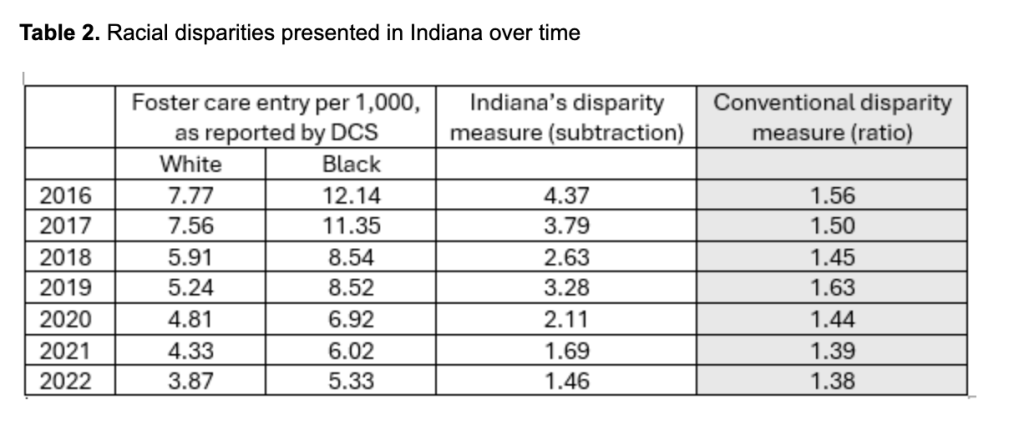



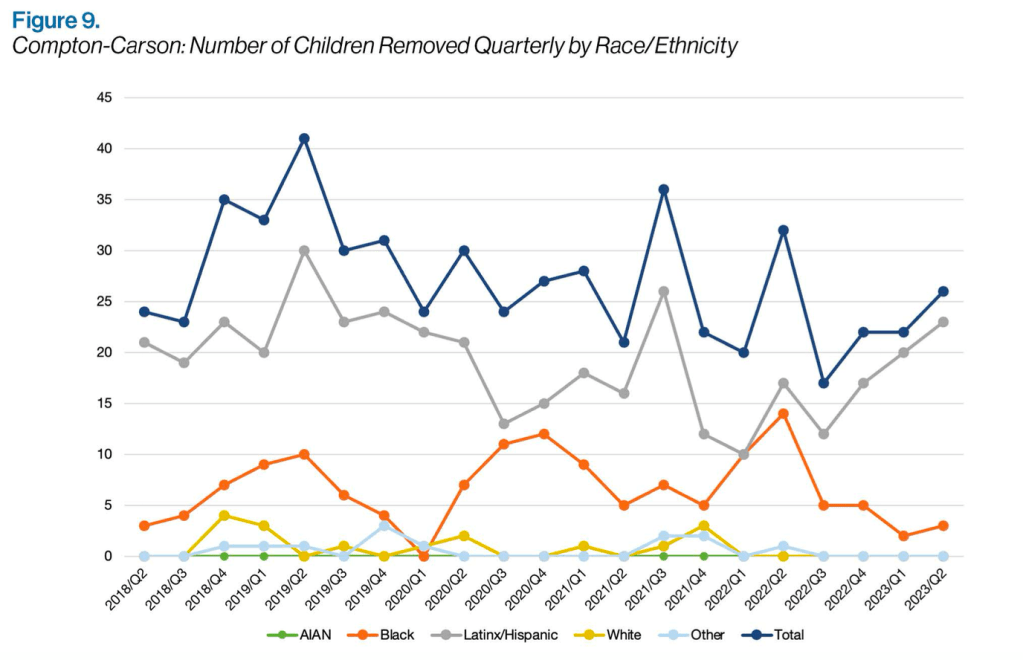
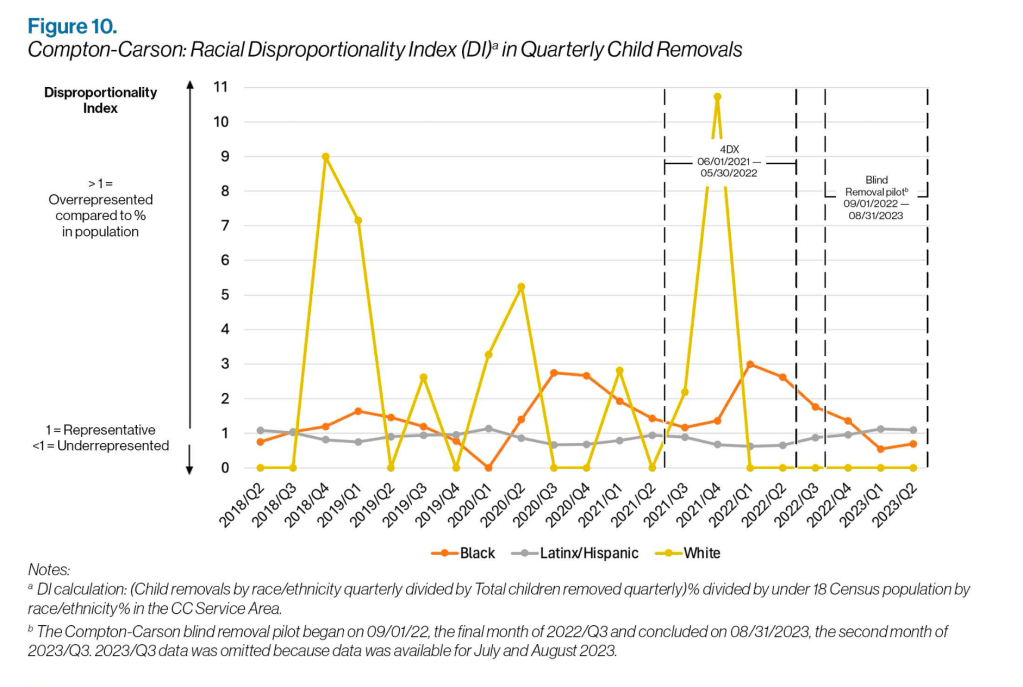


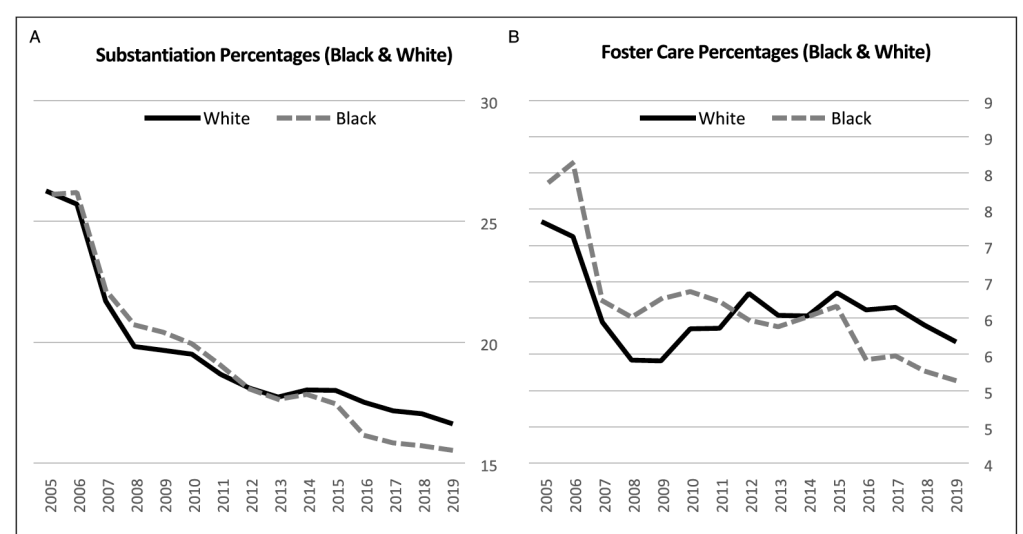
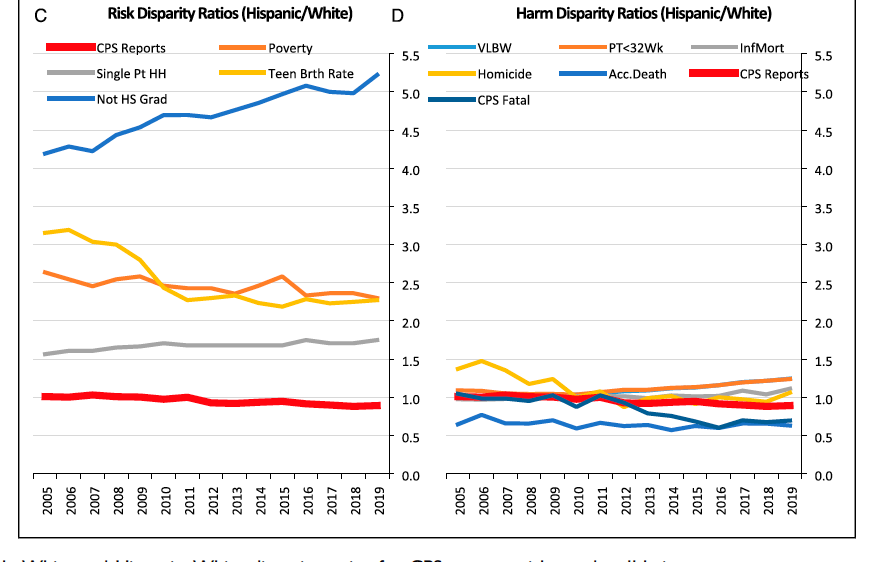

 Child Welfare Monitor