The last time Evgeny and Evgenia saw their eight-year-old son Maksim was on May 15. That’s the day that the couple refused to board a commercial flight taking them back to Russia, from which they had fled fearing persecution for their opposition to Valdimir Putin. On August 24, Maksim will turn nine years old in foster care. He has not seen his parents since May 15 and has given up hope for a reunion. Maksim’s family is not unique. The New York Times found a total of nine cases in which parents have been separated from their children after refusing to comply with deportation orders in this new version of the family separation policy that generated such a strong backlash in the first Trump Presidency.
As reported by Hamed Aleaziz in the New York Times and its podcast, The Daily, Evgeny and Evgenia, who prefer not to have their last name revealed, fled Russia because of their political activism. As supporters of Putin’s murdered enemy Alexei Navalny, they felt that they were at risk of losing their freedom, their livelihood or even their lives if they remained in Russia. They fled to Mexico, with the hope of getting an appointment to apply for asylum in the US through a cellphone app created by the Biden Administration to enable asylum-seekers to schedule an appointment from outside the country. But Trump shut down that program when he took office. Seeing no other option, the family went to a port of entry on the southern border and explained that they were there to seek asylum. But asylum applications had been shut down completely at the southern border, and the family was detained in Border Patrol custody. After two weeks, they were taken to JFK airport to be deported.
At the airport, ICE officials told Maksim’s parents that they would be separated from their son if they did not board the flight to Russia. But Evgeny was trying to prevent a longer separation in Russia since he expected to be detained there. With many tears on all sides, Evgeny and Evgenia were taken to detention and Maksim was taken to a shelter for unaccompanied immigrant children. It was May 15, 2025.
In the first Trump administration, thousands of families were separated at the border as a way to deter people from entering the country illegally. Parents were arrested and criminally charged for illegally entering the country and their children were taken away. This policy created a massive outcry worldwide and Trump ended it in 2018. Today, border crossings have slowed to a trickle and the new administration is focused on deporting those who have already crossed. Migrants from many countries can be shackled, cuffed, and loaded onto chartered flights. But for those who came from countries like Russia that do not accept deportation flights from the US, the government must use commercial flights to deport unwanted migrants. And commercial airlines do not accept passengers in restraints or who make a scene. Hence the choice offered to Maksim’s parents.
As Aleaziz puts it for the Times, “the new cases suggest that the administration has decided to use family separation as a tool, at least in some instances, to persuade families to leave and to create a powerful deterrent for those who might come to the United States illegally.” He found nine families who have refused deportation and been separated. But he does not know how many families have faced this choice, including those who have agreed to return to the countries from which they came. A spokeswoman for the Department of Homeland Security told him that there is no family separation policy and that “these families had the right and the ability to depart the country as a family and willfully choose to not comply.”
Evgeny and Evgeniia have not given in–a fact which lends credence to their fear of persecution in Russia. Since Maksim was taken from them, they have passed the rigorous screening for the validity of their asylum claim. Now the government cannot deport them to Russia but can send them to a third country if one can be found. Maksim has been transferred to foster care. His conversations with his parents are heartbreaking; At first he was counting the days that he has been apart from his parents but has now stopped. At this point, he has given up hope that he will see his parents again. Maksim will turn nine on August 24 and it looks like he will not be with his parents on that special day.
My regular readers know that, unlike some people who want to abolish foster care, I support the separation of children from their parents when there is abuse or neglect that is so severe that the child cannot be protected without removal. But perverting these practices in order to deter asylum-seekers is state-committed child abuse. Allowing Maksim to spend his ninth birthday in foster care as a lesson to families with valid asylum claims not to enter the United States is heartless beyond belief. Can a groundswell of opposition be generated and end this family’s ordeal and that of others in a similar situation? I certainly hope so.
Reactive Attachment Disorder (RAD) is a diagnosis that is included in the DSM and often applied to foster and adopted children. While RAD refers to a pattern of inhibited, withdrawn behavior, some controversial therapies (often described as varieties of “Attachment Therapy”) are based on a distorted definition of RAD, or on an unauthorized diagnosis of “attachment disorder” that includes a deep-seated rage that if unaddressed will result in antisocial and even criminal behavior.
Among the practices included these controversial therapies are severe disciplinary methods including the establishment of total parental control over children’s actions, including eating, drinking and using the toilet.
Many of these Attachment Therapy technique include a component that involves forcing the child to express underlying rage through physically coercive methods that may include being held down by several adults for as much as three to five hours. Several child deaths have been attributed to such methods.
In order to prevent more damage to children, it is necessary to adequately vet prospective adoptive parents for their readiness to parent children with challenging behaviors due to early trauma and deprivation. Even for parents who are able to meet the challenge, training and continued support are necessary.
Unbelievably, some adoptive parents have not been charged even when their parenting techniques have led to the deaths of their children. It is absolutely necessary for parents who use abusive parenting techniques to be charged and tried in court. Adequate investigations are necessary in order to ensure that the conditions that lead to such cases are identified and remedied.
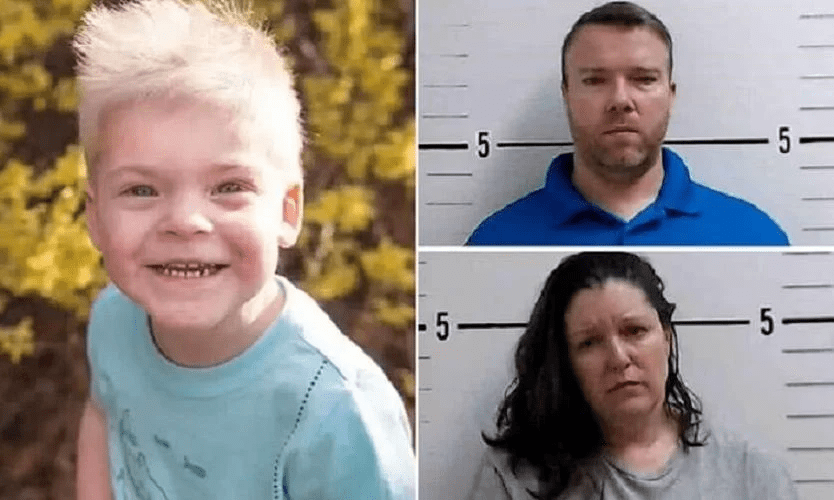
On January 5, 2023, according to a police warrant filed in Surry County, North Carolina, Joseph Wilson received a text from his wife telling him that something was wrong with their four-year-old adopted son Skyler after he was “swaddled.” She attached a picture of Skyler lying face down on the floor, wrapped in a sheet or blanket with duct tape attaching him to the floor. “Swaddling” is a practice used in many cultures to comfort infants, but Wilson told police he was referring to a parenting technique learned from a parenting expert named Nancy Thomas. (Court documents also state that one of the Wilsons’ former employees described recorded Zoom counseling sessions the couple had with Thomas.) Skyler died at Brenner Childrenโs Hospital in Winston-Salem on Jan. 9 of a “hypoxic, anoxic brain injury,” meaning that oxygen was unable to reach his brain due to the “swaddling.” Skyler’s adoptive parents, Jodi and Joseph Miller, have been charged with murder and felonious child abuse and are awaiting trial, which has recently been postponed–for the second time–from June 2 to December 1, 2025.
After Skyler’s death, police recovered surveillance cameras and arm and ankle restraints that Wilson had told them his wife used on Skyler during “swaddling.” A former foster parent of Skyler and his brother told police that Jodi Wilson had told her about using practices like “food restriction, the gating of Skyler in a room for excessive โaloneโ time, and the exorcisms of both children.โ The former foster parent was concerned enough to call Child Protective Services a month before the incident that killed Skyler.
Nancy Thomas, mentioned as the source of the swaddling technique and as a counselor to Skyler’s parents, is perhaps the most prominent exponent of a group of approaches to that the American Professional Society on the Abuse of Children (APSAC) described in a 2006 report as “controversial attachment therapies.” These therapies are generally directed at children with “attachment disorders.” The only such disorder that is officially recognized by the mental health community is “Reactive Attachment Disorder” (RAD), a diagnosis that is included in the Diagnostic and Statistical Manual of Mental Disorders (DSM-5). This diagnosis involves “a consistent pattern of inhibited, emotionally withdrawn behavior toward adult caregivers” as well as a “persistent social and emotional disturbance characterized by behaviors like minimal responsiveness to others, limited positive affect, and “episodes of unexplained irritability, sadness or fearfulness.” To be diagnosed with RAD, the child must have “experienced a pattern of extremes of insufficient care,.” which explains why this diagnosis is often applied to children who were adopted from orphanages abroad or foster care in the US. Some practitioners of these controversial attachment therapies, like Nancy Thomas, prefer to speak of children with “attachment disorder,” which is not included as a diagnosis in the DSM. Others use the term RAD but ascribe to that term a variety of symptoms that are not part of the DSM definition.
Whatever term they use, practitioners of controversial attachment therapies tend to believe that children who experience early adversity become “enraged at a very deep and primitive level.” This suppressed rage is said to prevent the development of attachment to caregivers and others and to lead to severe behavioral problems, such as violent behavior. These children are described as failing to develop a conscience, not trusting others, seeking to manipulate and control others, and at risk of developing criminal and antisocial behaviors. According to Nancy Thomas, some famous people with “Attachment Disorder” who did not get help in time include Adolph Hitler, Saddam Hussein, Jeffrey Dahmer, and Ted Bundy.
As described in the APSAC report, these controversial attachment therapies suggest that “parenting a child with an attachment disorder is a battle, and winning the battle by defeating the child is paramount.” Parents are often counseled to start by establishing total control over all the child’s actions, and requiring immediate obedience to parental commands. Nancy Thomas’s book, When Love Is Not Enough: A Guide to Parenting Children with RAD-Reactive Attachment Disorder, includes advice like “In the beginning, your child should learn to ask for everything. They must ask to go to the bathroom, to get a drink of water, EVERYTHING. When it starts to feel that they must ask to breathe, you are on the right track.” Another quote: When given directions it is unacceptable for the child to ask ‘”‘why?” or ‘what?’ NEVER answer these questions….Remember, have a consequence ready when a rule is challenged.” Thomas also recommends putting an alarm on a child’s bedroom door, and the window if necessary. Other techniques that have been recommended by attachment therapists include keeping the child at home (even counseling home schooling), barring social contact with others, assigning hard labor or repetitive tasks, and requiring prolonged motionless sitting.
Many proponents of controversial attachment terapies also believe that a child’s rage must be “released” before he or she can function normally. This release is often provided through physically coercive methods that may include being held down by several adults for as much as three to five hours. These techniques can be traced to “holding therapy,” a technique developed by a child psychiatrist named Foster Cline, who was ackhowledged as a mentor by Nancy Thomas in her book. Cline was admonished and restricted from using parts of his holding therapy model by the Colorado Board of Medical Examiners after members saw video of an 11-year-old being subjected to physical and verbal abuse while being restrained.
“Holding therapy” and similar methods designed to address “attachment disorder” have been implicated in the deaths of several adopted children, including that of three-year-old Krystal Tibbets, who died in 1997 when her adoptive father “applied the full weight of his body on the girl by lying across her and pressing his fist into her abdomen,” a technique he said he was taught by a therapist; four-year-old Cassandra Killpack, who in 2002 was forced to guzzle two quarts of water while her arms were bound, and 10-year-old Candace Newmaker, who suffocated in 2000 by a “therapist named Connell Watkins during a 70-minute “rebirthing ceremony” that was supposed to treat her attachment disorder. Nancy Thomas was working for Watkins at the time of Candace’s death. The “swaddling” technique that killed Skyler Wilson is an example of such a method.
Advocates of controversial attachment therapies have come to the defense of Skyler Wilson’s parents. The President of the Board of a nonprofit called Attach Families, Inc. shared an article on Facebook about Skyler’s death with the following preface: “These tragedies are always written one sided with no Investigative reporting, sadly…They obviously were using a swaddling technique that some Professionals promote for Attachment. This is a tragedy. But before these parents are “burned at the cross” our Families want more information.” The Page also posted this: “As we have seen hundreds of others making our Families look like monsters. When the truth is we try and will try ANYTHING to help our children. This is what we are trying to help them heal from before they get too big for us to physically handle their rages. Rages in which they inflict self harm. Rages where they slam their heads over and over on purpose. Rages in which we try to protect them from themselves and others around them. If you don’t live it 24 hours a day you have no idea what it is like.” Attached was an article about a Kansas teen who was arrested in the killing of his mother. The article contained no details about the teen or his mother. It is hard to understand how this talk of rage would apply to four-year-old Skyler. His former foster parent told a reporter that Skyler โwas so tiny and small but had a heart three times bigger than he was…โย
In some cases, the parents themselves, after reading misleading literature about children with RAD may invent their own disciplinary practices or use those inherited from their own upbringings or family traditions. The Denver Post recently wrote about Isaiah Stark, a seven-year-old who died in 2020 from ingesting too much sodium, likely from drinking olive brine. The newspaper learned that Isaiah’s adoptive parents were forcing him to eat olives and drink olive brine as a form of punishment for his behavior. According to a report from the state’s Child Fatality Review Team, the mother blamed all of Isaiah’s difficult behaviors on RAD and both parents attributed his actions to “manipulative behaviors and wilfulness.” At the funeral, she described Isaiah’s death as “God rescuing him.”
Isaiah Stark’s parents were never charged for his death. Since there was no trial, the public never learned whether the parents received any sort of parenting advice from an “expert.” The failure to charge parents who have tortured and killed adoptive children is all too common: witness the case in Florida of Begidu Morris, whose parents were not charged after starving, confining and beating him for years, ostensibly because the person who actually killed him could not be determined. As developmental psychologist Jean Mercer writes, plea bargains and the failure of investigators to follow up on the development of abusive parenting practices mean that we often don’t know whether abusive parents drew on outside influences or their own family histories or imaginations for the practices that led to a child’s injury or death.
Concern about controversial theories and methods of “Attachment Therapy” about twenty years ago prompted the formation of a task force of the American Professional Society on the Abuse of Children, the leading professional society of professionals who deal with child abuse and neglect. Its 2006 report, mentioned above, concluded that “attachment parenting techniques involving physical coercion, psychologically or physically enforced holding, physical restraint, physical domination, provoked catharsis, ventilation of rage, age regression, humiliation, withholding or forcing food or water intake, prolonged social isolation, or assuming exaggerated levels of control and domination over a child are contraindicated because of risk of harm and absence of proven benefit and should not be used.” The report cautioned child welfare systems not to tolerate any such techniques by foster or adoptive parents. It also stated that “[p]rognostications that certain children are destined to become psychopaths or predators should never be made based on early childhood behavior.” It also condemned “intervention models that portray young children in negative ways, including describing certain groups of young children as pervasively manipulative, cunning or deceitful.”
Some adults are simply not suited to raise challenging children. Yet, agencies desperate to get children adopted, especially children with special needs in foster care, have placed children with such parents despite red flags, or even returned them after abuse was uncovered. In an extreme case in 2016, the 12-year-old adopted daughter of Eugenio and Victoria Erquiaga ran away from home. Neighbors found her with her hands zip-tied and her feet bound. She reported that she was locked inside a small playhouse for long periods of time with no bathroom. The story became national news and it became known that the parents had sought help from a mental health counselor who oversaw a program called “Radical Healing,” which no longer exists. The state charged the parents with child abuse. However, they then offered to drop all of the charges and expunge their records if the Erquiagas agreed to take their daughter back into their home, which they did. The girl ended up in a group home after she turned 18.
Twenty years since the APSAC report, children continue to suffer and die because they have been diagnosed by “experts” or parents with RAD or “attachment disorder.” To prevent more damage to children, state governments must adopt policies to ensure that all adoptive parents are adequately vetted. Agencies must be prepared to screen out potential adoptive parents who lack the patience, self-control and emotional intelligence to raise challenging children, and those who might be susceptible to practitioners offering controversial methods involving harsh discipline and physical restraint to cope with behaviors stemming from previous trauma or deprivation. In 2012, a committee led by Washingtonโs child welfare agency and childrenโs ombudsman published a Severe Abuse of Adopted Children Committee Report, which made several recommendations for improving assessment of assessing prospective adoptive families. These included strengthening qualifications for individuals conducting adoption home studies and post-placement reports and enhancing minimum requirements for these home studies and reports.
Training and ongoing support must also be provided to those adoptive parents who are deemed capable of accepting the challenge of raising children with histories of trauma and deprivation. These parents must be prepared to understand the needs and possible behaviors of the children they adopt, given their backgrounds. They also must be educated about the existence of parenting practices and therapies which are not supported by research and potentially harmful to children. And finally, they need ongoing support. The need for a greater investment in post-adoption services has been publicized by authorities like the Donaldson Adoption Institute (now closed) in its major report, Keeping the Promise: The Critical Need for Post-Adoption Services to Enable Children and Families to Succeed. Even RAD parent advocacy organizations like Attach Families Inc. are also asking for ongoing support.
Parents caught confining, starving, or otherwise abusing their children through adherence to “attachment therapies” must receive a criminal trial. This is, not only to ensure that justice is done, but also to provide an understanding of the factors that allow such tragedies to occur. The failure to try cases of parents who were obviously responsible for the torture and death of a child is a national stain and must be addressed.
That vulnerable children who have already been traumatized or deprived in early childhood in have met suffering or even death in licensed foster or adoptive homes should be a source of shame to all Americans. It is time to put an end to the suffering of children who have suffered enough. These tragedies can and must be prevented.
Just before this article went to press, the author became aware of media reports about the arrest of the adoptive parents of a 15-year-old boy, who for the past ten years has been locked in his bedroom for most of the day with no access to food, water or a bathroom. The adoptive father is a former employee of the El Paso County, Texas sheriff’s office. So far there has been no information about the genesis of the situation and whether a diagnosis or behavioral problem was involved. But it seems that hardly a week goes by without news of an egregious case of abuse against and adopted child. There is no time to waste in taking action to prevent more such suffering and damage to children.
This post was edited on June 24, 2025 to add a reference to the Washington report on severe abuse of adopted children and its recommendations and again on June 26 and 27 to correct several small errors and typos.
by Emily Putnam-Hornstein (University of North Carolina at Chapel Hill), Sarah Font (Pennsylvania State University), and Brett Drake (Washington University in St. Louis).
I am honored to publish this post by three of the leading academic researchers in child welfare. As often is the case in this blog, they are writing about the flawed use of data to support the user’s claims about a policy or program. In this essay, the authors discuss last year’s testimony by Indiana’s deputy director of child welfare services claiming success for the state’s family preservation program in reducing foster care caseloads without compromising child safety while also reducing racial disparities.
On May 22, 2024, the U.S. Senate Committee on Finance held a hearing titled โThe Family First Prevention Services Act (FFPSA): Successes, Roadblocks, and Opportunities for Improvement.โ The testimony was striking for its still-aspirational tone 6 years after the law passed and its sanitized depiction of why children enter foster care. As researchers, however, the statistics offered by Indianaโs deputy director of child welfare services, David Reed, caught our attention. Reedโstestimony indicated that FFPSA and associated investments in intensive family preservation services and concrete supports had produced: (1) a 50% decline in the stateโs foster care caseload, alongside improved child safety; and (2) a two-thirds decrease in racial disparities among children entering foster care.
These claims are striking and beg the question: How?
On their very face, such dramatic numbers should invite skepticism. Despite continued efforts to move โupstream,โ empirical studies of maltreatment prevention programs generally generate null or small effects. But one way for an agency to achieve a rapid reduction in foster care caseloads is to increase the threshold for intervening, leaving children in environments from which they would have been previously removed.
Below, we review data for Indiana and conclude that available evidence does not support the testimony offered.1 This is problematic not only for Senate Committee Members, but also the field at large. Bold causal claims based on flawed interpretations of data too often lead policymakers, and the public, to conclude that there are easy fixes to complex problems.
Reducing Entries to Foster Care and Improving Child Safety
The ideal way to reduce foster care entries is by reducing the community incidence of child abuse and neglect. Other than a brief drop during the COVID-19 pandemic, and despite investments in voluntary programs such as Healthy Families Indiana, referrals to Indianaโs child maltreatmenthotline were largely stable pre- and post-FFPSA implementation (i.e., 168,919 in 2017 vs. 172,077 in 2023). There is no evidence of a decrease in suspected maltreatment identified by community members.
Of note, data indicate that Indiana is now screening in a smaller percentage of referrals (75.0% in 2017 to 57.9% in 2023). Certainly, it is possible that Indiana was responding to allegations of maltreatment that were unwarranted. Indiana issued guidance in 2021 designed to change the stateโs response to allegations of โeducational neglect.โ But if such changes led to the reduction, one would expect that as more โlow-riskโ referrals were screened out, children who were screened in would have higher risk and a greater share would be identified as victims requiring services.
Yet that is not what the data show. Among children who were screened in, the number of substantiated victims declined by roughly 30% between 2017 and 2023. This decline is particularly notable, given that during this same period, overdose deaths in Indiana were increasing and parental substance abuse is one of the most well-established risk factors for child maltreatment. It would appear that in addition to reducing the number of children who received a response, Indiana also increased its threshold for substantiating maltreatment. Importantly, changes in substantiation thresholds affect not only overall child victim counts, but also the federal measure of repeat maltreatment, which is the indicator of safety cited in Reedโs testimony. The easiest way to document improvements in child safety is to raise the bar for substantiation, thereby reducing both the initial victim count and the likelihood of identifying repeat incidents.
Short of successful efforts to reduce the incidence of maltreatment in the community at large, a second way an agency could theoreticallyโand safelyโreduce the number of children in foster care is by expanding efforts to prevent placement by providing more families with effective services and resources. Yet once again, Indianaโs data show that fewer rather than more children reported for maltreatment have received in-home services. State data suggest a reduced number of children receiving in-home services in absolute numbers (Figures 1 and 2, Table 1) and no change in the proportion (Figure 3). Moreover, as depicted in all three figures and consistent with screening and substantiations, steep declines in in-home services and foster care caseloads began in 2017, before FFPSA was implemented.
A third possibility is that the services provided have become more effective, thus reducing the rate of children entering foster care. Yet the major program touted by Reed in his FFPSA testimonyโan intensive family preservation program called Indiana Family Preservation Servicesโappears to have no effect on removal and a near-zero effect on repeat maltreatment.2 Indeed, the program is described as having โ0 favorable effectsโ by the federal clearinghouse for evidence-based programs. There is simply no way to attribute a 50% foster care reduction to Indianaโs prevention services.
Finally, because the number of children in foster care is a function of the number of children entering care relative to the number of children exiting care, an additional possibility is that Indiana found ways to transition children out of its foster care system faster or in greater numbers. However, foster care entries declined from 12,826 in 2017 to 6,212 in 2023. underscoring that the bulk of the 50% caseload reduction likely stemmed from fewer entries.
Decreasing Racial Disparities
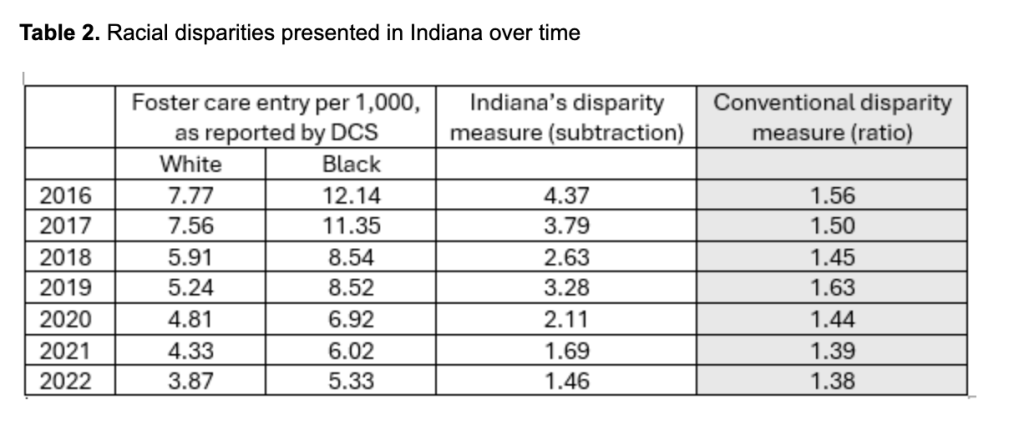
Senate committee members also heard about data suggesting that Indianaโs BlackโWhite disparity in foster care entries declined by two thirds. The statistics presented, however, were quite unusual. The typical approachโboth in the health literature and as a longstanding practice in child welfareโis to measure disparities as a ratio of rates (known as relative risk). In the context of the testimony presented, this would have been presented as the Black foster care entry rate divided by the White foster care entry rate.
But this is not what was used.
Rather, Indianaโs numbers were presented as the subtracted difference: the Black foster care entry rate minusthe White foster care entry rate. The problem with this approach is that it is very sensitive to base rates. Imagine that rates of removal were 10 per 1,000 Black children and 1 per 1,000 White children, then those rates decreased to rates of 1 per 1,000 for Black children and 0.1 per 1,000 for White children. In both cases, the relative risk of removal is 10 times higher for Black children than White children (a 0% change in disparity). But using Indianaโs subtraction-based measure, it would appear that the disparity declined from 9 to 0.9: a 90% reduction.
Using the conventional disparity ratio formula, the BlackโWhite removal rate disparity declined only slightly in 2021โ2022 compared with 2016โ2017โa reduction of roughly 12%, not the โ66.9% decreaseโ indicated in Reedโs testimony (see Table 2).
Summary
Available data do not support testimony that FFPSA implementation and Indianaโs Family Preservation Services program led to a 50% decline in foster care cases. Likewise, any reported improvements in child safety are likely an artifact of changed thresholds for classifying child maltreatment victims. We also believe that this testimony indicating dramatic reductions in racial disparities is quite overstated.
Of course, it is always possible that we have misunderstood the numbers Reed referencedโwhich is why we contacted him almost a year ago and shared our analysis. We received no response. If there is additional data that supports the testimony provided, we hope it will be made available. Until then, it is only reasonable to conclude that the striking claims made do not hold up to even modest scrutiny.
Note: On June 3, 2025, the IndyStar published an op-ed by Emily Putnam-Hornstein and Sarah Font summarizing the analysis in this post.
Notes
Regarding data published by Indianaโs Department of Child Services, we relied on publicly available information published as of June 2024 to align with what would have been available at the time this testimony was prepared. We also used data submitted by Indiana and found in the annual Child Maltreatment Reports. We focused on trends from 2017 (before FFPSA) through 2023 (the most recent year available). โฉ๏ธ
To elaborate, the intervention produced no โdirect effectโ on children entering foster care (i.e., no statistically significant reduction occurred in placements among families who were served). Published research has indicated that the intervention may have led to a small reduction in repeat maltreatment. To be generous, Indiana officials might argue that despite no direct effect on removals, the reduction in repeat maltreatment led to reduced removals over time. However, the estimated reduction in repeat maltreatment is only 4%, meaning that any indirect effects on removals cannot be more than this 4%. It is also worth noting that the declines in foster care caseloads began long before the program was implemented at any scale in Indiana. โฉ๏ธ
In a post dated January 10, 2025, I reported that 40 percent of investigations conducted by the District of Columbia’s Child and Family Services Agency (CFSA) in Fiscal Year(FY) 2024, which ended on September 30 2024, were “incomplete.” But by annual rather than quarterly data, that post actually understated the magnitude of the problem, which has worsened in the first half of FY 2025. The percentage of investigations that were terminated with a finding of “incomplete” increased to 65 percent in the second quarter of FY2025. The number of substantiated investigations has increased, while foster care placements and in-home case openings have not kept up with the apparent need for services.
The number of reports to child abuse hotlines varies by season, with reports tending to drop off during the summer when schools are closed and then increase again when schools re-open, along with fluctuations during the school year. Thus, data for part of a year should be compared to the same period of the preceding year. As shown in the table below, the number of reports to the CFSA hotline increased by from 11,945 in the first half of FY 2024 to 12,342 in the first half of FY 2025. The number of reports accepted for investigation actually decreased from 2,197 to 1,973, mostly because the hotline was screening out more of them. Nevertheless, the number of investigations conducted increased from 1,774 to 2,089. Thus, there were more reports, fewer reports accepted, and more reports investigated in the first half of FY 2025 than in the same period of the previous year. The reasons for these changes are unknown.
Table 1: Data for First Half of 2025 Compared to First Half of 2024
An investigation can have several findings. “Substantiated” means that the investigator (with approval from their supervisor) has concluded that the allegation of maltreatment (or risk of maltreatment) is supported by the evidence. “Unfounded” means there is insufficient evidence to support the allegations. “Inconclusive” means there is some evidence that maltreatment occurred but not enough evidence to support it definitively. “Incomplete” is defined as “an investigation finding for referrals in which there were barriers to being able to complete every aspect of the investigation. This could include obtaining confirmation during the investigation that the family was a resident of another state outside D.C., the parent refusing the social worker access to the home to complete a home assessment, or inability to locate the family.” (For the complete definitions, see the Investigations Page on the CFSA Dashboard). It is important to note that “Incomplete” refers to a finding upon closure of an investigation. It is not refer to an investigation that is ongoing.
The total number of investigations increased from 11,945 in the first half of FY 2024 to 12,342 in the first half of Fiscal Year 2025, as Table 1 shows. And there were some big changes in the numbers of investigations that were incomplete, substantiated and inconclusive. The number of incomplete investigations skyrocketed from 456 to 1,305. The number of unfounded investigations dropped from 949 to 327. And the number of substantiated investigations increased from 267 to 377, which is a large increase of 41 percent. This reflects both an increased number of investigations conducted and an increase in the percentage substantiated from 15 percent to 18 percent.
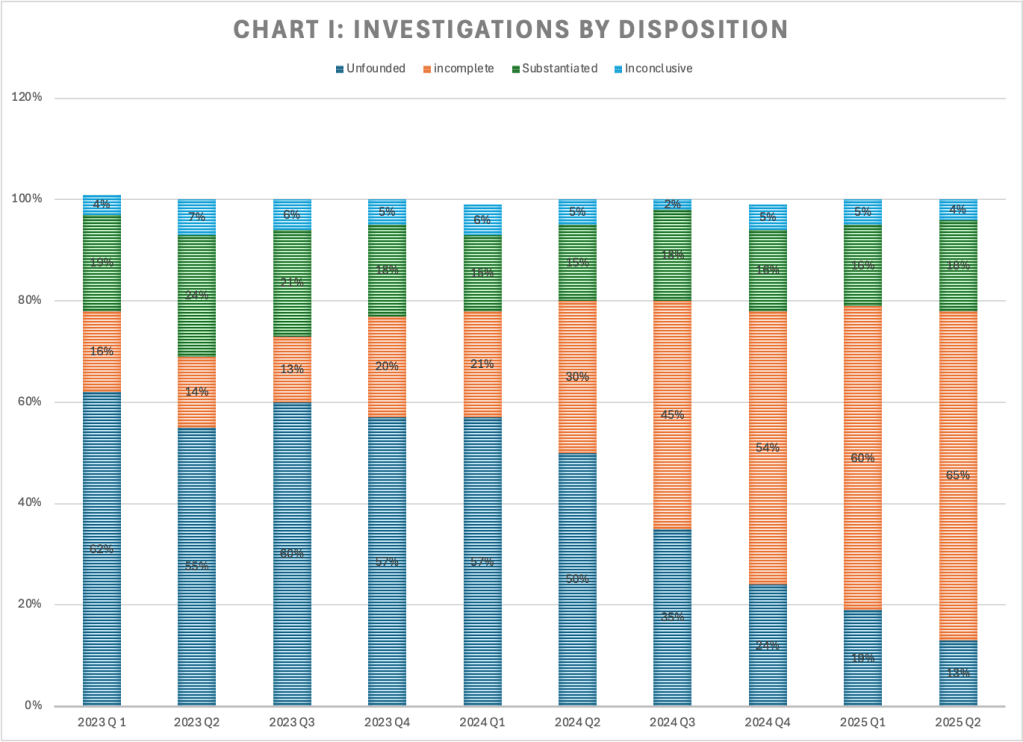
Chart I shows how the percentage of investigations by disposition has changed over the past nine quarters. The percentage of investigations that was incomplete (see the orange segments in the chart below) began to rise in the first quarter of 2024, when it jumped to 20 percent from 13 percent in the previous quarter. It rose to 30 percent in the third quarter of 2024, 45 percent in the third quarter, and 54 percent in the fourth quarter, 60 percent in the first quarter of 2025, and 65 percent in the second quarter of the current fiscal year.
As the percentage of investigations that are incomplete has increased, the percentage that are unfounded (dark blue in the above chart) has decreased–from 57 percent in the first quarter of 2024 to 13 percent in the first quarter of 2025. That drop of 44 percentage points happened at the same time as the percentage of investigations that were incomplete rose from 21 percent to 65 percent–an increase of 43 percentage points. It appears that investigations that would formerly have been closed as unfounded are now being closed as incomplete. CFSA did not respond to a request for the reasons for this change. The percentage of investigations that are substantiated has changed little since the first quarter of FY 2024.
Once an investigation is substantiated, CFSA may open a case for in-home services, or less often for foster care. As shown in Table I above, 169 in-home cases (each involving one or more children) were opened in the first half of FY 2025, compared to 125 in the first half of FY 2024. And 96 children were placed in foster care in the first half of FY 2025 compared with 110 in the first quarter of FY 2024. Unfortunately these two sets of numbers are not comparable as each in-home case can involve more than one child. But with substantiated reports increasing by over 100, in-home cases increasing by only 44, and foster care removals decreasing, it appears that some of the families with substantiated reports in 2025 are not receiving any CFSA services at all, and that is concerning. Perhaps some of these families are being referred to the collaboratives for services, which are less intensive and delivered by staff with lower credentials. And it is possible that some of these investigations may culminate in an informal kinship placement, but that means no services are provided to the parents or the children.
Clearly the staffing crisis with which CFSA (along with other agencies around the country) is struggling is responsible for the increase in incomplete investigations, and perhaps for the reduced percentage of substantiated cases receiving services as well. At the oversight hearing on February 13, 2025, Interim Director Trice pointed out that the number of investigative social workers has dropped from 100 to below 40. It is no surprise that CFSA’s oversight responses documented that most investigative workers had caseloads above 15. the maximum caseload allowed by CFSA’s Four Pillars Performance Framework. Average caseloads for the 38 investigative workers in the first quarter of FY 2025 were 30 or higher for 10 workers and 20 or higher for a total of 20 workers.
Director Trice reported that the agency is making do by diverting workers from the In-Home units to Investigations, but that is not a good solution. Families with in-home cases are often deeply troubled, with long histories of chronic neglect. According to CFSA’s 2023 Child Fatality Report, two children died while their families had open in-home cases. We cannot afford to divert these critically needed workers. Moreover, it is possible that the diversion of in-home workers to investigations may be part of the reason that in-home case openings did not increase more given the increase in substantiations. With workers not available to handle these cases, the agency may be more reluctant to open them.
What can be done? Creative solutions are needed. It may be necessary to temporarily reduce licensing or degree requirements through a special waiver due to the staffing crisis. Former Director Robert Matthews spoke of obtaining permission from the Board of Social Work Examiners to use workers with Bachelor of Social Work degrees to help investigators (not carry cases), but this plan was not mentioned in this year’s oversight responses. The agency might consider recruiting federal workers who have lost their jobs for these positions. Recruiting retired police officers and military veterans is another idea that has potential. A partnership with local schools of social work, as Maryland and other states maintain, is long past due. Those who agree to take jobs and remain for a given amount of time should receive loan forgiveness and perhaps housing as well. In a housing-hungry citizen, this could be a game changer. CFSA needs to think outside the box to resolve the staffing crisis.
CFSA’s Dashboard data for the first half of FY 2025 raises more questions than it provides answers. The most striking trend is the continuing explosion in the percentage of investigations that were incomplete–which was 65 percent in the second quarter. Also concerning is the failure of in-home case openings and foster care placements to keep up with increased substantiations. Like many other child welfare agencies, CFSA has been devoting much time and attention to programs outside of its core functions, like the warmline and family success centers. In this time of budget stringency and looming recession, it is time for CFSA to focus on its ability to perform its most basic and important function–child protection.
Proposed federal budget cuts to child welfare services might hurt New Jersey’s recent progress in child welfare, the Commissioner of New Jersey’s Department of Children and Families told state legislators last month. The anticipated reduction of more than $100 million would force the department to โrevert to its most basic role โ that of child protection โ not prevention, not support or empowerment, just surveillance and foster care,โ DCF Commissioner Christine Norbut-Beyer told members of the state Senate’s Budget Appropriations Committee. The relegation of child protection–or “surveillance and foster care”–to the “most basic” version of child welfare is telling. DCF’s Commissioner, like many other progressive child welfare administrators, no longer views child protection as the primary purpose of child welfare services.
For those who regularly read this blog, the devaluation of child protection and foster care by a high-level administrator over child welfare will not be a surprise. There has been a sea-change in child welfare over the past decade. The mainstream view of the purpose of child welfare has shifted from responding to child abuse and neglect to “upstream prevention.” And why not? Why wait until children are abused and neglected if we can prevent the maltreatment altogether?
There is no denying that ideally, it is better to prevent maltreatment than to respond to it. But the services that are discussed as prevention are mainly in the province of other agencies. In seeking to broaden child welfare services through the Family First Act, Congress added mental health, drug treatment, and parenting training. While the latter can be seen as a function of child welfare, drug treatment and mental health are separate systems. There has been increased emphasis on cash and housing and other antipoverty benefits as child maltreatment prevention; we have large programs to address these problems–much larger than the child welfare system. Even some of the “prevention services” that DCF and other state agencies have adopted, like “Family Success Centers,” provide a wide array of place-based services, most of which do not fall into the traditional orbit of child welfare and would be most appropriately funded jointly with other agencies.
If “prevention” could abolish the need for child protection, then there would be no need for child protection agencies. But we know that no amount of “prevention” (at least as envisioned by today’s child welfare establishment) will eliminate child abuse and neglect. We are often talking about patterns of mental illness, drug abuse, family violence, and poverty that have persisted over generations. And then there are families that are not poor or characterized by generations of dysfunction but where a parent’s mental illness or disordered personality makes them incapable of safely raising children. As Jedd Meddefield describes in his brilliant essay called A Watershed Perspective for Child Welfare, “As critical as it is to fully consider upstream factors, it would be wrong not to do all we can to help children who lack safe families today.
But the fact is that many of today’s child welfare leaders like Norbut-Beyer appear not to be interested in child protection and foster care. They often disparage the “reactive” role of child protective services in contrast to the “proactive” nature of prevention. Many agencies have reactive missionsโpolice, firefighters, emergency roomsโand one could argue these are the most important services of all because they save lives. The analogy with the police is revealing. Police react to allegations of crime just as child welfare agencies react to allegations of child abuse and neglect. Toย preventย crime, we must not rely on the police, who are overburdened already and not trained and equipped to provide the services needed. Instead we must turn to a whole host of agencies dealing with education, public health, mental health, housing, income security and moreโthe same agencies that we must mobilize if we want to prevent child abuse and neglect. Nobody is saying that the police need to address the underlying causes of crime.
Norbert-Beyer’s use of the word “surveillance” as a synonym for child protection is telling indeed. She clearly doesn’t see CPS investigators as heroes who go out in sometimes dangerous and certainly uncomfortable circumstances to protect children–and maybe even to save them. It’s not surprising because we have all been told that saving children is not what child welfare is about.1 And foster care? Norbert-Beyer boasts that New Jersey has the lowest rate of child removal in the country, and children who are removed more often than not go to relatives. She’s not very interested in the quality of care these vulnerable young people receive or in all the things her agency could do it improve it, like establishing foster care communities (like Together California) to house large sibling groups or investing in cutting-edge models of high-quality residential care.
When the person who is in charge of child protective services in a state that is acknowledged as a leader in the field calls it “surveillance,” and relegates it along with foster care to “basic” functions that hardly deserve mentioning, it’s hard to have faith that the crucial mission of child protection will be implemented with the passion it deserves. Norbert-Beyer’s comments illustrate the prevalent thinking that leads to the diversion of resources from crucially needed child protective services and foster care to “prevention services” that are and should be provided by other agencies.
See for example this statement from Casey Family Programs, which includes the words “Weย must continue to evolve from an approach that seeks to โrescueโ childrenย from their families to one that invests in supporting families before abuse and neglect occur.” One of the first messages I was given as a CPS trainee is that my job was not to save children. โฉ๏ธ
โB.B.โ was born in 2022 and died of fentanyl poisoning in March 2023. During the ten years before B.B.โs death, DCYF had received 30 reports on B.B.โs family (many before B.B. was born) for issues including use of heroin, marijuana and alcohol in the home; lack of supervision of the children; domestic violence; an unsafe caregiver living with the family; an unsafe and unclean living environment unsecured guns in the home โout-of-controlโ behaviors by B.B.โs older siblings at school, with the mother described as โout-of-itโ and unresponsive to school concerns; concerns about the childrenโs hygiene; and the mother driving under the influence of marijuana. An in-home services case that had been open since January 2023 was closed days before B.B.โs death.
On August 24, 2024, the Washington Department of Children, Youth and Families (DCYF) proudly announced in a press statement that it had reduced the number of children in out-of-home care by nearly half since 2018. Specifically, the number of children in foster care had fallen from 9,171 in 2018 to 4,971 as of August 14, 2024. โOutcomes like this demonstrate our agencyโs commitment to keeping families together and children and youth safe,โ DCYF Secretary Ross Hunter said. โAlthough the number of reports we are receiving remain [sic] consistent, we are seeing fewer children and youth in out-of-home care as families are being referred to support services rather than having children removed from their homes. Indeed, โsafely reduce the number of children and youth in out of home care by halfโ (without a baseline date from which this can be measured) is one of DCYFโs six strategic priorities. But treating the decline in foster care (the direct result of government actions) as a desirable outcome in itself can contribute to a disregard of actual child welfare outcomes like safety and permanency.
How did DCYF reduce foster care by nearly 50 percent?
How did DCYF manage to slash its foster care rolls so radically in such a short time? Without providing specifics, the press release cites DCYFโs implementation of the Family First Prevention Services Act (FFPSA) and its emphasis on โsupporting and collaborating with families by providing access to services and programs.โ A DCYF spokesperson told the Seattle Timesthat the department was using services to avoid removing children or to reunite families sooner, citing efforts to connect parents to substance use or mental health treatment programs, bring a social worker into the home to โproblem solve,โ or โoffer practical items, like diapers, car seats and beds.โ
Apparently not satisfied with the changes implemented by DCYF, the Washington legislature in 2021 passed the Keeping Families Together Act (KFTA, also known as HB 1227), which took effect on July 1, 2023. Among other provisions, KFTA increased the standard for the court to order removal of a child from the home, which previously required the agency to demonstrate that โreasonable grounds that the childโs โhealth safety or welfare will be seriously endangered if not taken into custody and that at least one of the grounds set forth demonstrates a risk of imminent harm to the child.โ As amended by KFTA, the law now requires the agency to demonstrate โthat removal is necessary to prevent imminent physical harm to the child due to child abuse or neglect.โ The petition for removal is required to contain โa clear and specific statement as to the harm that will occur if the child remains in the care of the parent, guardian or custodian, and the facts that support the conclusion.โ Moreover, the court must consider whether participation by the parents or guardians in โany prevention servicesโ would eliminate the need for removal. If so, they must ask the parent whether they are willing to participate in such services and shall place the child with the parent if the parent agrees.
On a page dedicated to KFTA implementation, DCYF explains that it has implemented the law by adopting new policies and procedures to determine whether to remove a child and by training and supporting staff to implement the new procedures and determine whether there is an imminent risk of serious harm to the child. DCYF reports that internal reviews show that staff are โtaking additional steps to prevent removal of a child and to support a safety plan for the family.โ
Shortly before KFTA took effect, DCYF, along with the Department of Health, the Health Care Authority, and the Washington State Hospital Association issued new guidelines to birthing hospitals and mandatory reporters. These guidelines stated that infants born substance exposed, but for whom there are no other safety concerns, can receive โvoluntary wrap-around services from a community organizationโ without being reported to CPS. These voluntary services are being provided through federally-mandated โPlans of Safe Care (POSC).โ Healthcare providers identifying a substance-exposed infant are instructed to access an online portal where they are directed to call DCYF if safety concerns are identified and to complete a POSC referral if not.
DCYF has been issuing quarterly data updates to assess the impacts of the KFTA. According to the most recent (October 2024) update, the law is having the intended impact of further reducing removals to foster care. DCYF reports a 16 percent decrease in the number of children removed in the July through September quarter of 2024 compared to the same quarter of 2022, before passage of KFTA. However, comparing foster entries for all ages in July through September 2024 to those in the same quarter of the previous year, the data indicate that foster care entries actually increased! Will this be the beginning of the end of the foster care reductions? That remains to be seen.
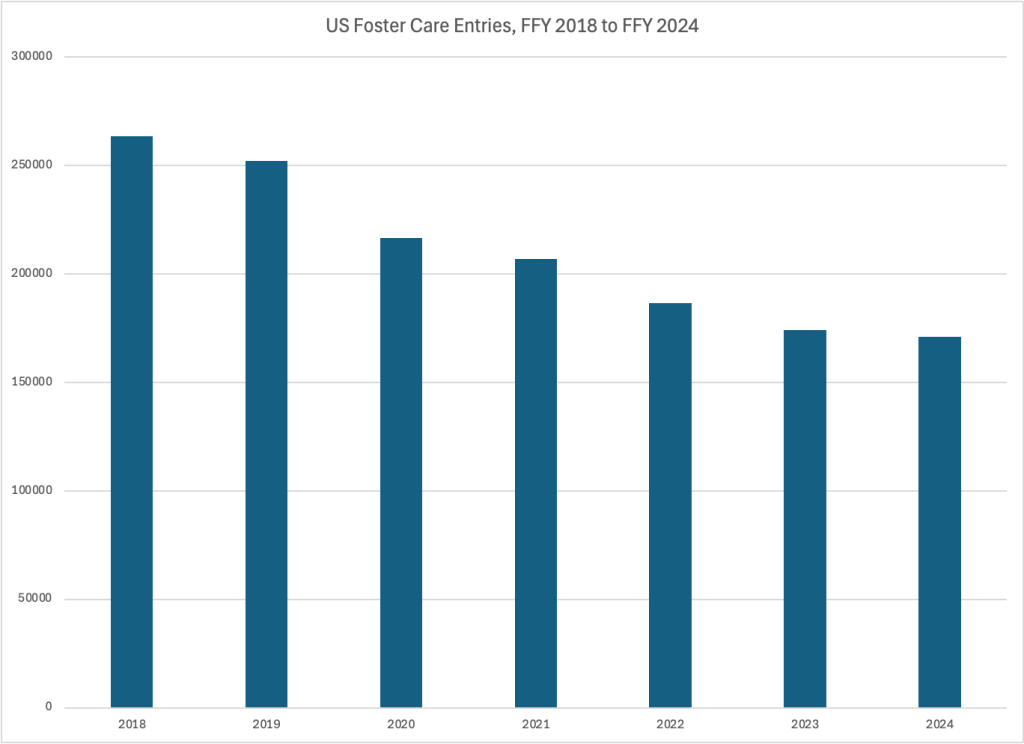
A longer-term view raises questions about the difference KFTA made, compared to the previous and ongoing efforts by DCYF to reduce foster care placements. Entries into foster care in Washington have decreased annually from 2017 to 2024, as shown in the chart below. The rate of decrease remained about the same between 2019 and 2024, while KFTA was not implemented until July 2023. Perhaps more children would have entered care if not for KFTA, but there is no way to assess the impact of KFTA as compared with DCYFโs ongoing effort to reduce removals.
The reduction in foster care placements was supposed to be accompanied (and made possible) by an increase in in-home services (which DCYF calls Family Voluntary Services or FVS), and DCYF reports that the number of cases receiving FVS increased by nine percent from 1,809 in SFY2023 to 1,994 in SFY2024. This increase in FVS cases cannot be compared to the 17-percent decrease in children placed in foster care over the same period, as the unit of analysis is different (families rather than children). But the key question is the nature and intensity of these services and whether they really kept the children safe.
The cost of foster care reductions
The purpose of foster care is to keep children safe when they cannot be protected at home. So the essential question is whether the reduction in foster care placements has occurred without any cost to children. Trends in child fatalities and โnear fatalitiesโ1 due to child abuse or neglect can provide a clue. These deaths and serious injuries are the tip of the iceberg of abuse and neglect. For each child who dies or is seriously injured, there are many more that are living in fear, pain, or hunger, and incurring lifelong cognitive, emotional, and physical damage. There are troubling signs of an increase in child fatalities and near fatalities over the past several years. In its most recent quarterly update, DCYF reports on the number of “critical events” or child fatalities and near fatalities that met its criteria for receiving an โexecutive review.โ These include the deaths of any minor that had been in DCYF custody or received services within a year of the death that were suspected to be caused by child abuse or neglect.2 They also include near fatality cases in which the child has been in the care of or received services from DCYF within three months preceding the near fatality or was the subject of an investigation for possible abuse or neglect. DCYF reports that the number critical events it reviewed increased from 23 in 2019 to 51 in 2023 and projects that it will increase to 61 in 2024.3
The increase in critical events reflects, in part, the growing opioid crisis in Washington, as well as decisions Washington has made regarding how it intervenes to protect children. Opioid related emergencies have โdramatically increased for the entire population (adults and children) in Washington,โ and children have not been immune. Fentanyl is particularly dangerous to young children because it takes only a tiny amount to kill a baby or toddler, who can mistake the pills for candy or put straws or foil meant for smoking the drug in their mouths. The number of fatalities and near fatalities reviewed by DCYF that involved fentanyl climbed from four in 2019 to a projected 35 in 2024. Since 2018, Washingtonโs Office of the Family and Childrenโs Ombuds (has observed an annual increase in child fatalities and near fatalities involving accidental ingestions and overdoses. Fifty-seven (or 85 percent) of the 67 incidents examined in 2023 involved fentanyl. Over half of these incidents involved children under three years old and a shocking 14 out of the 85 infants were 12 months old or less. As Dee Wilson and Toni Sebastian point out, the limited mobility and motor skills of infants suggests that some of these infants may have been given a small amount of fentanyl as a means of sedation.
The Washington Legislature was concerned enough about the possibility that KFTA is contributing to an increase in child fatalities and near fatalities in the context of the fentanyl epidemic that it passed a new law (SB 6109) in 2024. The law provides that a court must give โgreat weightโ to the โlethality of high-potency synthetic opioids.โฆ.in determining whether removal is necessary to prevent imminent physical harm to the child due to child abuse or neglect.โ However, it appears that there is confusion about exactly what that means.
Has DCYF given up on protecting children?
“We know that supporting and collaborating with families by providing access to services and programs increases their number of protective factors, leading to better outcomes,โ said DCYF Assistant Secretary Natalie Green. โGiving families the tools they need to thrive and safely parent means more children and youth remain safely at home.”
But the work of DCYFโs own analysts, in their quarterly KFTA updates, raises doubts about whether DCYF is adequately performing its child protection function. These updatesย acknowledge that the agency is not removing as many children with a high risk of future encounters with child welfare (in other words, those who have a high risk of being harmed). And they also report that the department has seen โan increasing percentage of moderately high to high risk cases being re-referred to CPS within 90 days of the risk assessment. DCYF also reports that the overlap between KFTA and Plan of Safe Care (POSC)ย is resulting in fewer screened-in intakes involving substance-exposed newborns because these infants are now being referred to voluntary services under POSC.
There has been a chorus of voices alleging that DCYF is abdicating its child protection responsibilities. One foster parent told the Seattle Times that โshe and other foster parents are finding children who now come into their care are in worse shape than they used to be, with more serious mental health conditions or greater exposure to lethal drugs like fentanyl.โ She contends theyโve been left too long in unsafe conditions because of the heightened legal standard for removal.In The Erosion of Child Protection in Washington State, Toni Sebastian and Dee Wilson have cited the weakness of the management of Family Voluntary Services, which is often employed as an alternative to foster care.
A survey of executive reviews of 2023 and 2024 child maltreatment child fatalities with DCYF involvement within a year provided examples of problems with screening, investigations, and case management, including the following:
Hotline issues. Reviews documented multiple intakes screened out on the same family even when the family had been the subject of multiple calls. The reviews also suggest that too many cases may be assigned to the Family Assessment Response (FAR) pathway, an alternative to a traditional investigation designed for lower-risk cases. In FAR cases, a social worker assesses the family and refers it to voluntary services. There is no finding about whether maltreatment has occurred and no child removal unless the case is transferred to the investigative track.
Premature closure of FAR cases. Reviewers noted instances in which FAR cases were closed after parents failed to cooperate, without caseworkers considering a transfer to the investigative track or before determining that the parent had followed through with services.
Assessment failures: Reviewers noted multiple failures to adequately assess parents for domestic violence, mental health, and substance abuse; failures to contact collaterals (relatives and friends) and instead relying on parental self-reports; lack of recognition of chronic maltreatment; ignoring evidence of past problems if not included in the current allegation; and failing to anticipate future behavior based on historical patterns.4
Inadequate understanding of substance abuse: Reviewers noted the failure to conduct a full assessment of substance abuse including history, behavioral observations, and collateral contacts; disregarding the unique danger to children posed by fentanyl; downplaying the significance of marijuana use, particularly as an indicator of relapse from harder drugs; and disregarding alcohol abuse because it is legal.
Failure to obtain information from treatment and service providers. The failure to communicate with service providers about clientsโ participation in services like drug treatment and relying on clientsโ self-reports was noted by more than one review team. Sometimes the providers refused to cooperate. Staff told the team reviewing one case about a substance abuse treatment provider that routinely refuses to cooperate, even when parents sign release forms, and routinely tells clients not to cooperate with DCYF.
Lack of subject matter expertise. Reviewers pointed to the lack of deep knowledge about domestic violence, substance use disorder, and mental health among staff doing investigations, assessments, and case management and the need to provide access to subject matter experts when needed.
Failure to remove a child despite safety threats. The team reviewing the case ofa four-year-old who died after ingesting fentanyl reported that there were at least two different times where an active safety threat was present that would have justified filing a petition in court to place the child in foster care. However, the staff believed, based on past experience, that the court would have denied the petition and therefore did not file.
Delayed Reunifications: โP.L,.โ a toddler allegedly beaten to death by his mother, was in foster care for over three years but his motherโs rights were never terminated. He was on a trial return to his mother for just over five months when he was found dead with bruises and burns all over his body.
Staff shortages and high turnover were mentioned as contributing to the observed deficiencies in case practice in almost every fatality review. In B.B.โs case, the reviewers noted that the office had been functioning with a 50 percent vacancy rate for the last several years, stating that such a vacancy rate leads to high turnover, high caseloads, caseworkers with little experience, and supervisors forced to carry cases rather than support their caseworkers. Even caseloads that comply with state standards may be too high. The standard of 20 families per caseworker in FVS was noted to be unmanageable by one review panel, which noted that FVS cases are often discussed as high risk cases and require multiple contacts per month with family members, services providers, and safety plan participants. As Dee Wilson and Toni Sebastian put it, โ[b]etting young endangered childrenโs lives on in-home safety plans developed and implemented by inexperienced and overwhelmed caseworkers is reckless, ill-advised public policy.โ
Conclusions and Recommendations
Treating the decline in foster care as a desirable outcome in itself, as Washington and other states have done, is both disingenuous and dangerous. Any government can slash the foster care rolls reducing or ending child removals, as many โchild welfare abolitionistsโ recommend. The central purpose of child welfare services, including foster care, is to protect children from child abuse and neglect. A reduction in foster care placements that results in the failure to protect children is no kind of success.
DCYF told King5 that โthe increase in child fatalities and near fatalities in Washington is not being driven by the change in removal standards under House Bill 1227 or the reduction in the number of children in foster care. It is being driven by the increased availability of a highly addictive and hazardous drug and a lack of substance use disorder treatment in our communities.โ But whether the agencyโs policy or the drug epidemic is more at fault is not the right question. It is DCYFโs job to protect children given the circumstances that exist, including the drug epidemic and the lack of sufficient treatment, keeping in mind that treatment often does not work the first, second, third or subsequent times.
What can be done? DCYF needs to address the workforce crisis, which will probably require increasing pay and improving working conditions, or even possibly relaxing requirements for employment as a caseworker in investigations, assessment, and FVS. DCYF should consider policy and practice changes such as reducing the FVS caseload cap from 20 cases per worker; Instituting a chronic neglect unit, with expert caseworkers and even lower caseloads, for chronic cases; finding a way to limit the use of FAR to cases that are truly low-risk; and promoting the use of dependency petitions for court supervision when children remain in the home, as suggested by two fatality review committees.5 DCYF should request and the legislature should fund a variety of ancillary services for families, starting with therapeutic childcare for all preschool aged children with FVS cases as well as those who have been reunited with their parents. Such childcare would give parents a break and parenting support, keep children safe for a large part of the day, and ensure another set of eyes on the child, among other benefits. Also needed are more residential drug treatment centers where parents can live with their children.
Finally, more transparency is needed so that legislators, advocates and the public have access to the findings of DCYFโs executive review teams. Washington deserves credit for sharing its executive child fatality reviews. But there is no reason that the DCYF should not share its near-fatality reviews as well. We know something about how DCYF failed B.B. and the other children who died. But the public needs access to the reviews of those children who narrowly escaped death as well as those who did not. It is only through such transparency that the public can see the actual impact of all the self-congratulatory proclamations about โsafely reducing the number of children in out-of-home care.โ
Notes
A โnear fatalityโ is defined by state law as โan act that, as certified by a physician, places the child in serious or critical condition.โ โฉ๏ธ
DCYF relies on the Office of the Family and Childrenโs Ombuds (OFCO) to determine whether the fatality appears to have been caused by abuse or neglect, therefore requiring DCYF to conduct a review. โฉ๏ธ
Data collected by OFCO are more confusing. OFCO reviews all fatalities and near fatalities in which the childโs family was involved in Washingtonโs child welfare system within 12 months of the fatality. There number of near-fatalities reviewed by OCFO increased annually from 21 in 2018 to 70 in 2023, according to its most recent annual report on Child Fatalities and Near Fatalities in Washington State. But fatalities reviewed by OFCO did not show the same pattern. They reached a peak of 87 in 2018 and fell sharply in 2019, then rose yearly until they reached 85 in 2022 and then dropped to 79 in 2023. Nevertheless, adding fatalities and near fatalities together shows an alarming increase in critical incidents from 108 in 2018 to 149 in 2023. โฉ๏ธ
For example, in the case of โR.W.,โ a child who died at age four after ingesting fentanyl, an investigation was closed because the children were staying with relatives, despite the motherโs history of repeatedly removing the children from relatives with whom she had left them. A month later the child was found dead at a motel in the custody of the parents.ย โฉ๏ธ
Complete Fiscal Year 2024 data now on the Dashboard of the District of Columbiaโs Child and Family Services Agency (CFSA) reveal significant changes over the previous fiscal year. Most striking is a large jump in the number of incomplete investigations and a concomitant decline in โsubstantiatedโ and โunfoundedโ reports. The number of children entering foster care increased for the first time in over ten years. There was a drop in in-home case openings but a similar increase in foster care placements during the year. The agency did not respond to this writerโs questions about the meaning of these trends.
Referrals
Total referrals (or calls to the CFSA hotline) have increased for the second year in a row. After falling in 2020 and remaining below 2019 levels in 2021 and 2022, the number of referrals jumped from 16,899 in FY2022 to 20,246 in FY2023 and then rose more modestly to 20,978 in 2024โan increase of 3.6 percent. Prominent child welfare scholars like Emily Putnam-Hornstein have concluded that referrals are the best available indicator of actual maltreatment due to the strong correlation between referrals and future reports (regardless of the outcome of any associated investigation) and also evidence of the difficulty of correctly determining whether maltreatment has occurred. Thus, the increase in referrals may well be a sign of increasing maltreatment. Contributing factors might be the end of COVID-19 assistance programs and the growing mental health, substance abuse, and housing crises in the District.
Childcare and school personnel continued to make more than half of the referrals to CFSA, with another 13 percent coming from law enforcement and 11 percent from friends and neighbors. All three of these groups made more referrals in FY2023 than FY2024, while counselors, therapists, social workers and medical professionals made fewer, suggesting that children may be seeing fewer of these professionals with the disappearance of virtual options spawned by the pandemic.
Looking at CFSAโs response to the referrals, the largest portion, or 73 percent, were screened out. That compares to only 19 percent that were accepted for investigation. The remaining referrals were either linked to an existing investigation (three percent) or classified as an information and referral that does not involve an allegation of abuse or neglect. These percentages are quite similar to those of the previous year.
An investigation can have five different dispositions. According to the definitions provided in the Dashboard, unfounded means that there is not enough evidence to conclude that the child has been maltreated or at risk of being maltreated. โSubstantiatedโ means that there is enough evidence to conclude that the child has been maltreated or is at risk of maltreatment. โInconclusive,โ means that โthere is insufficient evidence to substantiate the report but there still exists some conflicting information that indicate the abuse or neglect may have occurred.โ โIncompleteโ means that the investigation could not be completed due to barriers like inability to locate the family, a familyโs refusal of access to the home, or finding out that the family lived out of state.
There was a big jump in the number of investigations categorized as incomplete, from 525 in FY2023 to 1,442 in FY2024. That was an increase from 15% of all investigations to 38% of all investigations. As a consequence of the increase in incomplete investigations, the number and percentage of investigations that were unfounded and substantiated dropped drastically. The number of investigations that were substantiated fell from 799 (21 percent of investigations) in FY2023 to 606 (or 16 percent of investigations) in FY2024. Unfounded remained the most common disposition in FY2024, but the proportion of cases that were unfounded dropped from 58 percent to 41 percent.
CFSAโs communications director did not respond to several emails asking for an explanation of the the jump in incomplete investigations. But it seems likely that this trend stems from the workforce crisis that is affecting CFSA and other child welfare and human services agencies around the country. A spreadsheet that the agency provided to the DC Kincare Alliance shows 27 out of the 36 social workers performing investigations as of August 2024 were carrying more than theย 12 to 15 casesย that CFSA uses as an indicator of satisfactory performance. This included 19 social workers carrying 20 or more cases and five social workers carrying more than 30 cases. Even more concerning is that the number of social workers doing investigations fell from 42 in January 2024 to 36 in August 2024, according to the spreadsheet.
If social workers are not able to complete the required interviews and collect needed information timely, endangered children may suffer further harm. It is possible that most of the incomplete investigations have been essentially concluded with a determination of findings, leaving only the completion of needed documentation and forms undone as workers hurried to start new investigations. Such a scenario might be somewhat less alarming but would still raise concerns that overburdened social workers are not able to thoroughly investigate allegations, thereby endangering vulnerable children.
In-Home Case Openings and Foster Care Placements
The table below shows the number of in-home case openings and children entering foster care by year. These two numbers cannot be added together because because in-home entries are reported at the case level (with multiple children in many cases) and foster care entries are reported at the child level. However the trends over time can be compared, showing that the number of in-home cases opened dropped between FY2023 and FY2024 while the number of children entering foster care increased. This was the first time the number of children entering foster care increased since FY2021, after the drop in foster care placement due to COVID-19.\
The total number of children served in home and in foster care on the last day of every quarter are available on the CFSA Dashboard and can be added to yield the total number of children served on that date. The chart below shows that the total number of children served on the last day of the fiscal year (September 30) stayed basically the same between FY2023 and FY2024. But the number of children being served in their homes decreased by 50 while the number in foster care increased by 49. FY2024 reverses a trend of annual decreases in the number of children in foster care going back at least as far as 2011.
The increase in the number of children in foster care between September 30, 2023 to September 30, 2024 reflects an excess of entries to foster care over exits from care during FY2024. Specifically, the number of children in foster care at the end of the fiscal year should reflect the number of children in foster care at the end of FY2023, plus the number of entries to foster care during the year, minus the number of exits from foster care. While there is a discrepancy of two between the results of this calculation and the foster care caseload reported by CFSA, the numbers confirm that there were about 50 more entries than exits, so the caseload increased. A similar calculation cannot be performed for children served in their homes, as the entry data are based on cases, not children.
It may be reassuring that the number of children served by CFSA changed so little in FY2023. One can hope that despite the high percentage of incomplete investigations, CPS workers are doing what is necessary to find the children that need help and simply leaving some of the paperwork for later. However, such a situation is not sustainable without endangering children. And the 3.6 percent increase in the number of referrals between FY2023 and FY2024 was not met with an increase in the number of children served, which may be a result of the incomplete cases.
It is not possible to understand the FY2024 data without further information from CFSA. How alarming the increase in incomplete investigations may be depends on whether these investigations are truly incomplete or basically finished except for forms and documentation. More concerning still, CFSA caseload data indicates that there are fewer than half the number of social workers doing this work now than in previous years. It is good that the total number of children being served has not dropped precipitously along with the drop in completed investigations. But the public needs to know more about how CFSA is functioning and what it is doing to alleviate the workforce crisis.
I am grateful to be publishing this essay by a gifted and needed young voice in the child welfare space. Liliana “Patty” Flores, MSW is a clinician, researcher, advocate, educator, and motivational speaker. Her intersectionality and affiliation with marginalized identities such as being an undocumented Salvadoran female, LGBTQ+, foster youth, homeless, and cycling in and out of juvenile jails, have shaped the way she sees social issues. Patty was born in El Salvador and migrated to the U.S. at age 10. She spent half of her life in foster care, struggling with substance abuse. Patty turned 18 years old in jail. She eventually graduated high school and enrolled in college while still incarcerated. She now has an A.A. in Social and Behavioral Sciences, an A.S. in Administration of Justice from Pierce College, a B.A. in Sociology from UC Riverside, and a Master’s in Social Work from Smith College. Her goal is to empower those of similar backgrounds like herself. Read more about Patty and her work at www.defyinglabels.com. –Marie Cohen
Imagine going to school with bumps on your head and bruises on your back and legs from being repeatedly punched and kicked; this was my reality as a kid. Youth with lived experiences in foster care face countless challenges, even when the abuse finally stops – one way or another. For me, it stopped because at age 12 I reported it. I then found myself in foster care and having to navigate the complicated child welfare system, speaking little English and knowing nothing about how the child protection system (CPS) works in this country. Although my experience in care was hard for numerous reasons, including substance use, incarceration, homelessness, and being undocumented, I am alive only because this country has a system of protection in place for children and youth like me who have been victimized by their parents.
The movement to abolish the current child welfare system โspearheaded by the organization upEND and its co-founder, Alan Detlaffโhas sparked useless controversy and divided the community of people who are concerned with child safety, permanency, and wellbeing. Former foster youth like me, who are pursuing college and graduate education,ย are silenced in our classrooms. Also silenced are our allies, who are shamed for wanting to pursue a career in child welfare. The child welfare abolition movement originated from academics like Detlaff who haveย no lived experience of foster care. Who are these ivory tower elites to tell anyone that foster care is unnecessary and should be eliminated when theyโve not lived through it themselves?
The child welfare abolitionists have chosen to ignore those of us with lived experience of child abuse and neglect who refuse to endorse their program of eliminating the child protection system. Are they too uncomfortable to talk about the cruel truth of being an abused or neglected child? Do they fear this conversation will thwart their efforts to abolish the system? Itโs much easier to ignore the issues of child abuse and child deaths, to avoid engagement with survivors, and to see only the adult perpetrators as victims, than to recognize the reality of child abuse and neglect. It is also much easier to talk about tearing a system down than to grapple with the question of how to build one up that truly promotes child safety, permanency, and well-being. It is harder to acknowledge the harms of child maltreatment and work together with us to find solutions that ensure our safety, stability, and well-being. Abolitionists are choosing the easy, less messy way out. They argue that foster care is not the answer. But for some of us, it is the only answer after experiencing abuse and neglect without extended family support.
I was born in El Salvador and am a descendant of the Pueblo Pipil, an indigenous group of people in El Salvador. I migrated to the United States as an unaccompanied minor at the age of ten. My background is rooted in a history of civil war and the struggle of oppressed indigenous people to overthrow those in power. In the United States, child welfare abolitionists often label themselves as โrevolutionaryโ or claim to be engaging in โrevolutionaryโ social work, but they are mistaken. True revolution occurs when the community rises up against oppression from those in power, not the other way around. These are the lessons I have learned from my revolutionary ancestors.
Child welfare abolitionists use the term to brand themselves as social justice warriors and silence those with lived foster care experiences. They discuss child protection and foster care among themselves, excluding the very people most affected. It is an abuse of power for the โabolitionistsโ to neglect the voices of those with lived experiences in foster care, while enhancing their own prestige within the elite ivory tower.
Advocates for abolishing the child welfare system (or as they call it, the โfamily policing systemโ) argue that collective efforts and community involvement are the solution in cases of child abuse and neglect. Yet nearly five years have passed since the inauguration of upEND, and the child welfare abolition movement has not provided specifics about how this would look in practice. Nor have I heard Dettlaff or other child welfare abolitionists discuss the experiences of young people like me who endured abuse and neglect. Are they afraid of the harsh realities weโve experienced? How can they even talk about the child welfare system when they refuse to acknowledge our existence?
I keep asking myself these questions: where was the community when I witnessed my mother being violently attacked, with a gun held to her head by my father? Where was the community when Gabriel Fernandez lost his life? Where was the community when Danieal Kelly was starved to death by her mother? Or much more recently, as four-year-old Jahmeik Modlin, slowly starved to death in an apartment stocked with food? Where is the community when children continue to lose their lives at the hands of their caregivers daily? When Iโve spoken to community members about their role in intervening when child maltreatment or violence on the streets occurs (a โsolutionโ prescribed by the โabolitionistsโ), theyโve expressed fears of retaliation or concerns about getting themselves into dangerous situations where they could be attacked by the perpetrators.
The child welfare abolitionists have manipulated many young people, students, and activists into adopting oversimplified, Black and White narratives that erase other ethnic groups and the intersectionality children like me experience. To support their argument, they assert that the media is responsible for over-emphasizing cases of abuse and deaths, which they contend are infrequent. But when you grow up witnessing so much violence, abuse, and neglect firsthand, you donโt have to watch the stories on the news. In fact, I did not grow up watching any TV. I learned about all this violence because I lived it.
College and university professors who support abolition (and who have never worked in the system) consistently push the narrative that CPS serves only to break Black and Brown families apart. They rarely if ever acknowledge the suffering endured by the over half a million children and youth who are abused and neglected annually and the need for a system of child protection in this country. As a young person with lived experience in an abusive family, I felt compelled to speak up in the classroom. And I did, immediately standing out with my thick accent and visible head tattoos. Fortunately, many of my classmates, including peers with experience in foster care, supported me and together we pushed back against professorsโ biases and prejudice. I felt powerless growing up, and I still feel powerless as I navigate the racist, sexist, and classist world of academia.
In Defying Labels: From Negative Credentials to Positive Credentials?, an article I wrote for a newsletter at UC Riverside, I explained that society often shifts blame to the child for revealing family secrets in cases of abuse and neglect. The last thing I want as an adult is to keep being torn down and silenced by those in positions of power โ professors, researchers, policy analysts, lawyers, and others. The abolition movement is tearing foster youth apart. Why not actually listen to what we have to say? This is the only way toward a safer world for all.
A fourteen-year-old boy and a fifteen-year-old girl are charged as adults, one for a mass shooting and the other for selling a fentanyl tablet that killed an older teenager. These two young people had something in common–a long history of neglect (and sometimes abuse) by their parents and a failure to intervene by child welfare services despite multiple reports that children were in danger. Ignoring chronically maltreated children when they could have been saved and then locking them up for life is both inhumane and costly. We must intervene to help maltreated children before they are irrevocably damaged by years of abuse and neglect.
On September 4, 2024, fourteen-year-old Colt Gray shot and killed two teachers and two students at Apalachee High School in Winder, Georgia with an AR-15 style rifle given to him by his father. He has been charged as an adult and is awaiting trial. It did not take long for the media to uncover that Colt had grown up in a chronically abusive and neglectful home. As the Washington Post put it in a devastating article, “Coltโs parents, each addicted to drugs and alcohol, were perpetually inattentive, often cruel and sometimes entirely absent, according to family members, neighbors, investigators, police reports and court records.” In November 2022, Colt’s mother, Marcee Gray, left his father, Colin Gray, and moved to southern Georgia with her two younger children. It appears that DCFS had opened a case at some point because In October of 2023, a spot drug-test revealed Marcee’s renewed drug use. Colin Gray was ordered to retrieve the other children, or they would be placed in foster care. Shortly thereafter, it appears that the case was closed.
There is no information from media reports about whether DCFS evaluated Colin Gray for his fitness to take care of his three children or to monitor their well-being in his care before closing the child welfare case. Yet, relatives reported to the New York Post that Colin Gray relentlessly bullied his son, calling him names like “sissy” and “bitch.” The Washington Post reported that Colt first came to the attention of authorities at the age of 11, when his school flagged him for searching the internet for ideas on how to kill his father. In Colin Gray’s custody, Colt never attended eighth grade and was not even registered for school until February 2 of that year. That Christmas, Colin Gray gave Colt his own AR-15 style rifle, in an attempt to “toughen him up,” as relatives told the New York Post. By his fourteenth birthday in January, Colt’s grandmother reported that he was searching the internet for what was wrong with him; she offered to pay for therapy and take him there but his father never signed him up. In July of 2023, Marcee returned from rehab and Colin allowed her to move back in. Colt’s mental health deteriorated even further after his mother’s return, and he talked of hurting himself or others. He registered for high school two weeks late and rarely attended. โColt was like the thrown-away child,โ said his grandmother, who tried in vain to get his father and the school to help him. Five days after his father failed to take him to a crisis mental health center despite his grandmother’s plea, Colt brought his rifle to school and took four lives.
Also charged as an adult was 15-year-old Maylia Sotelo of Green Bay, Wisconsin, the subject of a devastating article by Lizzie Presser of Pro Publica. Maylia’s home had been a “hangout for users and dealers.” Her three older sisters had all been kicked out or left due to their mother’s violence. Maylia’s had been referred to child protective services 20 times before she was finally removed from her home at the age of 14. In a pattern typical of chronic maltreatment, the reports concerned multiple types of neglect, sexual abuse, and physical abuse. Before Maylia turned one, CPS documents show that her mother overdosed on cocaine and Adderall with seven children in her home. When she was five years old, a caller reported that her mother was โhigh as a kiteโ and her boyfriend was violent. The next year, another report indicated that there was no food in the home and that the mother was using heroin in front of her children.
When Malia was seven, CPS substantiated a report that a man โopened his pants, pulled out his penis and masturbatedโ in front of one of Mayliaโs sisters. That same year, a woman overdosed on crack in the house and Mayliaโs mother โwould not call rescue or the police because [she] did not want her children removed,โ according to a social worker’s notes. And a school employee reported that Maylia missed half the school year. When Maylia was 14 and her mother became psychotic, Maylia and her sister were finally removed from the home and placed with relatives. But they were given no counseling or assistance with school, according to Pro Publica. Maylia had been smoking weed since fifth grade, then began selling it. By the beginning of tenth grade, she was selling “blues,” pills that were billed as percocet but actually contained filler and fentanyl. She sold a pill to an 18-year-old named Jack McDonough. When he died of an overdose, Maylia was arrested for first-degree reckless homicide.
It is obvious that both Colt Gray and Maylia Sotelo were chronically maltreated children who suffered from multiple types of maltreatment over a period of years. It is also obvious that the systems designed to protect them failed both of these young people. Both families clearly required intervention that did not come when it was needed, though we do not have enough details to make an informed critique of the system’s response. When the child welfare system finally intervened in Malia’s case, it may have been hard to change her trajectory, and it appears that she was left with relatives and received monitoring or services to address her traumatic history. In Colt’s case, the intervention may have also come too late to prevent serious psychological damage. And once they became involved, caseworkers appeared to be focused on his mother and ended the case with the placement of all three children with their father, a parent who had been equally neglectful and failed to take action to protect the children from his wife’s abuse.
Perhaps more intensive in-home services provided earlier could have helped Colt’s and Maylia’s parents address the issues that led them to abuse or neglect their children. If not, perhaps Maylia’s earlier removal from her toxic home, and Colin’s removal to a better environment than either of his parents could provide might have saved these children from the sad fate that awaited them. The approach that is currently in fashion – exemplified by the much touted Family First Prevention Services Act (FFPSA) of 2018 – prescribes the avoidance of foster care at almost any cost. It does, however, promise that parents receive support in parenting their children, whether it is mental health, drug treatment, or parenting training. Child welfare systems have long been providing such support to families in the form of in-home services, and FFPSA was supposed to provide the resources to improve these services. Unfortunately, FFPSA did not acknowledge or support the crucial role of frequent home visits to ensure the children are safe and that they can be removed into foster care if the parents do not cooperate with their plans for addressing their issues and improving their parenting.
Sadly, there is no evidence that increases in family support or child safety monitoring are forthcoming. States are proudly citing drops in their foster care caseloads, with no reporting on what is happening to the children left at home. States are not required to release data on the number of cases opened for in-home services, so we have no idea whether the abused and neglected children who are not being removed are getting any supervision or their parents receiving services. But as I have written, data from the states with the largest and third largest foster care caseloads indicates that the number of children receiving in-home services has not increased to make up for the drop in children removed to foster care; instead it has decreased along with foster care placements, resulting in a decline in the number of children being served overall.
Studies have documented the connection between child maltreatment and crime.1 Failing to intervene with at-risk children before they resort to crime and subsequently incarcerating them results in unnecessary human suffering, not to mention greater financial costs, than intervening early. If we do not want to remove more children, we must provide intensive services to parents and close monitoring of their children’s safety–and be ready to remove the children as soon as it becomes clear that parents are not going to change before the children are irreparably harmed. Such monitoring is key, because we really do not know what, if anything, works in preventing future maltreatment among parents who have maltreated their children.
This is not the first time that the failure of CPS has been noted in the wake of a heinous crime. I previously wrote about Lisa Montgomery, who was executed on January 12, 2021. She murdered a pregnant woman, cut out the baby, and took it home. It turned out that Lisa Montgomery had a long and horrific history of physical and sexual abuse throughout her childhood, including beatings and bizarre punishments by her mother, rape by her stepfather, and prostitution by both. Sadly, it seems that we have not made much progress since Lisa’s childhood, and current ideological trends run the risk of leaving even more children unprotected in the future.
The MacArthur Foundation has announced its new class of Fellows, the recipients of what are commonly called the “Genius Awards.” Among the recipients is Dorothy Roberts, the self-styled popularizer of the term “racial disproportionality” and creator of the term “the family policing system.” According to the Director of the Program, โThe 2024 MacArthur Fellows pursue rigorous inquiry with aspiration and purpose. They expose biases built into emerging technologies and social systems….” It’s hard to understand how this term can be applied to an author who wrote that the “family-policing system terrorizes Black families because that’s what it is designed to do ” despite also stating that child welfare systems excluded Black children from their inception until the second half of the twentieth century. The choice of Roberts only exposes the bias and lack of rigor–or alternatively the sheer ignorance– of the MacArthur Foundation. As an illustration, I am reposting my 2022 review of Roberts’ most recent book, Torn Apart: How the Child Welfare System Destroys Black Families–and How Abolition Can Build a Safer World.
In her 2009 book, Shattered Bonds: The Color of Child Welfare, Dorothy Roberts drew attention to the disproportional representation of Black children in foster care and child welfare in general and helped make “racial disproportionality” a buzzword in the child welfare world. In her new book, Torn Apart: How the Child Welfare System Destroys Black Families–And How Abolition Can Build a Safer World, Roberts revisits the issues addressed in Shattered Bonds and creates a new buzzword, renaming child welfare as the “family policing system.” Those who liked Shattered Bonds will likely love Torn Apart. But those who value accuracy in history or in data will find it to be sadly misguided, although it does make some valid points about flaws in the U.S. child welfare system.
Roberts starts with a horrific anecdote about a mother, Vanessa Peoples, who was doing everything right–she was married, going to nursing school, about to rent a townhouse and was even a cancer patient. But Peoples attracted the attention of both the police and child welfare and ended up hogtied and carted off to jail by police, placed on the child abuse registry, and subjected to months of monitoring by CPS after she lost sight of her toddler at a family picnic when a cousin was supposed to be watching him. But citing these extreme anecdotes as typical is very misleading. This particular story has been covered in numerous media outlets since it occurred in 2017 and continues to be cited regularly. One can counter every one of these horrific anecdotes with a story of a Black child who would have been saved if social workers had not believed and deferred to the parents. (See my commentary on the abuse homicides of Rashid Bryant and Julissia Batties, for example).
Roberts’ book restates many of the old myths that have been plaguing child welfare discussions as of late and that seem to have a life of their own, impervious to the facts. Perhaps the most common and pernicious is the myth that poverty is synonymous with neglect. Roberts embraces this misconception, suggesting that most neglect findings reflect parents who are too poor to provide adequate housing, clothing and food to their children. But parents who are found to have neglected their children typically have serious, chronic mental illness or substance use disorders that severely affect their parenting, and have refused or are unable to comply with a treatment plan. Many are chronically neglectful, resulting in children with cognitive and social deficits, attachment disorders, and emotional regulation problems. Commentator Dee Wilson argues based on his decades of experience in child welfare that โa large percentage of neglect cases which receive post-investigation services, or which result in foster placement, involve a combination of economic deprivation and psychological affliction…., which often lead to substance abuse as a method of self-medication.” Perhaps the strongest argument against the myth that poverty and neglect are one and the same is that most poor parents do not neglect their children. They find a way to provide safe and consistent care, even without the resources they desperately need and deserve.
Roberts endorses another common myth–that children are worse off in foster care than they would be if they remained in their original homes. She argues that foster care is a “toxic state intervention that inflicts immediate and long-lasting damage on children, producing adverse outcomes for their health, education, income, housing, and relationships.” It is certainly true that foster youth tend to have bad outcomes in multiple domains, including education, health, mental health, education, housing and incarceration. But we also know that child abuse and neglect are associated with similar poor outcomes. Unfortunately, the research is not very helpful for resolving the question of whether these outcomes are caused by the original child maltreatment or by placement in foster care. We cannot, of course, ethically perform a controlled study in which we remove some children and leave a similar set of children at home. We must rely on studies that use various methodologies to disentangle these influences, but all of them have flaws. Roberts cites the study published in 2007 by Joseph Doyle, which compared children who were placed in foster care with children in similar situations who were not. Doyle found that children placed in foster care fared worse on every outcome than children who remained at home. [Update added October 2024: A newer study, reflecting current foster care policy and the more typical state of Michigan, found the opposite result.] But focusing on marginal cases* leaves out the children suffering the most severe and obvious maltreatment. In a recent paper, Doyle, along with Anthony Bald and other co-authors, states that both positive and negative effects have been found for different contexts, subgroups, and study designs.
There is one myth that Roberts does not endorse: the myth that disproportional representation of Black children in child welfare is due to racial bias in the child welfare system, rather than different levels of maltreatment in the two populations. After an extensive review of the debate on this issue, Roberts concludes that it focused on the wrong question. In her current opinion, it doesn’t matter if Black children are more likely to be taken into foster care because they are more often maltreated. “It isn’t enough,” she states, “to argue that Black children are in greater need of help. We should be asking why the government addresses their needs in such a violent way, (referring to the child removal). Roberts was clever to abandon the side that believes in bias rather than different need as the source of disparities. The evidence has become quite clear that Black-White disparities in maltreatment are sufficient to explain the disparity of their involvement in child welfare; for example Black children are three times as likely to die from abuse or neglect as White children. As Roberts suggests and as commentators widely agree, these disparities in abuse and neglect can be explained by the disparities in the rates of poverty and other maltreatment risk factors stemming from our country’s history of slavery and racism. Unfortunately, Roberts’ continued focus on these disparities in child welfare involvement will continue to be used by the many professionals who are working inside and outside child welfare systems all over the country to implement various bias reduction strategies, from implicit bias training to “blind removals.”
In Part III, entitled “Design,” Roberts attempts to trace the current child welfare system to the sale of enslaved children and a system of forced “apprenticeship” of formerly enslaved Black children under Jim Crow, whereby white planters seized custody of Black children from their parents as a source of forced labor.** As she puts it, “[t]hroughout its history US family policy has revolved around the racist belief that Black parents are unfit to raise their children. Beginning with chattel slavery and continuing through the Jim Crow, civil rights, and neoliberal eras, the white power structure has wielded this lie as a rationale to control Black communities, exploit Black labor, and quell Black rebellion by assaulting Black families.” In other passages she adds other groups to the list of victims, adding “Indigenous, immigrant and poor people to the list of communities that are being controlled by the “family policing system.” But most of her statements refer to Black victims only.
Roberts’ attempt to connect slavery and Jim Crow practices with child welfare systems highlights a major flaw of the book. She herself explains that due to racism the child welfare system served only White children when it emerged in the nineteenth century with the creation of child protection charities and the passage of state laws allowing maltreated children to be removed from their homes and placed in orphanages. Foster care was established in the middle of the century and also excluded Black children. The system did not begin serving Black children until after World War II, so it is difficult to understand how it could stem from slavery and Jim Crow practices. It seems much more plausible that the child welfare system arose from basically benevolent concerns about children being maltreated, and that with the rise of the civil rights movement, these concerns were eventually extended to Black children as well.
While Black children’s representation as a share of foster care and child welfare caseloads rose rapidly starting in the 1960’s, and Black children are much more likely to be touched by the system than White children, the system still involves more White than Black children. According to the latest figures, there were 175,870 White non-Hispanic children in foster care (or 44 percent of children in foster care) and 92,237 Black (non-Hispanic) children in foster care, or 23 percent of children in foster care. Moreover, the disparity between Black and White participation in child welfare and foster care as a percentage of the population seems to be decreasing.*** So the idea that this whole system exists to oppress the Black community and maintain white supremacy seems farfetched.
Roberts’ attempt to make Black children the focus of the book results in some awkward juxtapositions, like when she admits that though the Senate investigation of abuses by a for-profit foster care agency called MENTOR “highlighted cases involving white children, we should remember that Black children are more likely to experience these horrors in foster care—not only because Black children are thrown in foster care at higher rates, but also because government officials have historically cared less about their well-being.” A page later she states that the “child welfare system’s treatment of children in its custody is appalling but should come as no surprise. It is the predictable consequence of a system aimed at oppressing Black communities, not protecting Black children.” It is hard to understand how White children being maltreated in bad placements supports this narrative.
Fundamental to Roberts’ critique is her system is “not broken.” โThose in power have no interest in fundamentally changing a system that is benefiting them financially and politically, one that continues to serve their interests in disempowering Black communities, reinforcing a white supremacist power structure, and stifling calls for radical social change.” Even if one believes there is a white supremacist power structure, it is hard to see the direct connection between the abuses Roberts is highlighting and the disempowerment of Black communities; it seems more likely that the more abusive the system, the more protests it would generate. And at a time when the federal government and some of the wealthiest foundations and nongovernmental organizations are echoing much of Robert’s rhetoric, her reasoning seems particularly off-target.
Roberts makes some valid criticisms of the child welfare system. Her outrage at the terrible inadequacies of our foster care system is well-deserved. She is right that “The government should be able to show that foster care puts Black children [I’d say “all children”] on a different trajectory away from poverty, homelessness, juvenile detention, and prison and toward a brighter future.” Any society that removes children from their parents needs to be responsible for providing a nurturing environment that is much, much better than what they are removed from. And we are not doing that. As Roberts states, “The state forces children suffering from painful separations from their families into the hands of substitute caretakersโฆ..who often have unstable connections, lack oversight and may be motivated strictly by the monetary rewards reaped from the arrangement.” As a foster care social worker in the District of Columbia, I was driven to despair at my inability to get my superiors to revoke the licenses of such foster parents; the need for “beds” was too great to exclude anyone was not actually guilty of abuse or severe neglect. Roberts is also right to be concerned the outsourcing of foster care to private for-profit organizations that may be more concerned with making money than protecting children, sometimes resulting in scandals like the one involving MENTOR Inc., which was found to hire unqualified foster parents and fail to remove them even after egregious violations like sexual assault.
Roberts also raises valid concerns about children being sent to residential facilities, often out of state, that resemble prisons rather than therapeutic facilities. But she ignores the need for more high-quality congregate care options for those children who have been so damaged by years of maltreatment that they cannot function in a foster home, no matter how nurturing. Instead, she repeats the usual litany of scandals involving deaths, injuries, fights and restraints, without noting the undersupply of truly therapeutic residential settings, resulting in children sleeping in office, cars, and hotels or remaining in hospital wards after they are ready for discharge. Ironically, she supports defunding the system, even if that would mean even worse situations for these children.
Roberts decries the fact that parents sometimes relinquish custody of their children in order to get needed residential care, arguing that “rather than providing mental health care directly to families, child welfare authorities require families to relinquish custody of children so they can be locked in residential treatment centers run by state and business partnerships.” That statement is completely backwards. The child welfare system does not provide mental health services but, like parents, it often struggles to secure them for its clients. Some parents are forced to turn to the child welfare system because their insurance will not pay for residential care for their children. That is not the fault of child welfare systems, which clearly do not want to take custody of these children. The underlying problem is the lack of adequate mental health care (including both outpatient and residential programs), which has destructive consequences for the foster care system. This is exacerbated by the lack of parity for mental health in health insurance programs. It’s hard to believe Robert is unaware of these well-known facts.
Roberts is correct that parents as well as children are shortchanged by inadequacies in our child welfare program, such as the “cookie cutter” service plans which often contain conflicting obligations that are difficult for struggling parents to meet. But she is wrong when she says that parents need only material support, not therapeutic services. But this error flows logically from her concept of neglect as simply a reflection of poverty. In fact, many of these parents need high-quality behavioral health services and drug treatment, which are often not available because of our nation’s mental health crisis, as well as the unwillingness of taxpayers and governments at all levels to adequately fund these services.
In her final chapter, Roberts concludes that, like the prison system, the child welfare system cannot be repaired because it exists to oppress Black people. “The only way to end the destruction caused by the child welfare system is to dismantle it while at the same time building a safer and more caring society that has no need to tear families apart.” In place of family policing, Roberts favors policies that improve children’s well-being, such as “a living wage and income support for parents, high-quality housing, nutrition, education, child care, health care; freedom from state and private violence; and a clean environment.โ I agree with Roberts that aid to children must be expanded. The US is benighted when compared to many other Western countries that invest much more heavily in their children through income support, early childhood and K-12 education, healthcare, and housing. But family dysfunction occurs even if a family’s material needs are met. That is why every other developed nation has a child welfare system with the authority to investigate maltreatment allegations and assume custody of children when there are no other options. Moreover, some of the countries with the strongest safety nets for children also have higher percentages of children living in foster care than the United States.****
Torn Apart is a skewed portrait of the child welfare system. In it Roberts restates the common but easily discredited myths that poverty is synonymous with neglect and that foster care makes children worse off than they would have been if left at home. The underlying flaw in her account is the idea that this system exists to repress the Black community, even though it was established solely for the protection of White children. Roberts makes some valid criticisms of child welfare systems and how they shortchange the children and families they are supposed to help. But when she talks of dismantling child protection, she is proposing the abandonment of abused and neglected Black children in homes that are toxic to them, an abandonment that will perpetuate an intergenerational cycle of abuse and neglect. These children are our future; abandoning their well-being to prioritize that of their parents is a bad bargain with history.
*Doyle’s study included only those cases that would have resulted in foster placement by some investigators and not by others, leaving out the cases in which children were in such danger that all investigative social workers would agree that they should be placed.
**In various places, she also attributes it to different combinations of slavery and apprenticeship of Black children with the transfer of Native American children to boarding schools, the exclusion of Black children from charitable aid and the servitude of impoverished White children.
***A recent paper reports that disparities between Black and White children began to decrease in the twenty-first century in nearly every state, closing entirely in several Southern states.
****Unicef’s report, Children in Alternative Care, shows that Denmark has 982 children in โalternative careโ per 100,000 and Sweden has 872 per 100,000, compared to 500 per 100,000 for the United States.