by Marie Cohen

It’s the time of year when many commentators are recommending charities to which their readers can contribute. So I thought it might be useful to recommend some nonprofits whose work may prevent child abuse and neglect or that are working protect children against maltreatment when it happens. Finding such nonprofits is not easy. A charity called “Prevent Child Abuse America” devotes much of its funding to a program that has not been shown to prevent child maltreatment of any kind, while my very favorite child protection nonprofit does not even have child abuse or neglect in its name.
Protecting homeschooled kids
My favorite child protection nonprofit is the Coalition for Responsible Home Education (CRHE), a small but mighty nonprofit that advocates for legislation to protect homeschooled children, researches homeschooling outcomes and policy and develops resources for homeschooling parents, children, and those who want to help them. There have been many recent reports of children who were withdrawn from school after repeated calls by teachers to child abuse hotlines and then endured years of horrific abuse, often ending in death. In 2025, the Connecticut Office of the Child Advocate (OCA) reported that nearly a quarter of children withdrawn to be homeschooled were in families that had at least one report of abuse or neglect that was accepted for investigation by child protective services. But around the country, any attempt to regulate homeschools is met with massive resistance from well-funded organizations representing homeschoolers, spearheaded by the Home School Legal Defense Association (HSLADA) as well as state homeschooling organizations. Standing against this behemoth is CRHE, with only two paid staff. CRHE spent less than $122,000 in 2024 compared to the $16.7 million spent by HSLADA. CRHE needs more resources to achieve its mission of making homeschool safe for all children.
State Child Advocacy Groups
One might expect every state to have a group that advocates for policies to make child welfare systems more protective of abused and neglected kids. But that is not the case. Some groups with names that include “child advocacy” or “child advocates” have actually bought into the prevailing “families first” ideology, acting as though CPS investigations are more traumatic than abuse or toxic neglect. Abused and neglected children in a few states, including Arizona, Maryland, Massachusetts, Minnesota, Pennsylvania, and Washington, are lucky enough to have an advocacy group that puts children first. New Jersey and New Mexico have foster parent support organizations that also advocate for improved child protection policies. I have been shocked to find no such a group in large states like California, New York, Texas and Florida, Illinois, or in states like Connecticut, where ideology has clearly trumped concerns about child safety and wellbeing. But please let me know if I have missed any organizations that are worthy of support.
Family planning
Prevention of child maltreatment before it starts is all the rage nowadays, and of course it would be fabulous if we know how to do it. Unfortunately there is not much evidence that any programs work to prevent child maltreatment. But we do know very well how to prevent pregnancy and birth As I have written more than once, teen pregnancy, larger numbers of children, and closer child spacing are associated with child abuse and neglect. Access to family planning is not what it should be. Longer-acting methods such as IUD’s and implants, may require a repeat clinic visit, be unavailable or not covered by insurance. I support Upstream, which works to integrate family planning into primary care so that when family planning clinics close (as has been sadly happening around the country), access to contraception is not diminished. When contraception is not used or fails, abortion is the last resort, and many experts have expressed fear that the restriction of access to abortion would increase abuse and neglect and entries into foster care. I support two abortion funds, and an entire list of funds can be found here.
High Quality Early Care and Education
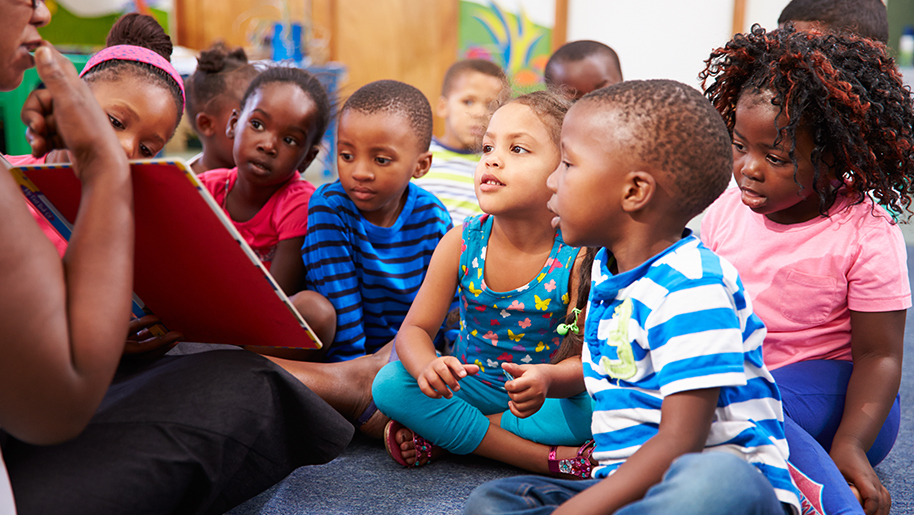
Free high-quality early care and education (ECE) for low-income children, starting in infancy, protects children through multiple pathways, as I have written in the past. Participation in an ECE program with staff trained in detection of abuse and neglect ensures that more adults will be seeing the child and able to report on any warning signs of maltreatment. Taking young children away from home for the day provides respite to the parent, gives them time to engage in services, and may reduce their stress, which contributes to child maltreatment. Attending quality ECE all day improves child safety by reducing the amount of time the children spend with the parents. Quality ECE programs that involve the parents can also improve child safety by teaching parents about child development, appropriate expectations, and good disciplinary practices. They may also connect parents with needed resources in the community and help them feel less isolated. I support a Washington, DC program called Educare, which provides full-day, year-round educational childcare to children in poverty from the age of six months to five years of age. Educare DC is part of a national network of 25 schools that “serve as centers of excellence, where children flourish, families lead, and communities unite to shape systems that ensure every child has access to high-quality early education.”
Helping foster youth
Let us not forget about children who are already in foster care, where they often are neglected if not actually abused. Moreover, adults who have been in foster care are more likely to abuse and neglect their children, so supporting foster youth may help break that cycle. One of my favorite District of Columbia programs is called Family and Youth Initiative, which connects caring adults with teens who are in foster care or have aged out. Adults may choose to mentor a teen or young adult, become a weekend host, or become an adoptive parent. Monthly fun events brings adult and youth together to make the connections that may ultimately lead to deeper involvement. Perhaps there is a program like this in your area that needs support.
Prevent Child Abuse, America?
Having the words “Prevent Child Abuse” in its name does not mean that an organization actually prevents child abuse. Prevent Child Abuse America describes itself as “the nation’s oldest and largest organization committed to preventing child abuse and neglect before it happens.” PCAA runs a program called Healthy Families America (HFA), which has become the largest home visiting program in the country. Billed as a child abuse and neglect prevention program, HFA has never proven its efficacy at achieving that goal. PCAA, then called The National Committee to Prevent Child Abuse, reports that it launched HFA after it “learned of the success” of a home visiting program in Hawaii.” But as I wrote in a post called The Power of Wishful Thinking, that report of success was greatly exaggerated. It was based on a pilot study with no control group and a short follow-up period. When a randomized controlled trial was finally completed and the results released in 1999, it found no impact on abuse or neglect. Early HFA evaluation results, published in the same issue, also failed to find effects on abuse and neglect in three randomized trials. But the HFA juggernaut was already in motion. PCAA does not say what percentage of its budget goes to HFA, but twenty-three members of the 45-person staff work on Healthy Families America. PCAA had total expenditures of $15.6 million in 2024. According to its 2023 IRS Form 990, its CEO earned $339,770 and the 13 members of the executive suite tegether earned over $2 million.
It is not easy to find organizations whose work actually prevents child abuse and neglect or protects children when it happens. Because withdrawal from school is such a common recourse by abusers to isolate their victims from protective adults, my most highly recommended charity is a homeschoolers’ advocacy organization called the Coalition for Responsible Home Education. Because the antecedents of child abuse and neglect are so diverse and reach so far back in time, I recommend supporting organizations that encourage family planning and. provide high-quality early care and education. And I also recommend giving to the woefully small group of organizations that truly advocate for children who are abused or neglected. Unfortunately, the name of an organization is not a good indicator of its purpose or impact. An organization with “Prevent Child Abuse” in its name spends much of what it takes in on a program that has no documented effect on child maltreatment.
Child Welfare Monitor’s Recommended Nonprofits
- Abortion funds list
- Center for Children’s Justice (Pennsylvania)
- Center for the Rights of Abused Children (Arizona, also works in other states)
- Coalition to Protect Maryland’s Children
- Coalition for Responsible Home Education
- Educare early childhood schools
- Family and Youth Initiative connecting DC foster youth with caring adults
- Friends of Children (Massachusetts)
- Keeping Kids Safe (Washington State)
- Miriam’s Heart Child Advocacy Network (New Jersey)
- New Mexico Child First Network
- Safe Passage for Children (Minnesota)
- Upstream (contraceptive care)
This post was edited on Monday, December 22, to add friends of the Children, which advocates for abused and neglected children in Massachusetts.
 Child Welfare Monitor