This post was originally published on Lives Cut Short website.
The Children’s Bureau’s eagerly awaited Child Maltreatment report has been published and the child welfare newsletter The Imprint lost no time in announcing that Maltreatment Reports, Victims and Fatalities All Down in 2024. Others are sure to follow with commentaries celebrating a 10 percent drop in the number of child maltreatment fatalities. This would be great news if it were true, but making any conclusion based on these data is not warranted. The state-by-state data show that the reductions reflect changing policies and practices, as well as reporting problems, rather than actual reductions in child maltreatment deaths.
On January 8, 2025, the Administration on Children and Families (ACF) of the U.S. Department of Health and Human Services published Child Maltreatment 2024 (CM2024), its latest compendium of data on states’ responses to reports of child abuse and neglect. These annual publications, produced by the Children’s Bureau of ACF, are based on data that states submit to the National Child Abuse and Neglect (NCANDS) data system. CM2024 provides data for FFY 2024, which ended on September 30, 2024. Based on reports from all 50 states, the District of Columbia, and Puerto Rico, CM 2024 reports that the number of child maltreatment fatalities dropped from 1,979 or 2.68 per 1,000 children in Federal Fiscal Year (FFY) 2023 to 1,773 or 2.41 per 1,000 children in FFY 2024. Of course,we should celebrate if these numbers are believable. But that is not the case.
An analysis of last year’s Child Maltreatment report explained how the numbers in the annual federal reports cannot be taken as a good estimate of child maltreatment deaths for any given year. It is widely accepted that these numbers greatly understate the actual number of deaths due to child abuse or neglect. Well-functioning child death review teams identify many more child maltreatment fatalities than are reported to NCANDS. Based on only publicly available sources, Lives Cut Short has counted more child maltreatment deaths than those reported to NCANDS in more than half of states in either 2022 or 2023. The undercounts in NCANDS are due to a variety of state policies and practices including restrictive definitions of child maltreatment fatalities, failure to consult all available sources, restrictions on which reports are investigated, and constraints on finding maltreatment in fatality investigations.
Of course it is theoretically possible that while NCANDS underestimates child maltreatment deaths, the trends it finds over time are still valid. But state-by-state data clearly disprove that thesis. The 50 states, the District of Columbia and Puerto Rico reported 206 fewer child maltreatment deaths in FFY 2024 than in FFY 2023. Five states–Texas, Maryland, North Carolina, Illinois and Virginia–together account for a decrease of 210 fatalities–more than 100 percent of the total decrease for the year overall. Explanations from all of these states indicate that the drops they reported reflect factors other than the actual number of child maltreatment deaths.
The number of child maltreatment deaths in Texas that were reported in Child Maltreatment 2024 fell from 187 in FFY 2023 to 107 in FFY 2024, an enormous drop. In its own annual report on child fatalities and near fatalities for FY 2024, the Texas Department of Family and Protective Services (DFPS) reports a smaller but still substantial decrease from 164 child maltreatment fatalities in state fiscal year (SFY) 2023 to 99 in SFY 2024.1 The number of investigated child fatalities fell from 690 to 587–a decline of 587, or 14.9 percent. Out of the investigated families, the number of fatalities where abuse and neglect was confirmed fell from 164 or 23.7 percent of fatalities investigated to 99, or 16.9 percent of fatalities.
In its report, DFPS suggests that the decline in both investigations and maltreatment findings reflects a change in the definition of child neglect adopted by the Legislature that took effect in FY 2022. This change required the agency to find that a parent exhibited “blatant disregard” for the consequences of an act or failure to the act that results in harm or immediate danger to a child. DFPS believes this law affected investigations and dispositions in both FY 2023 and FY 2024. (NOTE: This does not explain the drop in findings of abuse, however.)
DFPS also reported that two other factors affected the fatality numbers. Starting in 2022, the agency changed its screening policy so that reports involving a child fatality but include no explicit concern for abuse and neglect are not investigated if the reporter “or first responders” had no concern for abuse or neglect. According to DFPS, this contributed to the decrease in investigations and ultimately in fatalities reported both in FY 2023 and in FY 2024. DFPS also reported that in FY 2024 it imposed an additional level of review for certain investigations that found neglect (like those involving drowning or unsafe sleep) to ensure that the investigator had followed the new neglect definition incorporating “blatant disregard.” This change almost certainly contributed to the reduced number of maltreatment fatalities found.
North Carolina reported a large drop in child maltreatment fatalities from 107 in FFY 2023 to 46 in FFY 2024. In response to a question about the cause for this large decrease, a spokesperson for the North Carolina Department of Health and Human Services (NCHDHHS) provided the following explanation, which makes clear that the reported decline in child maltreatment fatalities in FFY 2024 is not valid and should not have been included in CM 2024:
NCDHHS is aware of probable discrepancies in the state’s historic child fatality data, particularly in 2023-2025. Prior to 2025, the state was using an outdated database platform that became increasingly unstable and subject to error. Recognizing this, NCDHHS made significant investments in designing and building a new, comprehensive Child Welfare Fatality Information System that launched for state users in 2025. While data from the old database was transferred to the new system, these numbers likely include inconsistencies and should not be used to analyze trends in child fatalities.
Maryland reported 46 child maltreatment deaths in FFY 2024, compared to 83 in FFY 2023.The large drop in Maryland’s child maltreatment fatalities was predictable in advance and is as irrelevant to actual child deaths as those in Texas and North Carolina. In 2025, Maryland’s child maltreatment fatality reports to the Children’s Bureau made the news when a reporter discovered the state had the second highest number in the country. Department of Human Services (DHS) officials soon realized that the agency had for years been reporting the number of death cases investigated for abuse and neglect, whether or not they were confirmed as due to maltreatment. Maryland reported this issue in its commentary to CM2024, stating that it had submitted correct information for 2024. However, Maryland’s entries for previous years have not been corrected, resulting in the misleading appearance of a large reduction in child maltreatment fatalities between FFY 2023 and FFY 2024.
Illinois reported a smaller but still sizable decline from 83 child maltreatment fatalities in FFY 2023 (itself a drop from 110 in FFY 2022) to 66 in FFY 2024. In its commentary, DCFS reported that the decrease in confirmed maltreatment fatalities in both years stems from the introduction of an administrative review process for sleep-related deaths. For any sleep-related death allegation, a senior administrator reviews the investigation “to ensure consistent evaluation of whether the sleep-related death included evidence of blatant disregard,” referring to the parent’s disregard of the danger to the child of unsafe sleeping arrangements. This is the same concept that is included in Texas’ new definition of child neglect. DCFS reports that this new review process has continued to result in fewer sleep-related deaths being “indicated” as due to maltreatment.
Virginia reported a significant decrease in child maltreatment fatalities from 55 in FFY 2023 to 40 in FFY 2024. In its commentary, the Virginia Department of Social Services suggests that this decline was due to a decrease in fatality investigations in FFY 2024, which in turn stemmed from “more local agencies having overdue investigations that were not closed timely or in accordance with VDSS guidance.”
The explanations provided by Texas and Illinois have something in common. In both states, the decline in confirmed child maltreatment fatalities was the intended result of policies–like a changed definition of neglect in Texas and the imposition of administrative reviews to enforce such a restrictive definition in both states–that were designed to find fewer child maltreatment fatalities. Those policies and practices are only part of an overall effort designed to reduce the involvement of child welfare agencies in the lives of families in those two states and in many other states around the country. So it is not surprising that the number of reports accepted for investigation and the number of children found to be victims of abuse or neglect also declined in FFY 2024.
In conclusion, five states account for over 100 percent of the decline in child maltreatment fatalities reported in Child Maltreatment 2024. All of these states have acknowledged that the decline in fatalities that they reported for FFY 2024 was caused by the fatality determination and reporting process itself, not real trends in child maltreatment deaths. The bottom line is that the numbers contained in the Children’s Bureau’s Child Maltreatment reports are not reliable for determining national or state-level trends in child maltreatment deaths, or in child maltreatment in general. Responsible reporters and researchers should know by now not to rely on these data, but they continue to do so, confusing the public and depriving policymakers of the information they need to make good decisions.
It is not clear why the SFY numbers are so different from the FFY numbers, as the two years overlap by 11 months, DFPS has not yet responded to a request for an explanation. ↩︎
The Texas Department of Family and Protective Services has reported a dramatic decline in child maltreatment fatalities from 199 in FY 2021 to 99 in FY in 2024. Perhaps most surprising about the purported decline in fatalities is that it occurred alongside a massive drop in the number of children placed in foster care from 16,028 in Fiscal Year 2021 to 9,623 in Fiscal Year 2022, with similar numbers of children placed in 2023 and 2024.
Supporters of recent changes in Texas law regarding child maltreatment were quick to highlight these findings as evidence that foster care can be greatly reduced or eliminated with no adverse effects on child safety.
But these claims do not stand up under careful scrutiny. Changes to policy and practice can result in dramatic year-to-year changes in official counts of child maltreatment fatalities, and Texas has implemented at least three significant policy or practice changes during this period.
First, a Texas law that took effect September 21, 2021 tightened the definition of neglect to require the presence of “blatant disregard” for the consequences of an act or failure to act that results in harm to the child or that creates an immediate danger to the child’s physical health or safety. This new requirement means that deaths that would have been attributed to maltreatment prior to the law change are now not investigated at all or not confirmed as maltreatment. Indeed, DCF cites this changed definition as one cause of the decline in reported fatalities between FY 2021 and FY 2024.
Child fatality numbers were also affected by a practice change implemented by DCF that involves the way the agency handles reports of child fatalities. Previously, DCFS assigned all child death reports it received for a full investigation. But starting in September 2022, reports to the Texas Child Abuse Hotline that involve a child fatality but include no explicit concern for abuse and neglect are treated as “Case Related Special Requests,” requiring field staff to confirm that the reporter or first responders had no concern for abuse or neglect. If there are any concerns for abuse or neglect, the child fatality is then sent for a full investigation, but otherwise there is no further action. DFPS reports that the number of child fatalities it investigated decreased from 997 in FY2022 to 690 in FY2023 and 587 in FY 2024. DFPS attributes this decline in investigations to both this practice change and to the legislature’s change in the definition of neglect.
There is one newer policy change that DFPS announced in its recent report. Investigations that are closed “with a disposition of reason to believe for neglect with a fatal severity code” receive a further level of review. It seems possible that this level of review may be reducing the number of reported cases even further.
Given all these policy and practice changes affecting the count of child maltreatment fatalities, It seems highly likely that Texas did not see an actual reduction in these deaths, but rather reclassified them as not due to child maltreatment. Perhaps it is not surprising that neither DFPS nor the supporters of weaker child protection are interested in exploring what is really happening to vulnerable children in the aftermath of the drastic decline in the use of foster care.
This post was originally published as a guest commentary in the Baltimore Sun.
Last month, the Baltimore Banner reported on an alarming rise in the number of child fatalities due to maltreatment in Maryland, as shown by a federal report. The number of child abuse and neglect deaths reported by Maryland to the federal Children’s Bureau was 83 for Fiscal Year 2023, up from 27 a decade before, a rate higher than any state but Mississippi.
After initially responding with confusion, the Maryland Department of Human Services (DHS) explained that the numbers it reported to the feds were erroneous. Actually, the state was aware of 47 children who died of abuse or neglect in 2023, which was still a 75% increase from 2013. “We continue to discover where data was routinely released without any validation or reconciliation,” a deputy DHS secretary told the Banner.
But members of the legislature were already alarmed and began talking about withholding funds until the agency was able to report accurate data about child fatalities as well as the conditions of children in foster care. Eager to demonstrate its desire for transparency, DHS announced that it was pivoting to support a bill requiring the agency to promptly release information about children in foster care who die from suspected maltreatment.
But this legislation would not apply to children who died while in the custody of their parents or guardians. It would not apply, for instance, to five-year-old Zona Byrd, who starved to death last year after being returned to her parents’ custody; four-year-old Amir James, who arrived at the hospital covered in cuts and bruises and died from skull fractures that caused his brain to bleed, while his twin brother survived similar injuries; 16-month-old Zavier Giron, who had several broken ribs, a dislocated femur and a perforated intestine when he died; and two-year-old Charlee Gamble, who was shot in the head by an unsecured gun that her father purchased illegally and left on a TV stand. The bill would apply only to cases of abuse or neglect in foster care — even though they are a rare occurrence. Indeed, less than 1% of perpetrators of child maltreatment fatalities reported nationwide for Fiscal Year 2023 were foster parents or staff of a group home or residential treatment facility.
The chair of the Maryland House Judiciary Committee conducting a hearing on the bill wondered if the bill was too narrow, but one of the sponsors, Del. Susan McComas, responded, “Whether it’s a little step or a big step, I don’t really care. I think we need to do something. And I think we could start with just this.”
The sentiment to do something is admirable, but in this case it will likely not even make a dent in the lack of public accountability and transparency when children die of maltreatment.
To prevent such tragedies, we need improved data collection, timely notification and greater transparency by agencies that investigate such fatalities and are responsible for protecting children. Maryland should pass a bill that requires prompt notification of any child fatality that has been reported to child protective services. Eleven other states already do this. Without such notifications, legislators and the public may never know about some child abuse deaths, especially those that did not result in criminal charges. In addition, DHS should be required to respond promptly to requests for further information about all suspected child maltreatment fatalities, not just those where the child was in foster care or state custody. It is only by achieving such transparency that DHS can work with the legislature, researchers and child advocates to prevent these tragic events in the future.
The death of Gavin Peterson from starvation last year after years of abuse and multiple calls to child protective services regarding his treatment set off an outcry in Utah and around the country. Media reports appeared throughout the country, legislators expressed their outrage, hearings were held, and concerned citizens rallied. But halfway through the legislative session that followed Gavin’s death, it appears that there will be no policy changes that will prevent more children suffering Gavin’s fate. Instead, his name has been invoked to support bills that would not have saved him, and, ironically, legislation that could increase the risks for children like Gavin who are withdrawn from school seems poised for passage.
As described in an earlier post, Gavin Peterson died of starvation in July 2024 at the age of 12, almost a year after his father and stepmother withdrew him from school, ostensibly to homeschool him. Gavin had been the subject of multiple reports to the Utah Division of Child and Family Services (DCFS), including at least four reports from his school describing him as eating food from the trash and with other signs of neglect and abuse. An investigation found no maltreatment but did result in his father and stepmother withdrawing him from school, a common response of abusive parents to being investigated, and too often a precursor of a child’s death from abuse. Gavin’s withdrawal from school was his death warrant, because there were no more caring adults to report on his suffering.
There are several types of legislation that might have helped prevent future Utah children suffering Gavin’s fate. Perhaps most effective would be to increase the protections for homeschooled children. For example, the Make Homeschool Safe Act developed by the Coalition for Responsible Home Education proposes that no person who has been found to have engaged in child abuse or neglect can operate a home school. It is not clear from the limited information provided by DCFS whether Gavin’s stepmother had been found to have committed abuse or neglect, but given that a case was open on the family for a year, it seems likely that she was. In addition, the bill would allow no person to withdraw a child from school for homeschooling within three years of an investigation of potential abuse or neglect unless there is a risk assessment by a child protective services worker and monthly risk assessments for the first 12 months of the child’s withdrawal from school. Such a law, if implemented faithfully, might well have saved Gavin.
But far from placing controls on homeschooling, Utah legislators are bent on removing them in the wake of Gavin’s death. For the past close to two years, Utah has required parents who homeschool their children to sign an affidavit swearing that they have never been convicted of child abuse. Admittedly, this seems to be a pretty toothless requirement, as compared to requiring a check of police and CPS records. But the homeschooling community has decided that even this weak law is offensive, as the Salt Lake Tribune has reported. Homeschooling families thronged the Capitol on February 25 to demonstrate their support for a bill that would eliminate this requirement. Its sponsor, Representative Noeleen Peck, justified the bill by saying the requirement “didn’t work” and was “confusing.” Some districts misinterpreted it to require a background check, she said. Perhaps that misinterpretation–giving the requirement teeth after all–explains the overwhelming support for this bill among homeschooling parents. The Committee voted unanimously to recommend the bill eliminating the requirement.
One bill (HB83) that did get introduced in Gavin’s name would not have protected him, despite being a good bill. It would make it easier for police or social workers to obtain a warrant to view a child and a home for the purposes of investigating a report of child abuse or neglect. This bill addresses a real problem in Utah which gained attention through another horrific abuse case in the same year. Parenting influencer Ruby Franke was starving and torturing her two youngest children. Police tried to check on them, but Franke would not respond to the door and a judge would not issue a warrant to allow them to enter the home. HB83 presumably would have enabled police to obtain a warrant to enter the Franke home and perhaps discover the children’s plight.
The sponsor of HB83, state Rep. Christine Watkins, told the House Judiciary Committee that this bill was in direct response to the cases of Gavin Peterson and the children of Ruby Franke. But the case history that was released by DCFS describes no instance of police or DCFS being denied access to Gavin’s home. DCFS visited the home twice in March, 2023 and interviewed Gavin outside the presence of his parents. But he did not disclose the abuse, probably for fear of retaliation by the abusers. Certainly the difficulty of accessing children at home is a problem worth correcting, but it was not apparently related to Gavin’s death. In any case, the bill did not make it out of its first committee hearing and does not seem likely to advance.
Sadly, it appears that the most consequential bill that will be passed in response to Gavin’s death is a measure that would eliminate the cost of reduced-price school lunches. The bill’s sponsor, House Rep. Tyler Clancy, told KJZZ that Gavin Peterson’s death helped build support for the bill. “It shakes you to your core when you read a story about a young person like Gavin Peterson starving to death,” Clancy said. Clancy’s compassion is commendable, but this bill would not have helped Gavin, who died almost a year after he was removed from school. There is something disturbing about using Gavin’s name to support a bill, however beneficial, that wouldn’t have helped him.
It is hard to understand how well-intentioned legislators, in the aftermath of a tragedy like Gavin Peterson’s death, can use his name to support legislation (no matter how worthwhile) that would not have prevented the tragedy in the first place. Whether it is the lack of bandwidth among legislators and staff or the dominance of preconceived notions about what constitutes the problem. It’s even harder to understand legislators voting to reduce protections for children who are withdrawn from school less than a year after Gavin’s death. The Utah Legislature is not unique in its failure to produce meaningful reforms after tragic failures in child protection. But it is the children trapped in their houses of horror that must pay the price.
“B.B.” was born in 2022 and died of fentanyl poisoning in March 2023. During the ten years before B.B.’s death, DCYF had received 30 reports on B.B.’s family (many before B.B. was born) for issues including use of heroin, marijuana and alcohol in the home; lack of supervision of the children; domestic violence; an unsafe caregiver living with the family; an unsafe and unclean living environment unsecured guns in the home “out-of-control” behaviors by B.B.’s older siblings at school, with the mother described as “out-of-it” and unresponsive to school concerns; concerns about the children’s hygiene; and the mother driving under the influence of marijuana. An in-home services case that had been open since January 2023 was closed days before B.B.’s death.
On August 24, 2024, the Washington Department of Children, Youth and Families (DCYF) proudly announced in a press statement that it had reduced the number of children in out-of-home care by nearly half since 2018. Specifically, the number of children in foster care had fallen from 9,171 in 2018 to 4,971 as of August 14, 2024. “Outcomes like this demonstrate our agency’s commitment to keeping families together and children and youth safe,” DCYF Secretary Ross Hunter said. “Although the number of reports we are receiving remain [sic] consistent, we are seeing fewer children and youth in out-of-home care as families are being referred to support services rather than having children removed from their homes. Indeed, “safely reduce the number of children and youth in out of home care by half” (without a baseline date from which this can be measured) is one of DCYF’s six strategic priorities. But treating the decline in foster care (the direct result of government actions) as a desirable outcome in itself can contribute to a disregard of actual child welfare outcomes like safety and permanency.
How did DCYF reduce foster care by nearly 50 percent?
How did DCYF manage to slash its foster care rolls so radically in such a short time? Without providing specifics, the press release cites DCYF’s implementation of the Family First Prevention Services Act (FFPSA) and its emphasis on “supporting and collaborating with families by providing access to services and programs.” A DCYF spokesperson told the Seattle Timesthat the department was using services to avoid removing children or to reunite families sooner, citing efforts to connect parents to substance use or mental health treatment programs, bring a social worker into the home to “problem solve,” or “offer practical items, like diapers, car seats and beds.”
Apparently not satisfied with the changes implemented by DCYF, the Washington legislature in 2021 passed the Keeping Families Together Act (KFTA, also known as HB 1227), which took effect on July 1, 2023. Among other provisions, KFTA increased the standard for the court to order removal of a child from the home, which previously required the agency to demonstrate that “reasonable grounds that the child’s “health safety or welfare will be seriously endangered if not taken into custody and that at least one of the grounds set forth demonstrates a risk of imminent harm to the child.” As amended by KFTA, the law now requires the agency to demonstrate “that removal is necessary to prevent imminent physical harm to the child due to child abuse or neglect.” The petition for removal is required to contain “a clear and specific statement as to the harm that will occur if the child remains in the care of the parent, guardian or custodian, and the facts that support the conclusion.” Moreover, the court must consider whether participation by the parents or guardians in “any prevention services” would eliminate the need for removal. If so, they must ask the parent whether they are willing to participate in such services and shall place the child with the parent if the parent agrees.
On a page dedicated to KFTA implementation, DCYF explains that it has implemented the law by adopting new policies and procedures to determine whether to remove a child and by training and supporting staff to implement the new procedures and determine whether there is an imminent risk of serious harm to the child. DCYF reports that internal reviews show that staff are “taking additional steps to prevent removal of a child and to support a safety plan for the family.”
Shortly before KFTA took effect, DCYF, along with the Department of Health, the Health Care Authority, and the Washington State Hospital Association issued new guidelines to birthing hospitals and mandatory reporters. These guidelines stated that infants born substance exposed, but for whom there are no other safety concerns, can receive “voluntary wrap-around services from a community organization” without being reported to CPS. These voluntary services are being provided through federally-mandated “Plans of Safe Care (POSC).” Healthcare providers identifying a substance-exposed infant are instructed to access an online portal where they are directed to call DCYF if safety concerns are identified and to complete a POSC referral if not.
DCYF has been issuing quarterly data updates to assess the impacts of the KFTA. According to the most recent (October 2024) update, the law is having the intended impact of further reducing removals to foster care. DCYF reports a 16 percent decrease in the number of children removed in the July through September quarter of 2024 compared to the same quarter of 2022, before passage of KFTA. However, comparing foster entries for all ages in July through September 2024 to those in the same quarter of the previous year, the data indicate that foster care entries actually increased! Will this be the beginning of the end of the foster care reductions? That remains to be seen.
A longer-term view raises questions about the difference KFTA made, compared to the previous and ongoing efforts by DCYF to reduce foster care placements. Entries into foster care in Washington have decreased annually from 2017 to 2024, as shown in the chart below. The rate of decrease remained about the same between 2019 and 2024, while KFTA was not implemented until July 2023. Perhaps more children would have entered care if not for KFTA, but there is no way to assess the impact of KFTA as compared with DCYF’s ongoing effort to reduce removals.
The reduction in foster care placements was supposed to be accompanied (and made possible) by an increase in in-home services (which DCYF calls Family Voluntary Services or FVS), and DCYF reports that the number of cases receiving FVS increased by nine percent from 1,809 in SFY2023 to 1,994 in SFY2024. This increase in FVS cases cannot be compared to the 17-percent decrease in children placed in foster care over the same period, as the unit of analysis is different (families rather than children). But the key question is the nature and intensity of these services and whether they really kept the children safe.
The cost of foster care reductions
The purpose of foster care is to keep children safe when they cannot be protected at home. So the essential question is whether the reduction in foster care placements has occurred without any cost to children. Trends in child fatalities and “near fatalities”1 due to child abuse or neglect can provide a clue. These deaths and serious injuries are the tip of the iceberg of abuse and neglect. For each child who dies or is seriously injured, there are many more that are living in fear, pain, or hunger, and incurring lifelong cognitive, emotional, and physical damage. There are troubling signs of an increase in child fatalities and near fatalities over the past several years. In its most recent quarterly update, DCYF reports on the number of “critical events” or child fatalities and near fatalities that met its criteria for receiving an “executive review.” These include the deaths of any minor that had been in DCYF custody or received services within a year of the death that were suspected to be caused by child abuse or neglect.2 They also include near fatality cases in which the child has been in the care of or received services from DCYF within three months preceding the near fatality or was the subject of an investigation for possible abuse or neglect. DCYF reports that the number critical events it reviewed increased from 23 in 2019 to 51 in 2023 and projects that it will increase to 61 in 2024.3
The increase in critical events reflects, in part, the growing opioid crisis in Washington, as well as decisions Washington has made regarding how it intervenes to protect children. Opioid related emergencies have “dramatically increased for the entire population (adults and children) in Washington,” and children have not been immune. Fentanyl is particularly dangerous to young children because it takes only a tiny amount to kill a baby or toddler, who can mistake the pills for candy or put straws or foil meant for smoking the drug in their mouths. The number of fatalities and near fatalities reviewed by DCYF that involved fentanyl climbed from four in 2019 to a projected 35 in 2024. Since 2018, Washington’s Office of the Family and Children’s Ombuds (has observed an annual increase in child fatalities and near fatalities involving accidental ingestions and overdoses. Fifty-seven (or 85 percent) of the 67 incidents examined in 2023 involved fentanyl. Over half of these incidents involved children under three years old and a shocking 14 out of the 85 infants were 12 months old or less. As Dee Wilson and Toni Sebastian point out, the limited mobility and motor skills of infants suggests that some of these infants may have been given a small amount of fentanyl as a means of sedation.
The Washington Legislature was concerned enough about the possibility that KFTA is contributing to an increase in child fatalities and near fatalities in the context of the fentanyl epidemic that it passed a new law (SB 6109) in 2024. The law provides that a court must give “great weight” to the “lethality of high-potency synthetic opioids.….in determining whether removal is necessary to prevent imminent physical harm to the child due to child abuse or neglect.” However, it appears that there is confusion about exactly what that means.
Has DCYF given up on protecting children?
“We know that supporting and collaborating with families by providing access to services and programs increases their number of protective factors, leading to better outcomes,” said DCYF Assistant Secretary Natalie Green. “Giving families the tools they need to thrive and safely parent means more children and youth remain safely at home.”
But the work of DCYF’s own analysts, in their quarterly KFTA updates, raises doubts about whether DCYF is adequately performing its child protection function. These updates acknowledge that the agency is not removing as many children with a high risk of future encounters with child welfare (in other words, those who have a high risk of being harmed). And they also report that the department has seen “an increasing percentage of moderately high to high risk cases being re-referred to CPS within 90 days of the risk assessment. DCYF also reports that the overlap between KFTA and Plan of Safe Care (POSC) is resulting in fewer screened-in intakes involving substance-exposed newborns because these infants are now being referred to voluntary services under POSC.
There has been a chorus of voices alleging that DCYF is abdicating its child protection responsibilities. One foster parent told the Seattle Times that “she and other foster parents are finding children who now come into their care are in worse shape than they used to be, with more serious mental health conditions or greater exposure to lethal drugs like fentanyl.” She contends they’ve been left too long in unsafe conditions because of the heightened legal standard for removal.In The Erosion of Child Protection in Washington State, Toni Sebastian and Dee Wilson have cited the weakness of the management of Family Voluntary Services, which is often employed as an alternative to foster care.
A survey of executive reviews of 2023 and 2024 child maltreatment child fatalities with DCYF involvement within a year provided examples of problems with screening, investigations, and case management, including the following:
Hotline issues. Reviews documented multiple intakes screened out on the same family even when the family had been the subject of multiple calls. The reviews also suggest that too many cases may be assigned to the Family Assessment Response (FAR) pathway, an alternative to a traditional investigation designed for lower-risk cases. In FAR cases, a social worker assesses the family and refers it to voluntary services. There is no finding about whether maltreatment has occurred and no child removal unless the case is transferred to the investigative track.
Premature closure of FAR cases. Reviewers noted instances in which FAR cases were closed after parents failed to cooperate, without caseworkers considering a transfer to the investigative track or before determining that the parent had followed through with services.
Assessment failures: Reviewers noted multiple failures to adequately assess parents for domestic violence, mental health, and substance abuse; failures to contact collaterals (relatives and friends) and instead relying on parental self-reports; lack of recognition of chronic maltreatment; ignoring evidence of past problems if not included in the current allegation; and failing to anticipate future behavior based on historical patterns.4
Inadequate understanding of substance abuse: Reviewers noted the failure to conduct a full assessment of substance abuse including history, behavioral observations, and collateral contacts; disregarding the unique danger to children posed by fentanyl; downplaying the significance of marijuana use, particularly as an indicator of relapse from harder drugs; and disregarding alcohol abuse because it is legal.
Failure to obtain information from treatment and service providers. The failure to communicate with service providers about clients’ participation in services like drug treatment and relying on clients’ self-reports was noted by more than one review team. Sometimes the providers refused to cooperate. Staff told the team reviewing one case about a substance abuse treatment provider that routinely refuses to cooperate, even when parents sign release forms, and routinely tells clients not to cooperate with DCYF.
Lack of subject matter expertise. Reviewers pointed to the lack of deep knowledge about domestic violence, substance use disorder, and mental health among staff doing investigations, assessments, and case management and the need to provide access to subject matter experts when needed.
Failure to remove a child despite safety threats. The team reviewing the case ofa four-year-old who died after ingesting fentanyl reported that there were at least two different times where an active safety threat was present that would have justified filing a petition in court to place the child in foster care. However, the staff believed, based on past experience, that the court would have denied the petition and therefore did not file.
Delayed Reunifications: “P.L,.” a toddler allegedly beaten to death by his mother, was in foster care for over three years but his mother’s rights were never terminated. He was on a trial return to his mother for just over five months when he was found dead with bruises and burns all over his body.
Staff shortages and high turnover were mentioned as contributing to the observed deficiencies in case practice in almost every fatality review. In B.B.’s case, the reviewers noted that the office had been functioning with a 50 percent vacancy rate for the last several years, stating that such a vacancy rate leads to high turnover, high caseloads, caseworkers with little experience, and supervisors forced to carry cases rather than support their caseworkers. Even caseloads that comply with state standards may be too high. The standard of 20 families per caseworker in FVS was noted to be unmanageable by one review panel, which noted that FVS cases are often discussed as high risk cases and require multiple contacts per month with family members, services providers, and safety plan participants. As Dee Wilson and Toni Sebastian put it, “[b]etting young endangered children’s lives on in-home safety plans developed and implemented by inexperienced and overwhelmed caseworkers is reckless, ill-advised public policy.”
Conclusions and Recommendations
Treating the decline in foster care as a desirable outcome in itself, as Washington and other states have done, is both disingenuous and dangerous. Any government can slash the foster care rolls reducing or ending child removals, as many “child welfare abolitionists” recommend. The central purpose of child welfare services, including foster care, is to protect children from child abuse and neglect. A reduction in foster care placements that results in the failure to protect children is no kind of success.
DCYF told King5 that “the increase in child fatalities and near fatalities in Washington is not being driven by the change in removal standards under House Bill 1227 or the reduction in the number of children in foster care. It is being driven by the increased availability of a highly addictive and hazardous drug and a lack of substance use disorder treatment in our communities.” But whether the agency’s policy or the drug epidemic is more at fault is not the right question. It is DCYF’s job to protect children given the circumstances that exist, including the drug epidemic and the lack of sufficient treatment, keeping in mind that treatment often does not work the first, second, third or subsequent times.
What can be done? DCYF needs to address the workforce crisis, which will probably require increasing pay and improving working conditions, or even possibly relaxing requirements for employment as a caseworker in investigations, assessment, and FVS. DCYF should consider policy and practice changes such as reducing the FVS caseload cap from 20 cases per worker; Instituting a chronic neglect unit, with expert caseworkers and even lower caseloads, for chronic cases; finding a way to limit the use of FAR to cases that are truly low-risk; and promoting the use of dependency petitions for court supervision when children remain in the home, as suggested by two fatality review committees.5 DCYF should request and the legislature should fund a variety of ancillary services for families, starting with therapeutic childcare for all preschool aged children with FVS cases as well as those who have been reunited with their parents. Such childcare would give parents a break and parenting support, keep children safe for a large part of the day, and ensure another set of eyes on the child, among other benefits. Also needed are more residential drug treatment centers where parents can live with their children.
Finally, more transparency is needed so that legislators, advocates and the public have access to the findings of DCYF’s executive review teams. Washington deserves credit for sharing its executive child fatality reviews. But there is no reason that the DCYF should not share its near-fatality reviews as well. We know something about how DCYF failed B.B. and the other children who died. But the public needs access to the reviews of those children who narrowly escaped death as well as those who did not. It is only through such transparency that the public can see the actual impact of all the self-congratulatory proclamations about “safely reducing the number of children in out-of-home care.”
Notes
A “near fatality” is defined by state law as “an act that, as certified by a physician, places the child in serious or critical condition.” ↩︎
DCYF relies on the Office of the Family and Children’s Ombuds (OFCO) to determine whether the fatality appears to have been caused by abuse or neglect, therefore requiring DCYF to conduct a review. ↩︎
Data collected by OFCO are more confusing. OFCO reviews all fatalities and near fatalities in which the child’s family was involved in Washington’s child welfare system within 12 months of the fatality. There number of near-fatalities reviewed by OCFO increased annually from 21 in 2018 to 70 in 2023, according to its most recent annual report on Child Fatalities and Near Fatalities in Washington State. But fatalities reviewed by OFCO did not show the same pattern. They reached a peak of 87 in 2018 and fell sharply in 2019, then rose yearly until they reached 85 in 2022 and then dropped to 79 in 2023. Nevertheless, adding fatalities and near fatalities together shows an alarming increase in critical incidents from 108 in 2018 to 149 in 2023. ↩︎
For example, in the case of “R.W.,” a child who died at age four after ingesting fentanyl, an investigation was closed because the children were staying with relatives, despite the mother’s history of repeatedly removing the children from relatives with whom she had left them. A month later the child was found dead at a motel in the custody of the parents. ↩︎
At least 1,800 children die from abuse and neglect every year, and the total is probably considerably greater. Between a third and a half of these deaths may involve families that were already known to Child Protective Services (CPS) through previous reports of maltreatment. In addition, an unknown number of children are severely injured due to maltreatment every year. Legislators, advocates, and the public need timely information about the circumstances leading to these events so they can identify policy and practice changes necessary to protect children. Decades ago, Congress recognized this need and required states to have a policy allowing for disclosure of information and findings about these tragic events. But due to the weakness of the requirement and the federal government’s lack of enforcement, only a few states make meaningful disclosures in the wake of these horrific events, as documented in a new report.
Federal Law and Policy Regarding Disclosure
In 1996, Congress amended the Child Abuse Prevention and Treatment Act (CAPTA) to ensure that information from child fatalities and near fatalities that are caused by abuse or neglect can be used to correct systemic problems and prevent future occurrences. This provision —42 U.S.C. 5106a(b)(2)(A)(x)—requires that “every state’s plan for spending CAPTA funds contain “an assurance in the form of a certification by the Governor of the State that the State has in effect and is enforcing a State law, or has in effect and is operating a statewide program, relating to child abuse and neglect that includes . . . provisions which allow for public disclosure of the findings or information about the case of child abuse or neglect which has resulted in a child fatality or near fatality.”
This provision has many weaknesses, as described in more detail in a new report called Keeping the Public in the Dark: How Federal and State Laws and Policies Prevent Meaningful Disclosure about Child Maltreatment Fatalities and Near Fatalities, which was prepared for Lives Cut Short, a project to document and direct attention to child maltreatment fatalities. First, the provision requires only that the governor certify the existence of a disclosure requirement, not that it actually exist. Moreover, the language is so vague that it leaves all details to the individual jurisdictions. To make matters worse, the US Department of Health and Human Services (HHS) never wrote regulations to flesh out the vague statutory requirements. Instead, HHS provided guidance in the form of questions and answers in its Child Welfare Policy Manual (CWPM). The CWPM does not have the same force as federal regulations, but some states clearly pay attention to it and have mirrored it in their laws and policies.
Unfortunately the CWPM leaves many questions unanswered and even adds new ones. There are several federal confidentiality requirements embodied in different laws, and the CWPM does not explain the order of preference. Instead, different sections of the CWPM actually contradict each other, with one answer stating that the disclosure requirement trumps previously enacted confidentiality laws and several other answers reminding states to comply with existing confidentiality requirements. To make matters worse, revisions in 2012 introduced new opportunities to avoid disclosure, specifically letting states allow exceptions “in order to ensure the safety and well-being of the child, parents and family or when releasing the information would jeopardize a criminal investigation, interfere with the protection of those who report child abuse or neglect or harm the child or the child’s family.” The exception for “safety and well-being of the child, parents and family” completely undercuts the previous language in the CWPM.
The 2012 revision also included a list of the information and findings to be disclosed, which would have been extremely helpful had it not added a new opportunity to withhold certain information. Specifically, the CWPM (Section 2.1A.4, Question 8) prescribes that states must release:
“information describing any previous reports or child abuse or neglect investigations that are pertinent to the child abuse or neglect that led to the fatality or near fatality; the result of any such investigations; and the services provided by and actions of the State on behalf of the child that are pertinent to the child abuse or neglect that led to the fatality or near fatality.”
This language allows states to withhold information that is actually relevant to the question of whether and how a fatality or near fatality could have been prevented. For example, a state could decide a prior incident of neglect was irrelevant if the cause of death was abuse. But the same parent often perpetrates multiple types of maltreatment, especially chronically maltreating parents who have had multiple encounters with the child welfare system. A state’s decisive intervention in response to prior maltreatment may save a child from death or near-death by another form of maltreatment.
State Laws and Policies Regarding Disclosure
The report reviews state laws and policies governing disclosure of information and findings in cases where child maltreatment resulted in a child fatality or near fatality. The review shows that many state laws and policies fall far short of what is needed to ensure adequate public information about how child protections may have failed. The major findings include:
Despite the federal requirement, not every state has a policy for publicly disclosing findings or information about child fatalities and near fatalities. Out of the 50 states and the District of Columbia, four states appear to have no such policies. Another four states have a policy for fatalities but not near fatalities.
Among the 47 jurisdictions that do have laws or policies for disclosing maltreatment fatality and near-fatality information, only 35 require the release of findings and information about child maltreatment fatalities, and all but four of those require that of near fatalities as well. Twelve allow but do not require the release of findings and information about these incidents.
Many state laws and policies are vague, and many contain restrictions that violate the Congressional intent to make information about child maltreatment and agency operations publicly available.
Seventeen states have laws or policies that require releasing some information without request. These releases vary from a few basic facts on each incident to a comprehensive review of the victim’s family’s history with child welfare. Only nine issue notifications of fatalities or near fatalities that are suspected to be due to maltreatment.1 Without such notifications, the public may not even know an incident has occurred, so they certainly will not ask for information about it.
Recommendations
CAPTA should be amended to clarify the language regarding child fatalities and near fatalities due to maltreatment and establish parameters for states in interpreting the law. The new language should make clear that states must release findings and information about fatalities and near fatalities, and disclosure must be required rather than simply allowed. The law should prescribe the types of information that can be withheld and when disclosure can be postponed, and it should deny states the option of withholding other information or refusing to release information altogether. It should spell out the findings and information that must be released. It should clarify that the CAPTA language overrides other confidentiality provisions in federal law. It should also require that states notify the public of child fatalities and near fatalities that are reported to child abuse hotlines and accepted for investigation.
But recent attempts to reauthorize CAPTA have failed, and these changes seem unlikely in today’s ideological climate, where child safety often takes a back seat to other concerns. It is probably more realistic to focus on changes to state legislation. A good state disclosure policy, in compliance with CAPTA, should cover fatalities and near fatalities. It should be mandatory and contain no vague terms, conditions, or exceptions. Permitted redactions should be limited to the names of living children in the family and reporters of maltreatment and (temporarily) any information that would cause specific material harm to a criminal investigation. There should be no prohibition on sharing information deemed to be against the best interests of or harmful to the injured child or any other child in the household.
At a minimum, a disclosure policy should require prompt public notification of all fatalities and near fatalities reported to the hotline and accepted for investigation, along with a documented rationale for not investigating others. The notifications should include whether the family had past involvement with CPS and a brief summary of prior reports and responses by the agency. There should be no requirement that the historical information be “pertinent to the abuse or neglect that caused the fatality,” as suggested by the CWPM. Upon completion of the investigation, if it is determined that the fatality resulted from abuse or neglect, the department should be required to release a detailed summary of prior reports involving the family or household and of agency responses, including investigations, in-home cases, child removals, and family reunifications, The agency’s complete files on the perpetrators and their children, with certain identifying information redacted, should be available to any person upon request.
A study of the policies of 50 states and the District of Columbia toward disclosing information regarding child maltreatment fatalities and near fatalities shows that many fall drastically short of embodying Congress’s intent in adding Section 106(b)(2)(B)(x) to CAPTA. Most of these difficulties stem from the deficiencies of the language itself and the guidance provided in HHS’s CWPM. While changing CAPTA’s language would be the most efficient way to enable improvement around the country, it is more likely that legislators and child advocates at the state level will collaborate on legislation requiring full transparency around these deaths. We cannot make progress in preventing severe and life-threatening child maltreatment unless legislators, advocates, and the public can access comprehensive information about what led to these tragic events.
Rhode Island provides notifications of suspected maltreatment only for fatalities and near fatalities only if the child was the subject of an open case; other notifications occur only after maltreatment is confirmed. ↩︎
To my readers: This blog summarizes a report that is the culmination of nine months of work. It is part of my advocacy for children in the District of Columbia, which I share in my blog, Child Welfare Monitor DC. But I think this post and the underlying report will be of interest to child advocates, policymakers and researchers around the country because the findings and issues discussedare widely applicable.
“We are not here to save children.” That is what I was told on the first day of my training as a child protective services worker at the District of Columbia’s Child and Family Services Agency (CFSA). And indeed, the District is on the cutting edge of the current movement in child welfare around the country that considers child protective services as a “family policing system” that unnecessarily harasses and separates families, especially families of color. The problem with this perspective is that some families do not provide a safe environment for children to grow and develop. In some of these families, children die. That is what happened to the 16 children whose cases are discussed in a new report, which is summarized in this post. And indeed, analysis of the limited information provided suggests that CFSA did not take advantage of the opportunities it had to protect children even after long histories of CFSA involvement in their families. As a result, three children were beaten to death, three more were poisoned by opioids, and others died of burns, a car accident, and unknown causes when the deaths might have been preventable if the agency had been more protective.
When a child dies of abuse or neglect after that child’s family has been on the radar of the agency designed to protect children, it is important for the public to know whether and how this death could have been avoided. The essential question is whether the agency could have prevented the death by doing something differently. Did staff miss any red flags, and therefore fail to take action when necessary? If the death was preventable, what factors must be remedied in order to prevent such failures in the future? It is not enough for the agency itself to have access to this information, or to have an internal team review it. Agencies can fail to learn from their mistakes when they are blinded by ideology, self-interest or just inertia.
For those reasons, federal law requires every state to have a law or program that includes “provisions which allow for public disclosure of the findings or information about the case of child abuse or neglect which has resulted in a child fatality or near fatality.” In compliance with this requirement, DC Code requires the Mayor or the Director of CFSA, upon written request or on their own initiative, to provide findings and information related to “[t]he death of a child where the Chief Medical Examiner cannot rule out child abuse, neglect, or maltreatment as contributing to the cause of death.” In March 2023, we requested such findings and information for all the fatalities that met the criteria and were reviewed by CFSA’s internal fatality review team between 2019 and 2021. It took more than six months of meetings and emails to receive the information that is presented in this report. We agreed to restrict our request to cases reviewed in 2019, 2020 and 2021 and to withdraw our request for information on near-fatalities, which CFSA only began tracking in October, 2022.
Not surprisingly, CFSA interpreted the disclosure requirements in a way that restricted the information provided as much as possible. If a medical examiner did not rule the manner of death to be an abuse or neglect homicide or “undetermined,” no information was provided. Therefore, the agency did not release any information on cases where the manner of death was labeled as accidental, even if it found a parent responsible for the death or removed the children. The “accidental” deaths for which information was not provided included one child who died after he was left in a baby swing for two hours, which most ordinary people would consider to be neglect. The death of seven-week-old Kyon Jones, whose mother told police that she threw his body in a dumpster after she rolled over him while high on PCP, was not included because his body was never found and therefore it did not meet the criteria for release of the information–even though CFSA removed the surviving children from their mother.*
In addition to omitting some cases in which neglect or abuse played a role, CFSA heavily redacted the information it did provide, with many pages and large portions of others blacked out. CFSA refused to provide the names of the children, parents and caregivers, providing a rather convoluted interpretation of DC Code, which clearly requires the release of this information. (See the full report for more information about their reasoning). In three cases, the child’s identity was clear from media coverage of the case, and we used the child’s name. A major source of redactions was the exclusion of “personal or private information unrelated to the child fatality.” It appears that CFSA’s legal team interpreted this term much more broadly than a social worker or researcher would, because they redacted almost all information about parents’ history of criminal activity, substance abuse, mental illness, and domestic violence–which are obviously relevant to many of the fatalities we are discussing.
On investigations, it is unfortunate that DC Code requires that the agency release only ”a description of the conduct of the most recent investigation or assessment” rather than all investigations regarding the family in question. It appears that the agency interpreted “the most recent investigation” as the fatality investigation itself rather than the most recent investigation before the fatality, but the law ought to require a description of all previous investigations. The agency also disregarded language that requires it to provide “the basis for any finding of either abuse or neglect.”
For most cases, we received very little information aside from a list of the previous referrals (reports to the CPS hotline) including only the date of the report, the allegation category and the disposition; an account of in-home and foster care case activities for the families that had such cases; and an account of the investigation of the fatality itself. The information about the parents was heavily redacted, and almost the entire history of agency involvement was blacked out in most cases. Despite the limited information provided, the redacted summaries included some new information, some of which was startling and disturbing. The report is based on the 16 case summaries provided by CFSA, occasionally supplemented with information from the agency’s annual fatality reports, which are available to the public. These cases affected 15 families, as one family had two fatalities in one year. Unless otherwise noted, the information is based on the case summaries. The full report, from which this blog is excerpted, contains summaries of each case.
Cause and Manner of Death
CFSA classifies child deaths by cause and manner. “Cause of death” is the specific disease or injury that led to the death. Manner of death refers to the circumstances that caused the death, and falls into five categories: natural, accidental, suicide, homicide, and undetermined. Of the 16 cases for which information was provided by CFSA, three (19 percent) were abuse homicides, six (37 percent) were neglect homicides, and seven (44 percent) were undetermined in manner. The latter were the cases for which CFSA provided information because the Medical Examiner was unable to rule out child abuse or neglect homicide as the manner of death.
The most common causes of death were blunt-force trauma and opioid poisoning, each claiming the lives of three children, as shown in figure below. The remaining children died from a variety of causes, including drowning, asphyxia, thermal and scald injuries, injuries from a car accident, and unknown causes.
Abuse deaths: Blunt Force Trauma
Three of the children died of blunt force trauma–one of the two most common causes of death in the sample. The murders of two of these children – Makenzie Anderson and Gabriel Eason – – became known to the horrified public through press coverage of their deaths in February and April of 2020. Each of them died from head trauma inflicted by a parent or stepparent. Makenzie suffered from multiple contusions to the face and head, skull fractures, and other injuries, and her mother pleaded guilty to manslaughter, receiving a ten-year prison term with seven years suspended on the condition that she obtain mental health treatment and have no unsupervised contact with children. Gabriel’s autopsy found abrasions and contusions to the head, face and torso; contusions to the heart and thymus gland; liver and kidney laceration; new and healing fractured ribs; and a brain hematoma. His stepfather was sentenced to 12 years and eight months in prison and his mother, who did not seek medical help for Gabriel or his critically-injured three-year-old brother, was sentenced to four years of probation and three years of supervised release.
But there was a third homicide by blunt force trauma. A three-year-old girl died of trauma to the abdomen in the home of an aunt where she was placed by CFSA after being removed from her drug-addicted mother. Her injuries included contusions to the forehead and abdomen, a lacerated liver, and blood in the abdominal cavity. No charges were filed against either the aunt or her boyfriend, and the case received almost no public attention.
Neglect deaths: Opioid Poisoning and other causes
Three children (a three-year-old girl, a three-year-old boy, and a three-month-old girl) died of synthetic opioid toxicity, with fentanyl implicated in all three deaths. (One of the children had also ingested a controlled substance called eutylone.) There is no information about how the children might have ingested the drugs, but all lived with parents who were known or alleged to abuse substances. These deaths never became known to the public, which is not surprising since it appears that none of the parents were arrested or charged.
A 17-month-old boy died of “complications of thermal and scald injuries,” and his mother told the investigator that she had no idea how it happened or how he ended up face-down in the bathtub several hours later. A seven-year-old died of injuries from a car accident. His mother was a long-time substance abuser and was arrested for Driving Under the Influence (DUI) in the accident. She was driving from Florida to Washington and her children were not sitting in car seats or belted in. A five-month-old boy died of asphyxia by drowning after being left alone in the bathtub with a one-year-old sibling while their mother searched for her car keys.
Deaths for Which the Manner was Undetermined
Two deaths has known causes but the manner – whether abuse or neglect or something else – was not determined. A twelve-year-old girl with asthma died of an untreated bacterial infection and pneumonia but also had enough bruising from two separate beatings in the previous two days to support a CFSA substantiation of the mother for physical abuse. It is unclear why this was not considered a medical neglect homicide. A ten-month-old girl died of asphyxia but the manner of death was undetermined. Her mother had left her in the care of her father and returned to find her unresponsive.
The cause as well as the manner of death was unknown or undetermined in five cases. These included an 18-month-old boy with a subdural hematoma, which could have been caused by abuse or a fall, an 11-month-old girl whose mother reported leaving her unsupervised on her stomach with a bottle in her mouth for about 40 minutes, a nine-month-old boy put to bed with a bottle and found face-down on a pillow; a two-month-old girl who died while sleeping with her mother, and a three-month-old girl found unresponsive by her parents one morning. Unsafe sleep practices may have contributed to some of these deaths, but other unsafe sleep fatalities were categorized as accidents, for which case summaries were not provided.
Demographics
A quarter of the children who died were younger than six months old and half of them were one-year-old or younger. Another quarter were two or three. This is not surprising as young children are more vulnerable and similar results are found nationally. But older children were not invulnerable to abuse or neglect, including the seven-year-old who died in a car accident and the 12-year-old who died of an untreated bacterial infection and pneumonia.
Fifteen of the decedents were African American and one was classified as “African-biracial.” According to the latest data from Kids Count, 54 percent of children in the District of Columbia are Black. So Black children were overrepresented among the children who died of maltreatment or possible maltreatment. The overrepresentation of Black children among children who died points to Black children’s particular need for protection. And it suggests that current emphasis in the District and around the country on reducing the involvement of Black families in child welfare may cause more suffering and more deaths among Black children.
The prevalence of large families among those that lost a child due to abuse or neglect is striking. More than two thirds of the mothers of children who died by maltreatment had four or more children. The average mother in the group had 4.6 children, often with more than one father.
Histories of System Involvement
All the families had been the subject of at least one report to the CFSA hotline before the fatality, or else they would not be included in this report. But many of the families that lost a child had experienced a large number of reports prior to the fatality. Among the 16 fatalities included in this report, only six occurred in families that were the subject of five reports or fewer in the last five years. Five occurred in families that had between six and 10 reports, three occurred in families with 10 to 15 reports, and one family had 24 reports. Three of the families had actually experienced a previous child fatality–a shocking statistic considering the rarity of child fatalities overall.
The families of the two children – Makenzie Anderson and Gabriel Eason – whose abuse homicides shocked the District of Columbia in February and April 2020 were both known to CFSA before the deaths, and the last report to the hotline came five months before the fatalities of both children. Makenzie Anderson’s family was reported to the hotline eight times within five years of her death. The last report alleged exposure to unsafe living conditions, inadequate supervision, and substance abuse by a parent, caregiver, or guardian. All those allegations were unfounded (not confirmed) by CFSA. Gabriel Eason’s family was the subject of 17 prior calls to the hotline since 2012, including 12 in the five years preceding Gabriel’s death. The most recent report was for unexplained physical injury in October 2019 and was also unfounded by CFSA.
Substance abuse by the parent or caregiver was the most frequent allegation CFSA received regarding the families in the five years before the deaths, with 30 substance abuse allegations collectively accumulated by the families of the 16 dead children during that period. Another eight reports concerned positive toxicity of a newborn, a reflection of parental substance abuse. Substance abuse by the parents was observed or alleged in the families of all but four of the victims included in this report. Inadequate supervision was the second most common allegation, with 25 allegations concerning the 15 families. Almost as common was educational neglect, referring to children with excessive school absences, with 24 allegations received in the five years preceding the fatality. Ten of the 15 families had at least one report for educational neglect before the child’s death. Another major theme was exposure to domestic violence, with 17 allegations received by the families. Domestic violence was mentioned in nine of the 16 case histories as the subject of an allegation or in notes from social workers or police.
Most of these families could be described as “chronically neglectful.” According to the Child Welfare Information Gateway, “Chronic child neglect occurs when a caregiver repeatedly fails to meet a child’s basic physical, developmental, and/or emotional needs. Chronic neglect can have long-term, negative consequences for child health and well-being.” Working with chronically neglectful families is especially difficult and requires special training and skills, which many CFSA social workers may lack. Perhaps that is one reason why they struggled so hard to engage some of these families. Four of the children died while an in-home case was open. Three out of four of the in-home case narratives from CFSA portray caregivers who evaded offers of help from CFSA and other providers and refused to cooperate with efforts to monitor conditions in their homes.
System Failures
The information received suggests several areas where failures in policy and practice by CFSA and other agencies may have allowed these deaths to happen. These areas include:
Screened out and unsubstantiated reports: Research points to the difficulty of determining correctly whether a child has been maltreated, as well as the absence of significant differences in subsequent outcomes between children with a substantiated allegation of maltreatment and those with an unfounded allegation. Without information on how hotline and investigation decisions were made, we cannot assess the agency’s performance in these areas. But the fact that most previous reports for families with a subsequent death were screened out or unfounded is concerning.
Flawed management of in-home cases: Four of the deaths reviewed here happened while an in-home case was open for the family. In three of these cases, workers struggled to complete face-to-face visits with the families because parents evaded these visits. Social workers and supervisors could have filed a petition to involve the court, an option known as “community papering.” But they did not exercise this option–or they started too late, as in the case of the child who died after a meeting was finally scheduled to discuss community papering the case. The meeting was cancelled after the agency received word of the child’s death.
Too many chances: The mother of the seven-year-old killed in the 2020 car accident had been given numerous chances to recover from drug addiction and had relapsed many times over 18 years of involvement with CSFA. The family of the 17-month-old who died of complications of thermal and scald injuries had 24 referrals to CFSA between 2016 and 2021. Three in-home cases were opened and closed, but the children were not removed until the little boy died.
A fragmented health care system: In its findings on Gabriel Eason’s death, CFSA pointed out that Gabriel was taken to different medical providers for his various injuries. Because they use different information systems, the providers could not see records of the earlier injuries.
The reaction of CFSA and the criminal justice system after the fatalities obviously did not contribute to the fatalities themselves but may illustrate a pattern that contributes to future deaths. Specifically, CFSA’s tendency to place siblings informally after fatalities and the police and US District Attorney’s failure to charge parents raise concerns.
Informal placements after fatalities: CFSA, and child welfare agencies around the country, have been criticized for relying on informal placements with family members, rather than formally removing the children, placing them with the relatives, and opening a case to monitor their safety and well-being. In at least four of the 16 cases reviewed here, CFSA did not officially remove the siblings of the children who died but instead relied on informal placements with fathers or other relatives to keep them safe. Nothing was done to assure that the children were not returned to the home from which they had been removed as soon as the investigations closed, or to verify that the parents or caregivers had rectified the conditions leading to the child deaths.
Failures by the criminal justice system: The failure to bring charges against some of the parents and caregivers described here is quite concerning, particularly in the case of the three-year-old who died of blunt-force trauma and the infant and two three-year-olds who died of opioid poisoning. There has been considerable criticism of the US Attorney’s office in the District (which handles adult criminal prosecutions) for its low rate of opting to charge people for crimes. We do not know if the problem is the Metropolitan Police Department’s failure to bring the cases to the US Attorney or the latter’s failure to pursue them.
Recommendations
Without seeing the full case studies that were available to CFSA’s internal review committee, we cannot make detailed recommendations about how to avoid child maltreatment fatalities for children known to CFSA. The minimal recommendations that CFSA’s internal review team made show the need for the City Council, advocates and the public to have access to these complete case studies: in its 2021 report the agency made no recommendations other than those dealing with the fatality review process! Therefore, our first recommendation is to the City Council, urging it to require that CFSA release comprehensive case histories on all proven or suspected child maltreatment fatalities. Our next blog post will discuss the legislative changes that are needed.
The lack of information on how screening and investigation decisions in particular were made precludes specific recommendations. Perhaps a new audit of the hotline is in order. Some changes to hotline screening policy might be advisable, especially around educational neglect. School absences should be investigated regardless of the age of the child (requiring a change in the law) and their academic performance. And perhaps investigative workers could benefit from better training in forensic interviewing techniques that might help them better evaluate parents’ and childrens’ statements for veracity and perceive more subtle signs of abuse or neglect.
The case narratives make clear that in-home social workers struggled to complete home visits to the families of the children who later died. The agency must change its policy to encourage “community papering,” making court involvement routine after a certain number of missed visits or other instances of noncooperation. CFSA might also want to consider strengthening its in-home practice, perhaps by reinstating the Chronic Neglect Units, which were eliminated barely a year after they were implemented. These units would employ specially-trained social workers with lower caseloads and longer time periods to work with families.
Despite the current ideology favoring family preservation and reunification at all costs, the agency must also recognize that sometimes it must give up on a parent and find a safe, permanent alternative for the children. Giving parents multiple chances with successive children over many years belies the true purpose of child welfare services – to protect children.
Not all needed changes fall in CFSA’s bailiwick. Reforms in the criminal justice system are also necessary to ensure that parents who killed one child cannot harm more children. Couples who refuse to cooperate with prosecutors, and parents who expose children to opioids due to their own abuse or drug dealing must also be charged. Other jurisdictions do it, and the District must do it as well.
DC Health and medical providers also have a crucial role to play in making children safer. Encouraging the adoption of a comprehensive medical information platform across the region to prevent families from using different doctors to hide abuse and neglect would be a welcome step. A campaign by DC Health to educate young women on how an early pregnancy, especially when followed quickly by others, compromises their future and that of their children, is a crucial necessity. It must be accompanied by improved access to long-acting reversible contraceptive methods.
In summary, even with the very minimal information we received, some conclusions emerge. CFSA’s extreme deference to parents and guardians emerges clearly through the redactions in these narratives. This is in direct contrast to the picture that is being painted by the foundations, advocacy groups and public agencies dominating the child welfare conversation. Their accounts portray interventionist child welfare agencies that remove children rather than giving their families the help they need and want. We are seeing the opposite here: families who evade offers of help from the agency and providers and refuse to cooperate with efforts to monitor conditions in the home. The goal of such parents often appears to be to avoid surveillance by outsiders rather than to improve their ability to care for their children. And CFSA workers often seem unwilling or unable to intervene in a way that will protect these children.
‘The tragic deaths of children whose families are known to CFSA are the tip of a much larger iceberg. For every child who dies of abuse or neglect, an unknown number of others are living in fear or pain from abuse, suffering chronic neglect that will cause lifelong intellectual an emotional damage, or lacking the loving attention necessary for optimal mental, emotional and physical development. Sadly, it is only the children who die whose cases can be used to learn lessons to prevent similar tragedies in the future. This information must be public, so that the public can push for a system that protects all children who are not receiving the parental care they need to survive and thrive.
*The case, which received media coverage, was included and easily identifiable in
A shattering new report from a Minnesota child advocacy group demonstrates that many of the more than 160 deaths of children from abuse and neglect over an eight-year period ending last May were preventable. These deaths, the report concludes, can be attributed to “a child welfare philosophy which gave such a high priority to the interests of parents and other adults in households, as well as to the goals of family preservation and reunification, that child safety and well-being were regularly compromised.” This report is essential reading for child advocates everywhere, because this philosophy reigns around the country, and the troubling factors identified exist in states where most of the child population resides.
Produced by the child advocacy group Safe Passage for Children of Minnesota, and authored by Safe Passage Executive Director Richard Gehrman and Maya Karrow, a fellow from a local law school, the project collected information about 88 children who were killed between 2014 and 2022. The Minnesota Department of Human Services (DHS) told project staff that it was aware of 161 child maltreatment deaths during a period that mostly coincides with the period studied.1 But DHS refused to provide information on any of these deaths (in violation of state and federal law), so the staff had to rely on news reports, online court records, and information provided by counties for the 88 cases it had identified.
Like child maltreatment fatality victims nationwide, the dead children were young, with 42 percent under a year old and 36 percent between one and three years old. Children under four were 78.4 percent of the Minnesota deaths very similar to the 76.3 percent for child maltreatment fatality victims nationwide. Black children accounted for 26.1 percent of all the fatalities reviewed. In contrast, Black children were 17.8 percent of children involved with child welfare and 10.6 percent of the state’s child population in 2021.2 Based on the statistics and case file reviews, the report’s authors expressed concern that chld welfare agencies in Minnesota “may have tended to leave Black children in more high-risk situations for longer periods of time than children of other races and ethnicities.” The report’s authors are not the first to have asked whether fears of being accused of racism may be leading agencies to leave Black children in harm’s way even more than children of other races.
The most common causes of death among the cases reviewed were blunt force trauma to the head (33 percent) and body (19.3 percent). The other major causes of death were asphyxiation (17.0 percent) and gunshot wounds (8.0 percent). Other causes included drowing, sepsis, poisoning from drugs, stabbing, hypothermia/hyperthermia, fire, and undetermined causes.
The most common perpetrators of child fatalities were mothers (27.3 percent), mothers’ significant others (23.9 percent), and fathers (22.7 percent). In 65.9 percent of the cases, one or more of the perpetrators had a history of substance abuse. Shockingly, there were seven deaths in foster care, of which six were in kinship foster care. In another appalling finding, there were seven cases in which a child was killed along with the mother or while attempting to intervene in an assault on the mother.
A concerning pattern was the evidence of child torture in a surprisingly large number of cases. The project’s reviewers identified 14 cases (or 15.9 percent) that displayed signs of torture, according to criteria outlined by experts. The authors used the case of Autumn Hallow, who was killed at the age of eight, as an illustration. Investigators found that Autumn’s father and stepmother frequently bound her in a sleeping bag as punishment, sometimes with her hands tied behind her back or overnight, and starved her for six months so that she weighed only 45 pounds when she died. A particularly appalling feature of her case was the “chilling indifference by all the authorities involved to the screams of a child [reported repeatedly by neighbors] and the pleas of an increasingly distraught mother.” Autumn’s cause of death was declared to be asphyxia and blunt force trauma. Her father and stepmother were convicted of second-degree unintentional murder in her death.
The project uncovered numerous systemic flaws that contributed to the 88 deaths reviewed. These included inappropriate assignment of reports to a “family assessment” rather than a factfinding investigation; the failure to respond adequately to repeated reports suggesting chronic maltreatment; seemingly endless chances given to parents to address chronic problems; the return of children from foster care to homes where safety had not improved;the placement of children with kin without appropriate vetting; leaving children with mothers who repeatedly failed to protect them from violent partners; and the lack of integration between child welfare and child custody cases.
The repeated inappropriate assignment of cases to the “Family Assessment” (FA) track, which is intended for low-risk cases, was a major recurring theme in the case reviews. Minnesota is one of 34 states that initially adopted a two-track model, often known as differential response, for responding to reports of suspected maltreatment. (Some states have since terminated the practice). The idea was that a less-adversarial response than an investigation would be a better way to engage families with lower-risk cases. But with its practices like informing parents of visits beforehand, interviewing children in front of their parents, and making no finding as to whether maltreatment occurred, the report explains that FA is not appropriate when the risk to children is high. Yet, by 2020, 62 percent of CPS reports in Minnesota were assigned to Family Assessment. The researchers found that 31 of the 59 families with Minnesota child protection history had at least one and as many as six Family Assessment cases prior to the fatality. As the authors point out, “it is self evident that the repeated use of FA in chronically referred families is inconsistent with the policy that FA be used only in low-risk cases.”
Among the examples cited by the authors for the inappropriate use of FA was one that occurred following a report that a mother and her boyfriend were hitting their children with objects and dragging them by their hair. This family was the subject of six previous reports that included allegations of “physical abuse, sexual abuse, and unhygienic and unsafe conditions, including rotten food, garbage, drugs, alcohol, and sharp objects accessible to children throughout the home.” Twenty days after that last FA, two-year-old Lyla Koob was dead. Her mother’s boyfriend admitted to shaking her in frustration after she vomited. Her autopsy revealed bleeding on the brain and injuries behind both eyes.
Based on analysis of court records, the researchers found that 71.6 percent of the dead children’s families had previous involvement with child protection. The 61 families included 59 with prior history in Minnesota and two with prior history in another state. In view of these percentages, it is not surprising that the project staff found that Minnesota child welfare had a pattern of failure to respond adequately to chronic maltreatment.
In some cases, the researchers noted a pattern of inaction by child welfare agencies in the face of chronic multitype maltreatment, or maltreatment that includes neglect as well as abuse. The case of Tayvion Davis, who died in 2018 at the age of eight, was used to illustrate this type of negligence. Before he was born, Tayvion’s mother was convicted of malicious punishment of a child after she and two adult relatives held down and beat one of her children. From that time until Tayvion’s death, the family was the subject of at least ten reports of physical abuse, sexual abuse, or neglect. According to court records, the children were hit with a hammer and a metal rod, whipped with a belt, burned with boiling water or chemicals, deprived of food and sleep as punishment, and threatened with death if they talked about the abuse. There were multiple reports of sexual abuse of Tayvion or a sibling by the oldest sibling, juvenile and adult relatives, and an unrelated adult.
Tayvion Davis froze to death in 2018 after his mother locked him in the garage overnight in subzero temperatures. The autopsy found numerous scars that suggested years of abuse that may have escalated into torture. Unbelievably, Tavion’s siblings were returned to their mother after being removed in the wake of Tavion’s death. They remained with her for another five months, during which she was the subject of several additional reports. It was not until they were removed again that they told their foster parents that Tavion was deliberately locked in the garage, resulting in murder charges against the mother.
The researchers also found that counties gave parents multiple chances to address chronic problems, while failing to execute effective safety plans for children remaining at home. One example of this tendency was the case of Aaliya Goodwin, who died at the age of five months. There had been eight reports for two older siblings regarding the parents’ substance abuse. Between 2015 and 2021, four safety plans were mentioned in court records, the oldest sibling was placed in foster care and returned home twice, the mother was charged with nine drug-related offenses and convicted of five, and the father was charged seven times with two convictions. The county opened a new FA in January 2022 due to a report of domestic violence and the mother agreed to a substance abuse assessment. Three days later she was found passed out on the couch after using drugs and alcohol. Aaliyah, squashed between her mother and the couch, was dead of positional asphyxia.
Another pattern cited in the report was counties’ tendency to return children from foster care to a home that was still unsafe. The project revealed that 26 percent of the children who died had been previously removed from their parents and then returned. The case of Khamari Golston was provided as an illustration of this pattern. Multiple abuse injuries to four-month-old Khamari resulted in his and his twin sister’s removal and placement in foster care. Their mother was charged with felony malicious punishment and assault. But only two months after adjudicating these children to be in need of protection, the judge sent them home for a “trial visit.” The mother was said to be cooperating with her case plan but there was no documentation of this in the court record. Eight weeks later, Khamari was dead of suffocation or smothering. He also had multiple injuries consistent with physical abuse. Khamari’s ten-year-old sister reported that their mother frequently choked him and covered him up when he cried.
Some children were returned from foster care to parents with serious mental illness. The report cites six-year-old Eli Hart, whose mother killed him with multiple shotgun blasts to the head and torso nine days after he was returned home. Eli was returned home without evidence that his mother’s mental illness was under control. Instead, her mental health remained a concern throughout the year that he was in foster care and during a trial home visit. She received eight traffic-related convictions (including for speeding and reckless driving) and was also charged with theft of pharmaceutical drugs during the time he was in foster care.
The occurrence of seven deaths of children in foster care, of which six were in kinship care, was a startling revelation of this study. There have been concerns raised around the country that the growing focus on kinship placements may be leading to the placement of children with family members who have not been adequately screened and are not appropriate caregivers. And indeed, the project staff found a “lack of due diligence in deciding whether a kinship placement would ensure the safety and well-being of the child.” To illustrate this pattern, the report offers the history of Leila Jackson, a 17-month-old who was killed by her foster father in 2018. Her autopsy showed “extensive subdural hemorrhages and severe brain injury, as well as extensive bruising on her buttocks.” Layla and her brother were placed in the kinship home after their mother’s parental rights were terminated. The foster parents denied having criminal records or substance abuse histories, but a background check (which was never conducted) would have revealed convictions for DWI, theft, possession of drug paraphernalia, and disorderly conduct.
The pressure to keep children with mothers who were victims of domestic violence, even when these mothers showed they were unable to protect their children, was another systemic problem noted by the project team. The authors found that 28.4 percent of the cases involved domestic violence–not surprising in view of the co-occurrence of child maltreatment with domestic violence. But that seven children were killed along with their mothers, or in an attempt to protect them, was shocking indeed. This is a difficult issue, and removals of children from domestic violence victims by CWS have been harshly criticized. But as the report put it, “at a certain point a line is crossed and it becomes imperative to move children to a safe place.”
In Minnesota, public child welfare cases are heard in juvenile court and custody cases in family court, which means that the same family can have two different court cases with different judges. The findings of the report suggest that the failure to consolidate these cases can place children at risk. In the case of Eli Hart, who was killed by his mentally ill mother, the custody case filed by his father was put on hold pending a resolution of the juvenile court case surrounding his mother. This is despite the fact that the mother’s mental health remained a concern and that all reports indicated that the father was a good and safe parent for Eli.
In sum, the report concludes that “the professional norms currently guiding child protection and foster care are out of alignment with those of the broader community.” As a first step, the report recommends that DHS release more information about child maltreatment fatalities, including making public the fatality and near-fatality reports that counties are required to submit to the state; such reports include information about previous reports and investigations on these families. This recommendation is particularly important because if the public knew about the types of egregious failures described in this report, there might be more public support for changes.
The report contains many specific recommendations to correct the systemic flaws found in the case studies. This year, Safe Passages will be distributing the report to legislators and briefing them on its findings and recommendations. Rick Gehrman, Executive Director Rick Gehrman reports that he will be working with legislators to translate some of these recommendations into legislation to be introduced in the next session, addressing at a minimum some of the Family Assessment practices that endanger children. The ultimate goal, Gehrman says, is to “raise public and legislative awareness of the child welfare practices that endanger children and to bring about a change in the overall philosophy of child welfare services in Minnesota.”
In effect, Safe Passages for Children has unofficially implemented the first recommendation of the Committee to Eliminate Child Abuse and Neglect Fatalities in its 2016 final report, Within Our Reach. That report recommended that each state, with federal funding and assistance, identify and analyze all of their child abuse and neglect fatalities from the previous five years in order to identify factors associated with maltreatment fatalities and agency policies and practices that need improvement to prevent fatalities. Based on this report, every state would develop a fatality prevention plan. Unfortunately, legislation supporting this proposal stalled in Congress and no state has elected to do this on their own. Maryland’s Council on Child Abuse and Neglect and its Child Fatality Review Board, inspired by this recommendation, formed a joint subcommittee that produced an excellent review of child maltreatment fatalities in Baltimore between 2012 and 2015 which identified systemic flaws and made recommendations to correct them.3 Other than that report, I am not aware of any other similar project by a state or local government agency. Let us hope that this report encourages other child advocacy groups and community boards to act where governments have not.
The final words of the report deserve to be repeated. “The erosion in professional norms that has gradually caused human services entities to tolerate the current level of neglect and physical abuse of children has developed over the course of decades. A concerted effort by a community of professionals will be required to restore standards that were once taken for granted, and to place appropriate limits on the ability of adults in a child’s life to harm them.”
Notes
The actual number was likely two to three times as high because the manners of so many maltreatment deaths are misclassified.
See Child Maltreatment 2021. Table C-2, Child Population 2017 to 2021 shows the state’s child population rose from 1,300,061 in 2017 to 1,317,567 in 2021. Table C-3, Child Population Demographics, shows that there were 140,129 Black children in Minnesota in 2021. That figure, divided by 1,317,567 gives the Black percentage of all children in Minnesota as 10.6 percent in 2021.
City of Baltimore Health Department, Eliminating Child Abuse and Neglect Fatalities in Baltimore City. January 2017. This report appears to be no longer available online. Please email marie@childwelfaremonitor.org for a copy.
The federal government’s annual maltreatment report for 2021 was released on February 9, 2023, and the child welfare establishment is celebrating. New Child Maltreatment Report Finds Child Abuse and Neglect Decreased to a Five-Year Low, crowed the Administration on Children and Families (ACF). “Number of Abuse and Neglect Victims Declines Again,” trumpeted The Imprint, a journal that typically reflects the prevailing voices in child welfare today. Left for the body of the ACF press release (and totally omitted by The Imprint) was the fact that in 2021 the nation was still in a pandemic that kept many schools closed for much of the year, and that child maltreatment “victimization” reflects jurisdictions’ policy and practice much more than it reflects actual maltreatment. Thus, there is no reason to celebrate a decrease in child maltreatment based on this report.
Child Maltreatment 2021 , the latest edition in the annual series from the ACF, combines data from the 50 states, the District of Columbia and Puerto Rico about the number of reports or children involved in each stage of the child welfare system in Federal Fiscal Year (FFY) 2021, which ran from October 1, 2020 to September 30, 2021. The data are obtained from the National Child Abuse and Neglect Data System (NCANDS), a national data collection program run by the Children’s Bureau under ACF. Arizona did not submit data in time to have its data included in this report, so only 49 states are included in this year’s report, along with the District of Columbia and Puerto Rico. Commentaries from most of the states regarding policies and conditions that may affect their data are attached in an appendix. The report’s findings are summarized in Exhibit S-2. All of the figures in this post are taken from the report.
A family’s journey through the child welfare system starts with an initial report, known as a “referral.” Figure 2-D below shows that the total number of referrals (the purple line) rose between 2017 and 2019, dropped sharply in the wake of the Covid pandemic in 2020, as schools closed and many families isolated at home, and increased only slightly in FFY 2021. It is important to remember that in FFY 2021, which began in October 2020, many schools were still closed. Most schools opened over the course of FFY 2021, but some remained closed the entire year. Thus, reporting from school personnel was suppressed for the federal fiscal year.
The rate of referrals as a portion of the child population varied greatly by state. Table 2-1 of the report shows that the total referral rate per 1,000 children in 2021 ranged from a low of 17.8 in Hawaii to a high of 137.0 in Vermont in 2021. Such differences exist every year and reflect factors such as public opinion and knowledge of child maltreatment reporting, as well as state practices. Some states do not even report most referrals to NCANDS, as described in the state commentaries. Pennsylvania has a unique system in which most reports that are not for abuse are classified as “General Protective Services” and not reported to NCANDS. Similarly, Connecticut does not report referrals receiving an alternative (non investigation) to NCANDS. In 2021, state-to-state differences may also reflect how soon in-person schooling resumed in the state after the pandemic. Vermont reported in its commentary that it has been receiving more referrals for concerns that do not reflect maltreatment. Vermont also included several reasons for its high referral rate, including the fact that reports on multiple children in the same family are counted separately. Kansas reported a decrease in reports due to “engaging communities to focus on prevention.”
Once a referral is received, it can be screened in or out by agency hotline or intake units. In general, agencies screen out referrals that do not meet agency criteria, which vary by jurisdiction. Reasons for screening out a referral may include that it does not meet the definition of child abuse or neglect, that not enough information is provided, that another agency should more appropriately respond, or that the children being referred are over 18. Despite receiving slightly more referrals than the previous year, child welfare agencies screened out a larger proportion of them in FY 2021, resulting in a slight decrease in screened in referrals (known as “reports“), from 2020 to 2021 – the blue line in Exhibit 2-D. In the 46 states that provided both data points, 51.5 percent of referrals were screened in and 48.5 percent were screened out.
There is great diversity in the proportion of referrals accepted by states. The percentage of referrals that was screened-in ranged from 15.3 in South Dakota to 98.5 percent in Alabama.1 There are many reasons for these variations, mostly associated with differing policies and practices between jurisdictions. For example, Georgia mentioned in its commentary that after hotline calls increased in 2021, it adjusted screening criteria to screen out more of them. Indiana tried to reduce its screen-in rate by changing criteria related to sexual behavior among teens and preteens, marijuana use by children, and educational neglect. Kansas reported a decrease in reports due to a change in the screening process for educational neglect. Missouri, on the other hand, changed screening criteria to screen in more referrals out of concern for children isolated because of the pandemic.
In FFY 2019, teachers were the most common source of referrals, submitting 21 percent of all referrals. They lost that position in FFY 2020 with the pandemic school closures, while legal and law enforcement personnel increased their share of reports. Perhaps it is not surprising that teachers did not recoup their leading role in 2021, since many students were still attending school virtually for some part of the year. Teachers actually submitted a smaller proportion of referrals in 2021 (15.4 percent) than in 2020 (17.2 percent). It is possible that teachers were making more calls but that more of these calls were being screened out than in the year before. But since ACF does not show the distribution of all referrals by reporting source, one cannot use this data to test that hypothesis.
Investigations
In Chapter 3 of Child Maltreatment 2021 the focus shifts from the referral or report to the child. ACF estimates that 3.016 million children or 40.7 children per 1,000 in the population received an investigation or alternative response2 in 2021. This was a slight decrease over 2020, when 42.0 per 1,000 children received an investigation or alternative response. These rates varied greatly by state, from a low of 12.8 per 1,000 in Pennsylvania to a high of 129.8 in West Virginia. The low in Pennsylvania is not surprising due to its unique system in which most neglect referrals are not reported to NCANDS. But Maryland and Hawaii also investigated small proportions of children– 15.7 and 15.9 per 1,000. These investigation rates reflect the number of referrals and how many were screened in, as well as the number of children per referral.
ACF found that of the children who received an investigation or alternative response, 16.7 percent were found to be victims of child abuse or neglect, as shown in Exhibit 3-B.3 The remaining children were not determined to be victims or received an alternative response. Estimating for missing data from Arizona, ACF calculated a national “victimization rate” of 8.1 per 1,000 children. As Exhibit 3-C shows, this rate has been decreasing since 2018 but the greatest decrease was in 2020 with the arrival of the pandemic.
ACF’s use of the term “victimization” can be misleading. An investigator’s decision about the truth of an allegation is based on limited information and is constrained by available time and staff, and evidence indicates that many referrals are unsubstantiated when maltreatment actually exists. Moreover, these rates are dependent on state policies and practices. Because of the misleading nature of the term “victimization,” the term “substantiation” is used for the rest of this commentary. State substantiation rates per 1,000 children ranged from 1.6 in New Jersey (even lower than Pennsylvania’s 1.8) to 17.0 in West Virginia, suggesting that these rates reflect much more than the prevalence of child abuse and neglect.
Among the many factors that can influence state substantiation rates are:
Differences in referral rates and screening practices, as decribed above;
Different policies about what is considered child maltreatment and different levels of evidence required to substantiate an abuse allegation;
Whether and how much a state uses an alternative (non-investigation response);
Natural and social disasters that may vary in their impact between states. Some states went back to in-person schooling for the entirety of 2021, others opened midyear, and others were virtual almost all year. West Virginia, with the highest substantiation rate, has been particularly hard-hit by the opioid epidemic. The state has the highest overdose mortality rate in the nation;
Differences in the messages coming from an agency’s leadership about the relative importance of child safety versus family preservation;
Variations in the use of kinship diversion, the practice of placing children with a relative without court involvement or case opening. If this happens before the investigation is completed, it may result in an “unsubstantiated finding.
All of these factors can change over time, affecting substantiation rate trends from year to year. It is clear that nationwide, the COVID-19 pandemic continued to suppress reports to CPS hotlines, and therefore investigations and maltreatment findings, in 2021. But the effect of the pandemic differed greatly between states: it appears that some states had more in-person days of school in 2021 than in 2020, and others had less. Additionally, several states described changes in their screening practices in 2021, usually to screen in fewer referrals. Delaware and Washington mentioned an increase in reports diverted to differential response as a reason for declining substantiation numbers in FFY 2021. The emphasis on prevention as an alternative to intervention has been increasing in most states, perhaps affecting the likelihood of substantiation. It is possible also that increases in kinship diversion may have reduced substantiation rates: there is no data to prove or disprove this, but concern over this practice is certainly growing.
To state that maltreatment decreased between 2020 and 2021 is to ignore that “maltreatment victimization” is not a measure of actual abuse and neglect. It is the result of a winnowing process that starts even before a referral arrives. At each stage, the numbers remaining may depend on a wide variety of factors, including policy, practice, natural and man-made disasters and more. The vast differences between state data on referrals, reports, investigations and substantiations shows how unlikely it is that the total number of children found to be victims of maltreatment reflects the actual number of maltreated children, and how irresponsible it is to suggest this might be the case.
A note onChild Fatalities
Last year, ACF used a decline in fatalities due to child maltreatment to headline its press release, Child Fatalities Due to Abuse and Neglect Decreased in FY 2020, Report Finds. This year, the number of child abuse and neglect fatalities reported by states increased slightly, a rise that was not the subject of a headline by ACF. Whether there is a small increase like this year or a decrease like last year means very little, for several reasons. As ACF explains, these child fatality counts reflect the federal fiscal years in which the children were determined to have died of maltreatment, which may be different from the year the child actually died. Such determinations may come much later due to the time it takes to complete a death investigation. For example Alabama reported that for the fatalities reported in FFY 2021, the actual dates of death were between FFY’s 2016 and 2021. Michigan even reported that its child fatality data included the child abuse death of twins in 2003 which was revealed by a cold case investigation.
A second problem with the fatality estimates is that they are widely believed to be too low. One reason is that many states report only on fatalities that came to the attention of child protective services agencies. As the report’s authors point out, many child maltreatment fatalities do not become known to agencies when there are no siblings or the family was not involved with the child welfare agency. Moreover, some fatalities resulting from abuse or neglect are labeled as due to accident, “sudden infant death syndrome,” or undetermined or unknown causes because insufficient evidence was found. Irecently reviewed the child fatality review report produced by the District of Columbia’s Child and Family Services agency (CFSA). CFSA relied on the decisions of the medical examiner, which chose not to classify as maltreatment deaths an infant who died after a mother who was high on PCP rolled on top of him when sleeping with him in the same bed (counted as “unknown); a baby left on his stomach with a bottle in his mouth when his mother left the apartment (counted as “undertermined); a child who was shot to death by gunmen trying to kill her father, involved in the violent drug trade, outside a liquor store at 11:00 PM (“non-abuse homicide”), and a child who died of an untreated bacterial infection and had beating injuries diagnosed by doctors as due to abuse (“undetermined”). The total number of maltreatment fatalities was estimated at only three for the District in CY 2021, not including those four deaths. Some researchers suggest that the actual number of abuse and neglect fatalities may be as much as twice or three times that given in the Child Maltreatment reports,4 and the District of Columbia data suggest this may well be the case.
Notes
This leaves out three states that are listed as screening in 100 percent of referrals: Illinois, New Jersey and North Dakota. Both Illinois and New Jersey explained in their state commentaries that reports must meet certain criteria to be accepted for investigation, so it is not clear why they responded that they screen in 100 percent of referrals. North Dakota actually screens in all referrals, but that is more semantic than real. Reports that do not meet agency criteria for a report of suspected chlid abuse or neglect are categorized as receiving an “administrative assessment,” and are not investigated. North Dakota does not report the number of referrals receiving an “adminnistrative assessment;” hence the reports that 100 percent of cases are screened in. It is unclear why New Jersey and Ilinois provided this figure of 100 percent but the reason may be similar.
Alternative response is, as defined in NCANDS, the “provision of a response other than an investigation that determines if a child or family needs services. A determination of maltreatment is not made and a perpetrator is not determined.”
NCANDS defines a “victim” as “a child for whom the state determined at least one maltreatment was substantiated or indicated, and a disposition of substantiated or indicated was assigned for a child in a report.” “Indicated” is defined as a disposition that concludes that maltreatment could not be substantiated under state law or policy, but there is a reason to suspect that at least one child may have been maltreated or is at risk of maltreatment.”
Herman-Giddens, M. E., et al. (1999). Underascertainment of child abuse mortality in the United States. JAMA , 282(5), 463-467. Available from http://jama.jamanetwork.com/article.aspx?articleid=190980. Also, Cotton, E. E. (2006). Administrative case review project, Clark County, Nevada: Report of data analysis, findings and recommendations. Crume, T. L., DiGuiseppi, C., Byers, T., Sirotnak, A. P., & Garrett, C. J. (2002). Underascertainment of child maltreatment fatalities by death certificates, 1990-1998. Pediatrics, 110(2). Abstract available from https://pubmed.ncbi.nlm.nih.gov/12165617/. Herman-Giddens et al. estimate actual child abuse and neglect deaths to be as high as three times the national reported amount; Cotton et al. and Crume et al. found the actual number of deaths to be twice that reported.
These days, It is a bit difficult to be a left-leaning liberal while also being an advocate for abused and neglected children. I would never have expected that a Senior Fellow at the American Enterprise Institute (AEI), Naomi Schaefer Riley, would be one of my closest allies in child advocacy. Or that my proudest achievement since starting this blog would be my service on a child welfare innovation working group that she organized out of AEI, or that, with a few quibbles over details, I would agree with the main points of her new book. But that is the case in these strange times, in which many of my fellow liberals appear effectively indifferent to the fate of children whose parents they view as victims of a racist “family policing system.”
Naomi Schaefer Riley is a journalist, a former editor for the Wall Street Journal, and the author of five previous books. In her new book, No Way to Treat a Child: How the Foster Care System, Family Courts, and Racial Activists Are Wrecking Young Lives, uses examples, data and quotes from experts to show in heartbreaking detail how policymakers from the left and the right have converged in creating a child welfare system that puts adults first. Much of this occurs because in deciding how to treat abused or neglected children, the people who create and carry out child welfare law and policy “consider factors that are completely unrelated to and often at odds with a child’s best interests,” as Riley puts it.
Take family preservation and reunification, for example. Instead of placing the safety of the child as the highest priority, Riley illustrates that child welfare agencies leave many children in dangerous homes long past the time they should have been removed, with sometimes fatal results. They give parents more and more chances to get their children back, long after the law says that parental rights should be terminated. The book is full of stories of children ripped away from loving foster parents (often the only parents they have ever known) only to be returned to biological parents without evidence of meaningful changes in the behaviors that led to the children being removed.
Not only do today’s advocates of “family first” wrest children away from loving families to return home, but Riley describes how they send other hapless children to join distant relatives that they never knew, on the grounds that family is always best even if the relative does not appear until as much as two years after an infant has been placed in foster care. The fact that a relative may display the same dysfunction that the parent showed may be ignored. I would add, based on personal experience, that in my foster care work I often met grandmothers who seemed to have gained wisdom (and finally, for example, gave up drugs) with age, as well as aunts and uncles who avoided the family dysfunction and went on to lead productive lives, making their homes available to the children of their less well-adjusted siblings. But Riley is right to say we should consider not just blood, but also fitness and bonding before removing a child from a good pre-adoptive home to live with a relative.
As Riley describes, one of the primary factors that is now taking precedence over a child’s best interest is that of race or ethnicity. Riley explains how data on the overrepresentation of Black and Native American children in foster care in relation to their size is being attributed to racism in child protective services, as I have explained elsewhere, ignoring the evidence that the underlying disparities in abuse and neglect are largely responsible for these differences in foster care placement. And they don’t seem to have a problem with holding Black parents to a lower standard of parenting than White children to equalize the ratios. Moreover, many of these “racial activists” are recommending eliminating child welfare systems entirely along with abolishing the police. As Riley states, Native children are the canaries in the coal mine, “for what happens when you hold some parents to a lower standard, as we have done with the Indian Child Welfare Act with devastating effects for Native children.
Another way we subordinate the interests of children is by minimizing their parents’ responsibility for their treatment by saying it is simply due to poverty. Riley addresses the common trope that “neglect,” the reason that 63 percent of children children were removed from their families in 2019, is “just a code word for poverty,” a myth that I have addressed as well. I’d venture that anyone who has worked with families in child welfare knows there is often much more going on in these families than poverty alone, including substance abuse, mental illness, and domestic violence. Riley puts her finger on an important issue when she suggests that part of the problem may be that we use a general category called “neglect” as the reason behind many removals. However, I don’t agree with her recommendation to discard neglect as a reason for removal. As I explain in a recent post, we need to distinguish between the over-arching categories of “abuse” and “neglect” and the specific subcategories of neglect such as lack of supervision, educational neglect, and medical neglect. Contrary to Riley’s suggestion that they are types of neglect, substance abuse and mental illness are factors that contribute to it. This important information should be included in the record but should not be confounded with types of neglect.
Another way that policymakers disregard the best interests of the child is by deciding that foster homes are better than institutions for almost all children instead of recognizing that some children need a more intensive level of care for a limited time, or that others can thrive in group homes that simulate a family setting but provide more intensive attention than a typical foster home can provide. The Family First Prevention Services Act (FFPSA), which went into effect for all states on October 1, does allow for children to be placed temporarily in therapeutic institutions, although it sets some unreasonable limits on these institutions and on placement of children in them. But it does not provide any funding for placement in highly-regarded family-like group settings such as the Florida Sheriff’s Youth Ranches. (I’m not sure why Riley says in later in the book that FFPSA “is looking like another piece of federal legislation that will be largely ignored by states, many of which have already been granted waivers from it.” Those waivers were temporary and there is no way states can ignore the restrictions on congregate care).
In her chapter entitled “Searching for Justice in Family Court, Riley describes the catastrophic state of our family courts, which she attributes to a shortage of judges, their lack of training in child development and child welfare, and their leniency with attorneys and parents who do not show up in court. As a model for reform, Riley cites a family drug court in Ohio that meets weekly, hears from service providers working with parents, and imposes real consequences (like jail time) on parents who don’t follow orders. But this type of intensive court experience is much more expensive. These programs are small, and expanding this service to everyone would require a vast infusion of resources.
I appreciated Riley’s chapter on why CPS investigators are underqualified and undertrained.” Having graduated from a Master in Social Work (MSW) program as a midcareer student in 2009, I could not agree with her more when she states that the “capture of schools of social work and child welfare generally by a social-justice ideology has produced the kind of thinking that guides social welfare policy.” I’d add that some students are ill-prepared for their studies and may not get what they need while in school to exercise the best judgment, critical thinking, effective data analysis, and other important hard and soft skills. Riley suggests that the function of a CPS worker is really more akin to the police function than to the type of traditional social work function performed by other social workers in child welfare–those who manage in-home and foster care cases. As a matter of fact, Riley quotes my post suggesting that CPS Investigation should be either a separate specialty in MSW programs or could be folded into the growing field of Forensic Social Work.
Riley’s chapter on the promise of using predictive analytics in child welfare shows how concerns that using algorithms in child welfare would exacerbate current discrimination are not borne out by history or real-world results. Use of an algorithm to inform hotline screening decisions in Allegheny County Pennsylvania actually reduced the disparities in the opening of cases between Black and White children. As Riley states, this should not surprise anyone because data has often served to reduce the impact of bias by those who are making decisions. As she puts it, “if you are concerned about the presence of bias among child-welfare workers and the system at large, you should be more interested in using data, not less.”
Perhaps not surprisingly, it is Riley’s two chapters on the role of faith-based organizations in child welfare that made me uncomfortable. Riley describes the growing role of these groups, especially large evangelical organizations, in recruiting, training, and supporting foster and adoptive parents.” Like it or not,” she states, “most foster families in this country take in needy children at least in part because their religious beliefs demand such an action.” But the Christian Alliance for Orphans, an organization often quoted by Riley, was one of the groups behind the “orphan fever” that took hold among mainstream evangelical churches in the first decade of this century. Many families were not prepared for the behaviors of their new children and some turned to a book by a fundamentalist homeschooling guru named Michael Pearl that advocated physical discipline starting when children are less than a year old. Many of the adoptions were failures, some children were illegally sent back to their own countries, some children were abused, and at least two died of the abuse. But Riley’s narrative suggests that many evangelical churches working with foster youth are using a trauma-focused parenting model (Trust-Based Relational Intervention) that is diametrically opposed to the Pearl approach. Nevertheless, the association of evangelical Christianity with a “spare the rod” parenting philosophy as well as the possibility that saving souls is part of the motivation for fostering or adoption, make me a bit queasy about over-reliance on evangelical families as foster parents, and I would have liked to see Riley address this issue.
In her esteem for religious communities and their role in child welfare, Riley is worried that some jurisdictions will bar all organizations with whom they work from discriminating on the basis of sexual orientation or gender identity, driving religions institutions out of business. Since the book was written, however, the Supreme Court has ruled that the City of Philadelphia violated the First Amendment when it stopped referring children to Catholic Social Services for foster care and adoption because the agency would not certify same-sex foster parents. So this threat may be dwindling for the time being. In general, unlike many liberals, I agree with Riley that, as long as there is an agency to work with any potential foster parent, we should “let a thousand flowers bloom” rather than insisting that every agency accept every potential parent.
Riley ends the book with a list of recommendations for making the system more responsive to the needs of children rather than adults. She agrees with liberals that we need an influx of financial resources as well as “better stewardship of the money we already spend.” We need both a massive reform of our child welfare agencies and a family court overhaul, she argues. She wants recruitment of more qualified candidates for child welfare agencies and better training for them. She urges the child welfare system to move away from “bloodlines and skin color” and allow a child to form new family bonds when the family of origin cannot love and protect that child. I certainly hope that policymakers on both sides of the aisle read and learn from this important book.




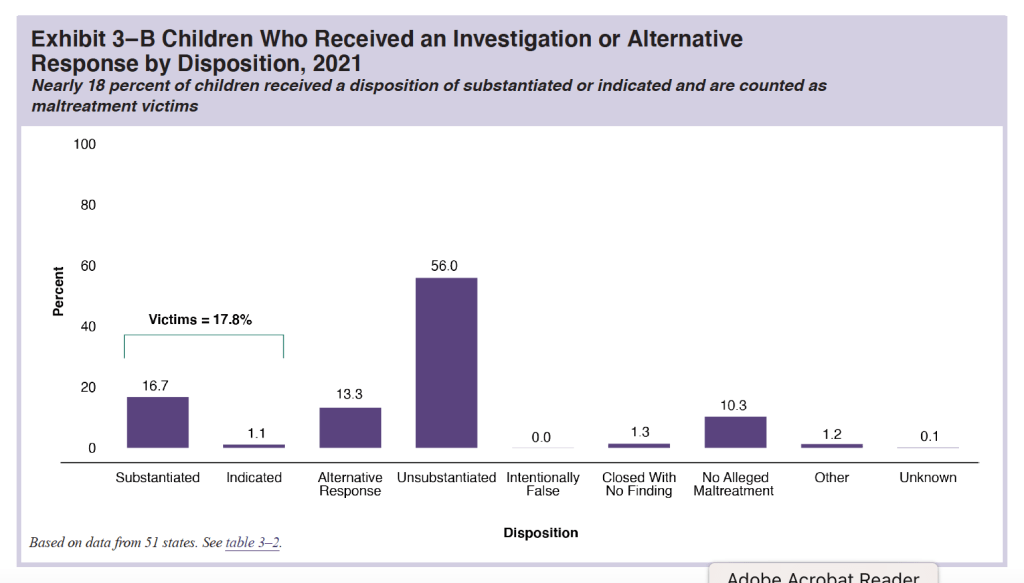
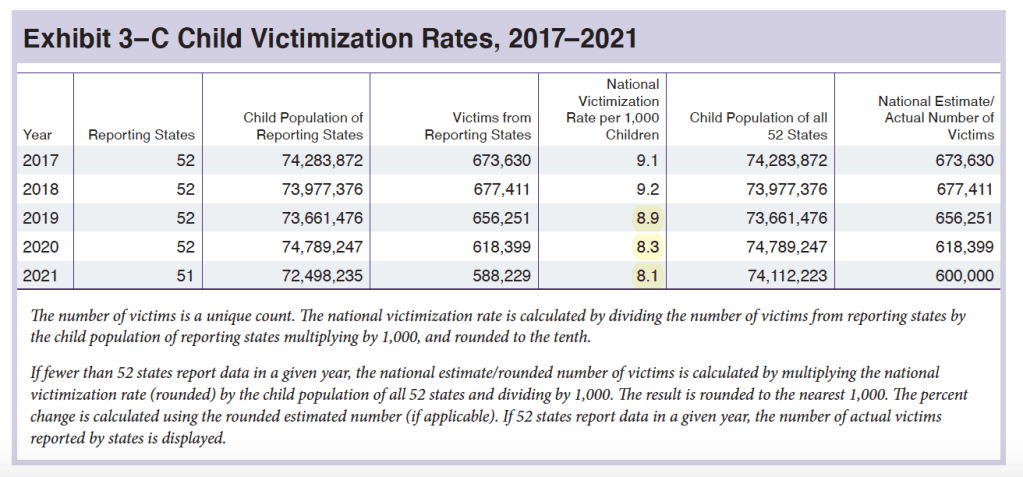

 Child Welfare Monitor