Child maltreatment deaths raise questions about Michigan’s funding priorities

Chayce Allen: The Detroit News

by Sarah Font (Washington University in St. Louis) and Emily Putnam-Hornstein (University of North Carolina at Chapel Hill)

I am honored to publish this post by two of the leading academic researchers in child welfare. They are also the Principal Investigators of the Lives Cut Short project, which documents child abuse and neglect fatalities around the country.

Armani EvansZemar KingLeviathan Froust. These are just three of Wayne Countyโ€™s children who have been killed by their caregivers in recent years. Wayne County is the home of Michiganโ€™s largest city, Detroit.

As part of the Lives Cut Short project, which aims to document child abuse and neglect fatalities nationwide, we requested and reviewed the Wayne County Medical Examiner records for child deaths since 2022. At least 52 children died due to abuse or neglect in the last 3.5 years, accounting for more than 1 in 10 of all child deaths in the county. Nearly two-thirds of child maltreatment deaths involved children ages 3 years and under.

At least nine children under the age of 3 died of illicit drug poisonings โ€“ involving fentanyl, heroin, and methamphetamine.

Equally disturbing, more than half of the child maltreatment deaths โ€“ 27 โ€“ involved intentional injury rather than negligence: children who were shaken, stabbed, beaten, and smothered. Many young childrenโ€™s deaths received no media attention โ€“ all that is known is that they were killed by homicide, with the injury description merely stating โ€œfound beaten.โ€

The 52 children who died of maltreatment in Wayne County are likely the tip of the iceberg โ€“ these deaths are challenging to identify due to limitations in the death investigation process, minimal release of information, and other factors.  

What would prevent children from dying at the hands of caregivers and family members?

Wayne County recently announced an expanded partnership with RxKids to provide thousands in no-strings-attached cash to all new and expectant mothers in 6 cities within the county. The countyโ€™s $7.5 million investment adds to a statewide investment of $250 million in RxKids for 2025-2026 alone. The governorโ€™s FY2026 budget recommendation further includes $27 million to provide โ€œeconomic and concrete supportsโ€ with the goal of reducing or avoiding involvement with Child Protective Services.

The leaders of RxKids imply on their website and other materials that their cash transfers can produce a large decline in child maltreatment and reduce the need for CPS intervention. Fortunately, a rigorous evaluation of the program was conducted in Flint.

The punchline? No impact.

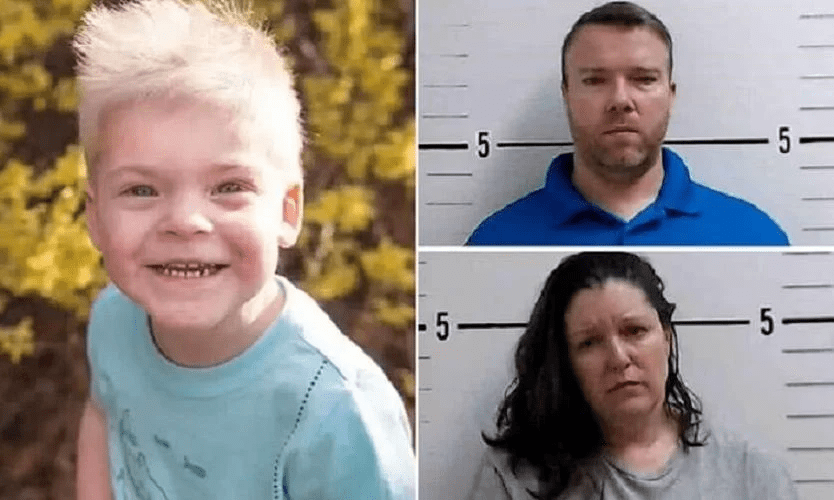
Such findings should come as little surprise when we take seriously the threats that children face. Neither drug addiction nor extreme violence seems likely to be ameliorated with short-term monthly checks. And many children died after CPS ignored clear warning signs. A wrongful death lawsuit filed on behalf of murdered Detroit toddler Chayce Allen reveals that relatives asked CPS to intervene on at least 13 occasions.

The likely reason so many kids are left to die in horrifying circumstances is that Michigan has a severe shortage of child protection caseworkers. Statewide vacancy rates are 20% and the problem is worse in Wayne County, which has 46 fewer caseworkers than intended, leading to high caseloads and turnover. High caseloads were one of the systemic problems that the state was expected to address as part of the Dwayne B. settlement โ€“ a case filed nearly two decades ago. Michigan seeks to exit court supervision as soon as this summer, despite their continued failure to adequately staff their system.

Before massive expansions of cash assistance โ€“ much of which is going to families who are not impoverished โ€“ perhaps the state should fulfill its existing obligations to kids.

Note: some deaths handled by the Wayne County Medical Examiner may stem from incidents occurring in surrounding counties (from which children were brought to and then died at a Wayne County hospital).ย  Our data do not provide the location of the maltreatment incident.

Home visiting: more hype than hope

Image: homvee.acf.gov

by Marie Cohen

Home visiting has been a highly popular intervention for the prevention of child abuse and neglect and for addressing a much broader set of social problems as well. But the research has never supported the efficacy of home visiting programs as a whole for improving child and family outcomes. The latest study of four popular home visiting programs found that all these programs have negligible impacts after five to seven years. But there was no hint of this message in the government’s press release or the report itself. The bipartisan belief in home visiting is prevening a needed examination of home visiting’s impact and the level of resources devoted to it.

A Brief History of US Home Visiting

While home visiting has existed since Elizabethan times in England, its history in the U.S. began in the late nineteenth century with charities seeking to address urban poverty by changing the behavior of poor families. While it is now considered to be the solution to a number of different social problems mostly related to poverty, modern home visiting was conceived as a way to prevent child abuse and neglect. Publication of Henry Kempe’s The Battered Child in 1968 brought about the recognition of child maltreatment as a national problem. To address child abuse, Kempe called for universal prevention through a network of home health visitors. Inspired by Kempe, Hawaiiโ€™s Healthy Start Project (HSP) began in 1975. In 1977, David Olds began testing his Nurse Home Visiting program in Elmira, New York. The first Parents as Teachers program was created in 1991. In 1992, the National Committee to Prevent Child Abuse (now Prevent Child Abuse America) rolled out Healthy Families America (HFA).

In 1993, the Future of Children, an influential academic journal produced by Princeton University and the Brookings Institution until 2021, devoted an issue to home visiting. In the summary article, the authors cautioned that the research so far was limited and had mixed results, but opined that the results were โ€œpromising enoughโ€ to recommend the expansion of existing programs and the continuation of evaluation efforts. Home visiting programs burgeoned in the wake of that issue, with funding from federal, state, and foundation sources.

In 1999, The Future of Children released its second issue on home visiting, containing evaluations of six demonstration programs. The results were sobering. In their analysis of all six studies, Deanna Gomby and colleagues concluded that “[I]n most of the studies described, programs struggled to enroll, engage and retain families. When program benefits were demonstrated, they usually accrued only to a subset of the families originally enrolled in the programs, they rarely occurred for all of a programโ€™s goals, and the benefits were often quite modest in magnitude.” The one exception was the Nurse Home Visiting Program, (now Nurse-Family Partnership), which differed from the other programs in being delivered by nurses rather than paraprofessionals, and which produced some sizable impacts on child abuse and neglect and second births to mothers.

But the home visiting juggernaut was already in motion. Programs continued to grow, funded by multiple sources, and most of the growth was not in the most promising (and expensive) Nurse-Family Partnership. The National Center to Prevent Child Abuse, renamed Prevent Child Abuse America in 1999, made HFA its signature program despite the lack of evidence that it prevents child abuse. According to the National Home Visiting Resource Center, “evidence-based home visiting was implemented in all 50 states, the District of Columbia, 5 territories, 32 Indigenous communities, and 65 percent of U.S. counties” by 2024. These programs reached over 284,000 families through more than three million home visits in that year, and another 70,000 families were reached by 11 “emerging models.” Of the more than three million home visits provided, approximately 14 percent were provided virtually, down from nearly 23 percent in 2024, as services gradually returned to in-person after the pandemic. Today, there are multiple home visiting programs with different target groups, curricula, goals, and personnel. In addition to the 24 models recognized by the federal government, there are an unknown number of “emerging models” which have not yet earned the label of “evidence-based.”

Undaunted by the scant evidence of success, Congress established, with bipartisan support, the Maternal, Infant and Early Childhood Home Visiting Program (MIECHV) as part of the Affordable Care Act of 2010. The goals of the program are to improve the health of mothers and children, prepare children for success in school, improve families’ economic well-being, connect families to other resources in the community, prevent crime and domestic violence and prevent child injuries, abuse and neglect. The funds can be used to implement any one of 24 models that meet the eligibility criteria established by HHSโ€™ Administration for Children and Families (ACF). An evaluation of this program was required by the legislation.

Home visiting programs also became a popular intervention in child welfare with the growing emphasis on keeping children with their families. This began in 1994 with the Title IV-E waivers and continued with the Family First Prevention Services Act (FFPSA), signed by President Trump in 2018. FFPSA allowed states to use Title IV-E funds, formerly reserved for foster care and subsidized adoptions, to support children and families and prevent foster care placements through in-home parent skill-based programs, as well as mental health, drug treatment and kinship navigator services. Programs had to be approved by the new Title IV-E Prevention Services Clearinghouse as โ€œevidence-basedโ€ before they could be included in a state’s Family First Prevention Services Plan. According to a research brief from Chapin-Hall at the University of Chicago, at least one home visiting model was included in the Family First Prevention Plans in 28 states as of April 2023. Most commonly included were Parents as Teachers (28) and Healthy Families America (23), with Nurse Family Partnership in third place with 15 programs, and SafeCare in fourth with seven programs.

Home visiting also became popular in growing efforts by child welfare agencies to invest in preventing child abuse and neglect before it occurs, or at least before a family comes to the attention of child protective services. A small source of federal funds, the Community Based Child Abuse Prevention Program (CBCAP), was established by Congress in 1996 to fund such prevention programs and is commonly used to fund home visiting as well.

The bipartisan enthusiasm for home visiting has been unwavering. Created under Obama, MIECHV has been supported by every succeeding administration. Total federal funding on this program is slated to increase from $500 million in 2023 to $800 million in 2027.Earlier this year, the Senate even passed (unanimously) a bipartisan resolution designating April 21 through April 25, 2025 as National Home Visiting Week. Even the Trump Administration has heartily endorsed the home visiting. Yet, the much-vaunted evidence for the value of home visiting really consists of a series of modest impacts affecting different outcomes, often based on less reliable indicators like self-reports, and dwarfed by a sea of findings of no effect. Even the one program (Nurse-Family Partnerhip), that had the most promising early resultsm has no stood up to recent replications–though additional trials with the population that seems to benefit most may be warranted.

Home visiting program evaluations

There have been multiple studies of home visiting programs, including both randomized controlled trials (RCT’s) and comparison group studies, and together these studies have generated hundreds of papers. Therefore, Child Welfare Monitor (CWM) drew from a summary of research on Nurse-Family Partnership from the Arnold Ventures Social Programs that Work website; the evidence assembled on the website of the Title IV-E Prevention Services Clearinghouse for Healthy Families America, Parents as Teachers, and SafeCare; and the Home Visiting Evidence of Effectiveness (HomVEE) Review conducted by the Administration on Children and Families of HHS for Early Head Start Home-Based Option. CWM consulted the original studies as needed, focusing on RCTs because randomization is the best way to rule out selection bias as the explanation for any differences between the intervention group and the control group. Otherwise, one cannot know whether the group that participated in the program differed in significant but unmeasured ways from the members of the comparison group. Appendix I includes more details about the program evaluations. Appendix II focuses on the challenges in measuring child abuse and neglect and what the research suggests.

Nurse-Family Partnership

Nurse -Family Partnership (NFP) connects first-time mothers and their babies with a specially trained nurse, who works with the mother and child from early in the pregnancy through the child’s second birthday. It differs from other models in using registered nurses to deliver the visits, making it more expensive and dependent on a scarcer group of providers. Nurse Family Partnership (NFP) has been the subject of RCTs in Elmira, NY (launched in 1988); Memphis, TN (launched in 1990), Denver, CO (1994) and in a larger statewide trial in South Carolina that started in 2016. It has also been tried internationally in British Columbia, the Netherlands, the United Kingdom and Germany; though the differences between populations and systems make these results less applicable to the United States, they can be seen as suggestive. The participants in the demonstrations were all first-time mothers but other criteria for inclusion varied by study. Among the effects that were replicated in two or more of the studies identified by the Arnold Venturesโ€™ Social Programs That Work website were reductions in medical treatment for injuries and accidents in Elmira and Memphis), reductions in subsequent births to mothers in their late teens and early twenties (in Elmira, Denver, and Memphis), and an improvement in cognitive or academic outcomes for the children of mothers with lower psychological resources, like intelligence, mental health, and self-confidence (in Memphis and Denver). There were few significant impacts on children’s emotional and behavioral outcomes and mothers’ life trajectories in terms of employment, income and crime, and those impacts were not repeated in more than one study.

A recent scaled-up NFP replication in South Carolina was disappointing, producing no significant positive effects on any of the three primary outcomes studied: the rate of adverse birth outcomes, mothersโ€™ rate of subsequent births within 21 months, and child health, measured as “a composite of mortality or health care utilization associated with major injury or concern for abuse or neglect.” Nor did the researchers find any significant improvements for a prespecified subsample of “socially vulnerable families” that were similar to the families for which earlier studies found positive impacts. There were also no significant findings for the secondary outcomes, which related to healthcare utilization. These results were sobering, and the researchers suggest that the rapid scaling up of the program and the broader population served may have contributed to the weaker results. David Olds, the founder of NFP, suggests1 that the program’s effectiveness was affected by the relative inexperience of the nurses (due to the rapid implementation), the use of impersonal recruitment methods (unlike Elmira and Memphis, where nurses personally recruited mothers in clinic waiting rooms), and the relatively more advantaged clientele. The program included any pregnant woman who qualified for Medicaid in South Carolina, which funded 46 percent of births in that state in 2023 and includes women up to 200 percent of the poverty level. So it was a less disadvantaged group than was included in the other US demonstrations, and earlier studies suggested that the more disadvantaged benefited more from this program.2 Thus, further study of NFP with a highly disadvantaged population should be considered.

Healthy Families America (HFA)

Healthy Families America, an initiative of the national organization, Prevent Child Abuse America, is a flexible program that allows local communities to choose their eligibility criteria, parenting materials, and staff. Services last for a minimum of three years and up to five years. Based on three RCTs of Healthy Families America, the Title IV-E Prevention Services Clearinghouse counted 18 favorable “contrasts” (their term for comparisons between the intervention and control groups) compared to four unfavorable contrasts and 211 contrasts displaying no effect. Among the 18 favorable contrasts, 11 were on self-reports of maltreatment or child behavioral and emotional functioning. Of the other impacts, all were from only one RCT. Many outcome categories showed no favorable impacts. These included child safety measured by administrative reports; child safety based on injuries, Emergency Room use or hospitalizations; child permanency based on out-of-home placements; child social functioning; child physical development and health; parent/caregiver substance abuse; and economic and housing stability. One of the four RCTs (Healthy Families Oregon) showed no positive impacts at all.

Parents as Teachers

Parents as Teachers is delivered by “parent educators” who work with families from pregnancy through kindergarten. The Clearinghouse identified one American RCT of this program, one RCT from Switzerland, and one matched comparison group study. The one US RCT, which evaluated two separate demonstrations in California, found that PAT had “little effect on parenting knowledge, attitudes or behaviors as measured in these demonstrations. Nor were significant effects noted on child health or health care.” The demonstration did find small positive effects (a two-month gain at the age of three) on “self-help development” in one of the two sites but no significant effects on cognitive development at either site. In the Swiss study, the clearinghouse found one significant effect on one of two measures of the child’s expressive language.

SafeCare

SafeCare is a brief home visiting model that is delivered in 18 one-hour sessions. SafeCare is designed for parents and caregivers of children birth through five who are either at-risk for or have a history of child neglect and/or physical abuse. It was included in the Title IV-E Prevention Plans of seven states in April 2023. The contrasts reported by the Clearinghouse include only one favorable effect–on foster care placement–based on a matched comparison group study and not an RCT and one unfavorable effect (on child welfare reports), along with 19 findings of no effect.

Early Head Start-Home-Based Option

Early Head Start Home-Based Option provides weekly visits to pregnant women, infants, and toddlers until the child is three years old. The goal is to promote school readiness of young children by enhancing their cognitive, social and emotional development. The federal reviewers of Early Head Start’s Home-Based Option used nine publications based on a large federal RCT of the program at 17 sites as well as the early results of the federal study of MCHIEV programs, which is described below. There were no favorable findings on maternal or child health; child maltreatment; or delinquency, family violence and crime. There were a few favorable impacts on child development and school readiness; positive parenting practices; and family economic self-sufficiency scattered among multiple findings of no effect. These effects were not consistent across age groups or outcomes where one would expect some alignment (like reading to children vs. reading at bedtime). These impacts appeared to be small, although the lack of standardized effect sizes complicates interpretation. In the final report on Early Head Start, the authors stated that at “the end of the program, when children were three, impacts were modest in size and Early Head Start children continued to perform below national norms on cognitive and language assessments.” By the time the children reached fifth grade, all but one favorable impact earlier reported was gone.

The MIHOPE Study

The legislation establishing the Maternal, Infant and Early Childhood Home Visiting Program (MIECHV) required an evaluation of the program in its early years. The study, named the Mother and Infant Home Visiting Program Evaluation (MIHOPE), included 88 local programs in 12 states and was carried out by an evaluation nonprofit called MDRC. All of the programs were based on one of the four models most commonly chosen by states in their initial MIECHV plans–Early Head Start Home-based Option, Healthy Families America, Nurse-Family Partnership, and Parents as Teachers. A total of 4,229 families enrolled in the demonstrations between 2012 and 2015. Strangely, even though the sample sizes were large enough to estimate the effects of each program model, the researchers opted to report findings for all four models taken as a whole, a decision that has been criticized by experts and funders because of the significant programmatic differences between the models. Early findings released in 2019 from when the children were 15 months old were disappointing. There was little difference between the experimental and control groups. About a third of the 63 outcomes measured were statistically significant and though most comparisons did favor the home-visited groups, the effect sizes were extremely small–too small to be of any practical significance. The authors reported that for most outcomes the effects were slightly smaller than the average effects found in past studies of the models (which were already modest).

On September 11, 2025, the Administration on Children and Families released the long-term results of the MIECHV program evaluation conductd five to seven years after enrollment, when children were in kindergarten or first grade. Summing up their findings in a press release, ACF asserted that “MIECHV-funded home visiting significantly improved maternal and family wellbeing for participants five-to-seven years after enrolling in services…MIHOPE found statistically significant and positive effects of home visiting” for the five categories of maternal and family well-being outcomes. For the three categories of child outcomes, the researchers found “some evidence of positive effects,” but only one was statistically significant and positive.

Unfortunately, the researchers did not distinguish between a statistically significant effect and an effect which is large enough to be meaningful. A more sober analysis by the Coalition for Evidence-Based Policy shows that home visiting produced “negligible outcomes” for each of the eight expected impacts. The review points out that the average effect size across the six statistically significant or near-significant categories of effects was 0.03 – the equivalent of moving the average child or mother from the 50th to the 51st percentile. The study did not report model-specific effect sizes, but the reviewers noted that they are likely to be small or modest given that few reached statistical significance. It is also worth mentioning that many of the outcomes came from maternal answers to a caregiver survey, introducing the possibility of bias..

It is also concerning that the evaluation team at MDRC used a different analysis plan to assess impacts for the kindergarten study than it did for the earlier results. The new analysis plan was dated January, 2025 (but not released until May 2025). The new methodology combined all the 66 outcomes studied into eight new “research questions” some of the outcomes were included under more than one research question. The researchers chose to focus not on the significance of each individual impact, as was done in the earlier report. Instead, they decided to use a method called “omnibus testing” to compute an overall significance level for each research question.3 By choosing this method, they were able to find significant results (at the 0.10 level) for five of the eight research questions, where looking at each outcome would have shown only eight significant outcomes out of 86, or less than 10 percent of the outcomes. Since the new analysis plan was dated January 2025, it seems likely that it was developed after an analysis of the data (which was collected in 2021 and 2022) under the old plan yielded unsatisfactory results.4 The Imprint has published a more detailed critique of the MIHOPE study by Sarah Font and Emily Putnam-Hornstein called The Odd Bipartisan Effort to Oversell the Evidence for Home Visiting.

Why have home visiting programs been so unsuccessful at changing outcomes for most children and families?

As Deanna Gomby stated back in 1990, “home visiting programs have struggled to engage and retain families.” Research has documented low levels of enrollment and engagement of families at risk of maltreatment in voluntary services in general and home visiting in particular. According to the MIHOPE implementation report, 17 percent of the home visiting group never even received one visit, as compared to 12 to 22 percent in previous studies. All the models expected families to participate at least until the child’s second birthday, with services available for two or three years longer in three of the programs. Yet, only 46 percent of families were still participating in home visits 12 months after their first visit, consistent with previous research. On average, families who received at least one home visit went on to participate for an average of eight months. While participating, families received fewer visits than expected by the models in which they were enrolled. In the first 12 months, less than 60 percent of families received at least half of the visits prescribed by their model, a result consistent with prior research. Part of the problem might be that many people who need the kind of help that home visiting is designed to provide do not want to let a stranger into their home to scrutinize their parenting and family functioning. Child Welfare Monitor has heard in the District of Columbia and elsewhere that there is an oversupply of home visiting slots, with too few people wanting to participate.

Misleading Congress, the Media and the Public

Ever since the initial excitement about home visiting, there have been high hopes for this service delivery method and unwillingness among policymakers on both sides of the aisle to discard their hopes. At the same time, the federal government along with many advocacy groups, has endorsed a vision of “evidence-based practices” that asks only for a minimal number of statistically significant impacts, with no concern about the size of the impacts or the nature of the evidence–whether it is self-reported, self-contradictory, or unsupported by more than one study. As a result, studies that show only a few modest impacts that may be statistically significant but not meaningful in size or corroborated by other studies can be cited as evidence of program success.

Unfortunately, program evaluations are technical enough that readers who are not schooled in the intricacies of research methods are often forced to rely on the researchers’ interpretation of their findings. The usually well-informed Congressional Research Service has stated that “A large body of research suggests that some home visiting models or services can benefit children and their parents.” Less surprisingly, the press is easily misled. Due to lack of time or expertise in the intricacies of social science research, reporters often simply report what is in the press release announcing new research results. For example, the Imprint, a widely circulated outlet for child welfare content, repeated in its podcast the government’s misleading proclamation about good news from the MIHOPE study.

—–

No matter how painful the process, legislators, agency officials and advocates should remove their blinders about home visiting. It is time to phase out the MIECHV program. State and local governments should begin scaling down their home visiting programs and funneling the money to other uses that are currently underfunded. In this time of budget scarcity, it is time to stop throwing good money after bad. We need new ideas and meaningful evaluations that can bring about the implementation of programs that actually work. If money is being wasted on home visiting services that are not making a difference, or not even being used, surely there are better uses of these scarce funds.

Appendix I

In the absence of time to review the hundreds of publications on the Nurse Family Partnership Program, I used the excellent evidence summary on the Arnold Ventures Social Programs that Work website. For the studies of HFA, Parents as Teachers, and SafeCare, I relied mostly on the compilation of study results provided by the Title IV-E Prevention Services Clearinghouse. For Early Head Start, which was not included in the Clearinghouse, I used the Home Visiting Evidence of Effectiveness review conducted by the Office of Policy Research and Evaluation (OPRE) of the US Department of Health and Human Services.

Nurse Family Partnership

Each of the four U.S. RCT’s of NFP had a different population and eligibility criteria for participants. Elmira is in a small, semirural county in New York State which had the highest rate of child abuse and neglect in the state at the time of the study. In 1980, the community was rated the lowest Standard Metropolitan Statistical Area in the United States for economic conditions. Program participants In Elmira were either teens, unmarried, or low-income, and all were White. They were actively recruited by nurses at the prenatal clinic, private obstetricians’ offices, Planned Parenthood, schools, and other health and human services agencies. In Memphis, the program admitted pregnant women with no previous live births who did not have a chronic illness that might affect the fetus and who had at least two of the following risk factors: being unmarried, having less than 12 years of education, and being unemployed. Ninety-two percent of the women enrolled were Black, 98 percent were unmarried, 64 percent were eighteen years old or younger and 85 percent came from households with incomes at or above the poverty level. In Denver, women were recruited at any point in their pregnancy if they had no previous live births and either qualified for Medicaid or had no health insurance. Almost half of the two groups were Hispanic, another 35 percent were Caucasian, and 16-17 percent were Black. The South Carolina demonstration recruited pregnant women who were 15 years or older and eligible for Medicaid, which meant their incomes were less than two percent of the poverty level. The participants were mainly non-Hispanic Black (54.9 percent) and non-Hispanic White (35.0). In addition to enrolling a different population, each study looked at a different set of outcomes, and sometimes at different times as well, making it hard to compare the results. The findings of the demonstrations are summarized below.

  • Child safety based on child welfare administrative reports: There was no statistically significant difference among confirmed child maltreatment reports between the experimental and control groups in Elmira. But there is some evidence that the Elmira program reduced child maltreatment among the participants who were most at risk, those who were teenagers, poor and unmarried. Among this group, 19 percent (or a total of eight) of the poor, unmarried teens had a verified maltreatment report compared to only one of their nurse-visited counterparts. But this effect was statistically significant at the p-0.7 level, not the standard level of 0.05. And there were no treatment-control differences in verified maltreatment reports during the two years after the program ended. However, the Elmira study did find a large impact on verified CPS reports when the children were 15; nurse-visited children had received on average of 0.29 verified CPS reports compared to 0.54 in the comparison group. This result is difficult to explain and one wonders if it was due to chance.This outcome was not examined in Memphis or Denver. The Netherlands study also found a large, statistically significant impact on child welfare administrative reports, where the researchers found that 11 percent of the visited children had a CPS report compared to 19 percent of the control group children during the first three years of their lives.
  • Child safety based on health care for injuries and ingestions: Nurse visited children in Elmira had fewer emergency room visits for injuries and ingestions in their second year of life than the control group. (This was not measured during the first year, when they were less mobile and able to get into trouble. No effect size was provided). When they were between 25 and 50 months old, they had 40 percent fewer mentions for injuries and ingestions in their medical records and 45 percent fewer mentions of child behavioral or parental coping problems. In Memphis the researchers found that in the first two years of life, nurse-visited children had an average of 0.43 health encounters for injuries or ingestions compared to 0.56 for the control group, or 23 percent fewer encounters. They also spent an average of 0.04 days hospitalized for injuries and ingestions, compared to 0.18 days for the control groupโ€“ a 78% decrease. A more recent evaluation of a large scale implementation of NFP in South Carolina found no difference between the experimental and control groups on child health, measured as “a composite of mortality or health care utilization associated with major injury or concern for abuse or neglect.” In the UK Study, there were no differences in the rates of emergency hospital visits for the experimental and control groups.
  • Child wellbeing based on behavioral and emotional functioning: This outcome was not included in Elmira at two and four years. But there were large favorable effects on self-reported arrests and convictions for the Elmira children at age 15-19–a finding that was not reported anywhere else and was not matched by effects on other outcomes like high school graduation, teen pregnancy, engagement in work or school at 19, or self-reported substance use or welfare receipt, all of which could have been expected to covary with the arrests and convictions. So it is not clear whether these results occurred by chance. In Memphis there were no effects found on children’s reported behavioral problems at two years, nor were there any results on youth behavioral functioning when they got older. There were significant favorable effects on child emotional functioning in Denver at two years and four years. By ages six to nine in Denver, behavioral and emotional effects were consistently favorable but did not reach statistical significance at standard levels, perhaps because the sample size was not large enough.
  • Child wellbeing based on cognitive functions and abilities: In Elmira there were no statistically significant cognitive effects on children in the first two years, although the researchers observed “improved intellectual functioning of nine to 11 points on the developmental tests for children from the highest risk families. Although only marginally significant statistically, the researchers observed that it is of clinical importance. Treatment effects in this range are consistent with those obtained for children of this age enrolled in intensive early childhood intervention programs aimed specifically at enhancing cognitive development.” In Memphis, there were no effects at two years on children’s mental development but there were substantial statistically significant effects on academic performance at age 12 for the children whose mothers were in the lower half of the sample on intelligence, mental health and self-confidence. In Denver, there were favorable effects on the cognitive development of children born to mothers with low psychological resources in the two-year follow-up. This group also did better cognitively at ages six to nine but the findings only occasionally reached statistical significance and may be due to attrition differences between the intervention and control groups. But at age 18 there were “sizable, significant” effects on two of three cognitive outcomes for this subgroup in Memphis. Cognitive effects were not studied for Elmira or Denver 18-year-olds.
  • Maternal life course: When the children were aged 15, the Elmira study found that nurse-visited mothers had 19 percent fewer births than control mothers, an average of 1.3 births compared to 1.6. In Memphis, the mothers had 16 percent fewer births in the first six years of the program. They had caught up by the time the children were 12, but the increase in birth spacing is still a significant favorable outcome. In Denver, home-visited women had fewer subsequent pregnancies (29 percent vs. 41 percent) and births (12 percent vs. 19 percent) by their children’s second birthdays. There was no impact on the rate of second pregnancies after two years in the South Carolina, British Columbia, and UK studies. Where reported, there were no effects on adverse birth outcomes, maternal employment, likelihood of partnership or marriage with the child’s father, substance abuse, psychological distress or foster care placements (mentioned only in Memphis).

Healthy Families America

The contrasts presented by the Title IV-E. Clearinghouse were based on four RCT’s that were rated highly for design and execution by clearinghouse staff. The results of each RCT are based on multiple research papers published for each major study. Reviewing the Clearinghouse’s tabulation of the data, and sometimes comparing it to the actual publications to which it referred, raised several questions about the overall effectiveness of the program:

  • Child safety measured by child welfare administrative reports: There were no favorable or unfavorable outcomes, as compared with 43 contrasts showing no statistically significant effect.
  • Child safety, based on maternal self-reports about whether they maltreated their children: There were five favorable contrasts, 38 contrasts with no effect, and one unfavorable contrast. It is hard to be confident about the validity of self-reports of maltreatment, as one could easily imagine the program participants having learned more about what to report, and under-reporting behaviors (such as spanking) that they had been taught were undesirable. The large number of contrasts with no effect is worth noting.
  • Child safety based on injuries needing medical care, hospitalizations, and emergency use: There were no favorable or unfavorable impacts and 11 contrasts showing no effect.
  • Child permanency based on out-of-home placements: There were six contrasts showing no effect, and none showing a positive or negative effect.
  • Child well-being: Behavioral and Emotional Functioning: Five contrasts showed a positive effect, two with no effect, and none with a negative effect. All of the five positive effects were reported by Healthy Families Alaska and were fairly large. But all of these were based on the caregiver’s report of the child’s behavior, and self-reports are not sufficient on their own for making conclusions about impact. Moreover, these outcomes and measures were not replicated in any other study.
  • Child well-being: social functioning: The Clearinghouse reports no favorable or unfavorable effects and and two contrasts showing no effect.
  • Child well-being: cognitive functions and abilities: There were two favorable impacts, one unfavorable impact, and 6 contrasts showing no effect. The two favorable impacts came from Alaska and were not found in any other evaluations.
  • Child well-being: physical development and health: The Clearinghouse reported no favorable or unfavorable impacts and six contrasts with no impact.
  • Child well-being: delinquent behavior. There was one favorable effect in the one contrast available, which was “child skips school often.” A look at the publication containing this result, which was a report on the RCT of Healthy Families New York (HFNY) seven years after random assignment, showed that fewer children self-reported skipping school, but this result was not supported by reports from their mothers.
  • Child well-being: educational attainment: The Clearinghouse reported one favorable impact and two findings of no impact. All three findings came from one publication from the HFNY RCT. The researchers found that children in the HFNY group were about half as likely to be retained in first grade (3.54 percent) than children in the control group (7.10 percent), based on official school data. However, there were no impacts found for the other two educational attainment outcomes used by the Clearinghouse–performing above or below grade level in reading or math. Moreover, this contrast was not available from any other study.
  • Adult well-being: positive parenting practices: There were three favorable impacts and 24 findings of no impact. All of the favorable impacts were from another report on HFNY that was based on observations of how the mothers interacted with their children as they completed three tasks–a puzzle solving task, a delay of gratification task, and a cleanup task. I was not able to judge the size of the effects; all were statistically significant at the 0.05 level. However, there were no significant effects on observed presence of harsh parenting during the same tasks. Moreover, this outcome was not included in the evaluation of any other program.
  • Adult well-being: parent/caregiver mental/emotional health. The Clearinghouse found three favorable impacts and 16 contrasts showing no impacts from a total of three RCT’s.
  • Adult well-being: Parent/Caregiver Substance abuse: There were no favorable or unfavorable effects, and 15 instances where no statistically significant effect was found.
  • Adult well-being: family functioning: There were three favorable impacts, one unfavorable impact, and 28 instances of no impact. The three favorable impacts stemmed from three different contrasts related to Intimate Partner Violence (IPV)–overall maternal IPV victimization rate (child age 1-3), maternal IPV victimization rate: physical assault (child aged 1 to 3), and maternal IPV perpetration rate: physical assault (child age 1 to 3). The size of the effect was not provided and there were nine other maternal IPV contrasts when the child was aged 1 to 3 that showed no effect. There were were no impacts on IPV when the child was older.
  • Adult well-being: economic and housing stability. There were no favorable impacts, five contrasts showing no impact, and one showing an unfavorable impact.

Parents as Teachers

The results presented by the Title IV-E Clearinghouse are based on two RCT’s and one study based on a matched comparison group. Even when counting all these programs, the results are not impressive.

  • For child safety based on administrative reports, the Clearinghouse noted two contrasts with a favorable effect and two with no effect. The effect size and implied percentile effect calculated by the Clearinghouse were very small. Moreover, these results were based on a matched comparison group rather than an RCT, casting doubt on the validity of the results.
  • Child permanency (out-of-home placement): The clearinghouse cited no favorable or unfavorable findings and one finding of no effect.
  • Child well-being: social functioning. The original article cited by the Clearinghouse, based on an RCT in two California sites, reported that PAT children in one of the sites benefited significantly, advancing by about two months of the control group in self-help development but did not report significant results for the other site or for social development at either site.
  • Child well-being: cognitive functions and abilities: Based on the American and Swiss RCT’s, The Clearinghouse reported two favorable findings and 10 findings of no effect. But one of the findings was actually of no effect for the PAT-only group; it was the โ€œPAT plus case management groupโ€ that experienced an impact.
  • Child well-being: Physical development and health: The clearinghouse reported no favorable or unfavorable effects and three findings of no effect from one RCT.
  • Adult well-being: positive parenting practices: The Clearinghouse reported no favorable or unfavorable effects and one finding of no effect from an RCT.
  • Adult well-being: family functioning: The Clearinghouse reported no favorable effects, 8 findings of no effect, and one unfavorable effect, all from one RCT.
  • Adult well-being: economic and housing stability. The Clearinghouse reported no favorable effects, one unfavorable effect, and nine findings of no effect, all from one RCT.

SafeCare

SafeCare is a brief home visiting model that is delivered in 18 one-hour sessions. SafeCare is designed for parents and caregivers of children birth through five who are either at-risk for or have a history of child neglect and/or physical abuse.It was included in the Title IV-E Prevention Plans of seven states in April 2023. The contrasts reported by the Clearinghouse include only one favorable effect–on foster care placement–based on a matched comparison group study and not an RCT and one unfavorable effect (on child welfare reports), along with 19 findings of no effect.

Early Head Start Home-based Option

The Early Head Start Home-based option serves low-income women and families with children under three years old. They receive a minimum of weekly 90-minute home visits and two group socialization activities per month. The findings discussed here are based on the HHS Office of Policy Research and Evaluation (OPRE) review of the research on home visiting. OPRE reports that it reviewed 23 “manuscripts” and identified nine of those manuscripts that were based on “impact studies rated high or moderate quality.” By focusing on “manuscripts” instead of studies, OPRE obscured the fact that seven of these manuscripts were actually based on the same study–a large federal demonstration of EHS programs in 17 sites conducted between 1996 and 2002. Of the nine manuscripts, five were based on the full study and two were based on results from one Utah site only. The other two studies reviewed were based on results of the MIHOPE study of four home-visiting models when the children were 15 months old. All but two of the manuscripts were rated high by the OPRE staff in quality for methodology. The manuscripts based on the Utah study and the grade five follow-up for the national study were rated “moderate” in quality because of high attrition. In the nine publications reviewed, there were no favorable findings on maternal or child health; child maltreatment; or delinquency, family violence and crime. There were a few favorable impacts on child development and school readiness; positive parenting practices; and family economic self-sufficiency. These effects were not consistent across age groups or similar outcomes (like reading to children vs. reading at bedtime.) These impacts appeared to be small, although the lack of standardized effect sizes makes the importance of the effects hard to estimate.

  • For child development and school readiness, the reviewers reported five favorable findings from the 17-site study and the Utah study. All the other 66 contrasts related to child development and school readiness in the two studies showed no effect. By the time the children in the main study reached fifth grade, no effects remained.
  • For positive parenting practices, the reviewers reported 10 favorable findings from the 17-site study and the Utah study. In total, there were 64 findings of no effect in this area. By the time children reached fifth grade, one favorable impact (which was not noted for the three or five year-olds) was observed.
  • For family economic self-sufficiency, the reviewers reported 16 favorable findings, one unfavorable finding and 88 findings of no effect from 3 publications in a total of two studies. No economic effects remained by the time the children were in fifth grade.

Appendix II: Home visiting and child maltreatment

Analyzing the effect of any program on child maltreatment poses unique difficulties because it is such a difficult outcome to measure. Obviously, the evaluators cannot see what goes on in a household after the visitor has gone home. Evaluators have used three types of measures to estimate the effects of home visiting programs on child maltreatment–verified child protective services (CPS) reports, health care encounters for injuries or ingestions (or simply emergency room visits), and self-reports of abusive or neglectful behaviors through surveys like the Conflict Tactics Scale.

The most obvious measure of abuse and neglect is official Child Protective Services (CPS) data, but there are several problems with CPS data as a measure of maltreatment. The number of maltreatment reports that are confirmed (substantiated) by CPS is most frequently used, but it is known to be an understatement. Many cases go unreported, and reported cases are often not substantiated. Another problem is that verified abuse is a relatively rare event in a population and a study may not have enough participants to detect it. Finally, h visitors are mandatory reporters and their presence in the home introduces surveillance bias; these families are under more surveillance than families in the control group and may receive more reports for that reason.

Olds and his colleagues did not find statistically significant differences in substantiated CPS reports for the whole program group during the two year period that families participated in the Elmira demonstration or in the subsequent two years. But they found some evidence that the Elmira program did reduce child maltreatment among the participants who were most at risk–those who were teenagers, poor and unmarried. About 19 percent (or a total of eight) of the the poor, unmarried teens had a verified maltreatment report compared to four percent (or one) of their nurse-visited counterparts. But this effect was statistically significant at the p-0.07 level, not the standard level of 0.05. And there were no treatment-control differences in verified maltreatment reports for this subgroup or the whole treatment group during the two years after the program ended. The researchers speculated that this may be due to increased surveillance on the nurse-visited group, because the nurses connected them to other providers before the programs ended.

However, a surprising finding emerged when the children were 15 years old. By that age, nurse-visited children had received on average of 0.29 verified CPS reports compared to 0.54 in the comparison group–a large and highly statistically significant difference. The investigators hypothesized that as young first-time parents mature and develop, small positive changes that [occur while they are in the program] can build and multiply over time, yielding larger effects in later years.” The mechanism by which the Elmira program had such delayed effects is hard to understand. Perhaps it occurred by chance. But in any case, a replication would be necessary to give it credence, and this outcome was not measured in Memphis or Denver.

As an alternative to CPS data, some researchers have used data on health care encounters for children’s injuries or ingestions. Many of these encounters may reflect abuse or neglect but they also would include cases that are not due to either abuse or neglect and would leave out many instances of maltreatment as well. But it is certainly a good indicator of safe parenting. In the four-year followup of the NFP Elmira group, when the children were 25 to 50 months old, the researchers found that nurse-visited children had 40 percent fewer injuries and ingestions (according to notations in their medical records) and and 45 percent fewer notations of or child behavioral or parental coping problems. Nurse-visited children also made 35 percent fewer visits to the emergency room. In the NFP Memphis trial, the evaluators found that nurse-visited children had an average of 0.43 health encounters for injuries or ingestions compared to 0.56 for the control group, or 23 percent fewer encounters in the first two years of their lives. They also spent an average of 0.04 days hospitalized for injuries and ingestions, compared to 0.18 days for the control group. But a more recent evaluation of a large scale implementation of NFP in South Carolina, described above, found no difference found between the experimental and control groups in its composite measure of child mortality and major injury related to abuse or neglect.

Other studies have used parent self-report measures such as the Conflict Tactics Scale. This measure is less valid than the other two because many parents are reluctant to report abusing or neglecting their children. A few studies found positive effects on such measures but without any corroboration from more objective measures.


Notes

  1. Conversation between Marie Cohen and David Olds, October 22, 2025
    โ†ฉ๏ธŽ
  2. Similar disappointing results from a study in the United Kingdom may have been influenced by a control group that received an average of 16 home visits from a public health nurse and 11 visits from a midwife through the child’s second birthday, as well as targeting a lower-risk population than most of the other studies. A study in British Columbia found no reductions in its primary outcome – child injuries by age two years – or in subsequent maternal pregnancies by the child’s second birthday. The authors speculate that British Columbia’s more comprehensive health and social services may explain the lack of effects. โ†ฉ๏ธŽ
  3. The authors organized the outcomes into five “research questions” focusing on maternal outcomes and three research questions focusing on “child outcomes.” The “maternal outcomes” included “outcomes that could be improved through direct interaction between parents and home visitors;” maternal mental and behavioral health; parent-child interactions; conflict, violence, aggression and maltreatment;” and families’ economic circumstances. The child outcomes included “children’s social-emotional functioning in the home context; children’s social-emotional functioning at school; and children’s cognitive, language and early math skills. โ†ฉ๏ธŽ
  4. Conversation with Emily Putnam-Hornstein, who made me aware of the revised 2025 research plan. โ†ฉ๏ธŽ

This post was edited on November 10, 2025 to add a sentence and links about enrollment and engagement in home visiting and a link to an article about the MIHOPE report.
Child welfare and community norms: a troubling divergence

Arabella McCormack, NBC7 San Diego

This summer, I was asked by a reporter to comment on a terrible case in the District of Columbia. Twenty-month old Kemy Washington died of starvation and dehydration, after her mother had had overdosed on a mix of MDMA, cocaine, ethanol and the animal sedative xylazine. An older sibling had been removed from Kemy’s mother due to her neglect and that child’s guardianship with a relative had been ratified only days before Kemy was born. Yet, Kemy was never on the radar screen of the Child and Family Services Agency until her grandmother made two calls, which were apparently screened out as not involving child abuse or neglect. When I read the more than 600 comments on the article, I was struck that over and over again, commenters asked the same question. How is it that a mother who had a previous child removed from her due to neglect could give birth to another child without triggering an investigation, close monitoring, or even removal of the child? The reporter asked me the same question and I explained that such a policy, though clearly logical to members of the community, would never be accepted by the current child welfare establishment, where it would be viewed as an unacceptable infringement on parents’ rights.

I have often remarked on situations where child welfare policy or practice departs from general community norms. Whether it is the continued screening out of calls on the same family, even if a child was previously removed; the refusal to consider policies that would trigger investigations when a new child is born to a parent who committed severe abuse or neglect; the push to “reunify” children with parents who have proved over and over again that they cannot keep them safe or even stop harming them, it seems that policymakers and practitioners of child welfare are operating from a different set of norms than the public. What would be clear to a grandparent, a neighbor, or a random layperson do not seem so evident for those who are charged with protecting our children. This was made very clear in a devastating report on child fatalities in Minnesota. As the authors put it,

Members of the public often express dismay and outrage to us over stories such as those recounted in this report. We infer from this that the professional norms currently guiding child protection and foster care are out of alignment with those of the broader community. 

Examples of this divergence abound, and I am sharing just a few here.

“B.B.” was born in the State of Washington in 2022 and died of fentanyl poisoning in March, 2023. Starting in 2014, the Department of Children, Youth and Families (DCYF) had received 30 reports about B.B.’s family for the use of heroin, marijuana and alcohol in the home; lack of supervision of the children; domestic violence; an unsafe adult living with the family; an unsafe and unclean physical environment; unsecured guns in the home, “out-of-control” behaviors by B.B.’s older siblings at school to which the mother was unresponsive, seeming “out of it;” concerns about the children’s hygiene; and the mother driving under the influence of marijuana. A few days before B.B.’s death, a caseworker told B.B.’s mother that the agency was closing a voluntary services case that had been open for about half a year. But the family was already under investigation again at the time B.B. died.

There have been multiple cases around the country of child protection workers disregarding reports of hungry children eating food from the floor or the garbage, until a child finally died or escaped from the torturers. School staff in Utah reported making at least four calls in the 2022-2023 school year (confirmed by a timeline released by DCFS) to CPS alleging that Gavin Peterson was always hungry and eating food from the trash. School staff were buying his lunch but had to stop after his father and stepmother forbade it. One school staffer “said Gavinโ€™s father and stepmother justified Gavinโ€™s small frame and constant desire for food as side effects from his medication, but she didnโ€™t buy it.” Why did CPS? That summer, Gavin was withdrawn from school. A year later he was dead after years of starvation and beatings.

Seven-month-old Emmanuel Haro is missing and presumed dead. Investigators believe that he was abused for an extended period of time before he was killed. But his suffering and death could have been avoided. His father had been arrested for abusing a child from a previous marriage in 2018–abuse so serious that the child is now bedridden. A simple “birth match” policy could have prevented the death of Emmanuel Haro. If birth records were linked to criminal and CPS records, Emmanuel’s birth could have triggered a mandatory investigation and monitoring because the father had been convicted of child abuse–the kind of policy that commenters in the Kemy Washington case were asking for. It is hard to think of a more common-sense idea than birth match. Yet, only five states had such a policy in 2022, according to my report on birth match for the American Enterprise Institute. And most of these programs are very limited both in terms of which parents are covered and of the state response.

Even a birth match policy would not help in cases where a parent’s violent history is known but disregarded. Four-year-old Rykelan Brown died from a beating by his father, Joshua Emmons, in May 2024, two months after he was removed from a loving foster home to be placed with Emmons. The foster parents had repeatedly reported that Rykelan came home from visits with his father bruised and saying his father hit him and he never wanted to go there again. The local Department of Social Services knew that in 2019 Emmons had beat his then-girlfriend’s three-year-old son so severely that he damaged the child’s liver, which must now be checked regularly. But the social services commissioner told an interviewer that the event occurred too long ago to be considered. Really? Even when paired with Rykelan’s bruises and reports of beatings?

As the above examples show, some things that are intuitive to ordinary people – -like that a child going to school hungry (and not because of poverty) – is a sign that something is deeply wrong at home–seemed to be missed by people engaged in child welfare practice, administration and policymaking. Much of the problem stems from a dominant ideology that preaches that abused and neglected children are almost always better off with their own families. The same viewpoint holds that what child welfare calls neglect is just poverty, as if all poor parents neglect their children, and that child welfare is a a racist system that was created to destroy Black and Brown families.1 Social work schools have adopted and promulgated these positions and agencies have incorporated them in the training for new social workers. Deep-pocketed groups like Casey Family Programs have used their money to foster this ideology through training and technical assistance to state and local agencies. The entire child welfare community in many states has found itself endorsing policies and practices that defy common sense thinking.

We must bring child welfare policy and practice back into alignment with community norms. But that is easier said than done. The public pays little attention to child welfare until there is a tragic fatality or egregious incident that is covered in the media. But many of these cases are never known to the media and therefore to the public. And even when they are, child welfare agencies often refuse to release information about their past involvement with the family, in violation of federal law. So the press, the public and legislators cannot identify what went wrong and what would be needed to prevent future tragedies in the future.

A small but useful first step to align child welfare systems with community norms would be to make the public aware of decisions that clearly violated these norms and harmed children. The federal government should enforce the requirements of the Child Abuse Prevention and Treatment Act (CAPTA), which as interpreted in the federal Child Welfare Policy Manual, requires states to issue specific information and findings on all child maltreatment fatalities and near fatalities caused by maltreatment. That includes information about past dealings between the children’s families and the child welfare agency. Ultimately, the requirement must be expanded to cover all “egregious incidents” where maltreatment is suspected.2 Increased public awareness how child welfare agencies knowingly and routinely leave children in harm’s way may help elevate child welfare into a major issue, not a backwater that gets addressed only when there is a tragedy.

Three family members are awaiting trial for murdering 11-year-old Arabella McCormick in August 2022 and torturing her sisters. A kindergarten aide in Arabella’s class told a reporter that she got a disturbing note from Arabella’s foster mother, who went on to adopt her and then allegedly participate in her murder. โ€œIn the envelope, it said, โ€˜Arabella is,โ€™ and it was line items such as โ€˜a terrible child,โ€™โ€ she said. โ€œโ€˜She’s a liar. You can’t believe anything she says. She’s a thief. She steals everything. Don’t trust her.’ It was just one thing after another of horrible things that you would never say about a 6-year-old.” The teacher’s aide told the grand jury that she contacted child protective services (CPS) after Arabella arrived at school school in the same dirty clothes on several occasions. She also told CPS that Arabella wasnโ€™t allowed to eat fruit, accept rewards or participate in recess with other children. โ€œAnd the lady from CPS said to me on the phone โ€” after I told her everything, she said, โ€˜Well, it could be worse,โ€™โ€ the teacherโ€™s aide told the grand jury. Really? I don’t think most members of the public would agree.

Notes

  1. In fact, child welfare systems initially involved White children only. Black children were originally excluded from public child welfare systems. โ†ฉ๏ธŽ
  2. Both Colorado and Wisconsin release information on cases meeting this description. โ†ฉ๏ธŽ

Teaching abuse: how some adoptive parents are being taught to maltreat their children

Image: Yadkin Ripple

by Marie Cohen

At a glance:

  • Reactive Attachment Disorder (RAD) is a diagnosis that is included in the DSM and often applied to foster and adopted children. While RAD refers to a pattern of inhibited, withdrawn behavior, some controversial therapies (often described as varieties of “Attachment Therapy”) are based on a distorted definition of RAD, or on an unauthorized diagnosis of “attachment disorder” that includes a deep-seated rage that if unaddressed will result in antisocial and even criminal behavior.
  • Among the practices included these controversial therapies are severe disciplinary methods including the establishment of total parental control over children’s actions, including eating, drinking and using the toilet.
  • Many of these Attachment Therapy technique include a component that involves forcing the child to express underlying rage through physically coercive methods that may include being held down by several adults for as much as three to five hours. Several child deaths have been attributed to such methods.
  • In order to prevent more damage to children, it is necessary to adequately vet prospective adoptive parents for their readiness to parent children with challenging behaviors due to early trauma and deprivation. Even for parents who are able to meet the challenge, training and continued support are necessary.
  • Unbelievably, some adoptive parents have not been charged even when their parenting techniques have led to the deaths of their children. It is absolutely necessary for parents who use abusive parenting techniques to be charged and tried in court. Adequate investigations are necessary in order to ensure that the conditions that lead to such cases are identified and remedied.

On January 5, 2023, according to a police warrant filed in Surry County, North Carolina, Joseph Wilson received a text from his wife telling him that something was wrong with their four-year-old adopted son Skyler after he was “swaddled.” She attached a picture of Skyler lying face down on the floor, wrapped in a sheet or blanket with duct tape attaching him to the floor. “Swaddling” is a practice used in many cultures to comfort infants, but Wilson told police he was referring to a parenting technique learned from a parenting expert named Nancy Thomas. (Court documents also state that one of the Wilsons’ former employees described recorded Zoom counseling sessions the couple had with Thomas.) Skyler died at Brenner Childrenโ€™s Hospital in Winston-Salem on Jan. 9 of a “hypoxic, anoxic brain injury,” meaning that oxygen was unable to reach his brain due to the “swaddling.” Skyler’s adoptive parents, Jodi and Joseph Miller, have been charged with murder and felonious child abuse and are awaiting trial, which has recently been postponed–for the second time–from June 2 to December 1, 2025.

After Skyler’s death, police recovered surveillance cameras and arm and ankle restraints that Wilson had told them his wife used on Skyler during “swaddling.” A former foster parent of Skyler and his brother told police that Jodi Wilson had told her about using practices like “food restriction, the gating of Skyler in a room for excessive โ€˜aloneโ€™ time, and the exorcisms of both children.โ€ The former foster parent was concerned enough to call Child Protective Services a month before the incident that killed Skyler.

Nancy Thomas, mentioned as the source of the swaddling technique and as a counselor to Skyler’s parents, is perhaps the most prominent exponent of a group of approaches to that the American Professional Society on the Abuse of Children (APSAC) described in a 2006 report as “controversial attachment therapies.” These therapies are generally directed at children with “attachment disorders.” The only such disorder that is officially recognized by the mental health community is “Reactive Attachment Disorder” (RAD), a diagnosis that is included in the Diagnostic and Statistical Manual of Mental Disorders (DSM-5). This diagnosis involves “a consistent pattern of inhibited, emotionally withdrawn behavior toward adult caregivers” as well as a “persistent social and emotional disturbance characterized by behaviors like minimal responsiveness to others, limited positive affect, and “episodes of unexplained irritability, sadness or fearfulness.” To be diagnosed with RAD, the child must have “experienced a pattern of extremes of insufficient care,.” which explains why this diagnosis is often applied to children who were adopted from orphanages abroad or foster care in the US. Some practitioners of these controversial attachment therapies, like Nancy Thomas, prefer to speak of children with “attachment disorder,” which is not included as a diagnosis in the DSM. Others use the term RAD but ascribe to that term a variety of symptoms that are not part of the DSM definition.

Whatever term they use, practitioners of controversial attachment therapies tend to believe that children who experience early adversity become “enraged at a very deep and primitive level.” This suppressed rage is said to prevent the development of attachment to caregivers and others and to lead to severe behavioral problems, such as violent behavior. These children are described as failing to develop a conscience, not trusting others, seeking to manipulate and control others, and at risk of developing criminal and antisocial behaviors. According to Nancy Thomas, some famous people with “Attachment Disorder” who did not get help in time include Adolph Hitler, Saddam Hussein, Jeffrey Dahmer, and Ted Bundy.

As described in the APSAC report, these controversial attachment therapies suggest that “parenting a child with an attachment disorder is a battle, and winning the battle by defeating the child is paramount.” Parents are often counseled to start by establishing total control over all the child’s actions, and requiring immediate obedience to parental commands. Nancy Thomas’s book, When Love Is Not Enough: A Guide to Parenting Children with RAD-Reactive Attachment Disorder, includes advice like “In the beginning, your child should learn to ask for everything. They must ask to go to the bathroom, to get a drink of water, EVERYTHING. When it starts to feel that they must ask to breathe, you are on the right track.” Another quote: When given directions it is unacceptable for the child to ask ‘”‘why?” or ‘what?’ NEVER answer these questions….Remember, have a consequence ready when a rule is challenged.” Thomas also recommends putting an alarm on a child’s bedroom door, and the window if necessary. Other techniques that have been recommended by attachment therapists include keeping the child at home (even counseling home schooling), barring social contact with others, assigning hard labor or repetitive tasks, and requiring prolonged motionless sitting.

Many proponents of controversial attachment terapies also believe that a child’s rage must be “released” before he or she can function normally. This release is often provided through physically coercive methods that may include being held down by several adults for as much as three to five hours. These techniques can be traced to “holding therapy,” a technique developed by a child psychiatrist named Foster Cline, who was ackhowledged as a mentor by Nancy Thomas in her book. Cline was admonished and restricted from using parts of his holding therapy model by the Colorado Board of Medical Examiners after members saw video of an 11-year-old being subjected to physical and verbal abuse while being restrained.

“Holding therapy” and similar methods designed to address “attachment disorder” have been implicated in the deaths of several adopted children, including that of three-year-old Krystal Tibbets, who died in 1997 when her adoptive father “applied the full weight of his body on the girl by lying across her and pressing his fist into her abdomen,” a technique he said he was taught by a therapist; four-year-old Cassandra Killpack, who in 2002 was forced to guzzle two quarts of water while her arms were bound, and 10-year-old Candace Newmaker, who suffocated in 2000 by a “therapist named Connell Watkins during a 70-minute “rebirthing ceremony” that was supposed to treat her attachment disorder. Nancy Thomas was working for Watkins at the time of Candace’s death. The “swaddling” technique that killed Skyler Wilson is an example of such a method.

Advocates of controversial attachment therapies have come to the defense of Skyler Wilson’s parents. The President of the Board of a nonprofit called Attach Families, Inc. shared an article on Facebook about Skyler’s death with the following preface: “These tragedies are always written one sided with no Investigative reporting, sadly…They obviously were using a swaddling technique that some Professionals promote for Attachment. This is a tragedy. But before these parents are “burned at the cross” our Families want more information.” The Page also posted this: “As we have seen hundreds of others making our Families look like monsters. When the truth is we try and will try ANYTHING to help our children. This is what we are trying to help them heal from before they get too big for us to physically handle their rages. Rages in which they inflict self harm. Rages where they slam their heads over and over on purpose. Rages in which we try to protect them from themselves and others around them. If you don’t live it 24 hours a day you have no idea what it is like.” Attached was an article about a Kansas teen who was arrested in the killing of his mother. The article contained no details about the teen or his mother. It is hard to understand how this talk of rage would apply to four-year-old Skyler. His former foster parent told a reporter that Skyler โ€œwas so tiny and small but had a heart three times bigger than he was…โ€ย 

In some cases, the parents themselves, after reading misleading literature about children with RAD may invent their own disciplinary practices or use those inherited from their own upbringings or family traditions. The Denver Post recently wrote about Isaiah Stark, a seven-year-old who died in 2020 from ingesting too much sodium, likely from drinking olive brine. The newspaper learned that Isaiah’s adoptive parents were forcing him to eat olives and drink olive brine as a form of punishment for his behavior. According to a report from the state’s Child Fatality Review Team, the mother blamed all of Isaiah’s difficult behaviors on RAD and both parents attributed his actions to “manipulative behaviors and wilfulness.” At the funeral, she described Isaiah’s death as “God rescuing him.”

Isaiah Stark’s parents were never charged for his death. Since there was no trial, the public never learned whether the parents received any sort of parenting advice from an “expert.” The failure to charge parents who have tortured and killed adoptive children is all too common: witness the case in Florida of Begidu Morris, whose parents were not charged after starving, confining and beating him for years, ostensibly because the person who actually killed him could not be determined. As developmental psychologist Jean Mercer writes, plea bargains and the failure of investigators to follow up on the development of abusive parenting practices mean that we often don’t know whether abusive parents drew on outside influences or their own family histories or imaginations for the practices that led to a child’s injury or death.

Concern about controversial theories and methods of “Attachment Therapy” about twenty years ago prompted the formation of a task force of the American Professional Society on the Abuse of Children, the leading professional society of professionals who deal with child abuse and neglect. Its 2006 report, mentioned above, concluded that “attachment parenting techniques involving physical coercion, psychologically or physically enforced holding, physical restraint, physical domination, provoked catharsis, ventilation of rage, age regression, humiliation, withholding or forcing food or water intake, prolonged social isolation, or assuming exaggerated levels of control and domination over a child are contraindicated because of risk of harm and absence of proven benefit and should not be used.” The report cautioned child welfare systems not to tolerate any such techniques by foster or adoptive parents. It also stated that “[p]rognostications that certain children are destined to become psychopaths or predators should never be made based on early childhood behavior.” It also condemned “intervention models that portray young children in negative ways, including describing certain groups of young children as pervasively manipulative, cunning or deceitful.”

Some adults are simply not suited to raise challenging children. Yet, agencies desperate to get children adopted, especially children with special needs in foster care, have placed children with such parents despite red flags, or even returned them after abuse was uncovered. In an extreme case in 2016, the 12-year-old adopted daughter of Eugenio and Victoria Erquiaga ran away from home. Neighbors found her with her hands zip-tied and her feet bound. She reported that she was locked inside a small playhouse for long periods of time with no bathroom. The story became national news and it became known that the parents had sought help from a mental health counselor who oversaw a program called “Radical Healing,” which no longer exists. The state charged the parents with child abuse. However, they then offered to drop all of the charges and expunge their records if the Erquiagas agreed to take their daughter back into their home, which they did. The girl ended up in a group home after she turned 18.

Twenty years since the APSAC report, children continue to suffer and die because they have been diagnosed by “experts” or parents with RAD or “attachment disorder.” To prevent more damage to children, state governments must adopt policies to ensure that all adoptive parents are adequately vetted. Agencies must be prepared to screen out potential adoptive parents who lack the patience, self-control and emotional intelligence to raise challenging children, and those who might be susceptible to practitioners offering controversial methods involving harsh discipline and physical restraint to cope with behaviors stemming from previous trauma or deprivation. In 2012, a committee led by Washingtonโ€™s child welfare agency and childrenโ€™s ombudsman published a Severe Abuse of Adopted Children Committee Report, which made several recommendations for improving assessment of assessing prospective adoptive families. These included strengthening qualifications for individuals conducting adoption home studies and post-placement reports and enhancing minimum requirements for these home studies and reports.

Training and ongoing support must also be provided to those adoptive parents who are deemed capable of accepting the challenge of raising children with histories of trauma and deprivation. These parents must be prepared to understand the needs and possible behaviors of the children they adopt, given their backgrounds. They also must be educated about the existence of parenting practices and therapies which are not supported by research and potentially harmful to children. And finally, they need ongoing support. The need for a greater investment in post-adoption services has been publicized by authorities like the Donaldson Adoption Institute (now closed) in its major report, Keeping the Promise: The Critical Need for Post-Adoption Services to Enable Children and Families to Succeed. Even RAD parent advocacy organizations like Attach Families Inc. are also asking for ongoing support.

Parents caught confining, starving, or otherwise abusing their children through adherence to “attachment therapies” must receive a criminal trial. This is, not only to ensure that justice is done, but also to provide an understanding of the factors that allow such tragedies to occur. The failure to try cases of parents who were obviously responsible for the torture and death of a child is a national stain and must be addressed.

That vulnerable children who have already been traumatized or deprived in early childhood in have met suffering or even death in licensed foster or adoptive homes should be a source of shame to all Americans. It is time to put an end to the suffering of children who have suffered enough. These tragedies can and must be prevented.

Just before this article went to press, the author became aware of media reports about the arrest of the adoptive parents of a 15-year-old boy, who for the past ten years has been locked in his bedroom for most of the day with no access to food, water or a bathroom. The adoptive father is a former employee of the El Paso County, Texas sheriff’s office. So far there has been no information about the genesis of the situation and whether a diagnosis or behavioral problem was involved. But it seems that hardly a week goes by without news of an egregious case of abuse against and adopted child. There is no time to waste in taking action to prevent more such suffering and damage to children.

This post was edited on June 24, 2025 to add a reference to the Washington report on severe abuse of adopted children and its recommendations and again on June 26 and 27 to correct several small errors and typos.

A life discounted: The tragic story of Begidu Morris

by Marie Cohen

Ten-year-old Begidu Morris died more than three years ago of horrific child abuse by his parents, who adopted him from Ethiopia. But there was no avalanche of media coverage of his death, no interviews with shocked neighbors saying they had no idea the child even existed. No pyramid of teddy bears and flowers outside his home. No arrests of those who tortured and murdered Begidu, and no demonstrations demanding justice. No anguished commentaries from experts on how we failed and what could be done to prevent such tragedies in the future. There is not even a picture of Begidu by which we can remember him. If not for a child fatality summary released by the Florida Department of Children and Families (DCF) two years after Begidu’s death, nobody outside the family, a few neighbors, and a small group of medical, social service, and law enforcement professionals would have known that it happened.

According to the DCF child fatality summary, Begidu Morris collapsed at home in Lee County, Florida, on March 17, 2022 and was transported to Golisano Childrenโ€™s Hospital. He was diagnosed with subdural hematoma, hypothermia, cardiac arrest, acute respiratory failure, retinal hemorrhages, and metabolic acidosis.Begidu was placed on life support and died on March 22, 2022. Examination showed bruising to Begiduโ€™s head and significant scarring to his buttocks. Begidu weighed 44 pounds, which was in the 0.1 percentile for his age. An autopsy determined that the cause of death was โ€œcomplications of hypoxic ischemic encephalopathy due to craniocerebral traumaโ€ and the manner of death was homicide.

The CPS investigation

Begidu lived with his adoptive parents, Jack and Consuela Morris, and their biological son. Their two other biological children were in college and returned home for vacations. Begidu and his biological sister were adopted from Ethiopia by the Morrises, when he was about two years old. His sister’s adoption with the Morris family disrupted and she was re-adopted by another family in 2019. After Begidu’s death, the family quickly obtained a lawyer and was โ€œminimally cooperativeโ€ with the CPS and police investigations.

The familyโ€™s three-bedroom home was described by the investigator as โ€œpristine.โ€ In addition to the master bedroom and the teenage siblingโ€™s room, the third bedroom served as a guest room for the two adult siblings when they returned home from college. Begidu slept in a small closet, where investigators discovered a pile of urine-soaked clothing on a rollaway bed. The door to the closet was locked from the outside and was monitored by a camera. The closet had no ventilation and there were no toys or personal possessions indicating that a child lived there. Begidu’s adoptive parents claimed that he engaged in behaviors such as temper tantrums and fecal smearing.

The CPS investigation concluded that โ€œ[a]lthough it was not able to be determined with certainty who inflicted the injury/injuries that led to this childโ€™s death, it can be concluded that the parents either participated in the abuse that led to the childโ€™s injuries and subsequent death, or they participated in concealing the horrific abuse and neglect that he suffered.โ€ It found the parents Jack and Consuelo Morris responsible for Begiduโ€™s death and for “bizarre punishments,” internal injuries, physical injuries, medical neglect, “failure to thrive/malnutrition/dehydration,” failure to protect, and inadequate supervision. 

Deaths due to child abuse or neglect are the tip of the huge iceberg of child maltreatment, most of which remains unseen by the public. All of these deaths should be examined, not only to determine whether maltreatment occurred and who was responsible, but also to identify systemic issues that might suggest policy changes to protect other children. Yet, the investigation summary I received showed a complete lack of curiosity and interest by DCF in drawing lessons from this terrible case and making them available to the public.

Isolation is a common element of severe and chronic child abuse cases. Begidu was clearly isolated. He had not visited a medical provider in three years. Most neighbors were unaware that the child even existed. And perhaps most important, he was not attending school–at least not in person. The Investigation Summary contains three different statements about Begidu’s and his adoptive brother’s schooling, stating in one place that the brother was enrolled in Lee County Schools and Begidu was not, in another place that both were homeschooled, and in two different places that each was enrolled in “virtual school.” DCF did not respond to my request to know which statement was correct. Yet this is crucial information.

If Begidu was enrolled in school virtually, it would have been incumbent on the investigator to contact the school and ask about his attendance and any interactions with Begidu and his family. This would be important in establishing if there was any negligence on the part of school staff or any need for policy changes. If Begidu was not in school at all, the question would be whether the state was aware he was being homeschooled. Homeschooling parents in Florida must provide one-time notice to the local superintendent, maintain a portfolio of their children’s work, and turn in an annual assessment by standardized test or portfolio evaluation. We need to know if Begidu’s parents complied with these requirements, and how he fell through the cracks if they did not.

With the lack of protective educators to respond to Begidu’s plight, DCF should have wanted to know if there were any opportunities for his situation to be brought to the attention of other protective adults. While the Morris family had no history with CPS in Florida or in Michigan, where they adopted Begidu, there may have been an occasion when the abuse in this home could have come to light. Begiduโ€™s sister was re-adopted by another family in Florida in 2019. One cannot help wondering if the sister was the previous target of abuse in the home, thus leading to her adoption by another family. In his medical chart from a primary care visit in 2018 or 2019, there was a note that Begidu said he was “going to be just like his sister.โ€ (These may be the only words of Begidu’s to be recorded).

Fully 19 lines of text about Begiduโ€™s sister are redacted from the Investigation Summary, which says only that she lives in another state and had no contact with Begidu or the Morris family. It is likely that the redacted information concerned the circumstances behind the disruption of the sisterโ€™s adoption. Did the sister report any concerning treatment to her new adoptive parents? Did anyone involved in the second adoption have information that should have been reported and investigated? Was a coverup part of the new adoption arrangement? Unfortunately, DCF denied my request for this information. DCF appears to have no interest in learning from Begidu’s death and sharing the implications of what they have learned with the wider community in the interests of protecting children in the future.

Whatever the flaws of the investigation were in terms of uncovering systemic issues, DCF ultimately found Begidu’s parents to be responsible for Begidu’s death and the horrific abuse and neglect that preceded it. But shockingly, the agency decided not to remove Begiduโ€™s adoptive brother from the home. According to the case summary, the teenager reported feeling safe in the home, and โ€œsources familiar with the childโ€ reported no concerns for his safety. (One wonders who these sources were and what they knew about Begiduโ€™s abuse.) The investigator also noted that the teen โ€œappeared physically healthy, was enrolled in virtual school, and was visible in the community, including attending a Mixed Martial Arts program several times weekly. He had his own fully furnished bedroom, and he was allowed to have relationships with others outside the home, including his adult siblings who were away at college.โ€ It is clear that this decision did not come easily. According to the investigation summary, โ€œ[W]hile it is concerning that [Begiduโ€™s sibling] remains in the home, it should be noted that he does not share the same vulnerabilities that were present with his younger sibling.โ€ This is quite a statement. Apparently, this child was considered โ€œsafeโ€ in the home of where his brother suffered unspeakable abuse and died, because he himself was not ill-treated. There was not even a services case opened to make sure that he received therapy for the trauma he has endured.

The criminal investigation

Three years after Begidu’s death, the police have made no arrests in the case. The DCF Investigation Summary states that CPS was involved in multiple meetings, including with the State Attorney’s Office (SAO) and that

“[u]ltimately no action was taken by the SAO as the perpetrator of abuse could not be determined based on the information that was available at the time of their staffing. There were two individuals (the mother and [the brother]) in the home capable of causing the head trauma to the child; the individual responsible for the abuse could not be determined.

The lack of charges is almost incredible. If they could not have charged anyone with the actual homicide, it is hard not to understand how the parents could not have been charged with multiple counts of child abuse, charges that surely exist in Florida as they do in other states. It is hard not to ask the question, as one child advocate put it, could this happen if Begidu were White? The State’s Attorney denied my request for the investigation records on the grounds that “there is still an active investigation.” But it is hard to believe that the police are still seriously working on this case.

Adoptions and Severe Abuse

Begidu’s story has similarities with the stories of other children adopted from overseas or from foster care. Few readers could have forgotten the six Hart children, adopted from foster care in Texas, who were starved, beaten, and eventually killed in a 2018 murder-suicide by one of their adoptive mothers. In 2013, a Washington State couple were convicted and sentenced to decades in prison in the death of their Ethiopian adopted daughter, Hanna Williams, who died of hypothermia in 2011 after being forced to sleep outside in the rain. Her malnourished body was covered with bruises and scratches and her brother testified that their adoptive parents beat them and deprived them of food. A Pittsburgh couple was sentenced in 2014 for endangering the welfare of two children they adopted from Ethiopia through withholding food from their six-year-old son and causing abusive head trauma to their 18-month-old daughter. In a dispiriting echo of Begidu’s case, the adoptive mother was sentenced to six to 12 months in jail with daily work release to enable her to go home and care for her biological children. The mother who re-adopted these children saw this sentence as “an indication that the court viewed adopted children as different, since it decided that a woman who abused her adopted kids could be trusted with her biological children.” In 2021, a woman in Washington was charged with second-degree criminal maltreatment for beating and starving a 12-year-old boy that she and her husband adopted from Ethiopia. The prosecution decided to drop the case, as reported by KUOW, stating that the boy had โ€œsuffered mental health challenges which will prevent him from testifying.โ€ The child had been re-adopted by one of his schoolteachers, who saw his abuse and came to an agreement with his parents–a possible hint to what may have happened with Begidu’s sister.

The vast majority of adoptive families provide loving homes, and a study from the Netherlands suggests that adoptive families are less likely to maltreat their children than birth families. Nevertheless, observers have noted clusters of cases of severe abuse of adopted children. Such a cluster was noted in the State of Washington at the time of Hanna Williams’ death. A committee led by Washington’s child welfare agency and children’s ombudsman in 2012 published a Severe Abuse of Adopted Children Committee Report, which discussed 15 cases of adopted children who had suffered abuse at the hands of their adoptive families. There was a common pattern of concerning parenting practices in these cases, including physical confinement, withholding food, isolation (including withdrawal from school), forcing the child to remain outside the home; and disparaging remarks about the child. The committee observed that these cases tend to occur “when an adoptive family is ill-prepared or ill matched with a child that suffers from unidentified and/or untreated trauma, abuse, and/or neglect.” The analysis suggests that families may respond to their adopted children’s difficult behaviors caused by past trauma by using punishments like sending a child to bed without dinner, which in turn triggers further behaviors, leading to a vicious cycle of behaviors and punishments culminating in egregious abuse.

The Washington committee made multiple recommendations for avoiding such tragedies in the future, including better oversight of child-placing agencies, strengthening the assessment of prospective adoptive families, and improved training for parents and adoption professionals, and post-adoption support services for families. Some of these recommendations required legislation and other required agency action, and it is not clear whether any of them were implemented.

The trial of Larry and Carri Williams for the death of their adopted daughter, Hannah, was a major event in Washington, with Seattle-area Ethiopians attending proceedings every day, “almost as a vigil” as the Seattle Times described it. But with no arrests in Begidu’s case and no media coverage until two years later, Florida’s Ethiopian community may not even be aware of it. Holding Begidu’s adoptive parents accountable wonโ€™t bring him back, but the lack of any meaningful response to his death is an offense to all child victims of abuse and neglect and those who care about them. The only thing that can be done now is to hold his torturers and murderers responsible and learn from his suffering to prevent other children from sharing it.

This blog was updated on April 25, 26, 27 and 29.


The power of wishful thinking: The continued promotion of Healthy Families America as a child abuse prevention program

by Marie Cohen

The original version of this post was published on April 4, 2022. I decided to update and re-publish it after reading a press release from Prevent Child Abuse America stating that “PCAAโ€™s signature home visiting program, Healthy Families America, has been proven to reduce child abuse and intimate partner violence while improving long-term health and educational outcomes.” While I cannot evaluate the claim about domestic violence, the post below show that Healthy Families America has not been “proven” to reduce child abuse.

I have written before about the power of wishful thinking and how it causes people to disregard research and real-life results. A program called Healthy Families America (HFA) offers a good example of the power of wishful thinking. The nation’s oldest and largest charity (now called Prevent Child Abuse America or PCAA) dedicated to the prevention of child abuse launched HFA based on weak evidence that a program in Hawaii could prevent child maltreatment. The first experimental study of the Hawaii program found no impact on child maltreatment but did nothing to derail the launch of HFA, which grew into the centerpiece of PCAA. Studies of HFA programs around the country have found little evidence of reductions in child maltreatment, but the program has continued to grow. The story of HFA is a lesson in the power of wishful thinking and the failure of evidence (or lack thereof) to counteract it.

As told in a helpful history of home visiting, all modern programs can trace their origins to Henry Kempe, whose book, The Battered Child, brought about the recognition of child maltreatment as a national problem. To address child abuse, Kempe called for universal prevention through a network of home health visitors. Inspired by Kempe, modern home visiting began with Hawaii’s implementation of the Healthy Start Project (HSP) in 1975. HSP was developed on the island of Oahu. It had two components: early identification (at the birthing hospital) of families with newborns at risk of child abuse and neglect and home visiting by trained paraprofessionals for those families classified as at-risk who agreed to participate. This initial program was never evaluated, but anecdotal information suggested it was successful in promoting effective parenting, and six similar programs were established on neighboring islands.

The Hawaii Legislature authorized a three-year pilot program focusing on one neighborhood in Oahu, which began in 1985. There was no control group in the pilot study, and the researchers used CPS reports and changes in family stress in participating families to measure program effectiveness. During the three-year pilot, there were few reports of physical abuse, neglect or imminent harm for program participants. Because evaluations of other home visiting programs had found much higher rates of reported maltreatment in comparison group families, these results were viewed as evidence that the program had a positive impact. According to the authors of the first rigorous evaluation of HSP, “The pilot study results might have been given too much weight, given the lack of a control group and the short period of follow-up for most families.” Nevertheless, the results of this unpublished study were enough evidence for the Legislature to expand HSP throughout Hawaii starting in 1989.

Home visiting in general was gathering steam in the 1980s and early 1990’s. In 1990, the U.S. General Accounting Office (GAO) issued a report promoting home visitation as a “promising early intervention strategy for at-risk families.” In its summary of research evidence, GAO focused mostly on health and developmental benefits for children, rather than maltreatment prevention. In 1991, the U.S. Advisory Board on Child Abuse and Neglect issued a report recommending a pilot of universal voluntary neonatal home visitation, stating that the efficacy of home visiting as a preventive measure was “already well-established.” The Board cited the results of a federally-funded demonstration begun 17 years earlier as well as the the nurse home visitation program started by David Olds in 1977. But HSP was not mentioned.

Despite the lack of a rigorous evaluation, the National Committee to Prevent Child Abuse (NCPCA, now called Prevent Child Abuse America), which bills itself as the nation’s “oldest and largest organization committed to preventing child abuse and neglect before it happens,” had become interested in using HSP as the nucleus of a national home visiting program. But first, NCPCA conducted a one-year randomized trial of HSP. The trial suffered from severe methodological limitations, including “less than ideal followup,” differential dropout rates in the program and control groups, the failure to blind interviewers to experimental or control status, and reliance on program staff rather than researchers to measure some outcomes. Nevertheless, the trial concluded that HSP reduced child maltreatment, and this apparently gave NCPCA the assurance it needed to invest in the model.

NCPCA launched Healthy Families America in 1992, with financial support from Ronald MacDonald House Charities. Rather than impose a single service model, HFA was based on a set of principles or critical elements, which included initiation of services prenatally or at birth, assessment of the needs of all new parents in the target area, voluntary nature of services, at least weekly services for families with the highest needs, availability of services for three to five years, comprehensive nature of services, and cultural competence, among others. The typical HFA program included an assessment of all new or first-time parents in a given community at the time their babies are born or prenatally.”

In the meantime, the Hawaii Department of Health recognized the limitations of both the pilot study and the NCPCA study and initiated a more rigorous evaluation of HSP in 1994. This was a randomized controlled trial, with at-risk families identified at the hospital and randomly assigned to the experimental and control groups. In 1999 the results of the Evaluation of Hawaii’s Healthy Start Program were released as part of an issue of the Future of Children journal containing evaluations of six different home visiting models.  No overall positive program impact emerged after two years of service in terms of child maltreatment (according to maternal reports and child protective services reports). Early HFA evaluation results, published in the same issue, also failed to find effects on abuse and neglect in three randomized trials, which included the HSP evaluation discussed above and another Hawaii HSP study.

David Olds had had begun testing his Nurse Home Visiting Program in 1977 and already had long-term results on the program in Elmira, NY, as well as shorter-term results for a replication in Memphis, Tenn. That program, now known as Nurse Family Partnership, was very different from HFA. It was restricted to first-time teenage mothers and the home visitors were nurses rather than paraprofessionals. The nurses followed detailed protocols for each visit. The researchers found that among low-income unmarried women (but not other participants), the program reduced the rate of childhood injuries and ingestions of hazardous substances that could be associated with child abuse or neglect. Follow-up of the Elmira group when the children were 15 found that the nurse-visited mothers were significantly less likely to have at least one substantiated report of maltreatment. These results are particularly impressive because they overrode a tendency for nurse-visited families to be reported for maltreatment by their nurse visitors. The researchers concluded that the use of nurses, rather than paraprofessionals, was key to the success of the program.

In their analysis of all six studies published in the Future of Children volume on home visiting, Deanna Gomby et al. concluded that while the HFA and HSP evaluations showed some change in maternal attitudes and self-reported behaviors related to abuse and neglect, only the Nurse Home Visiting Program showed impacts on abuse and neglect other than from self-reports. Gomby and her co-authors also concluded that the results of all six home visiting evaluations were discouraging for those who had high hopes for home visiting for solving an array of problems. All the programs “struggled to enroll, engage and retain families.” Program benefits generally accrued to only a subset of enrolled families and were often quite modest. The authors explained the disappointing results by concluding that human behavior is hard to change, particularly when problems are community-wide. They recommended that “any new expansion of home visiting programs be reassessed in light of the findings presented in this journal issue” and stated that home visiting services are “best funded as part of a broad set of services for families and children.”

But the home visiting juggernaut was already in motion nationwide. And NCPCA, renamed Prevent Child Abuse America in 1999, had already made HFA its centerpiece program. Home visiting grew, and HFA grew with it. In 2010, Congress created the Maternal, Infant and Early Childhood Home Visiting Program (MIECHV), which was re-authorized in 2018 with funding of $400 million per year through FY 2022. HFA is one of the models that are most frequently implemented with MIECHV dollars. Home visiting programs can also receive funding through Medicaid, Title IV-B and IV-E of the Social Security Act, and many other funding sources. HFA now serves over 70,000 families per year at an average cost of over $3,000 for a family in its first year of home visiting.

The infusion of funding for HFA research resulted in a multitude of research projects (both randomized trials and less rigorous studies) and resulting publications. Nevertheless, research has yet to find solid evidence that these programs have an impact on child maltreatment: The California Evidence-Based Clearinghouse for Child Welfare (CEBC), the pre-eminent child welfare program clearinghouse, reviewed 19 research reports on HFA. Its website as of April 2022 gave the program a rating of “4” on a scale of 1 to 5 for prevention of child abuse and neglect, meaning the evidence fails to demonstrate that HFA has an effect on abuse and neglect. Interestingly, that rating no longer appears on the CEBC website, but the earlier version is preserved by the Wayback Machine. As of April 2025, HFA is no longer listed at all in the CEBC’s document titled Home Visiting Programs for Prevention of Child Abuse and Neglect. When I emailed the CEBC to ask about the missing rating, I received an email stating that Healthy Families America “is still currently under review in the Prevention of Child Abuse and Neglect topic area. The rating for this topic area was pulled from the website during the rereview process. Some programs take longer to review due to the amount of research and other factors.”

HFA was not designed to work with families that have already been found to abuse or neglect their children but that did not stop child welfare agencies from spending federal and state funds delivering HFSA to families under the Family First Prevention Services Act (FFPSA). Despite the lack of evidence of its impact on maltreatment, HFA received a rating of “Well Supported” from the clearinghouse established by FFPSA to determine whether a program can receive federal funding under Title IV-E of the Social Security Act. To get such a rating, the program must show improved outcomes based on at least two randomized trials or rigorous quasi-experimental studies. But these outcomes could be any sort of “important child and parent outcome,” (not just reduction of child abuse or neglect) and there is no standard for how to measure each outcome. Based on its review of all HFA studies that met their criteria for inclusion, the Clearinghouse found 23 favorable effects, 212 findings of no effect, and four unfavorable effects across 16 outcomes. This included five favorable effects on child safety based on parents’ self-reports of maltreatment, with no favorable effects on other measures of child safety. Self-report is generally frowned upon as a measure of child maltreatment, for obvious reasons. A positive impact of HFA might reflect that participants in HFA were more eager than control group members to provide the “right answer” to questions about maltreatment.

The “well-supported” rating from the Title IV-E clearinghouse allowed states to spend Title IV-E funds on services to families with a child welfare in-home case. To take advantage of this new market, HFA announced in September 2018 that families referred by the child welfare system were now able to enroll as long as the child in question was 24 months of age or younger, as opposed to the original requirement that services start at or before birth. To serve these families, HFA introduced special child welfare protocols. HFA advertises these protocols on its website, stating that “HFAโ€™s evidence and the flexibility of enrollment make HFA a great prevention choice for states and child welfare organizations seeking to strengthen families and reduce the number of children placed in foster care.” (Note that there is no mention of reducing abuse and neglect!)

Today, the diversity of HFA programs makes evaluation of the program as a whole impossible. According to the website, “HFA puts communities in the driverโ€™s seat. Local HFA programs are able to choose their eligibility criteria, parenting materials, and hire the staff they deem best to do the job. With the amount of flexibility offered, HFA has been able to be successfully implemented in a wide variety of communities.” It is hard to imagine what the evaluation of one HFA program means about the effectiveness of other programs under the same name.

Critical examination of the HFA website shows that the organization skews its portrayal of available research to present it in the most favorable light and avoids direct statements that the program prevents child abuse and neglect. On its Evidence page, HFA claims the “highest rating possible from CEBC in the category “Home Visiting Programs for Child Well-Being,” without mentioning that in the category “Home Visiting Programs for the Prevention of Child Abuse and Neglect,” HFA is currently unrated after the statement that it was unable to demonstrate an effect was removed. The page goes on to group the effects of HFA into three categories, stating that participants “build nurturing relationships with their children,” “champion their children’s health and development,” and “cultivate a flourishing future for their family.” Reductions in abuse and neglect are not mentioned in the description of how parents “build nurturing relationships with their children.”

It is disappointing that an organization that defines its mission as child abuse prevention, decided to fund HFA before it was proven to prevent child maltreatment and continued with this commitment even after the disappointing evaluations of 1999 might have led them to diversify their investment. That PCAA continues to use charitable contributions made for the prevention of child abuse and neglect to fund a program that has not been proven to accomplish this goal, raises serious ethical questions. Twenty-three members of the 45-person staff (which has grown by five staff in three years !) listed on the Prevent Child Abuse website have duties linked to Healthy Families America.

The story of HFA is not an unusual one. I have written about the similar disregard for evidence in the promotion of models such as Homebuilders and blind foster care removals. Such stories are all too frequent. They show us how wishful thinking can drive leaders to disregard research, especially after they have made a premature decision to commit to one program or course of action.

Maryland needs full transparency on child fatality cases

By Naomi Schaefer Riley and Marie Cohen

This post was originally published as a guest commentary in the Baltimore Sun.

Last month, the Baltimore Banner reported on an alarming rise in the number of child fatalities due to maltreatment in Maryland, as shown by a federal report. The number of child abuse and neglect deaths reported by Maryland to the federal Childrenโ€™s Bureau was 83 for Fiscal Year 2023, up from 27 a decade before, a rate higher than any state but Mississippi. 

After initially responding with confusion, the Maryland Department of Human Services (DHS) explained that the numbers it reported to the feds were erroneous. Actually, the state was aware of 47 children who died of abuse or neglect in 2023, which was still a 75% increase from 2013. โ€œWe continue to discover where data was routinely released without any validation or reconciliation,โ€ a deputy DHS secretary told the Banner.

But members of the legislature were already alarmed and began talking about withholding funds until the agency was able to report accurate data about child fatalities as well as the conditions of children in foster care. Eager to demonstrate its desire for transparency, DHS announced that it was pivoting to support a bill requiring the agency to promptly release information about children in foster care who die from suspected maltreatment. 

But this legislation would not apply to children who died while in the custody of their parents or guardians. It would not apply, for instance, to five-year-old Zona Byrd, who starved to death last year after being returned to her parentsโ€™ custody; four-year-old Amir James, who arrived at the hospital covered in cuts and bruises and died from skull fractures that caused his brain to bleed, while his twin brother survived similar injuries; 16-month-old Zavier Giron, who had several broken ribs, a dislocated femur and a perforated intestine when he died; and two-year-old Charlee Gamble, who was shot in the head by an unsecured gun that her father purchased illegally and left on a TV stand. The bill would apply only to cases of abuse or neglect in foster care โ€” even though they are a rare occurrence. Indeed, less than 1% of perpetrators of child maltreatment fatalities reported nationwide for Fiscal Year 2023 were foster parents or staff of a group home or residential treatment facility. 

The chair of the Maryland House Judiciary Committee conducting a hearing on the bill wondered if the bill was too narrow, but one of the sponsors, Del. Susan McComas, responded, โ€œWhether itโ€™s a little step or a big step, I donโ€™t really care. I think we need to do something. And I think we could start with just this.โ€

The sentiment to do something is admirable, but in this case it will likely not even make a dent in the lack of public accountability and transparency when children die of maltreatment. 

To prevent such tragedies, we need improved data collection, timely notification and greater transparency by agencies that investigate such fatalities and are responsible for protecting children. Maryland should pass a bill that requires prompt notification ofย anyย child fatality that has been reported to child protective services.ย Elevenย other states already do this. Without such notifications, legislators and the public may never know about some child abuse deaths, especially those that did not result in criminal charges. In addition, DHS should be required to respond promptly to requests for further information about all suspected child maltreatment fatalities, not just those where the child was in foster care or state custody. It is only by achieving such transparency that DHS can work with the legislature, researchers and child advocates to prevent these tragic events in the future.ย 

A fundamental conflict: addressing implicit bias in mandatory reporter training

by Marie Cohen

Recognizing implicit bias in mandated reporting training is a national focus for addressing racial inequity in child welfare. States from New York to Washington have updated their training for mandatory reporters to include implicit bias or highlight the distinction between neglect and poverty in an effort to reduce racial disparities in child welfare involvement. My recent experience taking the updated training in Washington DC made clear that there is a fundamental conflict between preparing mandated reporters for their responsibility to report and advising them to assess their biases before reporting. The basic conflict is this: the core training instructs mandatory reporters to report any suspicion of abuse or neglect, while the implicit bias unit urges mandatory reporters to doubt their instincts and reconsider their duty to report.

In FY 2023, the District of Columbia’s Child and Family Services Agency (CFSA) updated its online mandated reporter training to include a module focused on understanding and addressing implicit bias for mandated reporters. This training is required for all mandated reporters, who include both professionals (doctors, nurses, teachers, social workers, etc.) and volunteers who work with children. I had taken the training several times in the past–first for my work as a social worker with CFSA and later as a mentor to a foster youth. I had my first experience with the updated training last month as part of my preparation to serve as a Court Appointed Special Advocate (CASA) for a child in foster care.

The Implicit Bias Module

The implicit bias module appears to have been shoehorned into the existing DC mandatory reporter training right after a brief introduction to mandatory reporters and their role. The video introducing the section explains that implicit bias harms “families of color” in the child welfare system, without providing any evidence of such harm. It goes on to assert that “the point of this portion of the training is to make sure that reporting is based on observations and not assumptions. Ultimately we want mandated reporters to consider this before responding to a childโ€™s disclosure of suspected abuse or neglect: Do I have any implicit bias in my decision to call or not to call the hotline.” It may sound reasonable, but as the training unfolds, a conflict with the goals of the overall training and mandatory reporting itself becomes clear.

The implicit bias module continues by explaining that nationally and in DC, mandated reporters call the CFSA hotline about Black families disproportionately more than White families; this leads to more “Black and Brown” children having in-home cases or entering foster care because they are assessed more closely. A graph has been provided, with text saying “In this graph, disproportionality is where you see that Black and Brown children make up approximately 64% of hotline calls. However, only 57% of people in the District are a race/ethnicity other than white.” Unfortunately, one does not see this in the graph, which does not include hotline calls at all! It does include children who are the subject of an investigation after a call to the CFSA hotline, and it shows that Black children made up 57 percent of the investigated children, while comprising 53 percent of the population. That is a very small disparity, and in any case could reflect unequal rates of abuse and neglect between Black and White children. The data does show a larger Black-White disparity in confirmed maltreatment (71 percent of the children confirmed as maltreated are Black) and “foster care” (whether this is children in care or entries into care is unclear) at 92 percent. But these increasing disparities come in at the investigation stage (where the substantiation and foster care decisions are made), not at the reporting stage, calling into question the need for training mandatory reporters about implicit bias. To make matters worse, the data on investigations contain a whopping 40 percent without race or ethnicity data; 26 percent of the confirmed maltreatment data, and 23 percent of the in-home case data also lack race and ethnicity information. (Note that the bars of the graph have been shifted by one column to the left of the corresponding columns from the numerical table, as in the original.) So it is impossible to draw meaningful conclusions from these data.

Source: DC Mandated Reporter Training, Lesson 3, page 6, available from

Other than the mention of the hotline call data, which is missing from the graph, the only analysis of the data in the text reads as follows. “Disparity occurs when these children and families have cases open to either in home or foster care support. As you can see that [sic] 85% of in-home cases, and more than 92% of foster care cases in 2020 were opened with Black and brown families, while again the District’s make-up is only 57% Black and brown.” The inclusion of “brown families” is somewhat disingenuous. The graph shows that Hispanics and Asians, the only “brown” children with non-zero populations on the graph, are underrepresented in investigations, confirmed maltreatment, foster care, etc.1 Switching categories, the lecturer goes on to state that “At every stage, Black and Indigenous families face racial discrimination and unequal treatment.” DC is not known to have a large indigenous population; there is no row on the table for Native Americans, and Native Hawaiians and Pacific Islanders are zero percent of every category except that they are listed as making up two percent of children aging out of foster care in 2019.

A central motif of the training is that the confusion of poverty with neglect contributes to the racial and ethnic disparities in child welfare. The video states that “under current law, most children in the US are separated for neglect, a code word that typically represents conditions of poverty, resulting in disproportionate separation and harm to Black families….” But there is a problem with this. We know that neglect is often associated with serious drug abuse and/or mental illness. After all, most poor people don’t neglect their children. Moreover DC Code Section 16.2301 forbids a court to find maltreatment when the deprivation of food, clothing, shelter or medical care is due to the parent’s lack of financial means. The law does not allow removing children because of poverty in DC, and the small number of removals compared to investigations in DC (224 children placed in foster care compared to 3,767 investigations in FY 2024) suggests that CFSA does not remove children for poverty alone.

The training includes practice scenarios to help trainees distinguish between poverty (or “need” according to the training) and neglect. The participant must read the scenarios and decide whether they represent need (and presumably do not call for a hotline report) or neglect. After providing their own answer, trainees learn the “right answer” according to CFSA. One of the three “need” scenarios is particularly troubling and is reproduced here:

The 4-year-old child came into the center smelling of a strong smell and her nails are long and dirty. There is sticky stuff on her chest that is black underneath her shirt on her skin. The child often comes to the center unbathed. She was wearing shoes that were too small, but the dad was made aware, and he got her new shoes. The child comes in with an old pamper not changed, soaked or soiled. Sometimes she comes to school with the same clothes on from the day before or sometimes wears the same clothes for three days.

The child does not talk or engage with staff or peers. The mother has been observed yelling at the child and all she does is cry. The child covers her eyes but does not ask for anything.

The caller is aware that the family was recently evicted after the mother lost her full-time job and they are being supported on the income made from the father’s part-time employment. The family moves from the homes of family and friends because they refuse to go to a shelter. Caller suspects sometimes the family may sleep in the car.

The characterization of this scenario as “need” rather than neglect is troubling. The combination of factors that are cited suggest something more than poverty. The fact that the child “does not talk or engage with staff and peers,” and that the mother “has been observed yelling at the child and all she does is cry” suggest problems this beyond the realm of need. The refusal to go to a shelter under current conditions, when the District of Columbia guarantees shelter to families with children and has replaced its dilapidated shelter with modern new facilities, increases the likelihood that this is a case of neglect.

In the content that follows, a video tells mandatory reporters that although they are required by law to report suspected abuse or neglect, they should not make reports “solely based on assumptions, schemas, or biases.” It seems rather disrespectful to think that a doctor, nurse, teacher, social worker or volunteer would do this. Trainees are presented with the following questions to ask before making a report.

This is confusing indeed. Is the agency saying that mandatory reporters should not make a report “solely out of legal obligation,” even though they are legally required to report and could receive consequences for not doing so? Providing resources to assist the family is fine, but if there is abuse or neglect, does that exempt the reporter from the duty to report? It seems unlikely and unwise.

“Granted,” the presenter continues, “there are many times when you recognize your legal obligation, have the resources to support a family, and have checked your biases, and a report still needs to be made.” But the speaker goes on to state that “Each of us holds a responsibility to address disproportionality and disparity in the lives of Black and Brown families in the District.” She then invites us to “walk through how we can do this together,” by listening to two videos that are a total of five minutes in length. The first video, on “Mitigating Bias” counsels reporters to follow a three-step process consisting of of “deliberate,” “reflect,” and “educate,” with each step containing mutiple steps or suggestions. Mandatory reporters then learn about “cultural humility” and its three attributes: “lifelong learning and critical self-reflection,” “recognition and challenging of power imbalances,” and “institutional accountability.” And then training participants are told that “[u]ltimately, our goal is to ensure that children who are experiencing neglect in the District receive the support they need to thrive within their families. To do this effectively, we each have to ensure our implicit biases, whether personal or institutional, are not the foundation for calls to the CFSA hotline.” Apparently, no children in the District need to be removed from their families in order to thrive; even though the agency providing the training removed 244 children in the last Fiscal Year, as mentioned above.

To sum up, the implicit bias section of the training teaches child-serving professionals and volunteers that mandatory reporting harms Black children and that to avoid that harm, mandatory reporters must engage in a lengthy deliberative process before making a report. Mandatory reporters learn nothing of the costs of not making a report, which include the possible death of a child. They also learn nothing about the different risks facing Black children, who are three times more likely than White children to die of maltreatment.2 Instead, they are told that “we are delinquent in addressing the institutionalized racism and bias that pervades our family and wellbeing systems. This has been perpetuated by the misconception that we are nobly rescuing children from dangerous situations.” The clear implication is that making a report is much more risky than not making one.

A Case of Mixed Messages

After at least an hour of training on implicit bias, mandatory reporters finally arrive at the original training, which seems mainly unchanged. They learn about how to respond to a child’s disclosure of abuse or neglect. They learn they must report when they have reasonable cause to believe a child has been, or is in immediate danger of, being abused or neglected. They learn what and how to report. They learn that the identity of reporters is confidential and that failure to make a report can be punished by a fine of up to $1,000 or imprisonment for up to 180 days. They learn about different types of abuse and neglect, which children have higher risks of being maltreated, situations in which CFSA does not intervene, what happens when a report is made, and how child welfare services work in the District of Columbia. They are told to “[r]eport any suspicion of child abuse and neglect,” and that “every call matters!” A key instruction is buried in the section on how to distinguish discipline from child abuse. It says: “The good news is, as a mandated reporter, you do not need to know the details or all the facts before making a report. You just need to be suspicious of abuse/neglect and CFSA’s response, if it does respond, will do the rest.” (This should be moved to the top and emphasized, as it may have been in an earlier version of the training). In closing, trainees are told that:

Abuse and neglect place children at great risk of physical and emotional injuries and even death. As a mandated reporter, the District is expecting you to do the following:

  • Recognize the signs of child abuse and neglect.
  • When children have the courage to disclose abuse or neglect to you, take them seriously.
  • When you suspect or know of incidents of child abuse or neglect, call CFSA at (202) 671-SAFE.
  • Be responsible for calling the CFSA Hotline yourself, even if you have informed your supervisor.
  • If necessary, be helpful and available during the investigation.

The fundamental conflict between the training’s two messages is clear. According to the original training, abuse and neglect are dangerous to children and it is our responsibility to report. According to the implicit bias section, it is reporting that is dangerous and needs to be inhibited. Neglect is a serious type of maltreatment according to the original training but a “code word”d according to the implicit bias section. It is not really surprising that the implicit bias element of the training seems to be in opposition to the preexisting content. Perhaps those who inserted this content would prefer to eliminate mandatory reporting training entirely and are just trying to minimize it within the requirements of current law. But the half-measure of trying to train the implicit bias out of mandatory reporters creates a training that simply does not make sense.

In addition to this fundamental disconnect, the training exhibits many factual errors and is padded with extraneous content. The factual errors are discussed in an addendum to this post. The extraneous content includes discussions of the racial wealth gap and instructions for “self-reflection, in which trainees are instructed to define their values by a three-step process that is painstakingly described in a three-minute video. Perhaps the most striking extraneous content is a section that describes in detail six types of “mental models related to diversity, equity and inclusion.” One of the six types is “active opposers,” who are typically deeply rooted in their choice to be a strong opponent of DEI. These are the people whose minds cannot be changed and who are committed to disrupting the work of DEI.” One cannot help wondering how the current federal leadership would respond if they knew of this content, and being offended at the disrespect for the time of busy professionals or volunteers.


In summary, there is a fundamental conflict between the original message of CFSA’s mandatory reporter training and the message of the implicit bias unit that has been added to it. Unlike the original message stressing the duty and importance of reporting suspected abuse and neglect, the new message states that reporting damages children and families of color and should be avoided whenever possible. This fundamental conflict is not unique to the District and by necessity affects all mandatory reporter trainings that attempts to temper the duty to report by inserting considerations related to race and ethnicity.

Notes

  1. Nationally, Hispanic children are reported to CPS at about the same rate as White children. Raw data shows them slightly more likely to be substantiated and placed in foster care once reported. See Brett Drake et al., Racial/Ethnic Differences in Child Protective Services Reporting, Substantiation and Placement, With Comparison to Non-CPS Risks and Outcomes: 2005โ€“2019. โ†ฉ๏ธŽ
  2. From U.S. Children’s Bureau, Child Maltreatment 2023, page 59. States reported that 6,04 per 100,000 Black children were found to be victims of a child maltreatment fatality compared to 1.94 per 100,000 White children. These are deaths that have been confirmed as due to maltreatment by child protective services, medical examiners, or police, a process that may be affected by bias. โ†ฉ๏ธŽ

Addendum: Factual Errors in CFSAโ€™s Mandatory Reporter Training Implicit Bias Module

The implicit bias module in CFSAโ€™s mandatory reporter training curtains numerous factual errors and omissions. Here are a few. 

  1. “National studies by the US Department of Health and Human Services reported that minority children and in particular black children are more likely to be in foster care than receive in-home services even when they have the same problems and characteristics as White children.” I asked the CFSA’s Communications Director for a citation and I found the exact language in one of the three references that were provided–a 2019 ABA brief entitled Race and Poverty Bias in the Child Welfare System: Strategies for Child Welfare Practitioners. A footnote referred readers to an essay by Dorothy Roberts for PBS’ Frontline program. That essay in turn attributes the same quote to “a national study of child protective services by the U.S. Department of Health and Human Services” with no citation. When consulted, ChatGPT references the outdated 1996 National Incidence Survey of Child Abuse and Neglect, which has been superseded and contradicted by the more sophisticated study published in 2010.
  2. “Rates of child abuse are not higher for children of color than white children. People of color do not treat their children worse than White families do. Racial disproportionality in CW is due to systemic racism, cultural misunderstandings, stereotypes, and biases that influence the decision to report alleged child report or neglect to CPS.” This is simply not true. First, we don’t have definitive evidence of child abuse rates as it occurs in secret, may not be reported, and investigations may not come up with the right results. But all the evidence we have indicates that Black families do abuse and neglect their children more than White families. This is likely due to the history of slavery and racism, which led to higher poverty and concentration in impoverished neighborhoods characterized by crime, substance abuse, unemployment, and limited community services, as well as a legacy of intergenerational trauma associated with these factors as well.
  3. “Although African American families tend to be assessed with lower risk than White families, they are more likely to have substantiated cases, have their children separated, or be provided family based safety services.” I could not find any resource on the internet that indicates that Black families tend to be assessed with lower risk than White families It is true that Black children tend to have more substantiated cases, have their children removed, or receive in-home services. But that is before controlling for family characteristics that affect risk. The only research article cited by CFSA actually reported that when they controlled for family risk factors, agency and geographic contexts, and caseworker characteristics, Black children were not at significantly higher risk of substantiation or removal.

No progress on child protection reforms in Utah halfway through the legislative session

The death of Gavin Peterson from starvation last year after years of abuse and multiple calls to child protective services regarding his treatment set off an outcry in Utah and around the country. Media reports appeared throughout the country, legislators expressed their outrage, hearings were held, and concerned citizens rallied. But halfway through the legislative session that followed Gavin’s death, it appears that there will be no policy changes that will prevent more children suffering Gavin’s fate. Instead, his name has been invoked to support bills that would not have saved him, and, ironically, legislation that could increase the risks for children like Gavin who are withdrawn from school seems poised for passage.

As described in an earlier post, Gavin Peterson died of starvation in July 2024 at the age of 12, almost a year after his father and stepmother withdrew him from school, ostensibly to homeschool him. Gavin had been the subject of multiple reports to the Utah Division of Child and Family Services (DCFS), including at least four reports from his school describing him as eating food from the trash and with other signs of neglect and abuse. An investigation found no maltreatment but did result in his father and stepmother withdrawing him from school, a common response of abusive parents to being investigated, and too often a precursor of a child’s death from abuse. Gavin’s withdrawal from school was his death warrant, because there were no more caring adults to report on his suffering.

There are several types of legislation that might have helped prevent future Utah children suffering Gavin’s fate. Perhaps most effective would be to increase the protections for homeschooled children. For example, the Make Homeschool Safe Act developed by the Coalition for Responsible Home Education proposes that no person who has been found to have engaged in child abuse or neglect can operate a home school. It is not clear from the limited information provided by DCFS whether Gavin’s stepmother had been found to have committed abuse or neglect, but given that a case was open on the family for a year, it seems likely that she was. In addition, the bill would allow no person to withdraw a child from school for homeschooling within three years of an investigation of potential abuse or neglect unless there is a risk assessment by a child protective services worker and monthly risk assessments for the first 12 months of the child’s withdrawal from school. Such a law, if implemented faithfully, might well have saved Gavin.

But far from placing controls on homeschooling, Utah legislators are bent on removing them in the wake of Gavin’s death. For the past close to two years, Utah has required parents who homeschool their children to sign an affidavit swearing that they have never been convicted of child abuse. Admittedly, this seems to be a pretty toothless requirement, as compared to requiring a check of police and CPS records. But the homeschooling community has decided that even this weak law is offensive, as the Salt Lake Tribune has reported. Homeschooling families thronged the Capitol on February 25 to demonstrate their support for a bill that would eliminate this requirement. Its sponsor, Representative Noeleen Peck, justified the bill by saying the requirement “didn’t work” and was “confusing.” Some districts misinterpreted it to require a background check, she said. Perhaps that misinterpretation–giving the requirement teeth after all–explains the overwhelming support for this bill among homeschooling parents. The Committee voted unanimously to recommend the bill eliminating the requirement.

One bill (HB83) that did get introduced in Gavin’s name would not have protected him, despite being a good bill. It would make it easier for police or social workers to obtain a warrant to view a child and a home for the purposes of investigating a report of child abuse or neglect. This bill addresses a real problem in Utah which gained attention through another horrific abuse case in the same year. Parenting influencer Ruby Franke was starving and torturing her two youngest children. Police tried to check on them, but Franke would not respond to the door and a judge would not issue a warrant to allow them to enter the home. HB83 presumably would have enabled police to obtain a warrant to enter the Franke home and perhaps discover the children’s plight.

The sponsor of HB83, state Rep. Christine Watkins, told the House Judiciary Committee that this bill was in direct response to the cases of Gavin Peterson and the children of Ruby Franke. But the case history that was released by DCFS describes no instance of police or DCFS being denied access to Gavin’s home. DCFS visited the home twice in March, 2023 and interviewed Gavin outside the presence of his parents. But he did not disclose the abuse, probably for fear of retaliation by the abusers. Certainly the difficulty of accessing children at home is a problem worth correcting, but it was not apparently related to Gavin’s death. In any case, the bill did not make it out of its first committee hearing and does not seem likely to advance.

Sadly, it appears that the most consequential bill that will be passed in response to Gavin’s death is a measure that would eliminate the cost of reduced-price school lunches. The bill’s sponsor, House Rep. Tyler Clancy, told KJZZ that Gavin Peterson’s death helped build support for the bill. “It shakes you to your core when you read a story about a young person like Gavin Peterson starving to death,โ€ Clancy said. Clancy’s compassion is commendable, but this bill would not have helped Gavin, who died almost a year after he was removed from school. There is something disturbing about using Gavin’s name to support a bill, however beneficial, that wouldn’t have helped him.

It is hard to understand how well-intentioned legislators, in the aftermath of a tragedy like Gavin Peterson’s death, can use his name to support legislation (no matter how worthwhile) that would not have prevented the tragedy in the first place. Whether it is the lack of bandwidth among legislators and staff or the dominance of preconceived notions about what constitutes the problem. It’s even harder to understand legislators voting to reduce protections for children who are withdrawn from school less than a year after Gavin’s death. The Utah Legislature is not unique in its failure to produce meaningful reforms after tragic failures in child protection. But it is the children trapped in their houses of horror that must pay the price.

Child Maltreatment 2023: A reduction in child maltreatment victims or a retrenchment of child protection?

“New Federal Report Demonstrates Reduction in Child Maltreatment Victims and Underscores Need for Continued Action,” the Administration on Children and Families (ACF) of the US Department of Health and Human Services proclaimed in releasing the latest annual report on the government response to child abuse and neglect. As in the past several years, ACF’s language suggested that child abuse and neglect are decreasing. But with states around the country changing law, policy and practice to reduce child welfare agencies’ footprint, the number of “child maltreatment victims” cited by ACF is likely more a reflection of policy and practice than an indicator of actual maltreatment.

The annualย Child Maltreatmentย reports, produced by the Childrenโ€™s Bureau of ACF, are based on data that states submit to the National Child Abuse and Neglect (NCANDS) data system. The new report, Child Maltreatment 2023 (CM2023), provides data for Federal Fiscal Year (FFY) 2023, which ended on September 30, 2024. The report documents the funnel-like operations child welfare protective services (CPS), which at each stage select only a fraction of the cases or children to proceed to the next stage. Exhibit S-2 summarizes the findings of the newest report. Child welfare agencies received 4.399 million “referrals” alleging maltreatment in Federal Fiscal Year (FFY) 2023 and “screened in” 2.1 million of them as “reports” for “disposition” through an investigation or alternative response. The investigation or assessment of those reports resulted in a total of 546,159 children determined to be victims of child abuse and neglect. (The final stage of the funnel involves services and is not covered in this post.) State and local policies and practice affect every stage of this process, as explained in detail below.

Referrals

NCANDS uses the term โ€œreferralsโ€ to mean reports to child welfare agencies alleging maltreatment. Agencies received an estimated total of 4,399,000 referrals through their child abuse hotlines or central registries in FFY 2023, according to CM 2023. This is a very slight increase over the previous year and represents about 7.8 million children, or 60 per 1,000 children. As shown in Exhibit S-1, the total number of referrals has been increasing since 2020, when the COVID-19 pandemic resulted in a large drop in referrals. In FFY 2023, the number of referrals surpassed the pre-Covid 2019 total for the first time as the lingering effects of the pandemic, which acted to suppress reports, finally dissipated.

As in past years, the state-by-state tables document large differences in referral rates, from 19.9 per 1,000 children in Hawaii to 171.2 per 1,000 in Vermont–also the top and bottom states in 2022. These differences reflect not just different numbers of calls to child abuse hotlines but also state policy and practice. Vermont reports that it counts all calls to the hotline as referrals, while other states do not do so. For example, Connecticut reported in CM2022 that none of the calls that are assigned to alternative response are included in NCANDS, resulting in a far lower number of calls than the number they actually receive. Referral rates may also affected by a state’s policy on who is required to report and what must be reported. Such policies are disseminated to mandatory reporters through training and agency communications. New York reported implementing in FFY 2023 a new training for mandated reporters that helps them identify when concerns do not rise to a level legally requiring a report be made.” The training also focuses on implicit bias in order to “reduce the number of SCR reports influenced by bias about race or poverty.” The number of referrals in New York dropped by a very small fraction in FFY 2023. Missouri reported in CM2022 that it stopped accepting educational neglect referrals in 2021 as the COVID emergency ended, resulting in a decreased number of referrals received the following year.

Reports

Once a state agency receives a referral, it will be screened in or out by agency staff. In general, referrals are screened out if they are deemed not to contain an allegation of child abuse or neglect, contain too little information to act on, are more appropriately assigned to another agency, or for some other reason do not fall under the mandate of the child welfare agency. In the language used by NCANDS, a referral becomes a โ€œreportโ€ once it is screened in. “Reports” are assigned for an investigation or “alternative response.” State data indicates that child welfare agencies screened in 2.1 million referrals, about 47.5 percent of referrals for an investigation or alternative response, and “screened out” the other 52.5 percent as not warranting a response. The number of screened-in referrals was 11.6 percent less than in FFY 2019 and slightly less than in FFY 2022.

A total of 42 states reported a decrease in the number of screened-in referrals in FFY 2023. In their commentaries, several of these states described policy and practice changes that led to their screening out more referrals. Ohio reported that two of its major metropolitan counties, which had significantly higher screen-in rates than the rest of the state, adjusted their screening procedures to be consistent with the rest of the state, resulting in a lower screen-in rate in those counties and statewide. Mississippi reported an increasing the amount of screening it conducted, especially when a report was received regarding a case that was already open; perhaps this is why its screen-in rate dropped from 41.3 to 36.5 per 1,000 children. Nebraska reported dropping a policy to require accepting all referrals from a medical professional involving children under six. Some states explicitly reported that their screening changes were adopted in order to decrease the number of screened in referrals. Kentucky reported adopting a new SDMยฎ screening tool designed to decrease the number of referrals that are “incorrectly accepted for investigation.” Nevada reported a decrease in screened-in referrals because it established new intake processes to ensure that referrals are screened out when they do not meet criteria for acceptance.

“Victims”

The next phase in the funnel of CPS is the determination of whether abuse or neglect has occurred. At this stage, the level of analysis shifts from the case to the child, and the number of “victims” is the result. In NCANDS, a โ€œvictimโ€ is defined as โ€œa child for whom the state determined at least one maltreatment was substantiated or indicated1; and a disposition of substantiated or indicated was assigned for a child in a report.โ€ “Victims” include children who died of abuse or neglect if the maltreatment was verified. Some children receive an “alternative response”2 instead of an investigation; these children are not counted as victims. According to CM2023, states reported a total of 546,159 victims of child abuse and neglect in FY 2023, producing a “victimization rate” of 7.4 per 1,000 children.

The number of “victims” reported by states according to the NCANDS definition does not represent the true number of children who experienced abuse or neglect, which is unknown. Many cases of child maltreatment go unreported. Children assigned to alternative response are not found to be victims unless their case is reassigned to the investigation track. And finally, substantiation may not be an accurate reflection of whether maltreatment occurred. Making a determination of whether maltreatment occurred is difficult. Adults and children do not always tell the truth, the youngest children are nonverbal or not sufficiently articulate to answer the relevant questions. So it is not surprising that research suggests that substantiation decisions are inaccurate3 and a report to the hotline predicts future maltreatment reports and developmental outcomes almost as well as a substantiated report.4 

State “victimization rates” range from a low of 1.5 per 1,000 children in New Jersey to a high of 16.2 in Massachusetts. It is unlikely that Massachusetts has more than ten times more child abuse and neglect victims than New Jersey–a not dissimilar Northeastern state. Policy and practice must be at play, including different definitions of abuse or neglect, levels of evidence required to confirm maltreatment, and policies regarding the use of alternative response or “Plans of Safe Care”5 to divert children from investigation, among other factors. Maine reported the second highest “victimization rate.” The Maine Monitor asked experts why this might be so. Among the reasons suggested were the definition of maltreatment; Maine allows abuse or neglect to be substantiated when there is a “threat” of maltreatment, even if there is no finding that it already occurred. In view of the deceptiveness of these terms, I have put the terms “victims” and “victimization rates,” when not preceded by the word “reported,” in quotation marks in this post.

The national “victimization rate” of 7.4 per 1,000 children, is a small decrease from 7.7 in FFY 2022 and the total number of reported “victims” was 19.3 percent less than the total reported in FFY 2019. This “victimization rate” has declined every year since FFY 2018. Of course, this decline is in part a result of the decline in the number of screened-in referrals that was discussed above. Any referral that is screened out is one less reported “victim,” even though some percentage of the screened-out referrals almost certainly reflected actual incidents of maltreatment.6 It is also clear that changes in policy and practice have contributed to the decline in the number of “victims” reported by states, as described below.

Policy and practice changes affecting “victimization” numbers

The change in the number of “victims” between FFY 2019 and FFY 2023 ranged from a 52 percent decrease in North Dakota to a 32 percent increase in Nevada, suggesting that these changes may reflect policy and practice more than actual trends in abuse and neglect. And indeed, two of the largest states made it more difficult to substantiate maltreatment in FFY 2022, and both found a decline in the number of maltreatment victims. In Texas, the legislature narrowed the definition of neglect, requiring the existence of both โ€œblatant disregardโ€ for the consequences of a parentโ€™s action or inaction and either a โ€œresulting harm or immediate danger.โ€ Perhaps this helps account for the drop in the number of reported victims from 65,253 in FFY 2021 to 54,207 in FFY 2022. But the number of victims actually rose very slightly in FFY 2023. Perhaps the new definition had been assimilated into practice and was no longer resulting in a decrease in substantiations. In New York, the level of evidence required to substantiate an allegation of abuse or neglect was changed from โ€œsome credible evidenceโ€ to โ€œa fair preponderance of the evidenceโ€ in FFY 2022. The number of victims found in New York dropped from 56,760 in FFY 2021 in to 50,056 in FFY 2022, which the Office of Child and Family Services attributed in its CM 2022 commentary to that change in evidentiary standards. The number of reported victims fell further to 46,431 in FY2023; perhaps the changed evidentiary standards were continuing to take hold or other state policies affecting other parts of the funnel–such as the attempt to rein in mandatory reporting–were contributing factors. The agency did not address this issue in its 2023 commentary.

A few states did mention in their CM 2023 commentary changes in policy or practice that might have contributed to changes in the number of “victims” in FFY 2023. North Dakota attributes a decrease partly to a change in state statute and policy which allows protective services to be provided when impending danger is identified, even without a substantiation. The agency appears to believe that workers are not substantiating as many reports now that they do not need a substantiation to provide services. Arkansas attributed a decrease in victims to the adoption of a new assessment tool that may have contributed to the routing of more reports to the differential response pathway. Kentucky reported that the adoption of new “Standards of Practice” may have contributed to the increase in the number of “victims” reported in FFY 2023.

Fatalities

Based on reports from 49 states (all but Massachusetts), the District of Columbia, and Puerto Rico, CM2023 estimated a national maltreatment fatality rate of 2.73 per 100,000 children. That rate was then applied to the child population of all 52 jurisdictions and rounded to the nearest 10 to provide a national estimate of 2,000. But experts agree that the annual estimates of child fatalities from NCANDS significantly undercount the true number of deaths that are due to child maltreatment. I discussed this in detail in A Jumble of Standards: How State and Federal Authorities Have Underestimated Child Maltreatment Fatalities.

The annual fatality estimates presented in the report increased by 12.3 percent between FFY 2019 and FFY 2022 and then fell slightly from 2,050 to 2,000 in FFY 2023, a fact that ACF mentioned in its press release. Such a small reduction of less than three percent over the previous year cannot be statistically distinguished from random fluctuation, especially because it is based on much-smaller numbers from the individual states. State commentaries illustrate the randomness of these year-to-year changes. In CM 2022, two individual states explained year-to-year jumps in fatalities by explaining that many children in one family died and that a large group of fatalities that occurred the previous year were reported in the current year. But even aside from statistical fluctuations, there are many reasons one cannot rely on year-to-year changes. These include the timing of reports and changes in policy and practice.

Timing

According to CM 2023 (and previous reports), “The child fatality count in this report reflects the federal fiscal year (FFY) in which the deaths are determined as due to maltreatment. The year in which a determination is made may be different from the year in which the child died.” The authors go on to explain explain that It may take more than a year to find out about a fatality, gather the evidence (such as autopsy results and police investigations) to determine whether it was due to maltreatment, and then make the determination. Alabama, for example, explained in its commentary that the deaths reported in a given year may have occurred up to five years before.

To add to the uncertainty around timing, the writers of CM 2023 are not exactly correct when they state that all states report on the fatalities determined in the reporting year. In their annual submissions to NCANDS, several states add fatalities for the previous year, implying that their practice is to report on fatalities that occurred in a specific time period, not those determined in the applicable year. Four states revised their number of 2022 fatalities in their submissions to CM2023. This suggests that their 2023 reports are in turn incomplete and will be revised in succeeding years. California, for example, explained that:

Calendar Year (CY) 2022 is the most recent validated annual data and is therefore reported for FFY 2023. It is recognized that counties will continue to determine causes of fatalities to be the result of abuse and/or neglect that occurred in prior years. Therefore, the number reflected in this report is a point in time number for CY 2022 as of December 2023 and may change if additional fatalities that occurred in CY 2022 are later determined to be the result of abuse and/or neglect.

So California is reporting (for CM 2023) a truncated count of child maltreatment deaths for Calendar Year 2022. But it did add 12 fatalities to the count of fatalities that it reported for FFY 2022, raising its total from 164 to 176. California reported 150 fatalities for FY2023; one can assume that additional deaths will be reported in the next report. The four states together added 56 deaths for FFY 2023. Arizona’s total increased from 14 to 39, Maine from three to 10 and Virginia from 39 to 51. .

Policy and Practice: Fatality Definition and Measurement

In addition to timing issues, year-to-year changes in fatality counts can reflect changes in how states screen or define child maltreatment fatalities. In previous issues of CM, states have reported on improvements in their collection of fatality information. Over time, some states have eliminated obsolete practices in screening and information collection. West Virginia reported in its 2016 commentary that it had begun investigating child fatalities in cases where there were no other children in the home. North Carolina ended its restrictive policy of reporting only fatalities determined by a chief medical examiner to be homicide, and it also began efforts to incorporate vital statistics and criminal justice data. 

During FY 2023, some states reported changes that may have resulted in a reduced number of child fatalities reported. 

  • Texas did not submit commentary for FFY 2023. But as reported above, it changed its screening policy so that reports involving a child fatality but include no explicit concern for abuse and neglect are not investigated if the reporter and other pertinent sources had no concern for abuse or neglect. DFPS reports that the number of child fatalities it investigated decreased from 997 in FY2022 to 690 in FY2023 (a 31 percent decrease) due to this new screening policy. And the number of child maltreatment fatalities fell from 182 to 164. But with a drastic drop in foster care placements in Texas, there is reason to fear that maltreatment fatalities increased rather than decreased. If that is the case, this change screening policy may have resulted in the failure to investigate and confirm actual maltreatment deaths.. 
  • The Illinois Division of Child Protection reported that it added a new administrative review process for sleep-related deaths. A senior administrator reviews the investigation to ensure that death included evidence of โ€œblatant disregard.โ€ DCF links this new policy with a decrease of 24.6% in reported child fatalities in FFY 2023.

Other states reported changes that might result in an increased number of child fatalities reported. Maryland attributed an increase in reported fatalities to a policy change requiring local agencies to screen in sleep-related fatalities as part of its prevention effort. Alaska reported a change that may affect fatality counts in future years: in December 2023 the agency dropped its practice of screening out cases where no surviving children remained in the home; from now on the agency will be making maltreatment findings even when there are no surviving children.ย 

It is regrettable that most state commentaries do not include explanations for the changes in their reported number of referrals, reports, and victims. Worse, several states do not even submit commentaries in time to be included in each year’s report. In CM023, commentaries are missing for Arizona, Hawaii, Kansas, New Hampshire, North Carolina, Oregon, Texas, and West Virginia. Given the importance of the state commentaries for understanding the data they submit, the preparers of the CM reports should reach out to agency personnel in states that have not submitted commentaries by a certain date or have not answered the important questions and ask the questions directly directly. This information is too important to be left out.

It is unfortunate that ACF continues to misuse term โ€œvictimizationโ€ and “victimization rate” to suggest that child maltreatment (including fatalities) is declining, particularly in its press release and executive summary, which do not provide any explanation of the true meaning of the terms. The deceptive language is not a surprise given the previous Administration’s desire to take credit for ostensible and support the prevailing narrative regarding the need for a reduction in interventions with abusive and neglectful families. One does not have to be a statistician or data scientist to realize that we will never get an accurate measure of child maltreatment because so much of it occurs behind closed doors. Finding fewer victims is one way to reduce CPS intervention in the lives of vulnerable children–and to deny that the reductions are harmful. Sadly, this report will be used as evidence to support policies that continue to roll back protections for our most vulnerable children.

Notes

  1. Substantated is defined as “supported or founded by state law or policy.” “Indicated” is a less commonly used term meaning a “disposition that concludes maltreatment could not be substantiated understate law or policy, but there is a reason to suspect that at least one child may have been maltreated or is at risk of maltreatment.” โ†ฉ๏ธŽ
  2. An “alternative response” includes an assessment and referral to appropriate services if the parent agrees to participate. There is no determination on whether abuse or neglect occurred and no child removal unless the case is transferred to the investigative track. โ†ฉ๏ธŽ
  3. Theodore Cross and Cecilia Casanueva, โ€œCaseworker Judgments and Substantiation,โ€ย Child Maltreatment, 14, 1 (2009): 38-52; Desmond K. Runyanย et al, โ€œDescribing Maltreatment: Do child protective services reports and research definitions agree?โ€ย Child Abuse and Neglectย 29 (2005): 461-477; Brett Drake, โ€œUnraveling โ€˜Unsubstantiated,’โ€ย Child Maltreatment, August 1996; and Amy M. Smith Slep and Richard E. Heyman, โ€œCreating and Field-Testing Child Maltreatment Definitions: Improving the Reliability of Substantiation Determinations,โ€ย Child Maltreatment, 11, 3 (August 2006): 217-236. โ†ฉ๏ธŽ
  4. Brett Drake, Melissa Jonson-Reid, Ineke Wy and Silke Chung, โ€œSubstantiation and Recidivism,โ€ย Child Maltreatmentย 8,4 (2003): 248-260; Jon M. Husseyย et al., โ€œDefining maltreatment according to substantiation: Distinction without a difference?โ€ย Child Abuse and Neglectย 29 (2005): 479-492; Patricia L. Kohl, Melissa Jonson-Reid, and Brett Drake, โ€œTime to Leave Substantiation Behind: Findings from a National Probability Study,โ€ย Child Maltreatment, 14 (2009), 17-26; Jeffrey Leiter, Kristen A. Myers, and Matthew T. Zingraff, โ€œSubstantiated and unsubstantiated cases of child maltreatment: do their consequences differ?โ€ย Social Work Researchย 18 (1994): 67-82; and Diana J. Englishย et al, โ€œCauses and Consequences of the Substantiation Decision in Washington State Child Protective Services,โ€ย Children and Youth Services Review, 24, 11 (2002): 817-851. โ†ฉ๏ธŽ
  5. Plans of Safe Care are voluntary plans offered to the families of substance-exposed infants under the Comprehensive Addiction and Recovery Act (CARA). โ†ฉ๏ธŽ
  6. We. know this from child fatality reviews that many children who die have been the subject of previous referrals, which were not substantiated but later found in fatality investigations to have been correct. See discussions of the deaths of Thomas Valva and Gavin Peterson, for example. โ†ฉ๏ธŽ