Annual checks needed for adoption and guardianship subsidies

by Marie Cohen

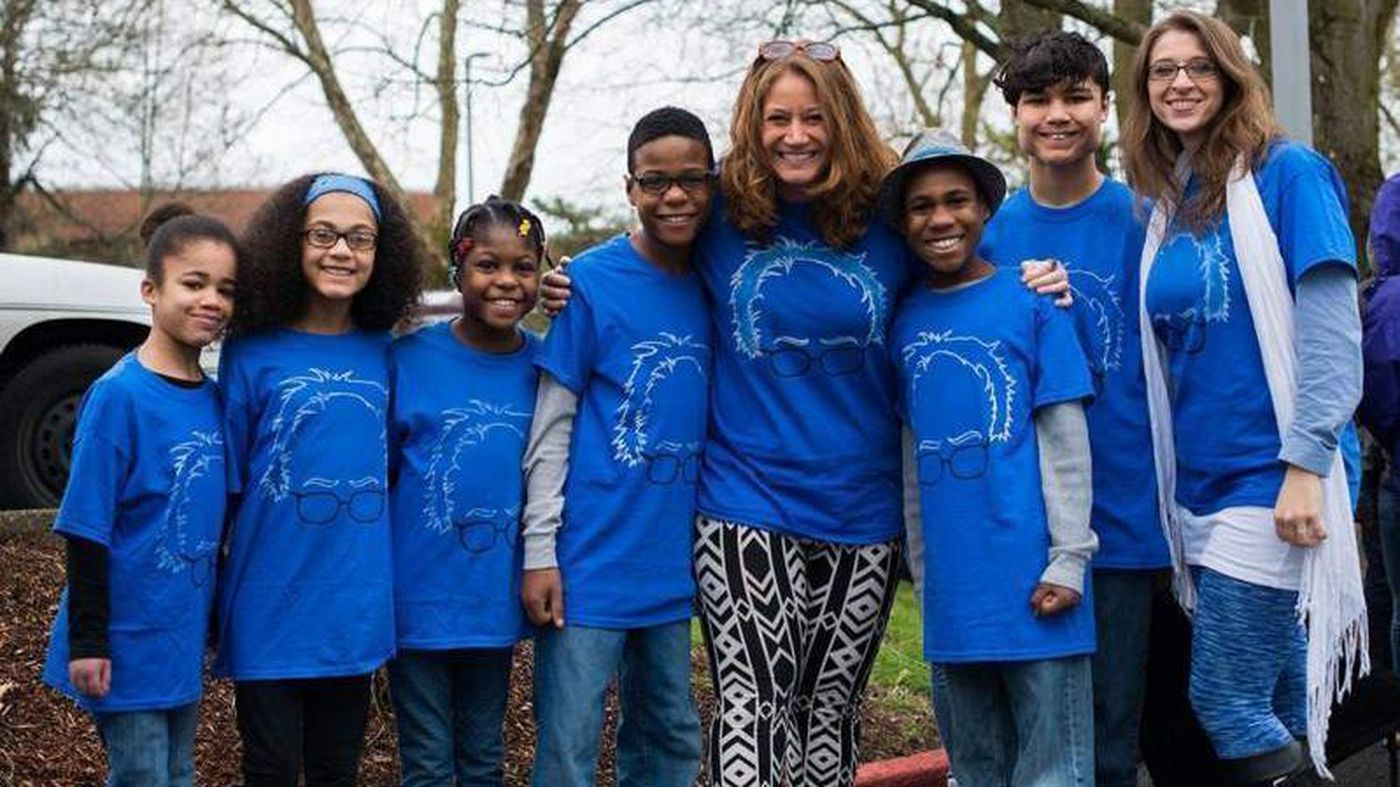
The Hart Family: Associated Press

Some of my happiest days as a social worker were the days I was able to celebrate the adoption of a child by loving foster parents that I had worked with since the child was placed with thm. I will never forget these people that opened their homes and their hearts to a child who was not born to them but who needed their loving care. They were parents in every sense of the word but the biological. Yet, a minority of adoptive parents do not fit this description or even the minimal definition of an adequate parent.

On March 26, an SUV carrying Jennifer and Sarah Hart and their six adopted children drove off a cliff into the Pacific Ocean in Northern California. Days before the crash, Washington State’s Department of Children Youth and Families had opened an investigation of the family after a neighbor called the child abuse hotline. It turned out that the family had a history of abuse reports in three states, starting even before three of the children were adopted. Eventually, we learned that Jennifer and Sarah Hart had received thousands of dollars in adoption subsidies to care for these children while they starved and abused them for years. If federal law had required an annual check-in with the children, they might have been spared years of suffering and untimely death.

There have been many reports of parents collecting adoption subsidies while abusing and neglecting their children or even after killing them. Michael and Shirley Gray collected $3,000 in adoption subsidies per month for four out of their five children adopted in two Tennessee counties while starving them and confining them in cages and closets. Two of the children died and were buried on the family’s property while the parents continued to receive the subsidies. In Iowa, Sabrina Ray and Natalie Finn died of starvation at the hands of their adoptive parents, and Malaiya Knapp ran away from her adoptive home after being locked in a basement and abused for years. Renee Bowman in Maryland beat, choked and starved all three of her children adopted from DC foster care. She killed two of them and kept their bodies on ice in a freezer while collecting $150,000 for raising them. Edward and Linda Bryant in Colorado collected $175,000 in subsidies for the adoption of two boys in 2000; they have not been seen since 2001 and 2003.

Reports of egregious or even fatal abuse of children adopted from foster care appear surprisingly often in the media, but most of these reports do not mention subsidies. But since the vast majority of parents who adopt from foster care (90 percent between 2005 and 2016) receive subsidies, it is likely that most of these “parents” were receiving them.

More common than horrific abuse and neglect are “broken adoptions,” in which the child is legally adopted but is no longer being cared for by the adoptive parents. A survey of 383 youth and adults who exited foster care to adoption1 found that almost 10 percent of the adoptees experienced “formal placement instability;” about eight percent reported re-entering foster care and almost two percent reporting the termination of their adoptive parents’ parental rights or emancipation before the age of 18. Another 30 percent of survey participants reported that they experienced “informal post-adoption instability,” including running away, leaving home before age 18, living with a nonrelative adult other than the adoptive parent, or being homeless. It is worth noting that some adoptive parents (like some birth parents) relinquish their highly challenging children to foster care in order to obtain behavioral health care and fully expecting to get them back. I do not consider these to be broken adoptions unless the parents refuse to take them back after their symptoms have been alleviated.

We do not know how many adoptive parents or guardians continue to receive subsidies after they have permanently stopped caring for their children. But In New York State, this issue has been on the radar of legislators and advocates for more than a decade. Advocacy and services groups in New York City began reporting in the 2010’s that they were working with children who were struggling to survive after leaving or being kicked out by their adoptive parents. The city’s Children’s Law Center set up a project to study these broken adoptions and publicized egregious cases, such as a sibling group whose adoptive parents had received over $200,000 in subsidies after the adoption had broken and and an adoptive father who continued to accrue subsidy payments for his children in jail after he murdered the adoptive mother. New York City’s Daily News reported in 2014 that a judicial hearing officer said he dealt with “hundreds” of cases a year where adoptive parents continued receiving subsidies after their children had left their homes. In a letter to the federal Administration on Children and Families (ACF) in 2015, the Commissioner of the city’s Administration for Children’s Services reported that in a single month during the previous year the agency had made subsidy payments for 143 adopted children who had already returned to foster care. That means the government was paying twice for the same children, with one payment going to the foster parent and another to the adoptive parent who was no longer caring for the child.

How can adoptive parents and guardians continue collecting subsidy payments for children that they have stopped caring for, neglected, abused or even killed? The Adoption Assistance and Child Welfare Act of 1980 (AACWA) established the adoption subsidy program to address widespread concern that many children were languishing in foster care because foster parents would have to give up their subsidies in order to adopt. The Fostering Connections to Success and Increasing Adoptions Act of 2008 added the guardianship subsidy program. According to Federal statutes 42 U.S.C. § 673, an adoption or guardianship subsidy may not be paid if the child has turned 18 or 21 (depending state policy and whether the child has a disability), if the state determines that the parents or guardians are no longer legally responsible for the support of the child, or if the state determines that the child is no longer receiving any support from the parents or relative guardians. But the statute provides no mechanism for the state to determine that the parents or guardians are no longer supporting the child. Instead, it states that parents or relative guardians “who have been receiving adoption assistance payments or kinship guardianship assistance payments under this section shall keep the State or local agency administering the program under this section informed of circumstances which would, pursuant to this subsection, make them ineligible for the payments, or eligible for the payments in a different amount.”

Government financial assistance programs do not generally leave it up to the recipient to inform the government that they are no longer eligible for benefits. Other than social security retirement and survivor benefits (which are meant to last a lifetime), federal assistance programs generally require a periodic redetermination of a recipient’s need for assistance. Members of the 96th Congress apparently did not suspect that adoptive parents would abuse, neglect or abandon their adopted children or that they would fraudulently collect adoption subsidies. However, it is important to note that the law does not actually forbid states from requiring periodic redetermination of the need for an adoption subsidy and the wellbeing of the adopted child. Unfortunately, the federal Administration for Children and Families (ACF) has misinterpreted the law to impose such a prohibition.

On December 31, 2007, ACF added to its Child Welfare Policy Manual (CWPM) a new question and answer about adoption subsidies. The new text stated that a title IV-E agency “cannot reduce or suspend adoption assistance solely because the adoptive parents fail to reply to the its request for information, renewal or recertification of the agreement. Once an eligible child is receiving title IV-E adoption assistance pursuant to an agreement, adoption assistance continues until either the adoptive parents concur to a change or one of the statutory conditions are met for termination of the assistance.” The answer continues: “Once an eligible child is receiving title IV-E adoption assistance pursuant to an agreement, adoption assistance continues until either the adoptive parents concur to a change or one of the statutory conditions are met for termination of the assistance (section 473(a)(4) of the Social Security Act and [CWPM] Section 8.2B.9 Q/A #2).”

As mentioned above, section 473(1)(4) of the Social Security Act says that adoption or guardianship assistance cannot be paid after the child ages out or if the state determines that the parents are no longer supporting or responsible for supporting the child. But in a 2001 policy announcement (later incorporated into the CWPM section referenced above) the agency changed the wording to: “[o]nce an adoption assistance agreement is signed and in effect, it can be terminated under the following circumstances only.” Saying the assistance cannot be paid if these circumstances exist is very different from saying the subsidies can be terminated only if these circumstances exist. ACF’s interpretation denies states the opportunity to determine whether the conditions for ending the subsidy are present.

ACF has continued to obstruct any effort to protect children adopted from foster care and impose fiscal discipline on the subsidy program. Twenty-eight years after the passage of AACWA, the 110th Congress passed the Fostering Connections to Success and Increasing Adoptions Act of 2008, which required that every state plan for foster care and adoption assistance provide assurances that each school-age child is indeed attending school or has completed secondary school. To comply with this requirement, New York’s Office of Children and Family Services (OCFS) adopted a new regulation2 requiring local offices to notify adoption subsidy recipients annually that they must certify that their school-age children are in school or have completed high school. The notice had to include a reminder of parents’ obligation to support the child (!!!) and of notify the local agency if they are no longer providing support for the child or are no longer legally responsible to do so. But there was some discussion in OCFS, according to an Administrative Issuance that has since been cancelled, about what to do when adoptive parents do not comply with the request for a certification. Also, there were “questions raised” about “when submission of additional proof (relevant to both support and school attendance) beyond certification, can, or should, be requested.” OCFS brought these questions to ACF and was told in no uncertain terms that “because the federal adoption assistance program is an entitlement, the state may not impose additional criteria beyond the federal requirements.”3 Furthermore, stated OCFS, “ACF advised against any intensive or intrusive inquiry into an adoptive family’s life.” The requirement for certification was allowed, but no attempt to verify it or even follow up when a parent did not answer. Despite Congress’ desire to ensure that all children receiving foster care and adoption assistance were in school, ACF was adamant that no verification was allowed.

The federal government’s pressure on states to keep the pipeline from foster care to adoption flowing has obviously not abated. The American Bar Association has suggested that this pressure may in fact be leading to an increase in the number of adoptions that fail as states encourage adoptions by foster parents who are not actually capable of meeting the children’s needs. The story of Krista and Tyler Schindley illustrates how such pressure can lead to disaster. The Schindleys were sentenced to 40 years in prison for the horrific abuse and attempted murder of their 10-year-old adopted son in Spalding County, Georgia. A neighbor had found the emaciated boy, who had escaped the house where he had been locked up, starved, and beaten. Three years before his escape, the Schindleys had adopted the boy along with his two sets of twin siblings, despite dire warnings against allowing them to do so. A school counselor told the Division of Children and Family Services (DCFS) caseworker that the adoptive mother did not want the boy and urged the agency not to proceed with the adoption. Even worse, the private faith-based foster and adoption agency that placed the children with the Schindleys eventually dropped the plan of adoption and revoked the family’s foster care license, telling DCFS that “the Schindleys were not fit to adopt the boy, or other children.” Unbelievably, DCFS re-licensed the foster home and pushed through the adoption. When the Title IV-E agency has no priority higher than shifting children from foster care to adoption, such things can happen.

The number of children in adoptive or guardianship has been quietly increasing as a portion of total Title IV-E caseload since the passage of the Adoption Assistance and Safe Families Act in 1990. While children in foster care were 79 percent of the Total IV-E subsidy caseload in 1990, they had fallen to 17 percent of the subsidy caseload by 2023, with the remaining 83 percent receiving adoption and guardianship subsidies. This is mainly due to the fact that Congress restricted eligibility for federal reimbursement of foster care subsidies as part of welfare reform in 1996 but exempted adoption subsidies from these limits. In FY 2024, an estimated 554,000 children received IV-E adoption subsides each month, 46,000 received guardianship subsidies, and 112,000 received foster care subsidies. In FY 2025, the federal government spent $4.479 billion on adoption and guardianship assistance, which is between 50 and 83 percent of the amount spent by each state or tribe.4

In 2025, after eight years of advocacy, the governor of New York finally signed a bill5 designed to address the problem of fraudulent adoption subsidy receipt, but it is only a very weak start. It requires parents to “certify annually” that they are fulfilling the obligations of their adoption subsidy agreement. But no documentation is required, so any parent can certify that they are fulfilling these obligations regardless of whether the child is even alive, let alone well-cared for. It is only if the parent fails to certify that the state agency is directed to “review all available information in order to confirm the parents’ continued eligibility to receive the subsidy.” Something much stronger is needed.

In order to protect children adopted from foster care, or those who leave foster care for guardianship, there should be at least an annual process to verify that each child is alive, well, and still being supported by the adoptive parents or guardians. The best way to implement this would probably be through a face-to-face meeting with the child. Like a CPS interview, this should be conducted out of earshot of the adoptive parents or guardians. In its Blueprint for Child Welfare Financing, published in 2025, the Child Welfare Financing and Accountability Working Group of the Bipartisan Policy Institute recommended that states be required to conduct annual wellness checks of children as a condition of IV-E reimbursement for subsidy payments. Perhaps there is a way to verify a child’s wellbeing and a parent’s support without a face-to-face meeting, using documentation from a school or pediatrician. What is clear is that there needs to be some process to evaluate the child’s well-being and the parents’ support at least yearly. There is nothing in the law that forbids such a check-in, but it is clear that Congress must act to make it happen.

When foster parents received a subsidy and adoptive parents did not, a perverse incentive kept children in foster care. But when adoption subsidies were added, they did not come with the monthly or bimonthly visits from a social worker that foster care requires. And that provision of money, without oversight, had perverse consequences of its own. The expenditure of billions of dollars without any controls (and the knowledge that at least thousands have been fraudulently spent) would be proof in itself of the need for a change. But the existence of not one or two, but many cases of severe abuse and neglect and sometimes death in these homes, there is no morally acceptable excuse for failing to check on these families. Given what we know now, it is immoral to continue offering adoption subsidies without at least annually verifying that the children are alive, well, and being supported by the adoptive parents who are receiving taxpayers’ money to care for them.

Notes

  1. These were children from the National Surveys of Children and Adolescent Well-being NSCAW I and II are longitudinal surveys of children and families who were subject to Child Protective Services (CPS) investigation. For this study, the researchers conducted new surveys with the families of children who were identified as adopted prior to the end of the original NSCAW I study period (August 2005-December 2007) or the original NSCAW II study period (June 2011 to December 2012).  ↩︎
  2. See OCFS regulation 18 NYCRR 421.24(c)(19) ↩︎
  3. That statement makes no sense. Other than social security retirement and survivor benefits, most or all entitlements require recertification. ↩︎
  4. See Appendix, Budget of the U.S. Government, 2027, page 482. Spending for foster care was $5.298 billion. Foster care spending was still higher than adoption and guardianship spending because its costs for administration, training and data systems are much higher. ↩︎
  5. See S784, which amends S8745, passed the previous year, ↩︎

“Steady March Toward Child Fatality Prevention” leaves Many Endangered Children Unprotected

sad child
Image: socialworkhelper.com

In an April 26 Opinion piece in the Chronicle of Social Change, Teri Covington congratulated the child welfare establishment for a “steady march toward child fatality prevention,” citing new developments on the federal, state and local levels. Earlier that week, new details came out about a case involving six child abuse fatalities that had transfixed the nation. But any mention of the Hart case–or how we can address fatalities and near-fatalities from chronic and severe child abuse–was conspicuously missing from the article and the briefing conducted by Covington’s group on the same day.

On April 23, newspapers across the country carried new headlines about Jennifer and Sarah Hart and their six adoptive children, who drove off a California cliff to their deaths in March. The new information, released by the State of Oregon Department of Human Services (DHS), revealed that DHS knew of the Hart parents’ extensive CPS history in Minnesota and had convincing evidence of maltreatment in Oregon but was still unable to determine that abuse had occurred.

The Hart case may have been unusual in the sheer number of system failures involved, but none of the specific features of the case is unusual. In January, the 13 Turpin children who were saved from death by abuse and starvation by the extraordinary bravery of one child. Within the past year, we’ve learned about Brook Stagles in New York, Evan Brewer in Kansas, and many other children who were allowed to suffer ongoing torture and abuse because of failures of the community and the systems designed to protect them. And those are only the cases that made the headlines. We will never know how many other children have suffered and perhaps died of chronic and severe abuse without ever being discovered.

In the article and briefing, Ms. Covington cited a number of actions by federal, state, or local governments that fulfill one or more of the 100 recommendations of Commission to Eliminate Child Abuse and Neglect Fatalities (CECANF). First and foremost according to Covington was the passage of the Family First and Prevention Services Act (FFPSA), which she hailed as a “seismic change,” because it makes resources available for the first time for services to prevent children who have already been abused or neglected from entering foster care. It’s hard to see how the passage of FFPSA could help victims of chronic and severe child abuse. The view that virtually no abused child should enter foster care may be one reason why many abused children are eventually killed by their parents. Moreover, it is hard to see how FFPSA will make the kind of difference expected by its advocates, since states are already funding the same services through funding streams like Medicaid and TANF.

Covington also mentioned the addition of $60 million in CAPTA funds in the current fiscal year for safe plans of care for drug-exposed infants as “another major federal improvement.” This is a good step that might aid in early identification of some children at risk of abuse, but it is a drop in the bucket compared to the need.

Several state and local initiatives mentioned by Covington are steps in the right direction to identifying victims of chronic and severe child abuse. These include the introduction of predictive analytics, improved data sharing between agencies, and more interagency planning and action.

However, conspicuously missing from Covington’s narrative are a set of major reforms that need to occur if we are to avoid more tragedies due to severe and chronic abuse. Some of these reforms are listed below:

  1. Improve vetting of potential adoptive parents. Jennifer and Sarah Hart arranged the adoption of their children through a Texas agency that reportedly put together adoptions against the wishes of the child welfare agency. Moreover, the second set of children was adopted even though the parents had already been investigated for abusing one of the first set. Agencies must not let their desperate search for homes for children considered to be hard to adopt lead them to disregard the future outcomes for these children.
  2. Monitor children whose parents receive adoption subsidies. Given the disproportionate number of serious cases of child maltreatment among adopted children and a valid state interest in the well-being of children supported by the state, parents receiving adoption subsidies should be required to document annually the child’s well-being through a social worker or doctor visit.
  3. Monitor homeschoolers and ban homeschooling by known child abusers. It is all too frequent for parents who have been substantiated for child abuse to withdraw their children from school as soon as their case is closed and they are no longer under the supervision of the child welfare agency. Parents with a record of abuse should not be allowed to homeschool their children. In addition, since homeschooled children appear to figure disproportionately in serious cases of abuse, all homeschooled children should have at least annual contact with a mandatory child abuse reporter such as a teacher, doctor or social worker.
  4. Adopt and promote universal mandatory reporting. Only 18 states and Puerto Rico require all adults to report suspected child abuse or neglect; most states require only certain professionals to do so. And even in the universal reporting states states (including Texas, where neighbors did not report the numerous red flags surrounding the Turpin family), it is unlikely that people know or observe the law. It should be mandatory for all adults to report any reasonable suspicion that a child is being maltreated and this duty should be promoted through a massive public information campaign.
  5. Demand greater accountability from mandatory reporters, as CECANF recommended. Incredibly, an Oregon pediatrician who saw the Hart children at the request of DHS reported that she had “no concern” that five out of six were so small and thin that their weights and heights did not even appear on the growth charts for children their age. CECANF recommended that mandatory reporting training and competency should be a requirement for licensure when applicable. Licensees and their agencies should be responsible for maintaining and refreshing their competency. And doctors who fail to fulfill their responsibilities should lose their licenses.
  6. Revamp investigations. Agencies need to separate the determination of whether abuse has occurred (which can be difficult when frightened children are coached to lie) from the decision to protect vulnerable children. Furthermore the definition of “safety” needs to be changed in many states. Often, a child deemed to be at high risk can be simultaneously labeled as “safe.” Thorough investigations also require manageable caseloads, which in turn require sufficient funding, which is not available in many states.
  7. Interstate registry: In child maltreatment death cases like that of Adrian Jones, parents have been able to escape detection by moving to another state. States should be required to participate in an interstate registry of child maltreatment reports and findings. This was recommended by foster care alumna and 2017 Congressional intern Tonisha Hora, who along with her sister suffered ten years of severe abuse before she was rescued by CPS.
  8. Reform in-home child welfare services so that meaningful services are provided and feedback is obtained from providers about parents’ progress. No case should be closed unless a state obtains credible testimony from service providers, the children and other professionals who know the family that parental behaviors have changed. Again, this require manageable caseloads and adequate funding.

Why were none of these proposals mentioned in the article and briefing? The most direct cause is that only one of these proposals (holding mandatory reporters accountable) was recommended (in part) by CECANF. But that just begs the question of why they were not among the CECANF recommendations.  There are three reasons I can identify:

  1. More children die of neglect than abuse. Of the children who were reported to the federal government who died of maltreatment in 2016, 75% suffered neglect and 44% suffered abuse either exclusively or in combination with another maltreatment type. At the briefing, a speaker from the Virginia Department of Social Services stated that unsafe sleep was the primary driver of child fatalities in Virginia, so the department was concentrating its fatality prevention work on safe sleep. Of course we should promote safe sleep, but we can’t ignore those children who die of severe and chronic child abuse because they are fewer in number.
  2. Many of these measures would draw intense political opposition for ideological reasons or because they would require increased spending. Homeschooling parents and adoptive parents have been adamantly opposed to any monitoring of their children. Doctors would virulently oppose greater penalties for malfeasance. Beefing up child welfare systems would cost money and systems around the country are struggling to obtain enough funds to meet increasing needs.
  3. The narrative currently embraced by the child welfare establishment is that all parents want the best for their children and that all children do best with their parents, no matter how abusive or neglectful. Perhaps that is why there has been so little response to the Hart tragedy and similar tragedies from the agencies responsible for protecting children.

The child welfare establishment needs to recognize that there are some parents to whom the prevalent rosy attitude simply does not apply. Ms. Covington opened her article by stating that deaths of children from abuse and neglect increased by more than 7 percent from 2015 to 2016. We don’t know how many of these deaths stemmed from severe and chronic child abuse. If there is such a thing as “a fate worse than death,” then years of torture by the people who are supposed to protect you qualifies. As you are reading this, how many children are being deprived of food, chained to their beds, or being beaten? One is too many, and political barriers should not be allowed to prevent action.

New Details on Harts Reveal Oregon Knew Children Were at Risk–but Left them in Abusive Home

Hart family
Image: cbsnews.com

In a previous post about the tragic story of the Hart family I listed multiple system failures that allowed the children to remain in an abusive home for years. In response to a public records request from multiple media outlets, the Oregon Department of Human Services released records from Child Protective Services (CPS) and police investigations of the Hart family. These records show that Oregon had extensive information about the children’s situation but still did not act to protect them.

The Hart family had reportedly lived in Oregon for just three months when a family friend called Oregon DHS to report that she was worried about the children after an incident at her home on June 28, 2013. The Harts were staying with the caller and she ordered pizza. Jennifer Hart gave each child, ranging in age from 8 to 15, one slice of pizza and some water. But in the morning, all the pizza was gone. Hart became angry. She stated that none of the children would be eating breakfast as none confessed to eating the pizza. All six children were made lie on an air mattress with sleeping masks on their faces for five hours as punishment. The caller said that the children had appeared to get taller, but not gain weight, over the 5 to 7 years since their adoption. The caller also indicated that the Harts had been investigated in Minnesota for withholding food from the children. The Harts pulled the children from school after the investigation but the caller doubted there was any education going on. Instead, Jennifer Hart took the children across the country for weeks attending music festivals and frequently had them pose as a happy family for Facebook.  The caller stated that the children were terrified of Jennifer Hart, their primary caregiver. Sarah was outside the home working during the day, but her loyalty was totally with Jennifer.

Because of missing pages in the Oregon record, we do not know the date of this report or how much time elapsed before DHS received a second report on July 18, 2013. An anonymous caller reported that the six Hart children appeared malnourished. The caller provided a Minnesota license plate number which enabled the hotline screener to identify Jennifer and Sarah Hart. The screener contacted Minnesota’s child welfare agency and quickly learned that the Harts had adopted their six children from Texas. A Minnesota social worker told the Oregon screener that Texas “seems to do a lot of adoptions through [a now defunct local agency}, even when the child welfare office has not approved the placement.”

The Oregon screener learned that Minnesota had received six separate abuse and neglect allegations against the Harts in 2010 and 2011, all of which came from the school regarding Abigail or Hannah Hart.  Three of the allegations involved physical abuse. and three involved food deprivation. On November 15, 2010, the school reported that six-year-old Abigail had “bruising on her stomach area from her sternum to waistband, and bruising on her back from mid-back to upper buttocks.” Abigail reported that Jennifer Hart beat her, but it was Sarah who said she was responsible for the marks. The beating reportedly resulted from a penny found in Abigail’s pocket, which her parents thought was stolen. The Harts “agreed to in-home therapy, parenting and counseling, and a variety of skill building activities.”

There is no information about whether the Harts really participated in these services, but a report came in the next month  (December) that Hannah had a bruise she attributed to Jennifer Hart, saying that Jennifer hit her “all the time.” Two reports came in January, one saying that Hannah had been asking classmates for food.  The final report stated that Hannah reported to the school nurse that she was hungry. During the investigation, the children reported being deprived of food as a form of discipline. As part of an assessment, six-year-old Abigail, who reportedly looked like she was two, was taken to the doctor, who “said she is just small, and being adopted, we don’t know their bio family history.” The Minnesota worker reported that when the parents were asked about the children’s hunger and their complaints about withholding food, they said the children were adopted, were “high risk kids,” and had food issues. The allegation apparently was confirmed and the Harts participated in services (perhaps the same services that were ordered pursuant to the November 15 report) but no information is provided about those services and whether the children were assessed to be safe before case closure. When that case was closed, and the services were “concluded” the family pulled their children out of school and eventually left the state for Oregon.

The Minnesota social worker told the Oregon screener that the problem was “these women look normal.” They knew what to tell professionals about special needs, adoption and food issues, to get them to “assign the problem to the children” rather than the parents. The Minnesota worker also understood that the children were at particular risk because “without any regular or consistent academic or medical oversight” and without reviews from the State of Texas, the children risked “falling through the cracks.”

After the Oregon screener spoke to the Minnesota staff, the case was approved for investigation by CPS. A CPS worker tried unsuccessfully to visit the family and found out eventually that the children were traveling with Jennifer Hart. Two Oregon CPS workers finally interviewed the parents and children on August 26, 2013–over a month after the report was received.  All of the children appeared small, but their mothers reported that they had  been small when they were adopted. Hannah Hart, 11 at the time, had no front teeth and the parents stated she had knocked them out in a fall and had to wait another year for dental work. All six children denied that they had been abused. According to the investigative report, “the children provided near identical answers to all questions asked.” For example, they all reported that they were punished by being required to meditate for five minutes. “All of the children, except Devonte, were very reserved, and showed little emotion or animation,” according to the CPS worker’s report. The investigator also observed  that the children looked at Jen Hart for permission to answer a question. The investigator was clearly not fooled by the identical answers. She later told one of the callers that the children had clearly been coached on what to say. Nevertheless, the children’s failure to report the abuse, even though it was characteristic of abused children who fear their caregivers, may have sealed their doom.

One of the family friends interviewed by CPS stated that Jennifer Hart viewed the children as “animals” when they came to her, and herself as their savior. The Harts displayed this “savior” mentality in their descriptions of the children when they were adopted. For example, they reported that when they adopted Devonte at the age of six, he could say only two words, both of which were expletives. They reported that he did not know where his fingers and toes were and was violent. They reported that Abigail was diagnosed as “borderline mentally retarded” at the age of two but had made “great strides” since that time. And they reported that Jeremiah was labelled “globally delayed” and possibly autistic, and could not even use a fork, but was currently functioning normally. As described in my earlier post, this exaggerated emphasis on the children as defective and the parents as saviors fits the pattern of the “white savior” as described by writer Stacey Patton.

The Harts agreed to a CPS request to take the children to a doctor to evaluate their weight. The doctor faxed the children’s growth charts to DHS along with a letter indicating “no concerns” even though five of the six children were so small that their heights and weights were not listed on growth charts for their age. The social worker was curious enough about this lack of concern that she spoke to the doctor, who , like the doctor in Minnesota, explained that she had no previous data or records for the children, and apparently therefore had no basis for concern.

The case was closed on December 26 with a disposition of “unable to determine, which means that there are some indications of child abuse or neglect, but there is insufficient information to conclude that there is reasonable cause to believe that child abuse or neglect occurred.” It was concluded that all of the children were “safe.” Nevertheless, in the section related “Vulnerability,” the investigator indicated that the children “are completely dependent on their caregivers and do not have regular contact with any mandatory reporters, as they are home schooled.”

The Hart case brings together many different barriers to our ability to protect abused children not just in Minnesota, Oregon and Washington but all over the country. In my post, How to Prevent More Hart Cases,  I identified a number of policy areas where change is needed in many or all states and localities, to save children like the Harts. In all of these areas, policy and practice needs to be changed in order to shift away from the current extreme focus on parental rights to a more balanced approach which gives child protection equal or greater emphasis. Here is an updated version of the list based on the new information from Oregon:

  1. Improve Vetting of Potential Adoptive Families. The new information from Minnesota adds more evidence that improved vetting is necessary, at least in some states. The second set of children were adopted despite the fact that the parents were investigated for abuse of one of the first set of children. Moreover, Minnesota staff told Oregon DHS staff that Texas arranged many adoptions through a particular agency, even when not supported by Minnesota’s child welfare agency. We need to know more about how adoptions could be organized against the wishes of the child welfare agency in the adoptive child’s state, and whether such adoptions continue to occur.
  2. Monitor adoption subsidy recipients. The new information confirms that the Harts received almost $2,000 a month in adoption subsidies–money that clearly enabled them to live. All agencies paying adoption subsidies should verify periodically that the children are alive and well and still living in the adoptive home.  Submission of an annual doctor visit report, and/or an annual visit by a social worker could be used for such verification.
  3. Regulate homeschooling. The Minnesota records confirmed that the Harts removed all their children from school after their child abuse case was closed in Minnesota. The Coalition for Responsible Home Education (CRHE), an advocacy group for homeschooled children, recommends barring from homeschooling parents convicted of child abuse, sexual offenses, or other crimes that would disqualify them from employment as a school teacher. CRHE also recommends flagging other at-risk children (such as those with a history of CPS involvement) for additional monitoring and support and requiring an annual assessment of each homeschooled child by a mandatory reporter.
  4. Adopt universal mandatory reporting and educate the public about reporting child maltreatment. The new information does not change the fact that the Harts’ neighbors in Washington witnessed clear indicators of maltreatment months before the family went off a cliff. If they had reported their observations earlier, the children might have been saved. However, Minnesota and Oregon reporters were more conscientious, and the children were failed by CPS; hence the next recommendation.
  5. Revamp the investigative process. We have seen that social workers in Minnesota and Oregon had a very clear idea of the dynamics of the Hart household, and how the parents manipulated professionals to shift all blame to the children. Nevertheless they were not able to act on this knowledge to protect the children. There are several reasons that arise from the characteristics of child protective services in most or all states. First, action such as opening an in-home case or removing a child is contingent on the abuse allegation being confirmed. But that is very difficult to do, especially when children deny the abuse, as abused children often do. It is likely that many actual cases of abuse are not substantiated. Research has found little or no difference in future reports of maltreatment of children who were the subject of substantiated or unsubstantiated reports.  We need to move away from substantiation as a trigger for action to protect children.  Another problem is the bizarre distinction between risk and safety which is made in most or all CPS systems. That children could be labeled “safe” even when  at risk, as happened in Oregon, is obviously ridiculous. This false distinction has contributed to the deaths of Adrian Jones in Kansas, Yonatan Aguilar in California, and doubtless hundreds of other children around the country.
  6. Establish stricter criteria for case closure. In Minnesota, one or two cases were opened and the Harts were required to participate in services. We know in retrospect that none of the services worked to change the Harts’ parenting style. It appears that the parents continued their pattern of abuse and food deprivation while the services were being provided. State and local agencies need to revise their criteria for case closure to make sure that they are not leaving the children in the same unsafe situation they were in before the case opened. Agencies must be required to do a rigorous assessment of the children’s safety, which includes checking in with all service providers as well as the children and other professionals who have contact with them.
  7. Encourage doctors to err in the direction of protecting children. The similar response from doctors in Minnesota and Oregon to these malnourished children (saying that they don’t know if there is a reason for concern because lack of historical data) suggests a pattern of reluctance by medical professionals even to express concern that abuse or neglect may be occurring. For a doctor to say that he or she has no concerns because of the lack of information is backwards. Pediatricians need to express concern until given reason to believe otherwise. The American Academy of Pediatrics should issue guidance to this effect, but this needs to be followed up by consequences for doctors who fail to protect their patients

In my earlier post, I recommended interstate information sharing as a way to prevent future Hart cases.The new information reveals that Oregon DHS was able to obtain information about the Harts’ abuse record almost as soon as they began their investigation. The State of Washington found out about the Harts only three days before the fatal event, so information sharing was unlikely an issue. Thus, a failure of information sharing appears not to have been a major factor in this case, even if it has played a role in other cases where abusive families moved from state to state. One of the family friends who reported the abuse of the Hart children has launched a petition campaign for an national child abuse registry. This proposal deserves support and might save many children in the future, even if it would not have helped the Hart children.

On April 26, I attended a briefing on Capitol Hill about “Innovations and Opportunities to End Child Maltreatment Fatalities.” None of the measures suggested above were mentioned, even though they are responses to system breakdowns that have occurred again and again in child maltreatment fatality cases. Until we are willing to address the current imbalance between the rights of parents and those of their children, children will continue to suffer and die just like the Harts.


Multiple System Failures Allowed Hart Children to Die

Hart family
Photo: Associated Press

On March 26, an SUV filled carrying a family plunged off a cliff. The car belonged to Jennifer and Sarah Hart. Their bodies, and those of three of their children, were found on the scene. Three children are still missing although another body found in the ocean may be one of the children. Initial coverage focused on the fact that the family consisted of two white mothers and six adopted black children. The family had had an earlier brush with fame when one of the boys was in a viral photograph hugging a police officer at a Ferguson protest.

As the days passed, disturbing details came to light. Days before the crash, Washington Child Protective Services (CPS) had opened an investigation of the family after a neighbor called the child abuse hotline. We eventually learned the family had a history of abuse reports. Then we learned that the crash appeared intentional, and probably triggered by the CPS report.

With each new discovery, we learned of another systemic failure to protect these vulnerable children. The Hart case brings together several common themes found in many cases of severe child maltreatment. Each of these themes highlights a different gap in the system that is supposed to protect our children.

Adoption: All six Hart children were adopted from foster care in Texas: three in 2006 and the next three in 2009. It is not that being adopted makes children more likely to be abused.  Indeed, one Dutch study indicated adopted children were less likely to be abused than children growing up in their biological families. However, anecdotal evidence suggests that adopted children are overrepresented among children who are severely abused or neglected, at least in homeschool settings. Many of these cases involve common elements, including locking children up in a room, withholding food, and isolating the child by homeschooling or other means, all of which were present in this case. One possible explanation for this pattern focuses on the traumatic backgrounds of many adoptive children, which may lead to behaviors that adoptive parents are not prepared to deal with. While they may start out with good intentions, they end up resorting to punitive and eventually abusive parenting to control the undesired behaviors.

Writer Stacey Patton has described a “white savior attitude” among some white parents who adopt black children from the U.S. or abroad. These parents “wear their transracial adoption as a status symbol.” These adoptive parents often post on social media about their extraordinary efforts to deal with their children’s emotional and intellectual challenges that they attribute to the deficiencies of their birth parents.” The Harts fit this pattern. According to the Oregonian, the Harts often said their children suffered a multitude of early childhood behavioral and developmental issues that made parenting a challenge.  Jennifer Hart also polished her image as an ideal mom who gave her underprivileged children a beautiful life. She frequently posted on Facebook portraying an idyllic family life full of trips, celebrations, community service, and events like the Ferguson rally in which Devonte sported a sign offering “Free Hugs.” When adoption is all about the parents, and the children become part of their public image, a bad outcome is not surprising.

There is reason for concern about the vetting process the Harts received when adopting the children. The Hart kids were among the 300 to 400 Texas children adopted each year by out of state foster parents, often because they are harder to place because they are in large sibling groups or have special needs. The Harts would have been vetted by a Minnesota agency, which would have submitted their home study to Texas for approval. After a child visit, the children would have probably moved in with the Harts for a six-month trial period. A Texas agency spokesman told the San Antonio Express-News that during the trial period for out-of-state adoptions, the out-of-state agency would be monitoring the family and reporting back to Texas. But in September 2008, probably during the trial period for the second adoption, Hannah Hart was asked about a bruise in her arm. She reported that her mother hit her with a belt. Police and social services interviewed the mothers, who denied the beating and said she had fallen down the stairs. Nevertheless, the second adoption went through. We need to know whether Texas was informed of this investigation.

Once the adoption was finalized, there was nobody monitoring the Hart children, even though Texas continued to pay for their care. The San Antonio Express-News reports that Jennifer Hart received nearly $1,900 per month in adoption subsidies from the State of Texas. The paper estimates that she collected a total of $270,000 from the state for caring for the six children during the time they lived with her. Unfortunately, children who receive adoption subsidies are not monitored to ensure that they are being properly cared for, are still in the home, or are even alive. Such monitoring has not been imposed even in the wake of cases in which adoptive parents like Renee Bowman and Edward and Linda Bryant have fraudulently collected adoption subsidies after killing–or allegedly killing–their children.

Home Schooling. On April 11, 2011, Sarah Hart made a plea agreement a week after pleading guilty to physical abuse of a six year old child. The next day, all six children were removed from school, never to attend again. The Harts joined a long line of abusive parents that removed their children from school after a brush with CPS. The notorious Turpin family, who gained worldwide attention this winter when one of their 13 malnourished children escaped confinement in their home, who also liked to dress their children in matching tee shirts. As the Coalition for Responsible Home Education points out, Pennsylvania is the only state that bars convicted child abusers from homeschooling, and then only if the conviction is in the past five years. No state has any mechanism to identify cases where parents remove a child from school after a child protective services case is closed, or after a series of child abuse allegations.

Failure to report: At a festival in Oregon, the Oregonian reports that one acquaintance observed the mothers become enraged after she brought Devonte and Sierra back to her parents from a day out, bearing food.  Sarah Hart grabbed Sierra’s arm, inflicting a bruise that lasted for days, and both mothers chastised her for “being selfish” and not sharing. Sierra told the woman that she often got in trouble for talking to people her mothers did not know. But the neighbor did not report the disturbing incident. The Hart family’s neighbors in Washington, Dana and Bruce DeKalb, told reporters that they had suspected that something was not right in the Hart household.  A few months after the Harts moved to Washington, the DeKalbs reported that Hannah Hart came to their door at 1:30 AM. She had jumped out of a second-story window and ran through bushes to their home, begging them to protect her from her abusive parents. The neighbors noted that she was missing her front teeth and appeared to be about seven years old, although she was twelve. The other children also appeared small and thin when the family came over the next morning.

The DeKalbs told the Washington Post that they considered calling CPS but “tried to overlook the incident.” In the next eight months, the DeKalbs saw Devonte doing chores but never saw the other children outside.  About a week before the crash,  Devonte began coming to the DeKalbs’ house requesting food and saying that his parents had been withholding food as punishment.  The visits escalated from daily to three times a day. It was only after a week of such visits that they finally called CPS, setting in motion the the escape attempt that ended in the fatal crash.The DeKalbs’ hesitation echoes that of the Turpins’ neighbors, who never reported the many red flags they saw.

Biased Investigative Process: As mentioned above, Oregon CPS was unable to substantiate a report from a family friend that the Harts were punishing the children by withholding food and emotionally abusing them. CPS interviewed the children but told the friend that it appeared they had been “coached” to lie, so there was no evidence to substantiate the allegation. The question is, why were the parents given enough warning that the children could be coached? This is only one example of how the system is biased toward parents’ rights over children’s safety.

Multiple systemic gaps allowed the abuse of the Hart children to continue until it culminated in the deaths of the entire family. A variety of policy changes are needed to address the gaps highlighted by this tragic case. I will discuss these in my next post.